


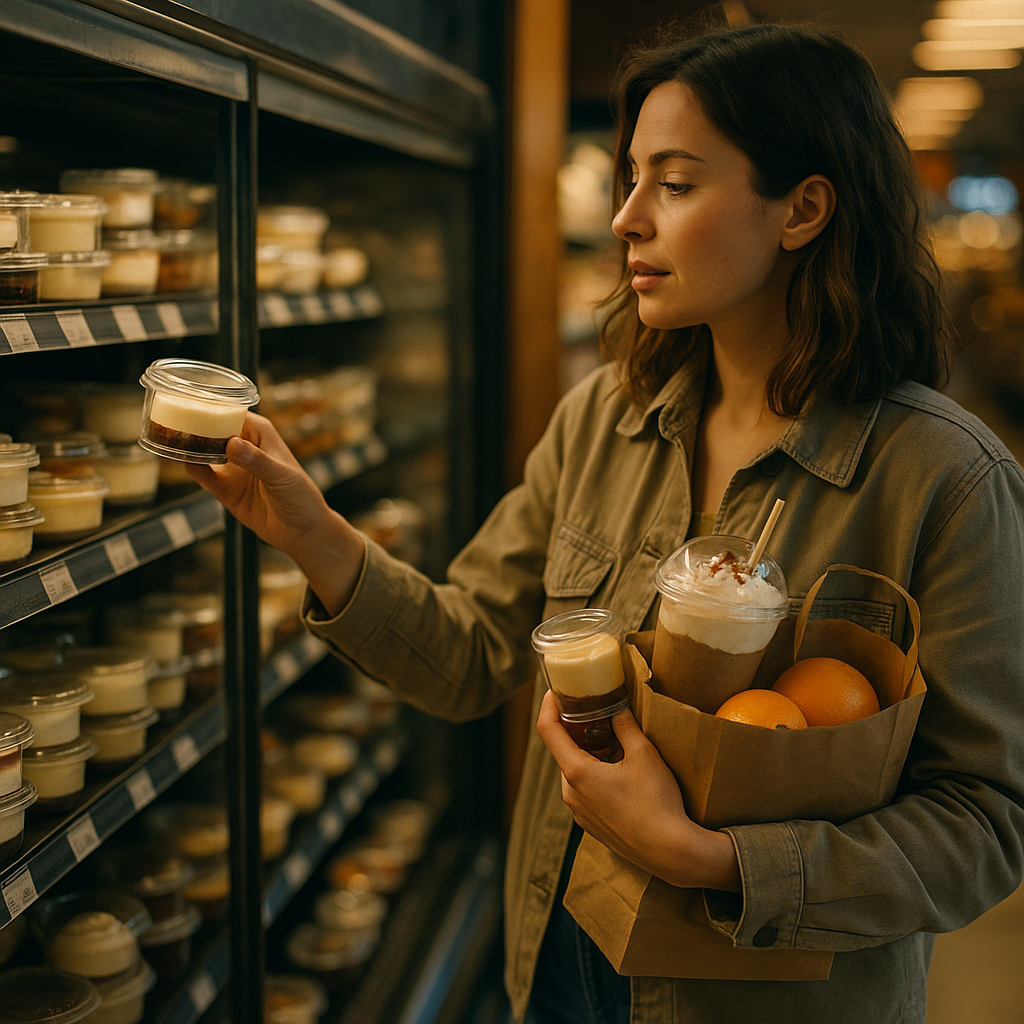
Treatonomics is reshaping how people shop in 2025: when budgets tighten, many consumers skip big purchases but still say yes to small, mood-lifting treats. These “micro indulgences” feel affordable, emotionally rewarding, and easy to justify—so they add up in baskets and drive volume for brands and retailers. The real question isn’t why people indulge, but why tiny treats win so consistently.
Micro indulgences
Micro indulgences are small, low-commitment purchases that deliver a quick emotional payoff: a premium coffee add-on, a single-serve dessert, a travel-size beauty item, an upgraded snack, or a limited-edition flavor. They are not “random splurges.” They are structured choices that feel proportionate to everyday stress, time pressure, and financial uncertainty.
What makes micro indulgences different from traditional discretionary spending is the perceived risk profile. A $4–$12 treat usually doesn’t require financing, prolonged comparison shopping, or waiting for a “right time.” The consumer can decide in seconds, experience the reward immediately, and move on. That frictionless loop matters because volume growth often comes from frequency more than from ticket size.
For businesses, micro indulgences tend to lift:
- Trip conversion (more shoppers buy something rather than leave empty-handed)
- Basket add-ons (one “little extra” becomes two)
- Repeat rate (the habit of “just a small treat” becomes routine)
- Trial velocity (people are more willing to test new flavors, formats, and claims)
Shoppers also use micro indulgences as personal rituals—an afternoon pick-me-up, a post-work reset, a reward after a workout. When a product fits into a ritual, it stops competing purely on price and starts competing on meaning.
Consumer psychology
Several well-established psychological mechanisms explain why micro indulgences punch above their price point. Understanding them helps brands design products and offers that feel helpful instead of manipulative.
1) Mental accounting: “Small bucket” spending feels safer
People separate money into mental categories—groceries, bills, savings, “fun.” Micro indulgences often land in the “fun” bucket even when overall budgets are constrained, because the absolute amount looks negligible. A small treat can feel like responsible self-care rather than “overspending.”
2) Loss aversion: avoiding regret feels like value
Consumers fear the regret of missing out on a limited-time flavor or a seasonal item more than they fear the cost of a small purchase. A “missed treat” feels like a loss. For brands, this is why short runs and rotating assortments can move units—when they’re executed with integrity and clear information.
3) Mood repair: quick rewards reduce perceived stress
Micro indulgences provide fast sensory and emotional benefits—taste, scent, comfort, novelty. When people feel depleted, they seek immediate, controllable rewards. A small treat is controllable: it doesn’t require a major plan, and it provides predictable pleasure.
4) The “affordable luxury” effect: status without the commitment
Premium cues—better ingredients, elevated packaging, a brand story—create a feeling of luxury at a price that still feels accessible. Consumers get the identity boost of “choosing something nice” without taking on the risk of a big-ticket purchase.
5) Goal substitution: a treat becomes a mini milestone
When long-term goals (saving for a home, career changes, health improvements) feel slow or uncertain, micro indulgences offer short-term milestones. They become rewards for getting through the day, commuting, finishing tasks, or parenting. That’s a powerful driver of repeat purchases.
The follow-up question many leaders ask is: “Does this mean people will buy anything small?” No. Micro indulgences work when the product delivers clear, immediate value—taste, convenience, relief, or novelty—without hidden trade-offs that create buyer’s remorse.
Value perception
Micro indulgences drive volume because they optimize how consumers evaluate value. In 2025, shoppers are price-aware and information-rich, but they’re also time-poor. Value perception becomes a blend of price, payoff, and permission.
Payoff: the reward must be obvious
Single-serve items, ready-to-enjoy formats, and “instant upgrade” add-ons work because the benefit is immediate. A product that requires effort, waiting, or additional purchases dilutes the micro-indulgence effect.
Permission: the purchase must feel justifiable
Justification can come from:
- Portion control (mini sizes feel disciplined)
- Transparency (clear ingredients, allergen info, and nutrition labeling)
- Functional benefits (energy, protein, hydration, calm—when claims are substantiated)
- Occasion framing (break time, self-care, “small celebration”)
Importantly, “permission” is not just marketing language. It’s reinforced by product design. For example, a 120-calorie mini dessert or a 30 ml premium serum makes it easier for consumers to say yes without feeling like they abandoned a goal.
Price architecture: the sweet spot matters
Micro indulgences typically sit in a “low pain, high delight” range. Too cheap can signal low quality; too expensive turns it into a considered purchase. The best-performing price points often align with everyday spending norms in that channel (convenience, grocery checkout, café, pharmacy).
When leaders ask, “Should we discount to drive volume?” the practical answer is: discounting can increase trial, but repeat volume depends more on delivering consistent delight and trustworthy quality. A customer who buys because it’s cheap is not the same as a customer who buys because it became their ritual.
Behavioral economics
Treatonomics shows up in measurable patterns that behavioral economics predicts: people lean into small rewards when uncertainty rises, and those rewards become higher-frequency purchases.
1) The “lipstick effect,” modernized
The classic idea is that consumers replace large luxuries with small luxuries during cautious periods. In 2025, it’s broader than cosmetics: premium snacks, specialty beverages, mini personal-care upgrades, and limited-edition drops all serve the same psychological function—accessible delight with low commitment.
2) Anchoring and trade-down dynamics
Consumers may trade down on big categories (electronics, furniture, vacations) but still anchor their identity to “quality choices” via small purchases. A $6 artisanal treat feels like a smart compromise compared with a deferred $600 purchase. Brands can support this by clearly stating what makes the product premium—sourcing, craft, performance, or sensory experience.
3) Present bias and immediate consumption
People tend to overweight immediate rewards relative to future benefits. Micro indulgences exploit this naturally because they are often consumed right away. Businesses that reduce the time between purchase and enjoyment—ready-to-drink, grab-and-go, peel-and-eat—make the decision easier.
4) Choice architecture at the point of purchase
Placement and simplicity drive conversion. Micro indulgences perform well at:
- Checkout (last-minute add-ons)
- End caps (high visibility with low search cost)
- Bundled prompts (“Add a mini treat for $X”)
- Digital cart suggestions (when relevant and not spammy)
To align with Google’s helpful-content expectations, it’s worth stating the boundary clearly: effective choice architecture should make it easier to find a relevant treat, not trick people into unwanted purchases. Sustainable volume comes from trust, not from dark patterns.
Retail strategy
Turning micro indulgences into volume growth requires operational discipline: the right assortment, frictionless availability, credible messaging, and a feedback loop that improves over time. Here’s what consistently works across food, beverage, beauty, and wellness.
Assortment: build a “treat ladder”
Create a range that supports different budgets and occasions:
- Entry treat (impulse-friendly, low price, broad appeal)
- Upgrade treat (premium cues, better ingredients, unique flavor)
- Limited treat (seasonal or collaboration, scarcity with transparency)
This ladder lets consumers stay in the category even when their budget changes week to week—protecting volume.
Format innovation: make the reward immediate
Single-serve, resealable minis, sampler packs, and “trial sizes” reduce risk and encourage experimentation. In beauty and personal care, travel sizes also solve a practical problem (portability), which strengthens the justification.
Messaging: describe outcomes, not hype
Helpful copy answers the shopper’s real questions quickly:
- What does it taste/feel like?
- How big is it?
- What’s inside it (ingredients, allergens, key actives)?
- When should I use it (occasion)?
When you make claims—“calming,” “energizing,” “supports skin barrier”—keep them specific, avoid medical promises, and ensure they are substantiated. EEAT in 2025 rewards brands that communicate limits clearly and provide verifiable details.
Merchandising: win the micro-moment
Micro indulgences thrive in “micro-moments”: the 30 seconds in line, the quick app reorder, the gas-station stop, the mid-afternoon office break. Plan for:
- High in-stock rates (nothing kills habit like empty shelves)
- Fast navigation (clear shelf labels; simple digital categories)
- Smart cross-merchandising (pair treats with complementary staples, like coffee + mini pastry)
Measurement: optimize for frequency, not just margin
Track metrics that match the goal:
- Units per trip and add-on rate
- Repeat purchase window (e.g., 7/14/30 days)
- Trial-to-repeat conversion by flavor/variant
- Out-of-stock impact on total basket value
Micro indulgences can be margin-positive, but their strategic value often includes protecting traffic, supporting loyalty, and increasing overall basket frequency. That’s why they “drive volume” even when single-unit revenue is modest.
Brand trust
Treatonomics scales when consumers feel good after they buy. If shoppers experience regret—because the product underdelivers, the portion feels deceptive, or the claims feel exaggerated—volume becomes short-lived. Trust is the compounding factor.
How to build trust without slowing conversion
- Make portion and price transparent (clear net weight, count, and serving size)
- Invest in sensory consistency (taste, texture, fragrance, performance)
- Use credible proof points (certifications, sourcing details, clinically supported actives where relevant)
- Handle health and wellness responsibly (avoid diagnosing, curing, or implying guaranteed results)
Address common shopper concerns proactively
Consumers often wonder: “Are these treats ruining my budget or my health goals?” Brands can help by offering:
- Mini sizes alongside regular sizes, not as a bait-and-switch
- Balanced options (lower sugar, higher protein, caffeine clarity, fragrance-free variants)
- Clear comparison (what makes the premium version worth it)
When a micro indulgence aligns with the shopper’s identity—someone who is budget-aware, health-conscious, and still wants moments of pleasure—it becomes a repeatable behavior. That repeatability is the engine of volume.
FAQs
What is treatonomics in simple terms?
Treatonomics describes how consumers keep spending on small, emotionally rewarding items even when they reduce larger discretionary purchases. These micro indulgences feel affordable, easy to justify, and immediately satisfying, which increases purchase frequency and total units sold.
Why do micro indulgences drive volume more than big splurges?
Because they happen more often. A large splurge is occasional and requires planning. Micro indulgences are frequent, low-friction choices that fit into daily routines, so they lift repeat rates, add-ons, and overall unit movement.
Are micro indulgences the same as impulse buys?
Not always. Some are impulse-driven, but many are planned rituals (a weekly dessert, a daily coffee upgrade, a travel-size skincare staple). The defining feature is the small commitment and quick payoff, not the absence of intention.
Which categories benefit most from treatonomics?
Food and beverage (snacks, premium drinks, single-serve desserts), beauty and personal care (minis, masks, fragrance), wellness (functional beverages and supplements with responsible claims), and convenience retail generally see strong results because immediate consumption and quick gratification are built in.
How should brands price micro indulgences?
Price them in a “low pain, high delight” range for the channel and make the premium value obvious. Over-discounting can create trial but may weaken perceived quality. Focus on a consistent experience, clear differentiation, and a price that feels easy to say yes to repeatedly.
How can retailers increase micro-indulgence sales without annoying shoppers?
Use helpful placement and relevant recommendations: strong in-stock performance, simple navigation, clear labeling, and sensible cross-merchandising. Avoid misleading scarcity or excessive pop-ups. Sustainable volume comes from making the right treat easy to find at the right moment.
Does treatonomics mean consumers are being irrational?
No. In many cases it’s a rational adaptation: people trade down on large purchases while preserving small moments of enjoyment. The behavior becomes problematic only if products encourage harmful overconsumption or rely on deceptive marketing—both of which erode trust and long-term demand.
How do you measure whether micro indulgences are working?
Track units per trip, add-on rate, repeat purchase timing, trial-to-repeat conversion, and out-of-stock impacts. If frequency and repeat improve while returns and complaints stay low, the strategy is creating durable volume rather than one-time spikes.
Treatonomics explains a practical truth of 2025: consumers may delay big purchases, but they still seek small, reliable rewards. Micro indulgences win because they reduce decision friction, feel easy to justify, and deliver immediate emotional payoff—often becoming rituals that repeat weekly or daily. The takeaway for brands and retailers is clear: design for trust, instant value, and frequency, and volume will follow.