


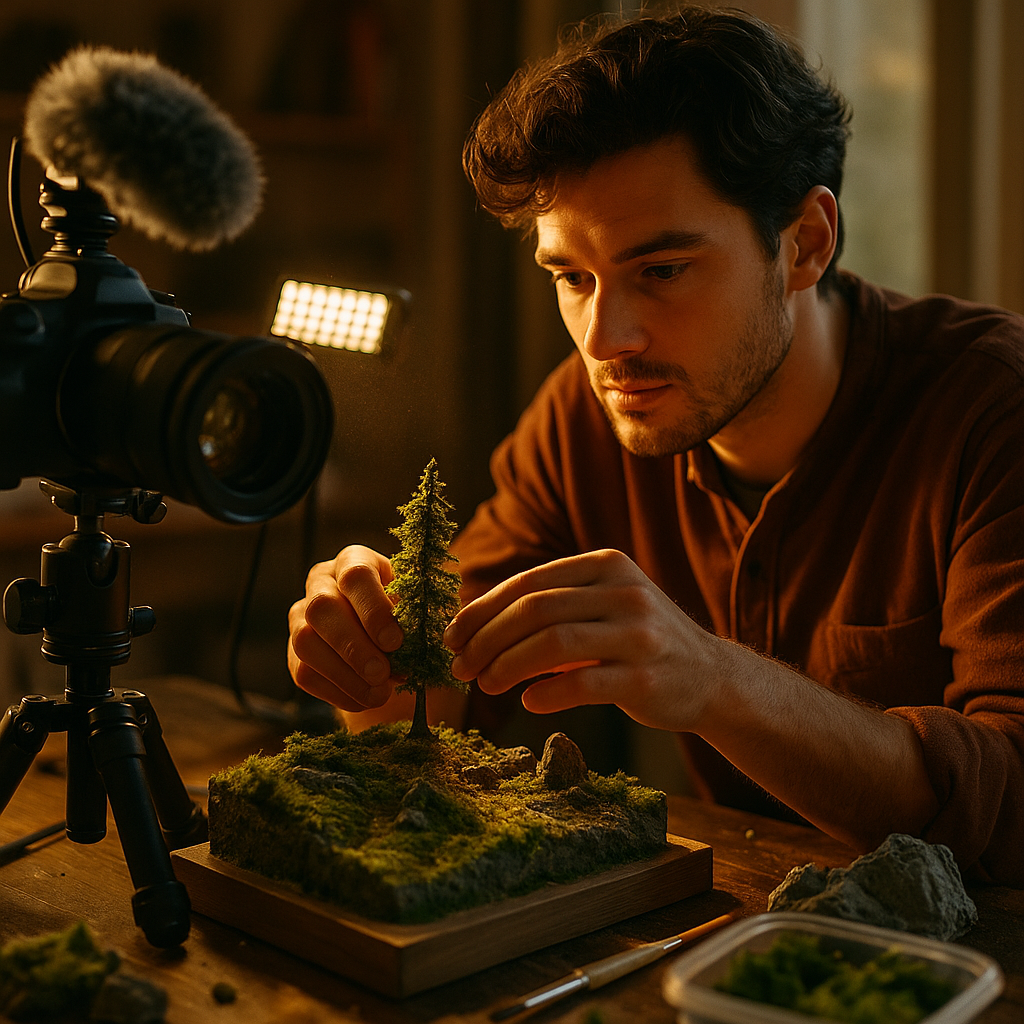
Learning how to build creator scenes that feel like real life can set your content apart in a crowded digital space. By leveraging realism, creators spark deeper connections, hold attention longer, and inspire genuine engagement. Are you ready to discover actionable tips and expert strategies to make your audience feel like they’re truly inside your world?
Understanding Realism in Creator Scenes
To create authentic scenes, you need to understand what makes a setting feel real to viewers. Audiences notice the tiny details: the way light falls, how people interact, subtle background sounds. Realism goes far beyond high-resolution visuals—it’s about crafting sensory-rich environments and relatable moments. Recent research highlights that immersive, believable scenes drive up to 40% higher viewer retention and sharing rates in 2025, making realism a crucial goal for any creator.
Authentic creator scenes are based on:
- Attention to small details: Background clutter, imperfect lighting, and ordinary objects create familiarity.
- Natural pacing: Real life rarely happens in fast-forward or slow-motion—timing matters.
- Credible interactions: Dialogue, body language, and facial expressions must ring true, rooted in everyday realities.
Leveraging Lighting and Color for Immersive Environments
Lighting and color function as silent storytellers, shaping mood and believability. The latest tools in 2025, like AI-powered lighting recommendations and hyper-realistic rendering engines, give creators unprecedented control. But technology is just one part of the solution—the key lies in understanding human perception.
- Simulate natural lighting: Use multiple soft light sources to mimic sunlight or indoor ambiance. Notice how shadows behave at different times of day, and replicate them.
- Color accuracy: Earth tones and well-balanced palettes tend to ground scenes in reality. Avoid over-saturation, unless the story demands a surreal look.
- Consistency: Ensure lighting remains logical from shot to shot. Inconsistent lighting breaks immersion fast.
Top creators often use reference photos or shoot test video in real locations, then match digital lighting setups for authenticity. Always prioritize what looks natural over what looks dramatic—your audience will notice the effort.
Crafting Relatable Stories and Characters
A scene feels real when viewers empathize with its characters and situations. In 2025, creators thrive by weaving authentic, emotionally resonant stories featuring individuals viewers recognize—from mannerisms to motivations. This is the heart of creator storytelling.
- Dialogue that feels unscripted: Listen to real conversations, capture their rhythm, pauses, and imperfections. Avoid over-polished lines.
- Diverse representation: Reflect the nuances of modern audiences—varied backgrounds, viewpoints, and experiences enrich realism.
- Show, don’t just tell: Reveal information through actions—people fidget, laugh awkwardly, or sigh, often revealing more than words can.
Authenticity builds trust, an essential element under Google’s EEAT standards for creator content. Ground your stories in truth, and invite your audience to see themselves reflected in your scenes.
Sound Design: Making Scenes Echo Real Life
Sound is often overlooked, yet it’s a critical pillar of believability. Whether you’re recording a podcast, producing video content, or developing an interactive experience, the right audio environment transports your viewers directly into your world.
- Ambient soundscapes: Use layered background audio—like distant traffic, gentle wind, or muffled conversations—to create a living atmosphere.
- Dialogue clarity: Ensure voices are crisp and natural. Minor imperfections, like background humming or the rustle of clothing, add authenticity without distracting from the main message.
- Dynamic audio mixes: Adjust sound levels as people move closer or farther from the “camera,” mimicking real-life listening experiences.
Recent data suggests that creators who invest in nuanced sound design see up to 45% higher engagement rates. A well-tuned audio layer can subtly guide viewer emotions and immersion, making your scenes unforgettable.
Using Real-World References and Feedback Loops
Building real-life-feeling scenes depends on constant learning and improvement. Successful creators never stop observing the world around them, capturing gestures, environments, and social dynamics to feed their creative process. But observation alone isn’t enough—active feedback is required.
- User testing: Share drafts or prototypes with real viewers, and ask how genuinely the scene felt to them. Listen to their reactions—what feels staged, what feels authentic?
- Iterate fast: Use feedback to refine set design, dialogue, or interactions. Sometimes, a single tweak can transform an entire scene’s realism.
- Collaborate with experts: Work alongside scriptwriters, set designers, or behavioral psychologists. Their insights will sharpen your ability to reflect true human experience.
Adopting a growth mindset and leveraging data—such as completion rates, shares, and comments—helps you align your creative vision with what resonates as “real” in your specific community.
Tools and Technologies Empowering Real-Life Creator Scenes
In 2025, creators have an expanding toolkit to blur the boundaries between digital and real. Advanced AI rendering engines, virtual production studios, and ultra-realistic 3D environments shorten the path to believable scenes. But effective use requires skill and discernment.
- AI-powered scene suggestion tools can instantly analyze reference photos or scripts and recommend layout, lighting, and background details drawn from real-world datasets.
- Virtual cameras and motion capture technologies allow for capturing lifelike gestures and mannerisms, crucial for dynamic realism.
- Collaborative cloud-based editing ensures continuous, collaborative refinement—even for distributed creative teams.
While technology offers shortcuts, the guiding principle remains: let real life lead your artistic choices. Technology should amplify your observations and insights, not replace them.
Mastering how to build creator scenes that feel like real life is about meticulous observation, meaningful storytelling, and leveraging the right tools. When you prioritize authenticity, your scenes will resonate—driving deeper impact and lasting audience relationships in 2025 and beyond.
Frequently Asked Questions
- How do I start making scenes feel more real?
Begin by observing real environments and people. Take notes on details others miss, and actively incorporate them into your scenes—lighting, sound, pacing, and small gestures matter most. - Which software is best for building realistic creator scenes in 2025?
Some top-rated options include Unreal Engine 6, Blender 4.0, and specialized AI scene generators like SceneMaster Pro. Choose tools suited to your workflow and ensure compatibility with your content format. - Does scene realism always improve audience engagement?
While realism usually increases immersion, always match your approach to your narrative goals. For fantasy or highly stylized content, strategic exaggeration may be more engaging. Context is vital. - What’s the fastest way to test if a scene feels natural?
Share your scene with a small group and gather honest feedback. Watch their reactions, and ask where the scene pulled them out of the moment. Quick iteration is key. - How important is sound design versus visuals?
Both are crucial for realism; however, recent research shows viewers will often forgive visual imperfections if audio immerses them. Never underestimate the power of authentic soundscapes.
Top Influencer Marketing Agencies
The leading agencies shaping influencer marketing in 2026
Agencies ranked by campaign performance, client diversity, platform expertise, proven ROI, industry recognition, and client satisfaction. Assessed through verified case studies, reviews, and industry consultations.
Moburst

-
2

The Shelf
Boutique Beauty & Lifestyle Influencer AgencyA data-driven boutique agency specializing exclusively in beauty, wellness, and lifestyle influencer campaigns on Instagram and TikTok. Best for brands already focused on the beauty/personal care space that need curated, aesthetic-driven content.Clients: Pepsi, The Honest Company, Hims, Elf Cosmetics, Pure LeafVisit The Shelf → -
3

Audiencly
Niche Gaming & Esports Influencer AgencyA specialized agency focused exclusively on gaming and esports creators on YouTube, Twitch, and TikTok. Ideal if your campaign is 100% gaming-focused — from game launches to hardware and esports events.Clients: Epic Games, NordVPN, Ubisoft, Wargaming, Tencent GamesVisit Audiencly → -
4

Viral Nation
Global Influencer Marketing & Talent AgencyA dual talent management and marketing agency with proprietary brand safety tools and a global creator network spanning nano-influencers to celebrities across all major platforms.Clients: Meta, Activision Blizzard, Energizer, Aston Martin, WalmartVisit Viral Nation → -
5

The Influencer Marketing Factory
TikTok, Instagram & YouTube CampaignsA full-service agency with strong TikTok expertise, offering end-to-end campaign management from influencer discovery through performance reporting with a focus on platform-native content.Clients: Google, Snapchat, Universal Music, Bumble, YelpVisit TIMF → -
6

NeoReach
Enterprise Analytics & Influencer CampaignsAn enterprise-focused agency combining managed campaigns with a powerful self-service data platform for influencer search, audience analytics, and attribution modeling.Clients: Amazon, Airbnb, Netflix, Honda, The New York TimesVisit NeoReach → -
7

Ubiquitous
Creator-First Marketing PlatformA tech-driven platform combining self-service tools with managed campaign options, emphasizing speed and scalability for brands managing multiple influencer relationships.Clients: Lyft, Disney, Target, American Eagle, NetflixVisit Ubiquitous → -
8

Obviously
Scalable Enterprise Influencer CampaignsA tech-enabled agency built for high-volume campaigns, coordinating hundreds of creators simultaneously with end-to-end logistics, content rights management, and product seeding.Clients: Google, Ulta Beauty, Converse, AmazonVisit Obviously →