


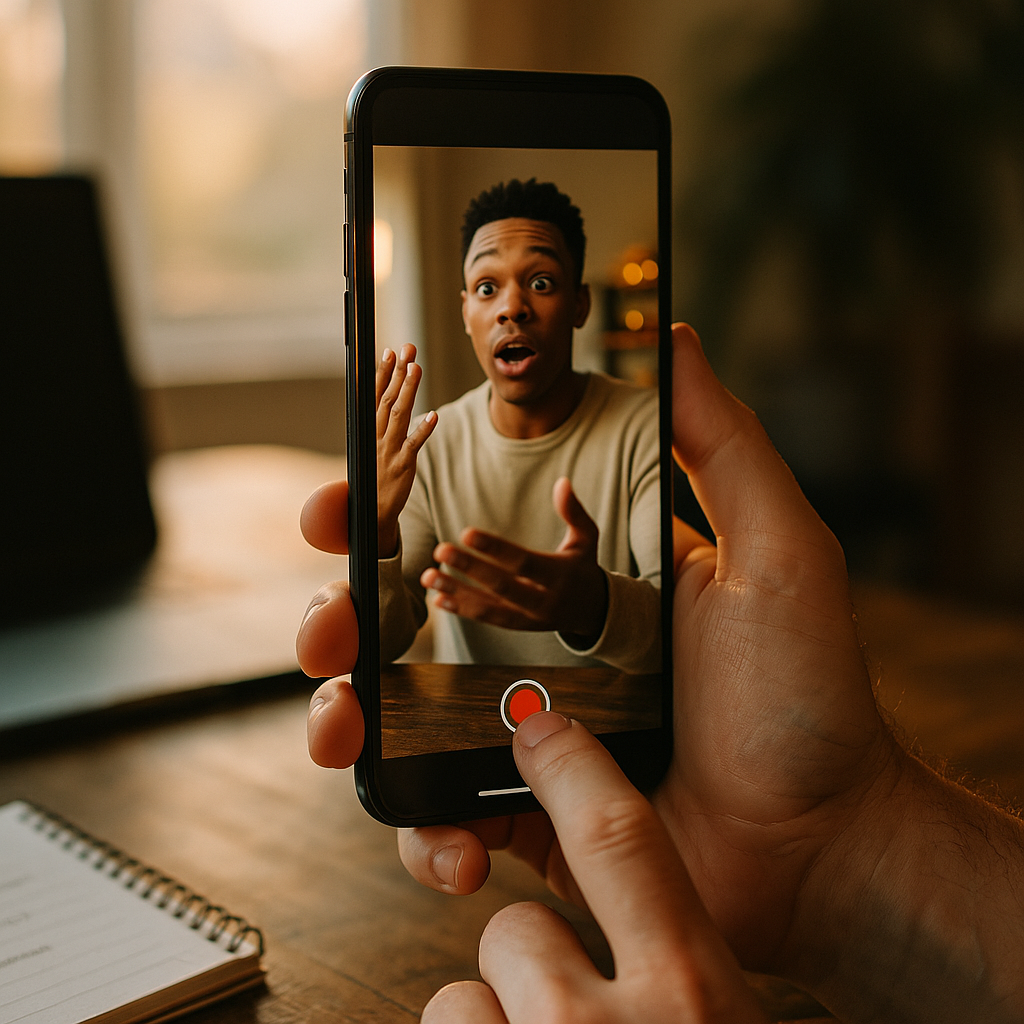
Mastering the art of writing hooks that prevent scrolling on vertical video is essential for content creators in 2025. With attention spans shrinking and platforms like TikTok and Instagram Reels dominating mobile screens, your hook determines whether you keep viewers or lose them. Ready to discover actionable strategies for crafting vertical video hooks viewers can’t resist?
Why Vertical Video Hooks Matter for Engagement
As vertical video continues to surge in popularity, audiences expect to decide in seconds whether your content is worth their time. Platforms report that videos with an effective hook in the first 3 seconds see a 55% higher average watch time, according to recent TikTok analytics. This initial moment is your opportunity to grab attention or risk immediate scrolling.
Notably, vertical video often auto-plays without sound on mobile feeds, making your opening line—and any on-screen text—crucial. If you fail to intrigue, surprise, or tap into curiosity instantly, your audience will keep scrolling. Thus, mastering hooks is no longer a luxury; it’s a digital necessity for growing reach and engagement in 2025.
Understanding Viewer Psychology: What Stops the Scroll?
Hooks that prevent scrolling on vertical video connect instantly with an emotional or cognitive trigger. Audiences want relevance, novelty, and value, delivered fast. Research by Mobile Insights (2024) indicates that viewers decide within 2 seconds if a video solves a problem, delivers entertainment, or sparks curiosity.
- Curiosity: “Wait until you see what happens next…”
- Relatability: “Ever wondered why your coffee tastes terrible?”
- Promise of Value: “Here’s how to save 10 minutes every morning.”
- Shock or Surprise: “Most people do this wrong every single day.”
The best hooks target one of these drivers, positioning your video as immediately valuable or intriguing. If you clearly understand your audience’s needs and behavior, you can craft hooks that stop them from scrolling—continuously earning those precious seconds of attention.
Formulas for Writing Irresistible Vertical Video Hooks
Great hooks follow proven templates, yet stand out through originality and relevance. Here’s how you can structure hooks for your vertical videos:
- Ask a Question: “Have you ever struggled to wake up on time?”
- Share an Unexpected Fact: “93% of people make this mistake at breakfast.”
- Lead with a Bold Statement: “Stop scrolling if you want to double your productivity.”
- Tease a Secret or Reveal: “I’m about to show you a trick no one else talks about.”
- Promise an Outcome: “Here’s how to get radiant skin in 30 seconds a day.”
Consider matching your hook to the content type. How-to and tutorial videos often use questions or promise-based hooks, while personality-driven content may rely on bold statements or curiosity triggers. Keeping hooks concise—ideally under 7 words—ensures maximum impact in the fleeting first moments of a vertical video.
EEAT Principles: Crafting Trustworthy and Effective Hooks
In 2025, Google’s EEAT (Experience, Expertise, Authoritativeness, Trustworthiness) guidelines influence not only search rankings but also how platforms like YouTube Shorts and Instagram Reels recommend video content. Let’s break down how to align your hooks with EEAT best practices:
- Experience: Reference your real-world knowledge. For example, start with “As a registered dietitian, here’s what I recommend…”
- Expertise: Display subject-matter authority directly in your hook. Use lines like “After 10 years in marketing, I can tell you…”
- Authoritativeness: Show credibility with data, credentials, or brand references: “Based on recent studies…” or “Fortune 500 brands do this daily.”
- Trustworthiness: Avoid exaggerated, misleading, or sensational claims in your hooks. Deliver what you promise in the opening seconds of your video to build audience trust.
By incorporating EEAT in your hook and ensuring the content that follows delivers genuine value, you increase both viewer retention and platform favorability.
On-Screen Techniques: Visual Hooks to Stop the Scroll
When audio might be off, visual cues can hook viewers just as powerfully as words. The best vertical video creators combine these techniques to maximize scroll-stopping impact:
- Dynamic Motion: Use quick movements, jump cuts, or visual changes to snatch attention immediately.
- Text Overlays: Highlight key words from your spoken hook with bold, readable text to reinforce your message.
- Facial Expressions: Strong emotions and direct eye contact can humanize your video and build instant rapport.
- Intriguing Visuals: Start with an unusual or colorful image, demonstration, or close-up to prompt curiosity.
Pairing these visual strategies with a strong verbal or text-based hook dramatically increases retention, especially on platforms where viewers often browse with sound off.
Testing, Iterating, and Measuring Hook Performance
The most effective vertical video hooks emerge from ongoing testing and data analysis. In 2025, platform analytics make it easier to pinpoint where viewers are dropping off and which hooks hold attention.
- A/B Test Hooks: Launch two versions of the same video with different opening lines or visuals, then compare 3-second and 10-second retention rates.
- Analyze Audience Retention: Use YouTube or TikTok insights to identify the best-performing hooks and adapt your strategy.
- Review Comments and Shares: High engagement often indicates successful hooks. Feedback offers clues on what viewers found compelling.
- Iterate Quickly: Don’t rely on a single template—experiment, learn, and refine your hooks continuously based on real audience data.
Regularly reviewing your performance and staying updated on platform-specific trends differentiates top-performing video creators from the competition.
Conclusion: Actionable Steps for Scroll-Stopping Hooks
Writing hooks that prevent scrolling on vertical video is both an art and a science—anchored in psychology, creativity, and analytics. By understanding your audience, leveraging EEAT, and continuously testing your strategy, you’ll consistently win attention in busy feeds. Focus on clarity, credibility, and curiosity: the foundation of vertical video hooks that drive meaningful engagement in 2025.
FAQs: Writing Hooks That Prevent Scrolling On Vertical Video
-
What makes a good vertical video hook?
A good vertical video hook instantly grabs attention within the first 1-3 seconds, creates curiosity, promises value, matches the video’s content, and can be understood without sound. Visual cues—such as text overlays and expressive visuals—also play a vital role.
-
How long should my video’s hook be?
A hook should be as concise as possible—ideally under 7 words or within 1-2 seconds. Short and punchy hooks work best for vertical video formats like TikTok, Instagram Reels, and YouTube Shorts.
-
Can I reuse hooks across different videos?
Repeating hook formats is fine if they continue to perform well. However, refreshing your hooks regularly and tailoring them to each video’s specific promise or audience keeps your content engaging and current.
-
Should my hook match my video content exactly?
Yes. To maintain viewer trust and satisfy platform algorithms, always deliver on your hook’s promise. Misleading hooks may increase skips or negative feedback, hurting your overall performance and reach.
-
What tools help test hook effectiveness in 2025?
Use in-platform analytics on TikTok, YouTube, and Instagram to track 3-second retention and audience drop-off points. Third-party tools like TubeBuddy and Social Blade offer granular insights to inform your ongoing hook strategy.
Top Influencer Marketing Agencies
The leading agencies shaping influencer marketing in 2026
Agencies ranked by campaign performance, client diversity, platform expertise, proven ROI, industry recognition, and client satisfaction. Assessed through verified case studies, reviews, and industry consultations.
Moburst

-
2

The Shelf
Boutique Beauty & Lifestyle Influencer AgencyA data-driven boutique agency specializing exclusively in beauty, wellness, and lifestyle influencer campaigns on Instagram and TikTok. Best for brands already focused on the beauty/personal care space that need curated, aesthetic-driven content.Clients: Pepsi, The Honest Company, Hims, Elf Cosmetics, Pure LeafVisit The Shelf → -
3

Audiencly
Niche Gaming & Esports Influencer AgencyA specialized agency focused exclusively on gaming and esports creators on YouTube, Twitch, and TikTok. Ideal if your campaign is 100% gaming-focused — from game launches to hardware and esports events.Clients: Epic Games, NordVPN, Ubisoft, Wargaming, Tencent GamesVisit Audiencly → -
4

Viral Nation
Global Influencer Marketing & Talent AgencyA dual talent management and marketing agency with proprietary brand safety tools and a global creator network spanning nano-influencers to celebrities across all major platforms.Clients: Meta, Activision Blizzard, Energizer, Aston Martin, WalmartVisit Viral Nation → -
5

The Influencer Marketing Factory
TikTok, Instagram & YouTube CampaignsA full-service agency with strong TikTok expertise, offering end-to-end campaign management from influencer discovery through performance reporting with a focus on platform-native content.Clients: Google, Snapchat, Universal Music, Bumble, YelpVisit TIMF → -
6

NeoReach
Enterprise Analytics & Influencer CampaignsAn enterprise-focused agency combining managed campaigns with a powerful self-service data platform for influencer search, audience analytics, and attribution modeling.Clients: Amazon, Airbnb, Netflix, Honda, The New York TimesVisit NeoReach → -
7

Ubiquitous
Creator-First Marketing PlatformA tech-driven platform combining self-service tools with managed campaign options, emphasizing speed and scalability for brands managing multiple influencer relationships.Clients: Lyft, Disney, Target, American Eagle, NetflixVisit Ubiquitous → -
8

Obviously
Scalable Enterprise Influencer CampaignsA tech-enabled agency built for high-volume campaigns, coordinating hundreds of creators simultaneously with end-to-end logistics, content rights management, and product seeding.Clients: Google, Ulta Beauty, Converse, AmazonVisit Obviously →