


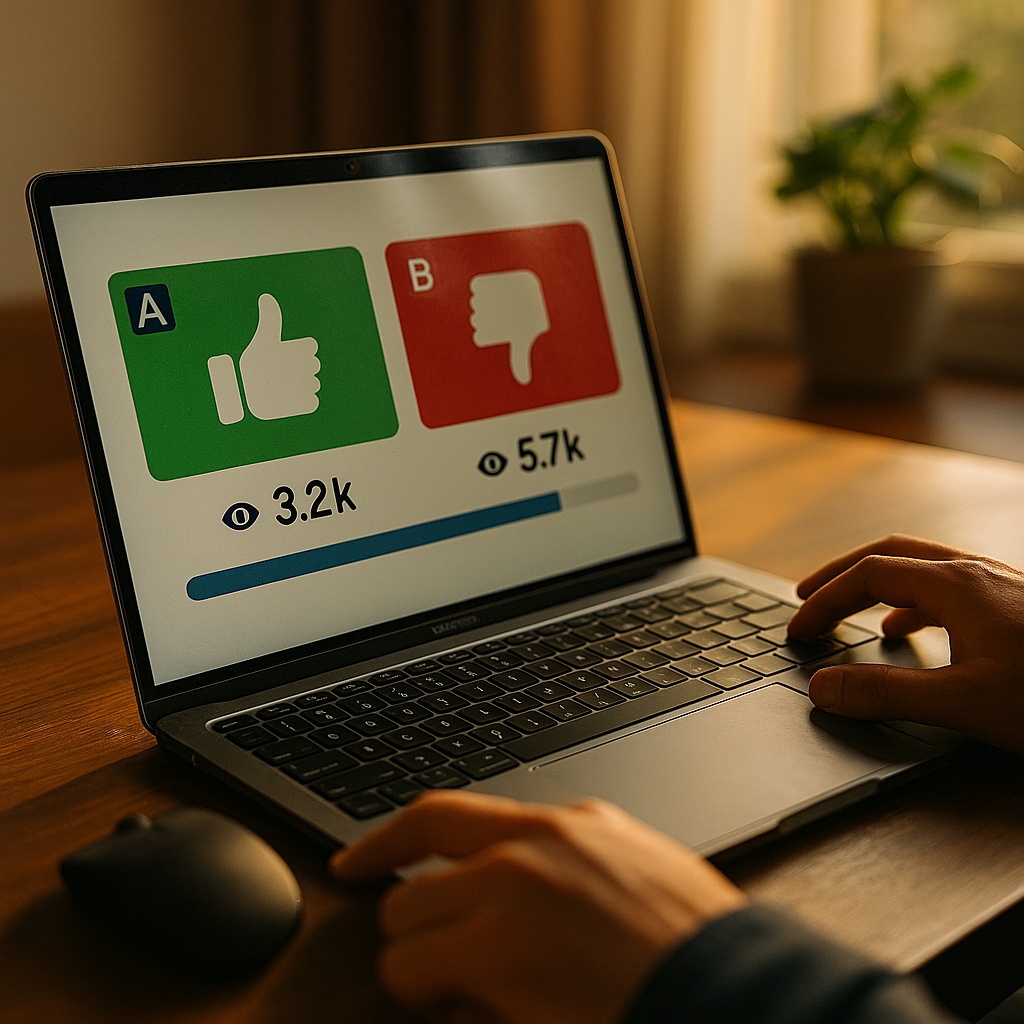
Thumbnail A/B testing is revolutionizing how creators and marketers optimize their visual click magnets. By carefully testing variations, brands gain insight into what makes people click. In a digital world where split-second choices matter, mastering this tactic can be the edge that propels content forward. What strategies truly boost your thumbnail click-through rate in 2025?
Understanding Thumbnail A/B Testing: The Science Behind First Impressions
Thumbnail A/B testing involves displaying two (or more) thumbnail variations to different audience segments to discover which garners more clicks. The goal is simple: boost your content’s click-through rate (CTR) by understanding what visually engages your audience. This data-driven approach removes guesswork, replacing it with empirical evidence about what makes people pause, consider, and ultimately click.
Recent WeAreSocial research (2025) found that 82% of online users make their watch-or-scroll decision almost instantly—often within two seconds. Thumbnails act as the gateway to your video or post, and testing them can reveal surprising insights about color use, facial expression, text overlays, and more.
Elements That Drive Clicks: Proven Winning Thumbnail Features
Through ongoing A/B testing, several thumbnail elements have consistently proven to influence user behavior. Understanding these features helps you create hypothesis-driven variations for testing. Here are the most influential factors:
- Contrasting Colors: Strong color contrast helps thumbnails stand out in crowded feeds.
- Facial Expressions: Thumbnails with close-up faces, especially those showing emotion, increase curiosity and engagement.
- Text Overlays: Concise, high-contrast text can clarify a video’s topic and entice targeted clicks.
- Visual Storytelling: Thumbnails that hint at a narrative or provoke questions evoke higher CTRs.
- Brand Consistency: Recognizable visual styles create trust and familiarity, encouraging returning clicks.
Strong research by YouTube’s Creator Insider confirms that subtle tweaks—like changing a facial expression or background color—can produce up to a 35% CTR swing. The key is intentional, data-driven experimentation.
Designing Effective Thumbnail A/B Tests in 2025: Best Practices
Modern A/B testing tools make it easy to compare thumbnail performance, but the quality of your insights depends on thoughtful experimental design. Here’s how to run a reliable thumbnail test:
- Formulate a Clear Hypothesis: Decide what you’re testing (e.g., “Smiling faces outperform neutral ones” or “Red backgrounds drive more clicks than blue”).
- Control Your Variables: Test one change at a time. Multiple simultaneous changes make it harder to isolate winning elements.
- Split Your Audience Randomly: Ensure your sample is statistically representative to avoid skewed results.
- Define Your Success Metrics: The primary metric is CTR, but session time and retention can provide deeper insight.
- Monitor for Statistical Significance: Use robust analytics to ensure your results aren’t due to chance. In 2025, most platforms report when tests reach significance.
- Iterate and Retest: Continual testing is essential, as audience preferences evolve and new competitors emerge.
Platforms like YouTube, Vimeo, and TikTok now offer built-in A/B thumbnail testing. Additionally, third-party tools cater to social media posts and e-commerce images, ensuring brands can fine-tune their visual first impressions across every channel.
Common Thumbnail Pitfalls: What to Avoid in A/B Testing
While A/B testing is powerful, certain missteps can undermine your results and even hurt your brand. Avoid these frequent mistakes:
- Bait-and-Switch Tactics: Using misleading thumbnails might spike CTR temporarily but damages viewer trust and can result in platform penalties.
- Overcrowded Designs: Cluttered thumbnails reduce clarity and can lower CTR. Simplicity aids in instant comprehension.
- Ignoring Mobile Trends: With over 74% of video consumption happening on mobile, test how thumbnails look on smaller screens.
- Over-testing Insignificant Differences: Minor tweaks (such as a slight font size change) rarely yield actionable insights unless they address a core user motivation.
- Neglecting Brand Guidelines: Inconsistent design can confuse loyal audiences and erode long-term engagement.
Remember, A/B testing is not about tricking the algorithm or viewer—it’s about learning what truly resonates, honestly and sustainably.
Interpreting Results: Data-Driven Decisions for Maximum Impact
Analyzing thumbnail test performance isn’t just about picking the winner. Deep dives into your results can reveal broader trends about your audience. For example, if emotion-driven thumbnails consistently win, consider applying similar visuals to other marketing assets. Conversely, if text overlays aren’t driving value, prioritize image-centric designs.
Leverage advanced analytics tools to segment data by device, age group, or geolocation. This multidimensional view can uncover niche audience preferences your competitors may miss in 2025’s crowded content landscape. Documenting test results further builds institutional knowledge, informing future creative strategy.
From Testing to Thriving: Evolving Your Thumbnail Strategy
Thumbnail A/B testing is not a one-off project; it’s an ongoing process aligned with your brand’s growth. As trends shift and new audience insights surface, maintain a pipeline of creative variations ready for testing. Connect your findings to broader campaigns, cross-platform branding, and even product launches. The best creators and brands use thumbnail insights to refine their messaging, nurture loyal audiences, and outpace rivals in attention-driven digital spaces.
Ultimately, the brands reaping the most benefit from thumbnail testing in 2025 are those who blend creativity, consistency, and rigorous analytics—turning fleeting impressions into lasting engagement.
FAQs: Thumbnail A/B Testing in 2025
-
What is thumbnail A/B testing?
Thumbnail A/B testing is a method where different thumbnail versions are shown to segments of an audience to determine which generates more clicks, allowing data-driven design improvements.
-
How long should I run a thumbnail A/B test?
Run tests until your sample size reaches statistical significance. On most platforms, this means a minimum of several thousand impressions per variant, but the platform can indicate when enough data has been collected.
-
Does A/B testing thumbnails affect video rankings?
Indirectly, yes. Higher CTRs can boost a video’s visibility and ranking within algorithms, but misleading thumbnails can harm watch time and reputation, resulting in negative consequences.
-
What tools can I use to A/B test thumbnails?
In 2025, platforms like YouTube and TikTok support native thumbnail testing. There are also third-party tools such as TubeBuddy and Vizard for extra segmentation and analysis needs.
-
Should I test the same thumbnails on all platforms?
No. Audience behavior varies by platform. Test and optimize thumbnails individually for each channel—what works on YouTube might not work on Instagram.
In summary, thumbnail A/B testing leverages objective data to maximize your content’s first impression and increase engagement. By carefully designing tests, analyzing results, and staying audience-focused, you’ll unlock actionable insights and, most importantly, get more clicks in 2025 and beyond.
Top Influencer Marketing Agencies
The leading agencies shaping influencer marketing in 2026
Agencies ranked by campaign performance, client diversity, platform expertise, proven ROI, industry recognition, and client satisfaction. Assessed through verified case studies, reviews, and industry consultations.
Moburst

-
2

The Shelf
Boutique Beauty & Lifestyle Influencer AgencyA data-driven boutique agency specializing exclusively in beauty, wellness, and lifestyle influencer campaigns on Instagram and TikTok. Best for brands already focused on the beauty/personal care space that need curated, aesthetic-driven content.Clients: Pepsi, The Honest Company, Hims, Elf Cosmetics, Pure LeafVisit The Shelf → -
3

Audiencly
Niche Gaming & Esports Influencer AgencyA specialized agency focused exclusively on gaming and esports creators on YouTube, Twitch, and TikTok. Ideal if your campaign is 100% gaming-focused — from game launches to hardware and esports events.Clients: Epic Games, NordVPN, Ubisoft, Wargaming, Tencent GamesVisit Audiencly → -
4

Viral Nation
Global Influencer Marketing & Talent AgencyA dual talent management and marketing agency with proprietary brand safety tools and a global creator network spanning nano-influencers to celebrities across all major platforms.Clients: Meta, Activision Blizzard, Energizer, Aston Martin, WalmartVisit Viral Nation → -
5

The Influencer Marketing Factory
TikTok, Instagram & YouTube CampaignsA full-service agency with strong TikTok expertise, offering end-to-end campaign management from influencer discovery through performance reporting with a focus on platform-native content.Clients: Google, Snapchat, Universal Music, Bumble, YelpVisit TIMF → -
6

NeoReach
Enterprise Analytics & Influencer CampaignsAn enterprise-focused agency combining managed campaigns with a powerful self-service data platform for influencer search, audience analytics, and attribution modeling.Clients: Amazon, Airbnb, Netflix, Honda, The New York TimesVisit NeoReach → -
7

Ubiquitous
Creator-First Marketing PlatformA tech-driven platform combining self-service tools with managed campaign options, emphasizing speed and scalability for brands managing multiple influencer relationships.Clients: Lyft, Disney, Target, American Eagle, NetflixVisit Ubiquitous → -
8

Obviously
Scalable Enterprise Influencer CampaignsA tech-enabled agency built for high-volume campaigns, coordinating hundreds of creators simultaneously with end-to-end logistics, content rights management, and product seeding.Clients: Google, Ulta Beauty, Converse, AmazonVisit Obviously →