


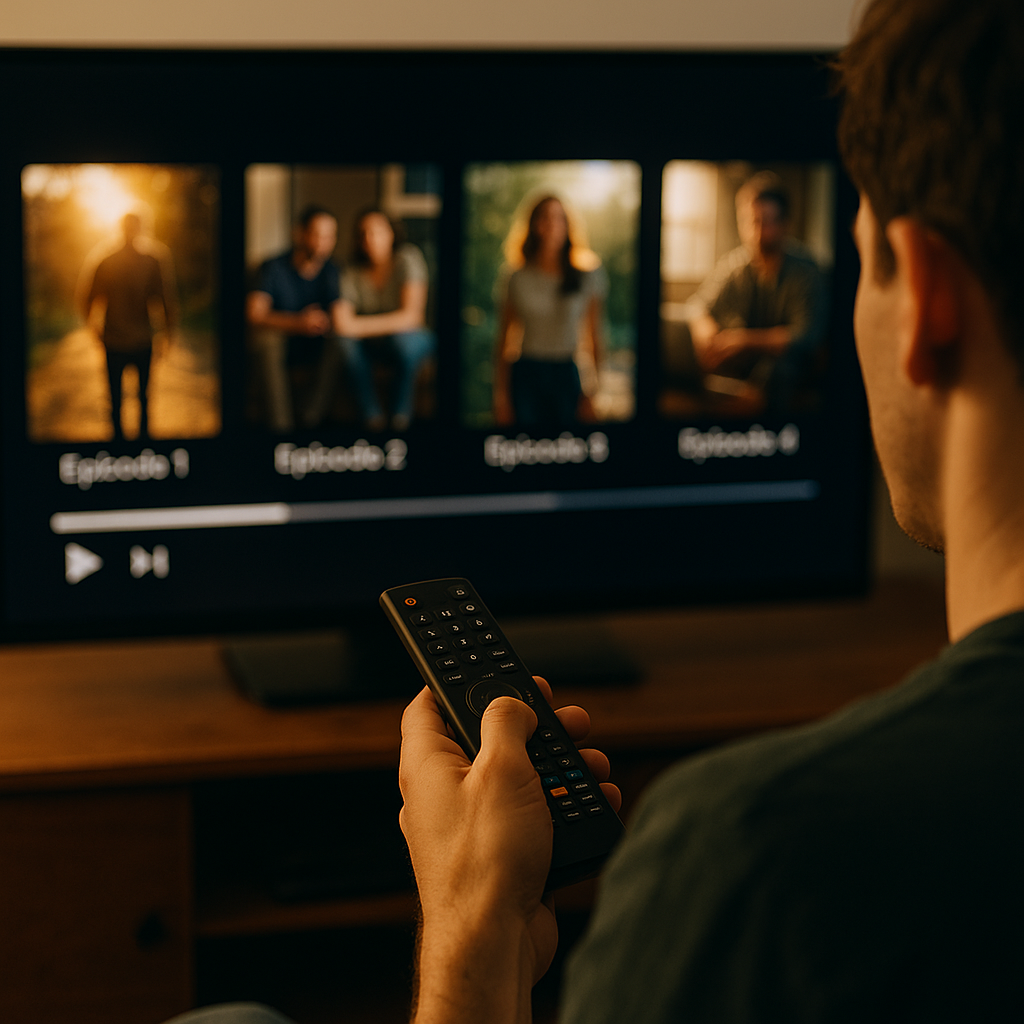
In 2025, creators and brands compete for attention in crowded feeds, but habits—not hype—drive lasting growth. The power of serialized video content lies in turning occasional viewers into regulars through structure, anticipation, and trust. When audiences know what to expect and when to expect it, they return on purpose. Here’s how to engineer that repeat behavior and keep people coming back.
Why serialized video builds audience retention better than one-offs
One-off videos can spike views, but they rarely create a routine. Serialization does, because it reduces decision fatigue and increases perceived value over time. Viewers don’t have to ask, “Is this worth my time?” They already know the format, tone, and payoff. That familiarity is a retention engine.
Serialized video also creates a clear mental “container.” People remember series names and episode arcs more easily than standalone titles. That memory advantage matters when your content competes with dozens of other options. As episodes accumulate, the backlog becomes an asset: new viewers can start at episode one, while existing viewers re-engage through reminders, clips, or recap episodes.
What this looks like in practice:
- Predictable format: same opening, segment order, and episode length window.
- Compounding value: each episode references prior lessons, building a knowledge “ladder.”
- Identity reinforcement: viewers begin to self-identify as “someone who watches this series.”
If you’re wondering whether series are only for entertainment, they aren’t. Tutorials, case studies, commentary, product education, and behind-the-scenes content all serialize well—especially when the viewer can anticipate a clear outcome.
Designing a repeatable content series that viewers follow
To build a series that people follow, you need an explicit promise and a repeatable mechanism for delivering it. The promise answers: “What will I consistently get here?” The mechanism answers: “How will each episode deliver that value in a familiar way?”
Start with a series promise statement: one sentence that defines the transformation or benefit. For example, “Every week, you’ll learn one practical way to improve your customer onboarding in under 10 minutes.” This promise is specific, measurable, and easy to test.
Then build a simple episode blueprint:
- Cold open (5–10 seconds): state the problem and why it matters.
- Core insight (60–180 seconds or more): teach, demonstrate, or analyze.
- Proof (optional but powerful): show a real example, result, or before/after.
- Action step: one thing viewers can do immediately.
- Next-episode setup: tease the next problem you’ll solve.
Choose a “season” structure: seasons create natural entry points, help you plan in batches, and make your series feel intentional. A season can be as short as 6 episodes or as long as 20, but it should have a theme and a finish line. Viewers like closure, and closure makes them more likely to start the next season.
Answer a common follow-up question: “Do I need high production?” No. Consistency beats polish for habit formation. Clean audio, clear visuals, and tight editing matter, but the series framework is what turns quality into routine.
Using episodic storytelling to create anticipation and momentum
Habit is emotional as much as it is logical. Episodic storytelling creates anticipation, and anticipation is what pulls viewers back without relying on constant novelty. The goal is not manipulation; it’s clarity and continuity. Viewers should feel like each episode is part of a meaningful journey.
Three storytelling tools that work across industries:
- Open loops: introduce a question early, then answer it later in the episode or in the next one. Example: “In a minute, I’ll show you the one onboarding email most teams forget.”
- Escalation: increase complexity over time. Start with fundamentals, then progress to advanced scenarios and edge cases.
- Recurring segments: a repeated feature builds familiarity. Think “Myth vs. Reality,” “Fix This,” or “One-Minute Audit.”
Keep the momentum honest: if you tease, deliver. Broken promises kill trust quickly. The fastest way to lose a long-term audience habit is to overhype outcomes, bury the payoff, or turn episodes into ads.
Make episodes modular: each video should stand on its own, but reward viewers who follow the sequence. That balance protects performance in recommendation systems while still strengthening series loyalty.
Optimizing viewer loyalty with cadence, formats, and distribution
Cadence is where strategy becomes behavior. If viewers can’t predict when you publish, they can’t build a routine around you. In 2025, many audiences follow creators across platforms, but they still rely on signals: schedule, consistency, and recognizable packaging.
Pick a cadence you can maintain for 12 weeks: weekly is a strong default for most teams. Twice weekly can work if your production system is mature. Daily can succeed for short-form, but only if you can keep quality and avoid burnout. A habit for your audience requires a habit for you.
Use a format stack: serialize the core show, then create supporting formats that funnel into it.
- Main episode: the primary value delivery (long-form or mid-form).
- Short clips: one idea per clip; link or point to the full episode/playlist.
- Recaps: “Season so far” videos lower the barrier for new viewers.
- Live Q&A: periodic sessions that strengthen community and clarify topics.
Distribution that builds habits: publish the series where the audience already expects longer attention (often YouTube, podcasts with video, or your site), then use short-form platforms for discovery. Always send viewers to a stable series hub: a playlist, a landing page, or a pinned post that explains where to start.
Answer a likely follow-up: “What if my audience is split across platforms?” Create one canonical home for the series (your playlist or page) and treat other platforms as entry points. Use consistent naming, thumbnails, and episode numbering everywhere so people recognize the series instantly.
Building trust with EEAT: expertise, proof, and transparency in every episode
Serialized video makes trust visible over time. That’s an advantage if you commit to EEAT: experience, expertise, authoritativeness, and trustworthiness. In a series, viewers notice patterns—both good and bad—so your standards must be consistent.
Show real experience: instead of speaking in generalities, demonstrate your process, share lessons from real projects, and discuss trade-offs. If you’re advising businesses, show anonymized examples, screen recordings, templates, or decision trees.
Back claims with credible sources: when you cite statistics or trends, reference reputable research bodies, established industry reports, or primary data. Keep it current and relevant, and avoid cherry-picking. If data is uncertain or contested, say so. Transparency increases credibility.
Make trust frictionless:
- State your role: who you are and why you’re qualified—briefly, consistently.
- Disclose conflicts: if an episode includes sponsorships or affiliate relationships, disclose clearly.
- Correct mistakes: publish clarifications and pin corrections when needed.
- Prioritize safety and accuracy: especially for health, finance, legal, or high-impact topics.
How EEAT connects to habits: habits form when viewers feel safe investing time. Each accurate, transparent episode lowers perceived risk and increases the likelihood they’ll return.
Measuring series performance and improving the habit loop
Serialization is not “set and forget.” To build long-term audience habits, measure whether people return, not just whether they click. In 2025, platforms offer deeper retention and returning-viewer insights, and your own site analytics can fill in gaps.
Track these signals:
- Returning viewers: growth here indicates habit formation.
- Episode-to-episode continuation: how many viewers watch multiple episodes in a session.
- Average view duration and completion rate: retention quality, not just reach.
- Playlist or series hub engagement: clicks into “Start here,” next-episode views, and saves.
- Subscription or follow conversion per episode: which topics earn commitment.
Run tight improvement cycles: make one change at a time and compare across a small set of episodes. Examples include adjusting cold opens, tightening intros, improving titles for clarity, or adding a stronger next-episode setup.
Don’t misread the data: a “lower view” episode can still be a habit builder if it has high completion and strong continuation into the next video. Series often produce steadier, more reliable performance over time, even if they’re less explosive than trend-chasing content.
Answer a common question: “When should I pivot?” Pivot if returning viewers stall for several weeks, if the promise no longer matches audience needs, or if production demands are unsustainable. Otherwise, refine. Habits take time to form, and consistency is part of the value.
FAQs about serialized video content and audience habits
What counts as serialized video content?
Any sequence of videos connected by a shared name, structure, or ongoing theme—often with episode numbers, recurring segments, or seasonal arcs. A series can be educational, entertainment-based, documentary-style, or product-focused.
How long should each episode be?
Choose a length that fits the promise and the platform. Short-form series can work if each episode delivers one clear takeaway. For deeper trust and expertise, many audiences prefer mid-form to long-form, but consistency and clarity matter more than duration.
How often should I publish a series?
Publish on a cadence you can maintain reliably for at least 12 weeks. Weekly is a strong baseline for most teams. If you publish more often, protect quality with templates, batching, and a clear production workflow.
Do I need episodes to be watched in order?
Not necessarily. The best approach is “standalone episodes with a sequence reward”: each video is useful by itself, but viewers who follow the order gain extra context, progression, and momentum.
How do I get new viewers to start the series?
Create a clear “Start Here” hub (playlist or landing page), produce recap episodes, and use short clips that highlight the series promise. Make episode titles benefit-driven and reduce jargon so first-time viewers immediately understand the value.
What’s the biggest mistake with serialized video?
Breaking trust through inconsistent publishing, unclear promises, or teasing outcomes without delivering. The series format amplifies both credibility and disappointment, so accuracy and follow-through are essential.
Serialized video turns attention into routine by combining consistency, anticipation, and trust. When you define a clear promise, publish on a reliable cadence, and link episodes into a journey, viewers return with intent—not by accident. Focus on retention and returning viewers, not just viral spikes. Build a series hub, refine with real analytics, and deliver honest value every episode.
Top Influencer Marketing Agencies
The leading agencies shaping influencer marketing in 2026
Agencies ranked by campaign performance, client diversity, platform expertise, proven ROI, industry recognition, and client satisfaction. Assessed through verified case studies, reviews, and industry consultations.
Moburst

-
2

The Shelf
Boutique Beauty & Lifestyle Influencer AgencyA data-driven boutique agency specializing exclusively in beauty, wellness, and lifestyle influencer campaigns on Instagram and TikTok. Best for brands already focused on the beauty/personal care space that need curated, aesthetic-driven content.Clients: Pepsi, The Honest Company, Hims, Elf Cosmetics, Pure LeafVisit The Shelf → -
3

Audiencly
Niche Gaming & Esports Influencer AgencyA specialized agency focused exclusively on gaming and esports creators on YouTube, Twitch, and TikTok. Ideal if your campaign is 100% gaming-focused — from game launches to hardware and esports events.Clients: Epic Games, NordVPN, Ubisoft, Wargaming, Tencent GamesVisit Audiencly → -
4

Viral Nation
Global Influencer Marketing & Talent AgencyA dual talent management and marketing agency with proprietary brand safety tools and a global creator network spanning nano-influencers to celebrities across all major platforms.Clients: Meta, Activision Blizzard, Energizer, Aston Martin, WalmartVisit Viral Nation → -
5

The Influencer Marketing Factory
TikTok, Instagram & YouTube CampaignsA full-service agency with strong TikTok expertise, offering end-to-end campaign management from influencer discovery through performance reporting with a focus on platform-native content.Clients: Google, Snapchat, Universal Music, Bumble, YelpVisit TIMF → -
6

NeoReach
Enterprise Analytics & Influencer CampaignsAn enterprise-focused agency combining managed campaigns with a powerful self-service data platform for influencer search, audience analytics, and attribution modeling.Clients: Amazon, Airbnb, Netflix, Honda, The New York TimesVisit NeoReach → -
7

Ubiquitous
Creator-First Marketing PlatformA tech-driven platform combining self-service tools with managed campaign options, emphasizing speed and scalability for brands managing multiple influencer relationships.Clients: Lyft, Disney, Target, American Eagle, NetflixVisit Ubiquitous → -
8

Obviously
Scalable Enterprise Influencer CampaignsA tech-enabled agency built for high-volume campaigns, coordinating hundreds of creators simultaneously with end-to-end logistics, content rights management, and product seeding.Clients: Google, Ulta Beauty, Converse, AmazonVisit Obviously →