


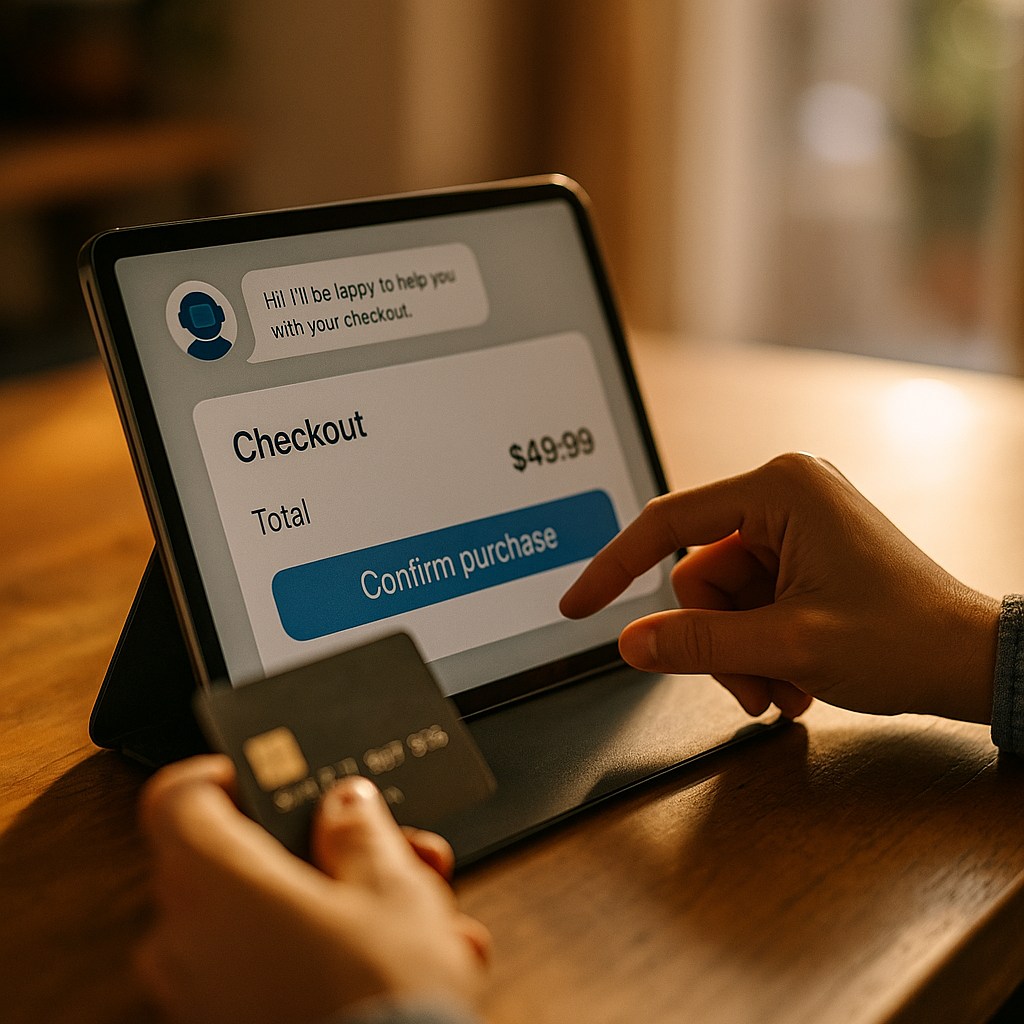
Writing Compelling Microcopy For Automated Agent-Driven Checkout is no longer a “nice to have” in 2025. As AI agents and scripted automations complete purchases on users’ behalf, your words become the guardrails that prevent confusion, abandonment, and support tickets. Great microcopy clarifies intent, reduces perceived risk, and keeps customers in control—especially when actions happen fast. Ready to make every character earn revenue?
Automated agent checkout microcopy: clarify intent and preserve control
Agent-driven checkout compresses decision-making into seconds. When an automated agent is choosing shipping speeds, applying discounts, or confirming payment details, customers need immediate clarity on three things: what is happening, why it is happening, and how to change it. Microcopy is the interface for trust.
Start by mapping the moments where users could feel “the system is doing something to me.” Those moments typically include: auto-filled addresses, automatic tax calculations, substitution of out-of-stock items, selecting a delivery window, and one-click payment confirmation. At each point, write microcopy that makes the agent’s role explicit and keeps the user as the final authority.
Use language that accurately describes agency. If the agent is recommending, say so. If the agent is executing, say so. Avoid vague phrases like “We’ve taken care of it” when what you mean is “Your agent selected the lowest-cost option based on your preferences.”
- Do: “Your agent applied the best eligible discount. Review before paying.”
- Do: “We’ll place the order after you confirm.”
- Don’t: “All set!” (when there are still choices or risks)
- Don’t: “Automatically confirmed” (without an obvious opt-out)
Answer likely follow-up questions directly in-line. For example, if an agent chooses a shipping option, include a short “Why this?” link-style phrase (in microcopy form) that explains the rationale: “Chosen because it matches your ‘arrive by Friday’ preference.” If a preference is missing, say that too: “No delivery preference set—using standard shipping.”
Checkout UX microcopy: reduce friction without hiding risk
Fast checkouts fail when speed masks cost, commitment, or constraints. Microcopy should reduce friction, not transparency. A practical rule: never let automation be the reason a user misunderstands price, timing, or cancellation terms.
In agent-driven flows, microcopy must “front-load” the highest-impact details while staying short. Focus on the big three: total cost, delivery timing, and what happens after confirmation. Then, use progressive disclosure for details like tax breakdowns and policy summaries.
Strong patterns for agent-driven checkout UX microcopy include:
- Price clarity: “Total includes tax and shipping. No added fees at payment.”
- Timing clarity: “Estimated delivery: Tue–Thu. We’ll notify you if it changes.”
- Commitment clarity: “You can cancel within 30 minutes after placing this order.”
- Inventory clarity: “Only 2 left. Your agent will not substitute without asking.”
When you must show risk, be precise and calm. Avoid alarmist language, but don’t soften facts into ambiguity. For example, if delivery is uncertain, write: “Delivery date may shift by 1–2 days during carrier delays.” This prevents the follow-up question “What does ‘may’ mean?” by quantifying the range.
Also, align microcopy to the user’s mental model of an “agent.” Users expect an agent to act on preferences. Therefore, when an agent makes a choice, include the preference used. When it cannot, explain the gap: “We couldn’t find a saved payment method—choose one to continue.” This reduces blame and keeps the flow moving.
AI agent trust messaging: make safety, privacy, and accountability legible
Trust in agent-driven checkout is not created by long policies; it is created by short, credible explanations at the moment trust is required. Your microcopy should demonstrate: capability (the agent can do the task), boundaries (what it will not do), and accountability (what happens if something goes wrong).
In 2025, customers are more aware of data use and automated decision-making. That means the safest approach is explicit, minimal, and verifiable microcopy:
- Privacy boundary: “Your agent uses your saved preferences to choose shipping. We don’t sell personal data.”
- Payment boundary: “Your agent can’t view full card details. Payments are tokenized.”
- Permission clarity: “You’re authorizing this purchase. The agent can’t place orders without confirmation.”
- Auditability: “View what changed: address, shipping, discounts.”
Make the system’s authority model obvious. If the agent is allowed to place orders under a spending cap, reflect that directly: “Agent approval limit: $150 per order. This order: $128.40.” If the order exceeds the limit, your microcopy should signal the required user step: “Over your agent limit—confirm to proceed.”
To follow EEAT expectations, write microcopy that is consistent across screens and matches actual behavior. If you claim “no substitutions,” ensure the system truly blocks substitutions unless the user opts in. Inconsistency is a trust debt that compounds quickly in automated flows.
Finally, provide a clear recovery path. People trust systems that can admit and fix errors. A concise line like “If something looks wrong, pause checkout and review details—nothing is charged until you confirm” answers the unspoken question: “How do I stay safe here?”
Cart and payment microcopy: prevent costly mistakes at the final decision
The final steps are where agent-driven checkout either feels magical or reckless. Microcopy at cart review and payment confirmation should be structured to prevent two expensive outcomes: unintended purchases and payment failures.
At cart review, focus microcopy on changes introduced by the agent and what the user should verify. A strong approach is to label “agent-chosen” fields so users can scan:
- Agent selected: “Shipping: Express (arrives by Fri)”
- Agent applied: “Discount: SAVE10 (–$12.00)”
- Agent noted: “One item low stock—confirm quantity”
At payment, users need one unmistakable sentence describing the action and outcome. Avoid cute button-adjacent copy. Use explicit, legally safe language:
- Primary confirmation line: “Confirm purchase. Your card will be charged $128.40.”
- If authorization only: “Confirm. We’ll authorize $128.40 now and capture when it ships.”
- If split payments: “Confirm. We’ll charge $60.00 today and $68.40 after delivery.”
Payment failures benefit from microcopy that is actionable, not accusatory. Replace “Payment failed” with a cause and next step where possible:
- Card declined: “Your bank declined this charge. Try another card or contact your bank.”
- Address mismatch: “Billing address doesn’t match your card. Update it to continue.”
- 3DS step: “Verify with your bank to finish checkout. This protects your account.”
Answer follow-up questions before they become drop-offs: “Will I be charged again?” “Did my order go through?” Add confirmation microcopy that includes a definitive status: “Order placed—no further action needed. Receipt sent to email.” If the status is pending: “Order pending—don’t refresh. We’re confirming payment.”
Error message microcopy: design for recovery, not blame
Automation increases edge cases: mismatched addresses, unavailable delivery slots, discount eligibility changes, and inventory shifts between agent selection and confirmation. When errors happen, users judge competence by how quickly they can recover.
Effective error message microcopy follows a simple structure:
- What happened (plain language, no codes)
- Why it happened (short, credible reason)
- What to do next (single best action)
- What the system did (so users don’t fear hidden changes)
Examples that work well in agent-driven checkout:
- Delivery slot gone: “That delivery window just filled up. Choose a new time—your cart is saved.”
- Price changed: “Price updated from $24.99 to $26.49 due to supplier change. Review and confirm.”
- Discount removed: “SAVE10 no longer applies to this item. We kept the best available discount.”
- Out of stock: “Item is out of stock. Your agent can suggest alternatives, or you can remove it.”
Notice the balance: the microcopy is transparent, it explains the agent’s response, and it offers control. Avoid forcing users into a single path when the agent could present options. Choice reduces support load and improves perceived fairness.
Also, write “safe interruption” microcopy for cases where the system must pause automation: “We paused your agent because this change affects cost. Please review before continuing.” This tells users the system is cautious on their behalf—an important trust signal.
A/B testing microcopy: measure what matters in agent-led conversion
Microcopy is measurable, but only if you test it against the right outcomes. In agent-driven checkout, optimize not only for conversion rate, but also for accuracy (fewer post-purchase corrections), confidence (lower abandonment at confirmation), and support deflection (fewer “where is my order” or “why was I charged” contacts).
Set up experiments around moments where language changes decisions:
- Confirmation phrasing: “Confirm purchase” vs “Place order” with explicit charge amount
- Agent rationale: Adding “Chosen because…” explanations for shipping or substitutions
- Risk disclosure: Quantified delivery uncertainty vs vague statements
- Policy microcopy: “Free returns within 30 days” positioned near commit point
To support EEAT and helpful content standards, document your assumptions and validate them with real behavior. If you claim “reduces errors,” track downstream metrics like cancellation rates, refund requests, and address-change tickets. Microcopy that drives short-term conversion but increases returns or chargebacks is not a win.
Practical guidance for tests:
- Test one variable per screen to isolate impact.
- Segment by user type: new vs returning users often need different reassurance.
- Include guardrail metrics: chargeback rate, cancellation rate, support contact rate.
- Prefer clarity over cleverness: if two versions convert similarly, keep the clearer one.
Finally, keep a microcopy system. Create a small library of approved phrases for agent actions (recommend, select, apply, pause, confirm) so your experience feels consistent. Consistency is a credibility multiplier in automated environments.
FAQs
What is microcopy in an automated agent-driven checkout?
Microcopy is the short, functional text that guides users through agent-led actions—like shipping selection, discount application, identity checks, and payment confirmation. In agent-driven checkout, microcopy also explains what the agent did, why it did it, and how the user can override it.
How do I make agent actions feel trustworthy without adding long explanations?
Use brief “because” statements tied to user preferences (for example, “Chosen because it matches your ‘fastest delivery’ setting”), label agent-made changes, and state boundaries (“No substitutions without approval”). Keep details available through expandable explanations, but make the key rationale visible.
Where should the most important microcopy appear in the checkout flow?
Place the most critical microcopy at decision points: when the agent changes price or timing, at cart review, and directly next to the final confirmation action. Users need cost, delivery expectations, and commitment terms before they commit—not after.
What wording reduces accidental purchases in one-click or agent-led checkout?
Use explicit confirmation text that includes the outcome and amount: “Confirm purchase. Your card will be charged $128.40.” Also clarify whether the payment is an authorization or a capture, and state “Nothing is charged until you confirm” when true.
How do I write better error messages for automated checkout?
State what happened, why, what to do next, and what the system preserved. For example: “That delivery window filled up. Choose a new time—your cart is saved.” This approach reduces anxiety and helps users recover quickly.
What metrics should I track to evaluate checkout microcopy changes?
Track conversion rate, abandonment at the confirmation step, time to complete checkout, payment failure recovery rate, cancellations, refunds, chargebacks, and support contacts tied to checkout confusion. Good microcopy improves both conversion and post-purchase outcomes.
Compelling microcopy in agent-driven checkout succeeds when it makes automation legible, safe, and reversible. In 2025, customers accept fast AI-assisted purchasing, but they still demand control, price clarity, and honest boundaries. Label agent actions, explain key choices in a few words, and design every error message for recovery. Your takeaway: write microcopy that protects users first—revenue follows.
Top Influencer Marketing Agencies
The leading agencies shaping influencer marketing in 2026
Agencies ranked by campaign performance, client diversity, platform expertise, proven ROI, industry recognition, and client satisfaction. Assessed through verified case studies, reviews, and industry consultations.
Moburst

-
2

The Shelf
Boutique Beauty & Lifestyle Influencer AgencyA data-driven boutique agency specializing exclusively in beauty, wellness, and lifestyle influencer campaigns on Instagram and TikTok. Best for brands already focused on the beauty/personal care space that need curated, aesthetic-driven content.Clients: Pepsi, The Honest Company, Hims, Elf Cosmetics, Pure LeafVisit The Shelf → -
3

Audiencly
Niche Gaming & Esports Influencer AgencyA specialized agency focused exclusively on gaming and esports creators on YouTube, Twitch, and TikTok. Ideal if your campaign is 100% gaming-focused — from game launches to hardware and esports events.Clients: Epic Games, NordVPN, Ubisoft, Wargaming, Tencent GamesVisit Audiencly → -
4

Viral Nation
Global Influencer Marketing & Talent AgencyA dual talent management and marketing agency with proprietary brand safety tools and a global creator network spanning nano-influencers to celebrities across all major platforms.Clients: Meta, Activision Blizzard, Energizer, Aston Martin, WalmartVisit Viral Nation → -
5

The Influencer Marketing Factory
TikTok, Instagram & YouTube CampaignsA full-service agency with strong TikTok expertise, offering end-to-end campaign management from influencer discovery through performance reporting with a focus on platform-native content.Clients: Google, Snapchat, Universal Music, Bumble, YelpVisit TIMF → -
6

NeoReach
Enterprise Analytics & Influencer CampaignsAn enterprise-focused agency combining managed campaigns with a powerful self-service data platform for influencer search, audience analytics, and attribution modeling.Clients: Amazon, Airbnb, Netflix, Honda, The New York TimesVisit NeoReach → -
7

Ubiquitous
Creator-First Marketing PlatformA tech-driven platform combining self-service tools with managed campaign options, emphasizing speed and scalability for brands managing multiple influencer relationships.Clients: Lyft, Disney, Target, American Eagle, NetflixVisit Ubiquitous → -
8

Obviously
Scalable Enterprise Influencer CampaignsA tech-enabled agency built for high-volume campaigns, coordinating hundreds of creators simultaneously with end-to-end logistics, content rights management, and product seeding.Clients: Google, Ulta Beauty, Converse, AmazonVisit Obviously →