


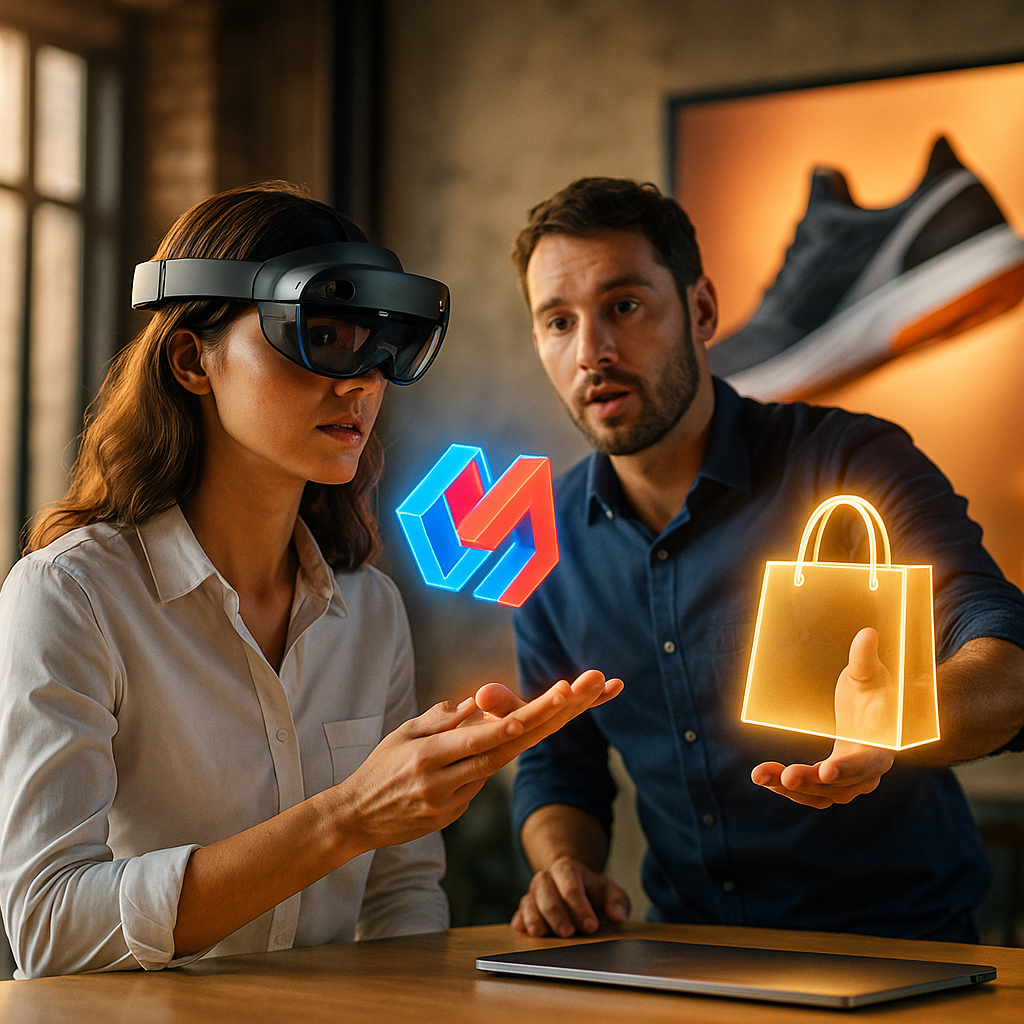
Designing Immersive Experiences For Mixed Reality Brand Activations has moved from experimental to expected in 2025, as audiences demand participation, not passive viewing. The strongest activations blend story, spatial design, and measurable outcomes—without sacrificing privacy or accessibility. This guide breaks down what to plan, what to build, and how to prove value across channels. Ready to turn attention into action?
Mixed reality brand activations: set strategy, audience, and objectives
Immersive work succeeds when it serves a clear brand job. Before choosing devices, engines, or visual styles, define the activation’s purpose in one sentence: What belief should change, and what action should follow? In practice, mixed reality brand activations typically aim to achieve one of three outcomes:
- Demand creation: introduce a new product, prove a claim, or drive trial through interactive demonstration.
- Brand reappraisal: reposition the brand by letting people experience values (craft, sustainability, performance) rather than reading about them.
- Conversion support: reduce purchase friction with guided configuration, fit/space visualization, or “see it in context” features.
Translate that purpose into measurable objectives. Use a simple ladder:
- Experience metric: dwell time, completion rate, repeat interactions, or percentage reaching the “moment of truth.”
- Brand metric: message recall, product understanding, preference shift, or intent lift from an on-site micro-survey.
- Business metric: email/SMS opt-ins, coupon redemptions, add-to-cart, qualified leads, or in-store uplift tied to a time window.
Segment your audience based on comfort with novel tech. Build for at least two modes: guided (staffed, frictionless onboarding) and self-serve (clear prompts, short loops, no explanation required). If the activation is in a public venue, assume 20–40% of participants will engage for under two minutes. Design a “fast path” experience that still lands the core message.
Finally, define success constraints early: allowable footprint, network availability, safety requirements, staffing levels, and the brand’s data policy. These constraints sharpen creative decisions and prevent late-stage compromises.
Immersive storytelling: design the narrative, interactions, and emotional arc
Mixed reality is not a video with extra steps. It works when narrative and interaction are inseparable. Start with a single experiential promise: “You will feel X and understand Y in under Z minutes.” Then structure the journey as a sequence of interactive beats:
- Hook (10–20 seconds): a surprising reveal in the physical space or on the device that signals “this is for me.”
- Orientation (20–40 seconds): teach one interaction pattern (tap, gaze + pinch, gesture, or phone movement). Keep it consistent.
- Agency moment (60–120 seconds): the user makes a meaningful choice (configure, compare, solve, collect) tied to the product’s value.
- Proof moment (30–90 seconds): a “show, don’t tell” demonstration: materials, performance, sustainability impact, or behind-the-scenes craft.
- Social payoff (15–30 seconds): a photo/video capture or shareable artifact that looks good without heavy editing.
- Conversion bridge (10–20 seconds): a clear next step: sample, scan, redeem, book, or buy.
Design interactions that communicate brand meaning. If the claim is “precision,” use interactions that feel exact and responsive. If the claim is “play,” allow discovery and remixing. Avoid interaction overload. One strong mechanic executed flawlessly beats five half-working gimmicks.
Answer common user questions inside the flow. For example, when someone places a 3D product in their environment, prompt: “Want to see it in a smaller size?” or “Compare finishes?” When they complete a challenge, reveal: “Here’s what changed and why it matters.” You reduce staff dependence and increase completion rates.
Build for shared experiences. People attend activations in groups, so include spectator-friendly visuals on a large display, mirrored device output, or a physical set element that reacts to the participant’s progress. That social layer increases organic reach and makes the space feel alive.
Spatial computing design: create believable environments and intuitive UX
Immersion breaks the moment the experience feels misaligned with reality. Spatial computing design is the craft of making digital content behave like it belongs in the physical world. Prioritize these fundamentals:
- Anchoring and scale: lock content to real surfaces with correct size references (door frames, tables, product props). Provide a “re-center” action that always works.
- Lighting and material cues: approximate venue lighting so digital objects don’t look pasted on. Use softer shadows rather than hyper-realism if conditions vary.
- Occlusion and depth: when possible, let real objects partially block digital ones. If that’s not reliable, design scenes that don’t require perfect occlusion.
- Comfort and motion: avoid rapid camera movement and intense parallax. Keep interaction zones within comfortable reach and clear line of sight.
- Audio placement: use directional audio to guide attention, but include captions or visual cues for noisy venues.
Mixed reality UX must be legible at a glance. Use environment-first UI: instructions appear near the object of focus, not as floating menus that compete with the scene. Keep copy short, action-driven, and local: “Place,” “Rotate,” “Compare,” “Collect.”
Plan for real-world chaos. Venues have glare, crowds, uneven floors, and inconsistent connectivity. Design resilient states:
- Offline-safe mode: core experience runs locally; network enables enhancements (leaderboards, personalization) rather than being required.
- Recovery states: if tracking fails, show a clear “Hold still and point at the marker” prompt rather than generic error text.
- Timeboxing: build an experience loop that feels complete in 90–180 seconds, with optional depth for those who stay longer.
Accessibility is part of immersion. Provide seated-compatible interactions, high-contrast text, avoid color-only cues, include audio alternatives, and keep gesture requirements simple. In 2025, brands are judged on inclusivity as much as spectacle.
MR hardware and software: choose platforms, pipelines, and production workflow
Platform choice shapes reach, cost, and reliability. Start from the deployment context:
- Phone-based AR: best for scale and low friction. Ideal for retail, street-level pop-ups, and campaigns that extend beyond the event via QR codes.
- Headset-based MR: best for premium immersion, complex spatial scenes, and controlled throughput. Ideal for flagship events, trade shows, and VIP demos.
- Hybrid setups: combine a headset “hero moment” with a phone-based takeaway that participants can revisit later.
In production, prevent late surprises by locking these decisions early:
- Content budget and performance targets: polygon counts, texture sizes, frame rate goals, and device minimum specs.
- Tracking approach: marker-based, spatial anchors, or environment mapping. Each has tradeoffs in setup time and robustness.
- Venue scanning and testing: capture reference photos, lighting conditions, and key surfaces. Run on-site tests under actual crowd lighting.
- Asset pipeline: define how product CAD becomes optimized real-time assets (retopology, baking, material simplification) with brand-approved look-dev.
Protect the brand with operational discipline. Use a show-ready build that is separate from experimental features. Maintain version control, a rollback plan, and device management (charging, cleaning, pairing, spare units). If you rely on staff, script onboarding in under 15 seconds: what to say, what to do if tracking fails, and how to move participants through safely.
Integrate the activation into the broader campaign. Provide consistent naming, visuals, and offers across OOH, social, CRM, and retail signage. The MR moment should feel like a chapter in a story, not an isolated tech demo.
Experience analytics: measure engagement, brand lift, and ROI
Immersive activations are only “creative” until someone asks what worked. Measurement planning should start alongside concepting so events are instrumented by design, not retrofitted.
Track three layers of analytics:
- Behavioral telemetry: session starts, time-in-experience, step completions, interaction counts, drop-off points, and replay rate.
- Qualitative signals: short intercept surveys, open-text feedback, and staff notes on confusion points or repeated questions.
- Outcome signals: QR scans to product pages, coupon or offer redemptions, booked demos, lead forms, or POS-linked uplift where available.
Answer the questions stakeholders will ask:
- Was it engaging? Look for high completion rates and repeatable “moment of truth” reach, not just average dwell time.
- Did it change perception? Use a two-question micro-survey: “What is the brand claim?” and “How confident are you?” asked before and after when feasible.
- Did it drive action? Tie a unique offer or URL parameter to the activation. If it’s in-store, coordinate with retail teams to watch for correlated lift.
Respect privacy while still learning. Use aggregated analytics by default, disclose what you collect in plain language, and avoid collecting sensitive biometrics unless absolutely necessary and explicitly consented. In 2025, trust is a performance variable: participants abandon experiences that feel intrusive.
Convert insights into iteration. If drop-off spikes at a specific step, simplify that interaction. If the top feedback is “I didn’t know what to do,” improve onboarding cues. If the share rate is low, adjust capture framing, lighting, or add a “hero pose” moment.
Brand safety and privacy: build trust, accessibility, and compliant operations
Mixed reality places brands inside people’s environments and bodies’ attention. That power requires careful brand safety and governance. Put safeguards in place across content, data, and physical operations.
Content safety starts with scenario planning. Consider what happens if the venue is crowded, a user is short/tall, lighting changes, or a child participates. Avoid jump scares and intense flashes unless you have clear warnings and a controlled space. Provide an easy exit and a visible staff member or help prompt.
Data practices should follow a “minimum necessary” principle:
- Collect only what supports defined objectives.
- Use explicit, readable consent for any personalization or contact capture.
- Keep retention periods short and documented.
- Ensure vendors and platforms meet your security standards.
Accessibility and inclusion are non-negotiable. Offer alternatives for participants who cannot or prefer not to use a headset. Provide subtitles for audio content, avoid rapid gesture demands, and make key information available visually and verbally. Train staff to assist without taking control away from the participant.
Operational safety matters in live environments. Create a floor plan that prevents collisions, manage headset hygiene, and set throughput expectations to avoid long queues. If wait time exceeds a few minutes, use pre-engagement elements (physical product touchpoints, short teaser content, or a mini-challenge) so the line still feels like part of the experience.
These practices strengthen EEAT signals: expertise in execution, authoritative governance, and trust through transparency.
FAQs
What makes a mixed reality brand activation “immersive” instead of just interactive?
It feels spatially believable, responds instantly to the participant, and connects interaction to a brand meaning. Immersion comes from coherent sensory cues (visual, audio, physical set) and a clear role for the participant, not from adding more effects.
How long should an MR activation experience be at an event?
Design a complete loop in 90–180 seconds for high-traffic venues, with optional deeper layers for those who stay. This protects throughput while still delivering a memorable “proof moment” and a clear next step.
Should we use phones or headsets for brand activations in 2025?
Use phones for scale, low friction, and easy post-event continuation. Use headsets for premium immersion and controlled storytelling. Many brands succeed with a hybrid approach: a headset hero moment plus a phone-based takeaway that drives conversion later.
How do you measure ROI for immersive experiences?
Combine telemetry (completion and drop-off), brand lift signals (short recall or understanding questions), and outcomes (unique QR/URL conversions, offers, lead capture, bookings, or POS-linked uplift). Define these metrics before production so instrumentation is reliable.
What are common reasons MR activations fail?
Unclear objectives, confusing onboarding, unstable tracking in real venues, overcomplicated interactions, and no measurement plan. Operational issues—like long queues, insufficient staff training, or poor hygiene protocols—also reduce participation and brand trust.
How do we keep MR activations privacy-safe?
Collect the minimum data needed, explain it in plain language, use explicit consent for contact capture or personalization, store data securely with limited retention, and avoid sensitive biometric collection unless essential and clearly consented.
Immersive MR activations win in 2025 when they pair creative ambition with operational discipline. Define a measurable objective, design a short but meaningful interaction arc, and build spatial UX that survives real venues. Choose platforms based on reach and reliability, then instrument analytics from day one. The takeaway: treat mixed reality as a product experience with standards, not a one-off stunt.
Top Influencer Marketing Agencies
The leading agencies shaping influencer marketing in 2026
Agencies ranked by campaign performance, client diversity, platform expertise, proven ROI, industry recognition, and client satisfaction. Assessed through verified case studies, reviews, and industry consultations.
Moburst

-
2

The Shelf
Boutique Beauty & Lifestyle Influencer AgencyA data-driven boutique agency specializing exclusively in beauty, wellness, and lifestyle influencer campaigns on Instagram and TikTok. Best for brands already focused on the beauty/personal care space that need curated, aesthetic-driven content.Clients: Pepsi, The Honest Company, Hims, Elf Cosmetics, Pure LeafVisit The Shelf → -
3

Audiencly
Niche Gaming & Esports Influencer AgencyA specialized agency focused exclusively on gaming and esports creators on YouTube, Twitch, and TikTok. Ideal if your campaign is 100% gaming-focused — from game launches to hardware and esports events.Clients: Epic Games, NordVPN, Ubisoft, Wargaming, Tencent GamesVisit Audiencly → -
4

Viral Nation
Global Influencer Marketing & Talent AgencyA dual talent management and marketing agency with proprietary brand safety tools and a global creator network spanning nano-influencers to celebrities across all major platforms.Clients: Meta, Activision Blizzard, Energizer, Aston Martin, WalmartVisit Viral Nation → -
5

The Influencer Marketing Factory
TikTok, Instagram & YouTube CampaignsA full-service agency with strong TikTok expertise, offering end-to-end campaign management from influencer discovery through performance reporting with a focus on platform-native content.Clients: Google, Snapchat, Universal Music, Bumble, YelpVisit TIMF → -
6

NeoReach
Enterprise Analytics & Influencer CampaignsAn enterprise-focused agency combining managed campaigns with a powerful self-service data platform for influencer search, audience analytics, and attribution modeling.Clients: Amazon, Airbnb, Netflix, Honda, The New York TimesVisit NeoReach → -
7

Ubiquitous
Creator-First Marketing PlatformA tech-driven platform combining self-service tools with managed campaign options, emphasizing speed and scalability for brands managing multiple influencer relationships.Clients: Lyft, Disney, Target, American Eagle, NetflixVisit Ubiquitous → -
8

Obviously
Scalable Enterprise Influencer CampaignsA tech-enabled agency built for high-volume campaigns, coordinating hundreds of creators simultaneously with end-to-end logistics, content rights management, and product seeding.Clients: Google, Ulta Beauty, Converse, AmazonVisit Obviously →