


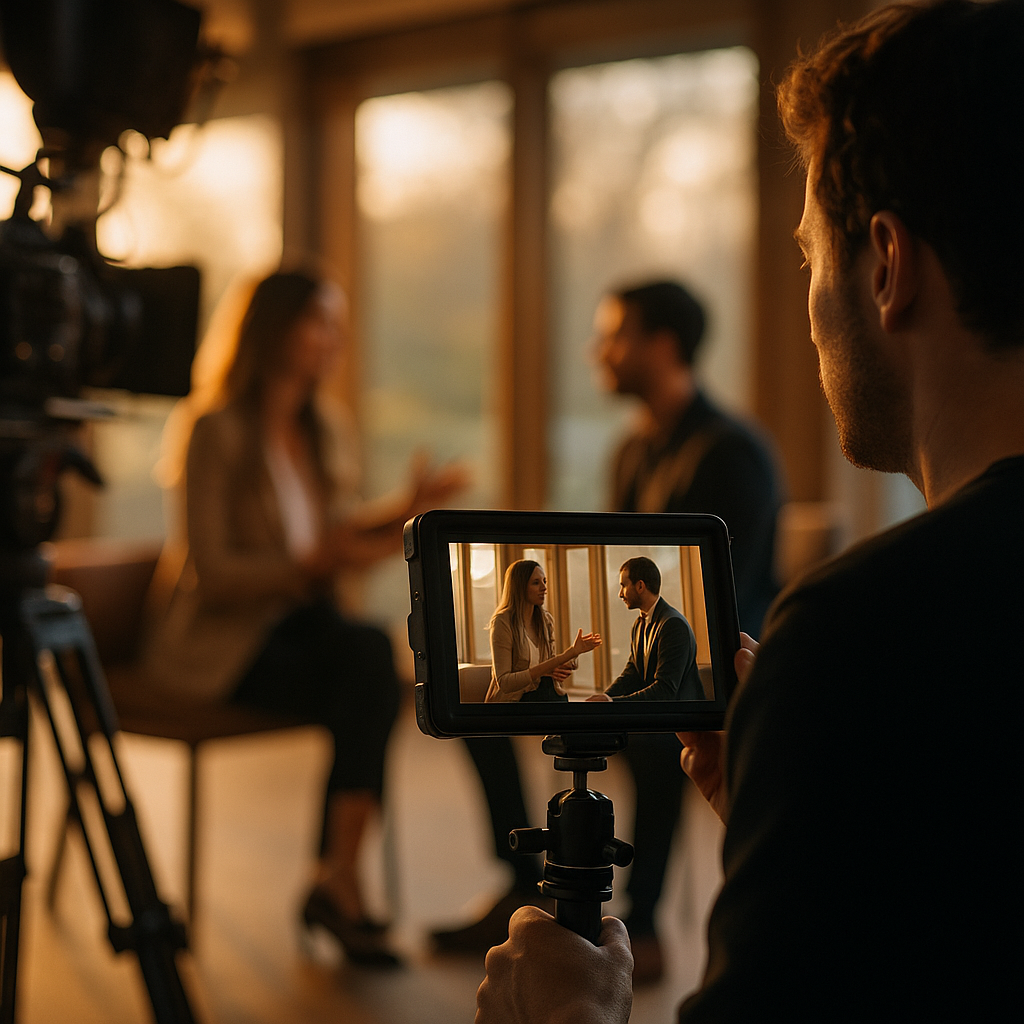
In 2025, audiences scroll fast and trust slow. The brands that earn attention don’t shout features; they invite people into meaning. The Art Of The Cinematic Brand Story helps marketers move beyond 15-second persuasion and toward narrative experiences that feel worth watching. This article breaks down how cinematic storytelling works, what it demands, and how to measure it—before your next campaign becomes skippable.
Why Cinematic Storytelling Works: cinematic brand storytelling
Cinematic brand storytelling succeeds because it aligns with how people actually process information: through emotion, pattern, and memory. Traditional commercials often start with the product and end with a claim. A cinematic approach starts with a human truth and earns the product’s presence by making it relevant to the story’s stakes.
In practice, “cinematic” isn’t only about glossy visuals. It’s a discipline of narrative clarity and emotional pacing. It uses character, tension, and resolution to create meaning. When done well, the viewer feels like they discovered the brand rather than being sold to.
If you’re wondering whether this is only for big budgets, it isn’t. The core advantage comes from story design, not camera cost. A small brand can be cinematic by being intentional about framing, rhythm, sound, and—most importantly—what the audience is meant to feel and remember.
To judge whether your idea is truly cinematic, ask:
- Is there a character with a goal? If not, you likely have a montage, not a story.
- Is there conflict or friction? Without it, viewers have no reason to stay.
- Is there transformation? If nothing changes, nothing sticks.
- Does the brand play a meaningful role? Product placement without purpose erodes trust.
From Product Claims to Plot: brand narrative
Moving beyond traditional commercials means shifting from “what we sell” to “why this matters in someone’s life.” That shift starts with a brand narrative that is specific enough to guide creative decisions and broad enough to hold many stories.
A practical way to build a usable brand narrative is to define four elements:
- Audience tension: the problem people feel, not just the category problem you want to own.
- Belief: the worldview your brand stands for (a point of view, not a slogan).
- Promise: how life is better when the belief is lived (an outcome, not a feature).
- Proof: what you can show, demonstrate, or document to earn credibility.
Then translate those elements into a plot framework. You don’t need to copy film formulas, but you do need structure. A reliable structure for brand films is:
- Setup: establish a relatable moment quickly—where we are and what matters.
- Inciting incident: introduce a change, pressure, or choice.
- Escalation: show effort, setbacks, or doubt—this is where authenticity lives.
- Resolution: deliver meaning, not just a win; the brand supports the resolution.
- Afterglow: a quiet beat that lets the message land without explaining it.
Readers often ask, “Where should the product appear?” Put it where it naturally belongs in the character’s journey: when it helps, when it symbolizes a value, or when it removes friction. If it’s on-screen only because legal or sales wants it, the audience will feel the intrusion.
Production Craft That Signals Trust: cinematic video production
Craft matters because viewers use it as a shortcut for credibility. But craft isn’t about expensive toys; it’s about consistency and intention. In 2025, audiences are fluent in video language—lighting, editing, sound design, and performance all communicate whether a brand is careful, truthful, and worth believing.
Focus on the craft elements that most influence perception:
- Sound first: Dialogue clarity, ambient texture, and music choices shape emotion more than resolution ever will.
- Controlled pacing: Don’t cut every two seconds. Let moments breathe when you want the viewer to feel.
- Natural performance: Cast for believability, not perfection. Realistic behavior beats “ad acting.”
- Visual storytelling: Show decisions, not declarations. A look, a pause, a gesture can replace a line of copy.
- Brand restraint: Minimal logo time often increases recall because the story earns it.
To meet EEAT expectations, make your story verifiable. If you imply outcomes—health, money, safety, performance—support them with clear proof points, on-screen qualifiers, or an easy path to details. Viewers reward transparency because it respects their intelligence.
Also plan accessibility from the start: accurate captions, readable supers, and audio mix that works on phones. Accessibility isn’t only compliance—it expands reach and improves comprehension, which improves results.
Distribution That Keeps the Story Intact: branded content strategy
Even a great film fails if the rollout treats it like a standard ad. Cinematic work needs a distribution plan that protects narrative coherence while adapting to platforms. The goal is to let people enter the story at different points without losing the emotional thread.
Build a content ecosystem around one “hero” film:
- Hero: the full story (60–180 seconds, sometimes longer if the story earns it).
- Trailers: 15–30 seconds that introduce the tension and hold back the resolution.
- Character cuts: short scenes that deepen one person’s stakes; ideal for social.
- Behind-the-scenes proof: real process, real creators, real constraints; this boosts trust.
- Interactive extensions: landing pages, quizzes, creator commentary, or product “in-story” explainers.
Creators and partnerships can strengthen authenticity when aligned with your narrative. Choose collaborators who already speak to the audience tension you’re portraying. Brief them on the belief and the emotional destination, not just talking points.
If you’re thinking, “Won’t this hurt conversion?” It shouldn’t—if your funnel is designed for it. Let the film build desire and trust, then provide a clean next step: a product page that mirrors the story’s promise, a limited offer tied to the narrative, or a guided path to the right choice. Cinematic doesn’t replace performance marketing; it improves the top and middle of the funnel so performance has warmer demand to capture.
Measuring What Matters: brand film ROI
Cinematic work must be measured differently than direct-response ads, but it should still be accountable. The mistake is judging a story solely on last-click metrics. The better approach is a layered measurement model that tracks attention, sentiment, brand lift, and downstream action.
Use a three-tier scorecard:
- Attention quality: view-through rate by second, average watch time, replays, shares, and saves. Look for “holds” at key emotional beats.
- Brand impact: ad recall, brand search lift, direct traffic lift, and sentiment in comments/messages. Track whether people repeat your theme in their own words.
- Business contribution: assisted conversions, email sign-ups, store locator usage, product consideration actions, and time-to-convert changes for exposed audiences.
To make attribution more credible, set up clean testing:
- Holdout audiences: compare exposed vs. unexposed groups where possible.
- Sequential messaging: show the film first, then a product explainer or offer; measure lift versus offer-only.
- Creative diagnostics: test alternative openings, different levels of branding, and different calls to action.
Readers often ask how long to wait for results. If the story is a brand-building asset, give it time to compound across channels, but don’t wait blindly. Define decision checkpoints—early indicators (attention and sentiment) within days, brand lift signals within weeks, and business contribution over a campaign cycle. If attention drops sharply in the first seconds, fix the opening before spending more.
Building Authority and Integrity: authentic brand storytelling
In 2025, authenticity is not a tone; it’s a standard of evidence. Audiences question motives, verify claims, and notice when a brand borrows culture without contributing to it. Cinematic storytelling raises the stakes because it asks for more trust—so it must deliver more integrity.
Apply EEAT principles directly to creative development:
- Experience: base stories on real customer moments, documented field research, or lived experience from your community. If it’s fictional, keep the emotional truth grounded.
- Expertise: involve subject-matter experts when topics touch health, finance, safety, or technical performance. Let them review scripts and claims.
- Authoritativeness: show credible signals—real testimonials with context, recognitions that are relevant, transparent sourcing for statistics.
- Trust: disclose partnerships, avoid misleading before/after implications, and make it easy to find details behind any claim.
Also consider representation and consent. If you depict communities, do so with participation, fair compensation, and sensitivity review where needed. Missteps travel fast and last longer than campaigns.
Finally, protect the story from internal compromise. The most common failure mode is “committee edits” that stuff the film with claims, features, and taglines. Set guardrails: one core emotion, one audience tension, one takeaway. The clearer you are, the easier it is to say no to noise.
FAQs
What makes a brand story “cinematic” instead of just emotional?
A cinematic brand story uses narrative structure (character, tension, change) plus intentional craft (pacing, sound, visual language) to create a complete viewing experience. Emotional commercials can still be claim-driven; cinematic stories earn the brand’s role through plot and meaning.
How long should a cinematic brand film be in 2025?
Long enough to complete the emotional turn, short enough to hold attention. Many effective hero films land between 60 and 180 seconds, supported by shorter cuts. If you go longer, you need stronger tension early and a clear reason the audience should stay.
Where should the product or logo appear?
Place the product where it naturally helps the character or symbolizes the brand belief. Use the logo with restraint: a subtle presence during the story and a clear but brief end card often performs better than repeated interruptions.
Is cinematic storytelling only for large brands with big budgets?
No. Cinematic is primarily a storytelling discipline. Smaller brands can achieve it by focusing on strong scripts, great sound, believable casting, and simple but intentional cinematography. One well-planned location and a focused narrative often beat expensive but shallow production.
How do you measure success if conversions don’t spike immediately?
Track attention quality (watch time and retention), brand impact (search lift, recall, sentiment), and business contribution (assisted conversions and funnel velocity). Use holdouts or sequential tests to estimate incremental lift rather than relying only on last-click attribution.
What’s the biggest mistake brands make when trying cinematic storytelling?
They treat the film like a traditional commercial and overload it with features, claims, and taglines. The result is a story that never becomes a story. Start with a human tension, keep one clear emotional destination, and let the brand’s role feel earned.
In 2025, cinematic brand storytelling is a practical response to audience fatigue, not a creative indulgence. When you build a clear narrative, support it with credible proof, and distribute it with platform-smart cuts, you earn attention that lasts longer than a click. The takeaway: design stories where the brand helps a real human change—and measure the lift across the full journey.
Top Influencer Marketing Agencies
The leading agencies shaping influencer marketing in 2026
Agencies ranked by campaign performance, client diversity, platform expertise, proven ROI, industry recognition, and client satisfaction. Assessed through verified case studies, reviews, and industry consultations.
Moburst

-
2

The Shelf
Boutique Beauty & Lifestyle Influencer AgencyA data-driven boutique agency specializing exclusively in beauty, wellness, and lifestyle influencer campaigns on Instagram and TikTok. Best for brands already focused on the beauty/personal care space that need curated, aesthetic-driven content.Clients: Pepsi, The Honest Company, Hims, Elf Cosmetics, Pure LeafVisit The Shelf → -
3

Audiencly
Niche Gaming & Esports Influencer AgencyA specialized agency focused exclusively on gaming and esports creators on YouTube, Twitch, and TikTok. Ideal if your campaign is 100% gaming-focused — from game launches to hardware and esports events.Clients: Epic Games, NordVPN, Ubisoft, Wargaming, Tencent GamesVisit Audiencly → -
4

Viral Nation
Global Influencer Marketing & Talent AgencyA dual talent management and marketing agency with proprietary brand safety tools and a global creator network spanning nano-influencers to celebrities across all major platforms.Clients: Meta, Activision Blizzard, Energizer, Aston Martin, WalmartVisit Viral Nation → -
5

The Influencer Marketing Factory
TikTok, Instagram & YouTube CampaignsA full-service agency with strong TikTok expertise, offering end-to-end campaign management from influencer discovery through performance reporting with a focus on platform-native content.Clients: Google, Snapchat, Universal Music, Bumble, YelpVisit TIMF → -
6

NeoReach
Enterprise Analytics & Influencer CampaignsAn enterprise-focused agency combining managed campaigns with a powerful self-service data platform for influencer search, audience analytics, and attribution modeling.Clients: Amazon, Airbnb, Netflix, Honda, The New York TimesVisit NeoReach → -
7

Ubiquitous
Creator-First Marketing PlatformA tech-driven platform combining self-service tools with managed campaign options, emphasizing speed and scalability for brands managing multiple influencer relationships.Clients: Lyft, Disney, Target, American Eagle, NetflixVisit Ubiquitous → -
8

Obviously
Scalable Enterprise Influencer CampaignsA tech-enabled agency built for high-volume campaigns, coordinating hundreds of creators simultaneously with end-to-end logistics, content rights management, and product seeding.Clients: Google, Ulta Beauty, Converse, AmazonVisit Obviously →