


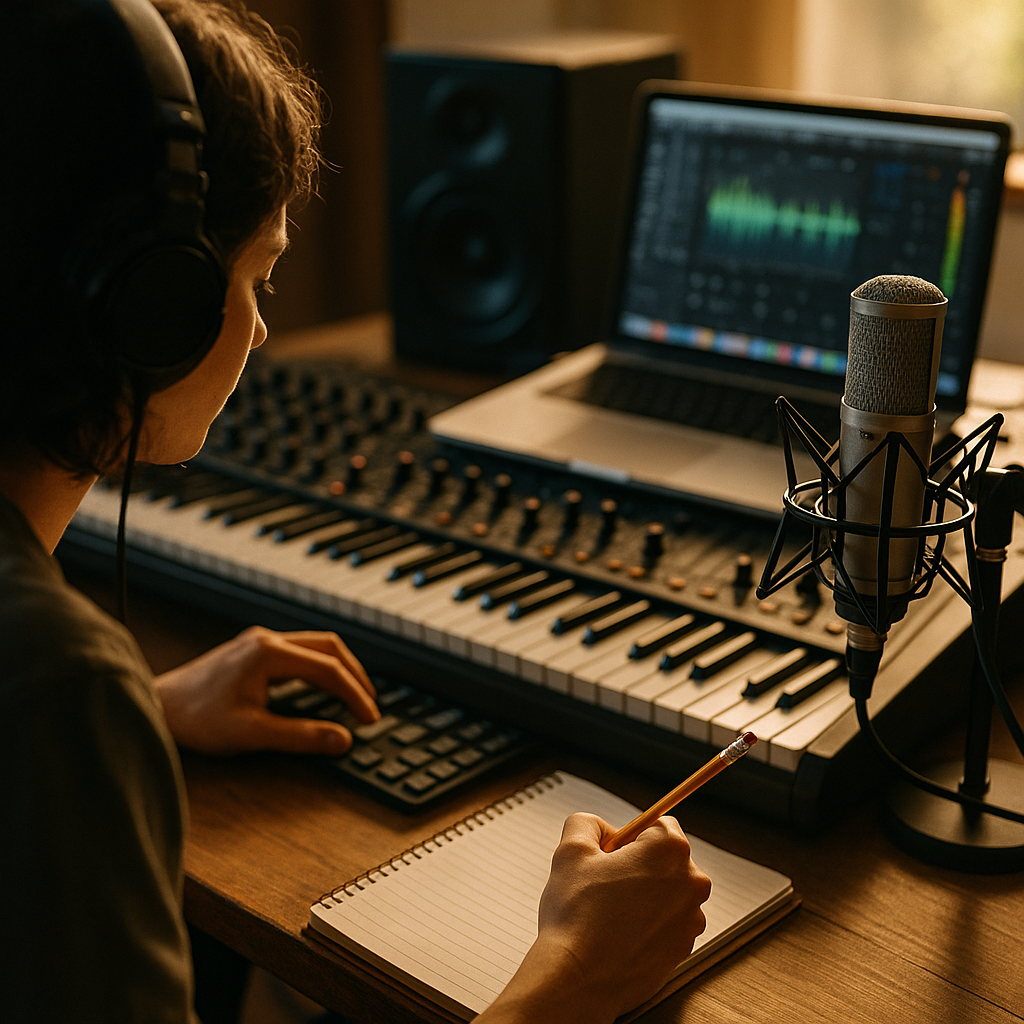
In 2025, brands compete not just for attention, but for memory. The Psychology Of Sound: Building A Signature Audio Brand Identity explains why certain tones feel trustworthy, why a simple chime can trigger recall, and how audio can shape decisions faster than visuals. When you design sound with intent, you turn fleeting impressions into durable associations—so what does your brand sound like?
Sound psychology in marketing: why audio changes perception
Sound reaches the brain quickly and often emotionally. Before a listener “thinks” about what they heard, they may already feel it. That’s the core advantage of sound psychology in marketing: audio bypasses long deliberation and influences perception in real time.
Several well-established psychological effects explain why sound is so powerful for brands:
- Emotional priming: Timbre, harmony, and dynamics can prime mood. Warm, rounded tones tend to read as friendly; sharper transients can feel urgent or technical.
- Associative learning: Repeated pairing of a sound with a brand moment (app open, payment success, product unboxing) trains recognition and expectation.
- Fluency and ease: Simple, coherent audio patterns are processed more easily, which can increase perceived quality and trust.
- Attention direction: Short, well-designed cues can guide users through complex interactions without extra text, reducing cognitive load.
For practical branding, this means you should treat sound like a design material with measurable outcomes. If a checkout sound feels stressful, you may increase abandonment. If a notification tone reads as “helpful,” you support retention. The key is to choose audio attributes that match the brand’s promise and the user’s context.
A useful follow-up question is: Should audio always be emotional? Not necessarily. Some brands win by sounding neutral, quiet, and precise. The goal isn’t maximum emotion; it’s controlled emotion aligned to what customers expect from you.
Sonic branding strategy: aligning sound with brand values
A sonic branding strategy connects business goals to audio decisions. Without it, you risk random sounds that confuse customers or feel inconsistent across products and channels.
Start with a clear brand-to-sound translation. Identify 3–5 brand attributes you want customers to perceive, then map each to audio qualities:
- Trustworthy: stable pitch center, moderate tempo, smooth envelopes, balanced frequencies
- Innovative: modern synthesis textures, light glitches used sparingly, crisp high-end, minimal motifs
- Premium: controlled dynamics, high-fidelity samples, spacious reverb used with restraint, no harshness
- Playful: bright intervals, bouncy rhythm, short melodic gestures, slightly exaggerated timing
- Calm: slower tempo, soft attacks, gentle low-mid warmth, reduced high-frequency spikes
Then define the “audio rules” your team will follow, similar to visual brand guidelines:
- Core motif: a short melodic or rhythmic identity that can be adapted
- Instrument palette: what you use and what you avoid
- Tempo and energy range: acceptable BPM bands and intensity levels
- Frequency discipline: target tonal balance so it works on phone speakers and earbuds
- Context rules: when audio is appropriate, when to stay silent, and how to respect user settings
Teams often ask: Do we need a full “audio logo” right away? Not always. Many brands build from small UI sounds and a consistent palette first, then distill a memorable logo once they’ve validated what resonates with users.
Audio brand identity: crafting a recognizable sonic signature
An audio brand identity is the full system of sounds that consistently represents you: the audio logo, product sounds, notification tones, hold music, podcast stings, in-store ambience, and even voice style in ads. The goal is recognition without needing to see the logo.
To craft a signature that scales, design a hierarchy:
- Audio logo (1–3 seconds): the distilled signature for endings, openings, and confirmations
- Brand motif (3–10 seconds): a flexible phrase for videos, intros, and longer transitions
- Functional UI sounds (50–400 ms): micro-feedback for success, error, navigation, and progress
- Long-form sound (30–120 seconds+): ambient loops, store soundscapes, or app background audio where relevant
Memorability typically comes from simplicity and repetition, but not monotony. A strong signature often uses a small number of notes, a distinctive rhythm, or a unique timbral fingerprint (for example, a specific bell-like tone or a textured synth). The key is making it identifiable even when:
- played softly in a noisy environment
- compressed by social platforms
- heard through low-quality phone speakers
- translated into different lengths and arrangements
A practical way to validate recognizability is a “thin slice” test: play the sound at low volume for a short duration and ask users what brand category it belongs to, what emotion it triggers, and whether it feels consistent with your product experience. If people describe the sound accurately but can’t connect it to your brand, you may need tighter integration at key touchpoints.
Brand sound design: applying psychoacoustics to real touchpoints
Brand sound design is where psychology becomes engineering. Psychoacoustics—how humans perceive sound—helps you create audio that feels clear, comfortable, and meaningful across devices.
Key principles that improve effectiveness:
- Frequency balance for small speakers: Phone speakers struggle with deep bass. Build identity in the midrange (roughly where human hearing is most sensitive) so the signature survives playback limitations.
- Transient shaping for clarity: A slightly defined attack makes micro-sounds readable. Too sharp feels irritating; too soft feels vague.
- Dynamic control: Loudness consistency protects users and improves perceived polish. Avoid surprises, especially in quiet environments.
- Masking awareness: If your sound shares frequencies with common background noise (traffic, chatter), it may disappear. A subtle pitch choice or harmonic content can improve detectability.
- Duration discipline: Most functional sounds should be short. Longer sounds imply “wait” or “story,” which may frustrate during fast tasks.
Apply these principles to moments that matter. In most brands, the highest-impact touchpoints include:
- Onboarding: a welcoming motif that sets expectation without overwhelming
- Success states: payment confirmation, booking completion, file upload success
- Error states: clear, calm cues that signal correction without blame
- Notifications: distinct tones for priority levels that don’t train anxiety
- Content intros/outros: podcasts, videos, webinars, and ads
Readers often wonder: Should our app have sound by default? In many contexts, default-on audio can backfire. A safer approach is silent-by-default for nonessential cues, then allow users to opt in—while still providing haptics and visual feedback. Where sound is core to the product (games, music, meditation), design onboarding to set expectations clearly.
Customer experience audio: building trust, accessibility, and comfort
Customer experience audio succeeds when it respects people. A sonic system can improve usability and brand warmth, but it can also annoy, exclude, or trigger discomfort if handled carelessly.
Use these guidelines to protect trust and broaden accessibility:
- Give control: Provide easy mute and volume options. Remember user preferences across sessions.
- Avoid alarm fatigue: Reserve urgent sounds for truly urgent events. Overusing “alert” tones trains stress and reduces attention when it matters.
- Design for neurodiversity: Avoid overly sharp, piercing frequencies and sudden loud peaks. Favor predictable envelopes and gentle dynamics.
- Support hearing differences: Don’t rely on a single frequency band. Pair audio with haptics and clear visuals; use multi-band cues so more people can perceive them.
- Respect cultural context: Musical intervals and instruments carry cultural associations. Test in your key markets, especially if your brand is global.
Audio can also strengthen perceived transparency. For example, a calm, consistent “processing” sound can reassure users during delays, while a soft confirmation tone can reduce uncertainty after a critical action. But the sound must match reality—if you signal success when an action is still pending, you erode trust quickly.
To follow EEAT best practices, document decisions and test results. Keep a record of user research, accessibility considerations, and technical specs. This not only improves quality but also helps teams maintain consistency as products evolve.
Signature audio logo: testing, measuring, and scaling across channels
A signature audio logo must work everywhere: ads, apps, events, customer support, video, social, and sometimes physical spaces. That requires measurement and a plan for long-term governance.
Test your audio logo with methods that answer real business questions:
- Recognition testing: Can people identify the brand (or at least the category) from sound alone after repeated exposure?
- Attribution testing: When paired with visuals, does the sound increase correct brand recall compared to a silent control?
- Emotional fit: Do listeners describe feelings that match your intended brand attributes?
- Usability metrics: In-product, do sound cues reduce errors, speed up tasks, or improve satisfaction?
Then scale with an “audio style guide” and production pipeline:
- Master assets: high-resolution masters plus platform-ready versions (mono, stereo, compressed formats)
- Length variants: 0.3s, 0.7s, 1.5s, 3s, and 6s cutdowns for different placements
- Channel adaptations: social-safe loudness, broadcast-safe mixes, app-safe micro-sounds
- Governance: who approves new sounds, naming conventions, and version control
A common follow-up is: How do we keep consistency when different agencies work on campaigns? The answer is standards plus examples. Provide reference tracks, do/don’t rules, and a small library of approved motifs and textures. Consistency comes from constraints that still allow creative variation.
Building a signature sound is not a one-off creative task; it’s a system that shapes recognition and trust at scale. When you connect sound psychology to strategy, design, accessibility, and measurement, your audio becomes a reliable brand asset instead of background noise. In 2025, the clearest takeaway is simple: design fewer sounds, design them better, and repeat them consistently.
FAQs
What is sonic branding, and how is it different from a jingle?
Sonic branding is the full set of sounds that represent a brand across touchpoints (UI sounds, audio logo, ads, environments, voice style). A jingle is typically a longer musical piece used mainly in advertising. Modern sonic branding is modular and designed to work in seconds—or milliseconds.
How long should an audio logo be?
Most effective audio logos land between 1 and 3 seconds. Shorter can work for UI confirmations, while longer versions may be used for campaign intros. The best practice is to create multiple cutdowns that keep the same motif.
Do small businesses need a signature audio brand identity?
Yes, if audio is part of your customer journey—social video, podcasts, apps, retail spaces, or phone systems. Start small: choose a consistent sound palette and one simple motif. You can expand into a full audio logo and library as your channels grow.
How do we make sure our brand sounds consistent across platforms?
Create an audio style guide with approved instruments/textures, tempo and mood ranges, loudness targets, and examples. Distribute master assets and platform-specific exports, and assign clear ownership for approvals to prevent random additions.
What mistakes hurt audio branding the most?
The most common issues are overly loud sounds, inconsistent tones across touchpoints, using generic stock audio that competitors also use, and ignoring user control. Another major mistake is designing “cool” sounds that don’t match the brand’s promise or the user’s context.
How can we measure ROI from sonic branding?
Combine brand metrics (aided/unaided recall, attribution lift in ad testing) with product metrics (task completion time, error rates, retention, opt-in rates for sound). In customer support, measure satisfaction and perceived clarity when audio cues or voice guidelines are introduced.
Top Influencer Marketing Agencies
The leading agencies shaping influencer marketing in 2026
Agencies ranked by campaign performance, client diversity, platform expertise, proven ROI, industry recognition, and client satisfaction. Assessed through verified case studies, reviews, and industry consultations.
Moburst

-
2

The Shelf
Boutique Beauty & Lifestyle Influencer AgencyA data-driven boutique agency specializing exclusively in beauty, wellness, and lifestyle influencer campaigns on Instagram and TikTok. Best for brands already focused on the beauty/personal care space that need curated, aesthetic-driven content.Clients: Pepsi, The Honest Company, Hims, Elf Cosmetics, Pure LeafVisit The Shelf → -
3

Audiencly
Niche Gaming & Esports Influencer AgencyA specialized agency focused exclusively on gaming and esports creators on YouTube, Twitch, and TikTok. Ideal if your campaign is 100% gaming-focused — from game launches to hardware and esports events.Clients: Epic Games, NordVPN, Ubisoft, Wargaming, Tencent GamesVisit Audiencly → -
4

Viral Nation
Global Influencer Marketing & Talent AgencyA dual talent management and marketing agency with proprietary brand safety tools and a global creator network spanning nano-influencers to celebrities across all major platforms.Clients: Meta, Activision Blizzard, Energizer, Aston Martin, WalmartVisit Viral Nation → -
5

The Influencer Marketing Factory
TikTok, Instagram & YouTube CampaignsA full-service agency with strong TikTok expertise, offering end-to-end campaign management from influencer discovery through performance reporting with a focus on platform-native content.Clients: Google, Snapchat, Universal Music, Bumble, YelpVisit TIMF → -
6

NeoReach
Enterprise Analytics & Influencer CampaignsAn enterprise-focused agency combining managed campaigns with a powerful self-service data platform for influencer search, audience analytics, and attribution modeling.Clients: Amazon, Airbnb, Netflix, Honda, The New York TimesVisit NeoReach → -
7

Ubiquitous
Creator-First Marketing PlatformA tech-driven platform combining self-service tools with managed campaign options, emphasizing speed and scalability for brands managing multiple influencer relationships.Clients: Lyft, Disney, Target, American Eagle, NetflixVisit Ubiquitous → -
8

Obviously
Scalable Enterprise Influencer CampaignsA tech-enabled agency built for high-volume campaigns, coordinating hundreds of creators simultaneously with end-to-end logistics, content rights management, and product seeding.Clients: Google, Ulta Beauty, Converse, AmazonVisit Obviously →