


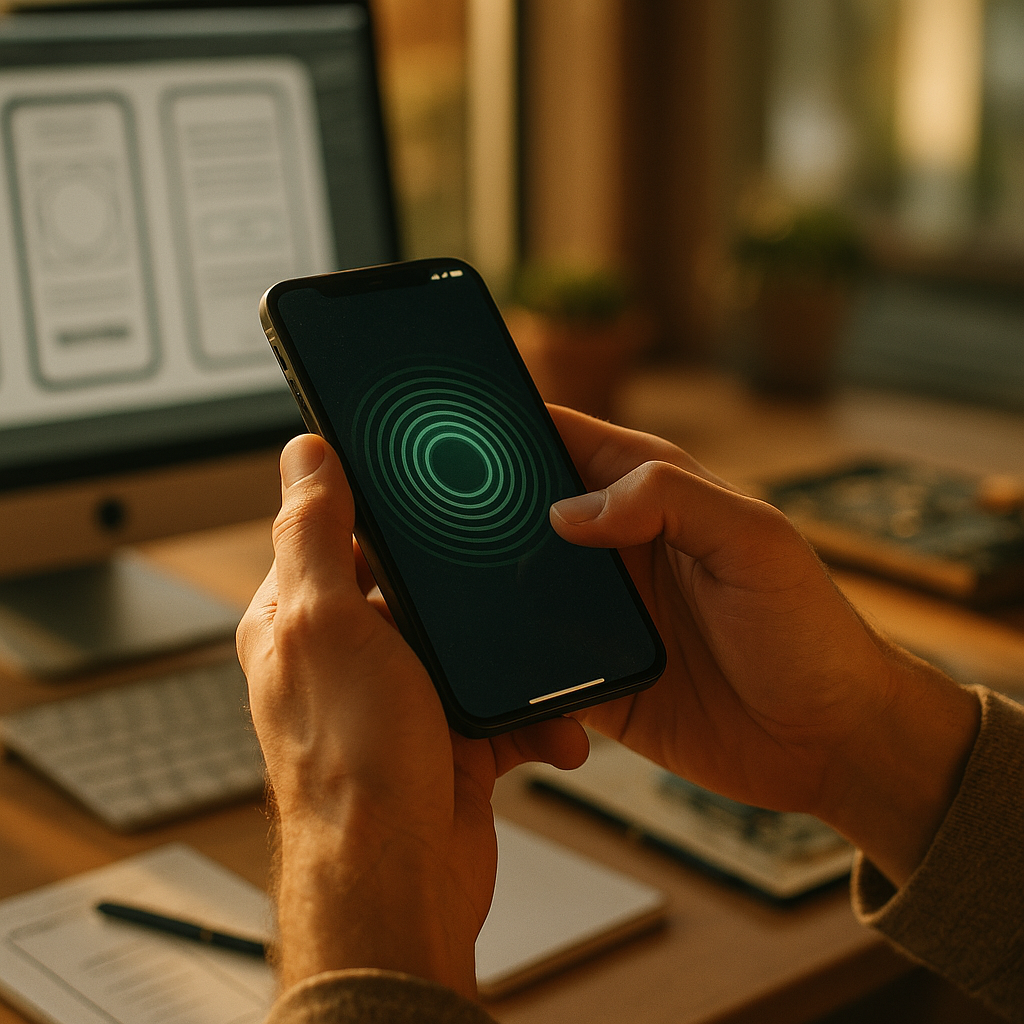
Designing For Haptic Engagement is quickly becoming a defining skill for mobile teams in 2025, because touch feedback can make digital actions feel real, immediate, and trustworthy. When done well, haptics guide attention, reduce mistakes, and add delight without slowing users down. When done poorly, they annoy, drain battery, and confuse. The difference is intentional design—so where do you start?
Why haptic feedback design improves mobile UX
Haptics are not decoration. They are a communication channel that complements visuals and sound—especially in situations where users can’t look closely at the screen (walking, one-handed use, glare, fatigue) or when audio is muted. Strong haptic feedback design improves mobile UX by making actions feel confirmed, boundaries feel clear, and errors feel distinct.
Key UX benefits of haptics in mobile experiences:
- Confirmation without visual load: A crisp tap can confirm “sent,” “saved,” or “paid” without forcing users to scan for a toast message.
- Error prevention and recovery: A distinct “nope” vibration pattern can signal invalid input immediately, reducing repeated attempts.
- Perceived performance: Immediate tactile response can make interfaces feel faster, even when network actions take longer.
- Better learnability: Consistent haptics teach users what different interactions “mean,” similar to iconography or color.
- Accessibility support: Tactile cues can help users who benefit from non-visual feedback, when used thoughtfully and with user control.
Users already expect touch feedback in core moments: toggles, keypresses, biometric authentication, camera shutter, pull-to-refresh, drag-and-drop boundaries, and critical confirmations. The design opportunity is to make haptics purposeful and consistent—so they reinforce the interface rather than compete with it.
Mobile haptics patterns that feel natural (not noisy)
Effective mobile haptics rely on patterns that map to user intent and context. Most teams fail by adding too many vibrations, using the same vibration for every event, or placing haptics on low-value interactions. Aim for a small vocabulary of tactile signals with clear meaning.
High-value haptic patterns to consider:
- Micro-confirmation: A short, light tap on successful completion of an action the user initiated (e.g., “Added to cart,” “Bookmark saved”).
- Boundary/constraint: A subtle “tick” when a slider hits min/max, a list reaches the top, or a draggable snaps into place.
- Mode change: A slightly longer pulse when entering a different state (e.g., recording starts, focus mode turns on).
- Error/invalid action: A distinct, sharper pattern that differs from success—never reuse success haptics for errors.
- Rhythm for progress (use sparingly): Gentle pulses at meaningful milestones (e.g., scan complete, download finished), not continuous buzzing.
Where to avoid haptics:
- Purely passive events the user did not request (frequent notifications, auto-refresh updates).
- Every scroll tick or animation frame—this quickly becomes fatiguing.
- Redundant feedback when a strong visual cue already exists and attention is focused (e.g., long-form reading).
Answering a common follow-up question: Should haptics be consistent across the entire app? Yes—consistency is what makes them learnable. However, consistency does not mean “one vibration for everything.” It means a stable mapping: success feels like success everywhere, and errors always feel different from success.
Haptic UI design principles: intensity, timing, and meaning
Strong haptic UI design depends on three variables users notice immediately: intensity (how strong), timing (when), and meaning (what it signifies). Treat haptics like microcopy: short, specific, and aligned to the moment.
1) Intensity: design for comfort and context
Use the lowest intensity that still communicates. In a quiet context (bedtime, meetings), heavy haptics feel intrusive. In a noisy environment (outdoors, commuting), slightly stronger confirmation may be appropriate. If your platform provides “light/medium/heavy” options, default to light for routine actions and reserve stronger feedback for high-stakes confirmations and errors.
2) Timing: align the haptic with the user’s mental model
- On press supports “I touched it.” (Best for keys, toggles, press-and-hold.)
- On release supports “I completed it.” (Best for drag release, send action, drop target.)
- On state change supports “It happened.” (Best when an async task completes.)
Mismatch creates confusion. For example, haptics on “press” for an action that later fails can feel like a lie. When success is uncertain (payment processing, uploads), provide a light acknowledgment on press, then a distinct success or error haptic when the result is known.
3) Meaning: keep a small, documented haptic language
Create a haptic style guide alongside typography and color. Define a limited set of haptic tokens (e.g., ConfirmLight, ErrorSharp, BoundaryTick, ModeChange) and specify where each is used. This reduces random one-off vibrations added late in development.
4) Respect user control and accessibility
In 2025, “helpful” also means “respectful.” Users may disable vibration at the OS level or rely on assistive settings. Your app should honor system preferences, avoid forcing haptics, and offer in-app controls when haptics are a core feature (gaming, training, music). If haptics convey important information, provide redundant cues (visual, text, sound option) so no user is blocked.
Touch interaction design for gestures, keyboards, and wearables
Touch interaction design becomes more powerful when haptics reinforce complex inputs—especially gestures and multi-step flows. Users often struggle with invisible rules like “long-press to reorder” or “swipe at the right angle.” Haptics can make those rules tangible.
Gestures
- Swipe actions: Use a subtle tick when crossing the threshold that commits an action (e.g., archive). This answers “Did I swipe far enough?”
- Pull-to-refresh: Add a boundary cue at the activation point, then a lighter confirmation when the refresh begins.
- Drag-and-drop: Provide a tick on pickup, a boundary cue when hovering a valid drop zone, and a soft confirm on drop.
Keyboards and text entry
Typing haptics can increase perceived accuracy, but too much intensity causes fatigue. Use lightweight feedback, and avoid haptics for auto-corrections or predictive suggestions unless the user explicitly selects them. For password fields or one-time codes, consider a subtle confirmation when the final digit is entered, paired with a clear visual state change.
Form inputs and critical actions
For destructive actions (delete, cancel subscription), haptics should support clarity, not pressure. Use a neutral acknowledgment when opening the confirmation dialog, then reserve strong haptics for the final, confirmed decision. Avoid “scary” heavy buzzes that can feel manipulative.
Wearables and cross-device experiences
If your product spans phone plus watch or earbuds, keep the haptic language consistent but adapt intensity to device expectations. A watch tap can feel stronger because it’s on the body; the same pattern that works on a phone may be too much on a wrist. Define device-specific scaling while preserving the same meaning.
Implementing haptic technology in apps: platforms, performance, and privacy
Good design only matters if it ships reliably. Haptic technology implementation requires collaboration across design, engineering, QA, and accessibility. In 2025, users expect polish: haptics should feel immediate, not delayed, and should not fire at random.
Platform considerations
- Use native haptic APIs: They are tuned for each device’s actuator and power profile.
- Design for variation: Low-end devices may have less precise motors. Test on multiple hardware tiers.
- Honor system settings: If vibration is disabled, do not attempt to bypass it.
Performance and battery
Haptics consume power, especially repeated or long patterns. Keep events short and purposeful. Avoid continuous vibration loops for “loading” states; replace them with a single cue at start and completion. Also consider latency: if a haptic confirmation arrives late, it breaks trust. Tie haptics to UI events that are guaranteed to occur instantly (tap down) and reserve result feedback for confirmed outcomes.
QA: test the feel, not only the trigger
Teams often test whether haptics fire, but not whether they feel distinct. Add tactile review to QA checklists:
- Can users differentiate success vs error with eyes closed?
- Do haptics ever double-fire (common in gesture handlers)?
- Do haptics fire during unintended scroll or accidental touches?
- Are patterns consistent across the app and key flows?
Privacy and user trust
Haptics can communicate sensitive outcomes (payment accepted, medical reminder, authentication). Avoid patterns that reveal private information to bystanders through audible vibration sounds in quiet spaces. Provide settings to reduce intensity or disable certain categories of feedback (e.g., “transaction confirmations”).
Measuring haptic engagement with user research and metrics
To treat haptics as a product feature, measure their impact. Haptic engagement is not about “more vibration,” but about improved outcomes: fewer errors, faster completion, stronger confidence, and higher satisfaction.
User research methods that work well for haptics:
- Task-based usability testing: Compare flows with and without haptics; track hesitation, retries, and mis-taps.
- Think-aloud plus “eyes-busy” scenarios: Ask users to complete tasks while walking (safely simulated) or with brief glances to mimic real use.
- Preference testing: Let users choose between two patterns for the same event and explain why.
- Accessibility reviews: Include users who rely on non-visual cues and users sensitive to vibration.
Metrics to connect haptics to outcomes:
- Error rate: Invalid submissions, failed gesture commits, wrong selections.
- Time to complete: Especially for gesture-heavy flows and checkout tasks.
- Rage taps and repeated actions: A drop can indicate clearer confirmation.
- Support tickets: Fewer “did it go through?” messages after improving confirmation cues.
- Opt-out rate: If many users disable haptics, you may be overusing intensity or frequency.
Answering another likely follow-up: Should you A/B test haptics? Yes, when you can do it ethically and interpretably. Keep variations limited (e.g., timing or intensity for one event) and avoid testing manipulative patterns. Always include a quick rollback plan if users report discomfort.
FAQs about designing haptic engagement
-
What is haptic engagement in mobile UX?
Haptic engagement is the use of tactile feedback (vibration or precise “taps”) to communicate state, confirm actions, signal errors, and guide gestures. Done well, it reduces cognitive load and makes interactions feel more responsive and trustworthy.
-
How many haptic patterns should an app have?
Most apps do best with a small set—typically 4 to 8 reusable patterns—mapped to clear meanings like confirm, error, boundary, and mode change. A limited vocabulary improves consistency, learnability, and maintainability.
-
Do haptics help accessibility?
They can, especially as redundant feedback for confirmations and errors. However, users must control them, and critical information should never rely only on haptics. Always support visual and optional audio cues, and respect system vibration settings.
-
What are the most common haptics mistakes?
The biggest issues are overuse (too frequent), unclear meaning (same pattern for success and error), poor timing (confirmation before outcome is known), ignoring user settings, and not testing across device tiers where vibration quality varies.
-
Will haptics drain battery?
Short, intentional haptics have minimal impact, but frequent or long patterns can increase power use. Avoid continuous vibration for loading states and prefer brief cues at key moments (start, boundary, completion).
-
How do I document haptics for my design system?
Create haptic tokens with names, purpose, usage rules, and examples (e.g., “ConfirmLight: used after successful user-initiated actions”). Include timing guidance (press vs release vs result) and accessibility notes, then review in QA like any other UI component.
Designing haptics well in 2025 means treating touch as a real interface layer, not a novelty. Use a small, consistent haptic language, align feedback with outcomes, and respect user control and context. Test with real devices, measure impact on errors and confidence, and document patterns in your design system. When touch cues carry clear meaning, your app feels faster, calmer, and easier to trust.
Top Influencer Marketing Agencies
The leading agencies shaping influencer marketing in 2026
Agencies ranked by campaign performance, client diversity, platform expertise, proven ROI, industry recognition, and client satisfaction. Assessed through verified case studies, reviews, and industry consultations.
Moburst

-
2

The Shelf
Boutique Beauty & Lifestyle Influencer AgencyA data-driven boutique agency specializing exclusively in beauty, wellness, and lifestyle influencer campaigns on Instagram and TikTok. Best for brands already focused on the beauty/personal care space that need curated, aesthetic-driven content.Clients: Pepsi, The Honest Company, Hims, Elf Cosmetics, Pure LeafVisit The Shelf → -
3

Audiencly
Niche Gaming & Esports Influencer AgencyA specialized agency focused exclusively on gaming and esports creators on YouTube, Twitch, and TikTok. Ideal if your campaign is 100% gaming-focused — from game launches to hardware and esports events.Clients: Epic Games, NordVPN, Ubisoft, Wargaming, Tencent GamesVisit Audiencly → -
4

Viral Nation
Global Influencer Marketing & Talent AgencyA dual talent management and marketing agency with proprietary brand safety tools and a global creator network spanning nano-influencers to celebrities across all major platforms.Clients: Meta, Activision Blizzard, Energizer, Aston Martin, WalmartVisit Viral Nation → -
5

The Influencer Marketing Factory
TikTok, Instagram & YouTube CampaignsA full-service agency with strong TikTok expertise, offering end-to-end campaign management from influencer discovery through performance reporting with a focus on platform-native content.Clients: Google, Snapchat, Universal Music, Bumble, YelpVisit TIMF → -
6

NeoReach
Enterprise Analytics & Influencer CampaignsAn enterprise-focused agency combining managed campaigns with a powerful self-service data platform for influencer search, audience analytics, and attribution modeling.Clients: Amazon, Airbnb, Netflix, Honda, The New York TimesVisit NeoReach → -
7

Ubiquitous
Creator-First Marketing PlatformA tech-driven platform combining self-service tools with managed campaign options, emphasizing speed and scalability for brands managing multiple influencer relationships.Clients: Lyft, Disney, Target, American Eagle, NetflixVisit Ubiquitous → -
8

Obviously
Scalable Enterprise Influencer CampaignsA tech-enabled agency built for high-volume campaigns, coordinating hundreds of creators simultaneously with end-to-end logistics, content rights management, and product seeding.Clients: Google, Ulta Beauty, Converse, AmazonVisit Obviously →