


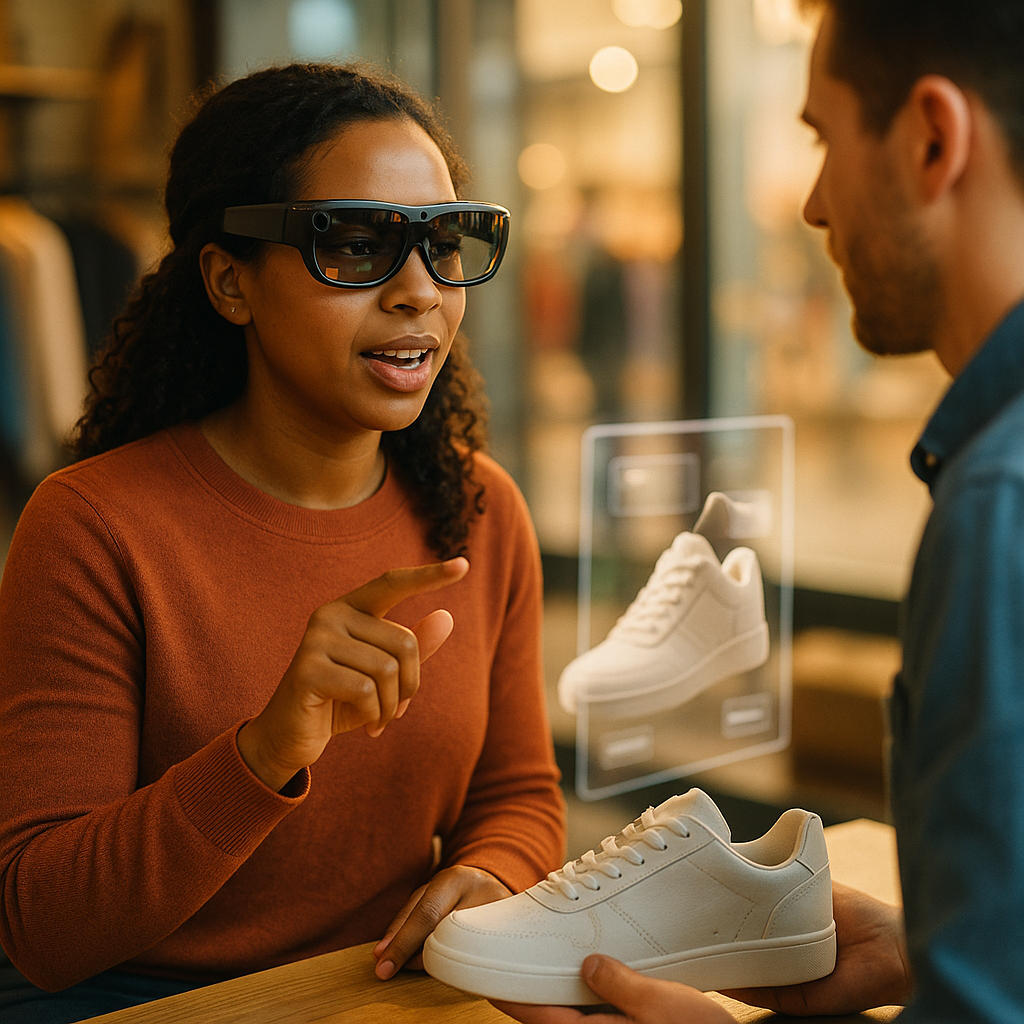
Designing Immersive Brand Experiences For Next-Gen AR Wearables is no longer experimental in 2025; it is becoming a practical channel for product discovery, service guidance, and loyalty-building in everyday contexts. The brands that win will treat AR as a living interface, not a gimmick. This article breaks down strategy, design, measurement, and risk so you can launch with confidence—what will users see first?
AR wearable marketing strategy: start with outcomes, not effects
Next-gen AR wearables sit closer to the user than any previous screen. That proximity changes what “good marketing” means. The goal is not to flood vision with branded overlays; it is to deliver value at the exact moment a user needs it. In practice, that means defining outcomes that users recognize as helpful and that your business can measure.
Clarify the job-to-be-done. Start by mapping the user’s task in a real environment: choosing a product, setting it up, navigating a store, learning a skill, or getting support. Then decide where AR removes friction. If your experience doesn’t reduce time, errors, uncertainty, or cognitive load, it won’t earn repeat use.
Pick a primary context. AR wearables are context engines: location, movement, gaze direction, and nearby objects matter. Choose one core context for launch (in-store, at home, in the field, at an event). Multi-context experiences can work later, but early versions should be tight and testable.
Design for trust and consent. Wearables can feel intimate. Build a clear permission narrative: what you sense (camera, depth, location), why you sense it, and what the user gets in exchange. Place opt-in controls at the moment they matter, not buried in settings. This is as much a brand signal as any visual element.
Answer the obvious stakeholder questions early. Marketing, product, legal, and IT will ask: Who is this for? Where will it be used? How do we avoid distraction? How do we measure ROI? How do we moderate user-generated AR content if any exists? A short “experience brief” that includes outcomes, context, safety constraints, and analytics prevents costly rework.
Spatial UX design for wearables: build for comfort, clarity, and flow
Spatial UX is design under physical constraints: limited field of view, variable lighting, motion, and human attention. The best wearable AR feels quiet until it’s needed. The experience should guide without nagging and brand without blocking.
Use an “attention budget.” Define how much screen-space and how many seconds per minute your experience may occupy. For many scenarios, the right answer is “less than you think.” Reserve persistent UI for essentials (status, next step, safety), and present rich elements only when the user explicitly requests them.
Anchor content to real-world meaning. Users understand overlays faster when they attach to objects or surfaces that already matter: a shelf label, a product, a machine part, a doorway. Avoid floating panels unless they are transient. When content must float, give it a consistent “home” position to reduce search time.
Design for glanceability. Text must be short, high-contrast, and readable at varying distances. Replace paragraphs with progressive disclosure: a headline plus one action. If you need more, offer a “pin to follow-up” interaction so the user can review later on a phone or desktop.
Make interactions forgiving. Hand tracking and voice can be noisy. Support multiple inputs for critical actions (gaze + pinch, voice + confirmation, controller fallback if available). Provide generous hit zones and clear “state changes” (selected, placed, completed). Avoid gesture sets that require memorization.
Respect motion and comfort. Content that jitters, drifts, or lags will break immersion and can cause discomfort. Prefer stable anchors, predictable animations, and minimal parallax tricks. Keep transitions short and functional: highlight, point, confirm. If your concept relies on heavy visual motion, test it early with real users, not just in demos.
Build a brand system for space. Traditional brand guidelines rarely cover depth, occlusion, or environmental lighting. Extend your system with: spatial typography rules, 3D icon style, material/finish choices, shadow/lighting behavior, and an “overlay density” standard. Consistency across moments builds trust and recognition without needing giant logos.
AR content production pipeline: scale 3D storytelling responsibly
Immersive brand experiences live or die by content operations. If every new product requires a custom 3D rebuild, you will stall. Create a pipeline that balances quality, cost, and speed while protecting brand integrity.
Audit what you already have. Many brands already own CAD files, photogrammetry scans, product imagery, manuals, and training videos. Convert and optimize these into AR-ready assets. CAD often needs retopology and texture work; photogrammetry needs cleanup and simplification. Plan this as a repeatable process, not a one-off project.
Define asset tiers. Not everything needs hero-level fidelity. Use tiers such as:
- Tier 1 (Hero): flagship products or campaign centerpieces; high-detail materials and animations.
- Tier 2 (Standard): most catalog items; optimized meshes, baked lighting, limited animation.
- Tier 3 (Utility): parts, accessories, or guidance overlays; minimal geometry, icon-led.
This reduces cost and improves performance while keeping quality where it matters.
Optimize for wearable constraints. Next-gen wearables are improving, but you still need disciplined budgets for polygon counts, texture sizes, transparency, and real-time lighting. Use level-of-detail models and texture atlases. Treat performance as a brand attribute: an experience that runs smoothly communicates competence.
Plan for localization and accessibility. Spatial experiences often ship globally. Localize text, voice, and units, and allow region-specific content rules. For accessibility, include captions for audio cues, avoid color-only signaling, provide adjustable text size where possible, and offer alternative interactions when voice or hand tracking isn’t viable.
Set content governance. Decide who can publish changes, how assets are reviewed, and what constitutes a “brand-safe” overlay. If your experience includes third-party placements (retail partners, events, creators), define approval workflows and takedown procedures. Governance is part of EEAT: it demonstrates you control quality and reduce harm.
Contextual personalization in AR: deliver relevance without crossing privacy lines
Wearables make personalization tempting because they sense context: where the user is, what they look at, and what object they’re near. The win is relevance, but the risk is creepiness. The right approach is transparent, minimal, and user-controlled.
Personalize by situation first, identity second. Many useful experiences do not require identifying the user. For example: “You’re in aisle 4; here are comparisons for products in view” or “This device model needs step 3 next.” Prefer on-device, session-based logic when possible.
Use progressive profiling. Ask for data only when it unlocks clear value. If you want preferences (skin type, size, style), request them at the moment the user is trying to decide. Then show immediate benefit: filtered options, better fit visualization, fewer steps.
Make controls obvious and reversible. Provide simple toggles like Pause AR overlays, Stop scanning, Clear session, and Review permissions. Keep confirmations in plain language. A brand that makes it easy to say “no” earns more “yes” over time.
Design for shared spaces. Wearables are used around other people. Avoid displaying sensitive recommendations or account details by default. Provide a “private mode” that reduces personal content to icons or summaries until the user confirms.
Align personalization with brand promise. If your brand stands for simplicity, personalization should reduce choices. If you stand for expertise, personalization should explain trade-offs clearly. If you stand for premium service, personalization should feel like concierge help, not targeted ads.
AR analytics and measurement: prove impact from attention to action
If you can’t measure it, you can’t improve it—or defend it in budget conversations. AR wearables require a measurement model that respects privacy while capturing the full journey from exposure to outcomes.
Define a measurement stack. Useful layers include:
- Experience health: session length, completion rate, drop-off steps, performance metrics (frame rate, load time), crash rate.
- Engagement quality: number of meaningful interactions (place, compare, save, request help), repeat usage, time-to-task completion.
- Business outcomes: add-to-cart, store conversion lift, reduced returns, support deflection, training time saved, NPS changes.
Choose a small set of “north star” metrics tied directly to your initial use case, then add depth once instrumentation is stable.
Use event design that matches spatial reality. Traditional click tracking won’t capture gaze-based exploration or object interactions. Instrument events like: object recognized, anchor placed, instruction step confirmed, comparison opened, save for later. Pair these with environment tags (in-store vs at home) rather than personal identifiers whenever possible.
Run responsible experiments. A/B testing can work in AR, but be careful with safety and comfort variables. Test one change at a time: copy length, overlay density, call-to-action placement, tutorial style. Use holdouts for conversion measurement and triangulate with qualitative feedback because novelty can inflate early metrics.
Close the loop with customer support and sales teams. In 2025, EEAT is not only about who wrote the content; it’s about whether your experience aligns with real expertise and real customer needs. Feed wearable AR insights into training, product documentation, and merchandising. If users repeatedly request the same clarification, that’s a signal to improve the experience and your underlying product communications.
AR safety, ethics, and compliance: protect users and the brand
Immersive brand experiences can fail not because they look bad, but because they create risk: distraction, misinformation, bias, or privacy harm. Build guardrails that are explicit and testable.
Prioritize situational safety. In motion contexts (walking, driving-adjacent areas, industrial settings), reduce overlays and rely on audio cues or minimal indicators. Provide “safe mode” behaviors that trigger automatically based on speed or location rules when feasible. Make it clear when the system is uncertain about what it sees.
Prevent misleading visualization. If you offer virtual try-on, sizing, or product placement, communicate limitations. Include calibration steps and confidence indicators. Don’t overpromise accuracy. A smaller, truthful claim outperforms a big claim that triggers returns and complaints.
Reduce bias in recognition and recommendations. If computer vision or personalization affects what users see, test across diverse environments, skin tones, lighting conditions, and accessibility needs. Document testing procedures and known limitations. This supports EEAT by showing responsible expertise and transparency.
Comply with platform and privacy requirements. Treat camera access, spatial mapping, and location data as sensitive. Store the minimum required, secure it properly, and clearly communicate retention. If you use third-party SDKs, review data flows and contractual terms. Compliance is easier when it is designed in from the first prototype.
FAQs: Designing immersive experiences for AR wearables
What makes an AR wearable brand experience “immersive” without being distracting?
Immersion comes from relevance, stability, and low friction—not from constant visuals. Keep overlays minimal, anchor them to real objects, and reveal details only when the user requests them. A good rule is to optimize for task completion and comfort first, then add branded flourish where it supports clarity.
How do I choose the right first use case for wearable AR?
Pick a use case with frequent real-world repetition and measurable pain: product comparison in-store, guided setup at home, step-by-step service support, or training for staff. Avoid broad “metaverse showroom” concepts until you have proven that users return and that the experience changes outcomes.
Do we need a custom app, or can we use web-based AR?
It depends on the wearable platform and your needs. Web-based approaches can speed distribution and updates, but native apps often provide better performance, sensor access, and persistent capabilities. Start with the simplest approach that meets performance, privacy, and measurement requirements, then upgrade if you hit limits.
How do we maintain brand consistency in 3D and spatial UI?
Extend your brand guidelines into spatial rules: 3D iconography, materials, lighting, motion, and overlay density. Create reusable components (buttons, cards, labels, pointers) and a review process so new assets don’t drift. Consistency should feel like a system, not repeated logos.
What metrics best prove ROI for AR wearables?
Use a chain of proof: performance and completion rates to show usability, then business outcomes such as conversion lift, fewer returns, reduced support tickets, faster training, or higher repeat visits. Tie metrics to a single primary outcome per launch, and run controlled experiments when possible.
How do we address privacy concerns with camera-based experiences?
Ask for permissions only when needed, explain what’s sensed and why, and provide easy controls to pause scanning and clear session data. Favor on-device processing and context-based personalization over identity-based targeting. Make privacy part of the product experience, not just a legal page.
In 2025, next-gen AR wearables reward brands that design for real-world utility, not spectacle. Start with a single context and outcome, build spatial UX that respects attention, and establish a scalable content pipeline. Personalize with restraint, measure end-to-end impact, and bake in safety and compliance. The takeaway: deliver helpful moments users choose to repeat, and your brand becomes part of their environment.
Top Influencer Marketing Agencies
The leading agencies shaping influencer marketing in 2026
Agencies ranked by campaign performance, client diversity, platform expertise, proven ROI, industry recognition, and client satisfaction. Assessed through verified case studies, reviews, and industry consultations.
Moburst

-
2

The Shelf
Boutique Beauty & Lifestyle Influencer AgencyA data-driven boutique agency specializing exclusively in beauty, wellness, and lifestyle influencer campaigns on Instagram and TikTok. Best for brands already focused on the beauty/personal care space that need curated, aesthetic-driven content.Clients: Pepsi, The Honest Company, Hims, Elf Cosmetics, Pure LeafVisit The Shelf → -
3

Audiencly
Niche Gaming & Esports Influencer AgencyA specialized agency focused exclusively on gaming and esports creators on YouTube, Twitch, and TikTok. Ideal if your campaign is 100% gaming-focused — from game launches to hardware and esports events.Clients: Epic Games, NordVPN, Ubisoft, Wargaming, Tencent GamesVisit Audiencly → -
4

Viral Nation
Global Influencer Marketing & Talent AgencyA dual talent management and marketing agency with proprietary brand safety tools and a global creator network spanning nano-influencers to celebrities across all major platforms.Clients: Meta, Activision Blizzard, Energizer, Aston Martin, WalmartVisit Viral Nation → -
5

The Influencer Marketing Factory
TikTok, Instagram & YouTube CampaignsA full-service agency with strong TikTok expertise, offering end-to-end campaign management from influencer discovery through performance reporting with a focus on platform-native content.Clients: Google, Snapchat, Universal Music, Bumble, YelpVisit TIMF → -
6

NeoReach
Enterprise Analytics & Influencer CampaignsAn enterprise-focused agency combining managed campaigns with a powerful self-service data platform for influencer search, audience analytics, and attribution modeling.Clients: Amazon, Airbnb, Netflix, Honda, The New York TimesVisit NeoReach → -
7

Ubiquitous
Creator-First Marketing PlatformA tech-driven platform combining self-service tools with managed campaign options, emphasizing speed and scalability for brands managing multiple influencer relationships.Clients: Lyft, Disney, Target, American Eagle, NetflixVisit Ubiquitous → -
8

Obviously
Scalable Enterprise Influencer CampaignsA tech-enabled agency built for high-volume campaigns, coordinating hundreds of creators simultaneously with end-to-end logistics, content rights management, and product seeding.Clients: Google, Ulta Beauty, Converse, AmazonVisit Obviously →