


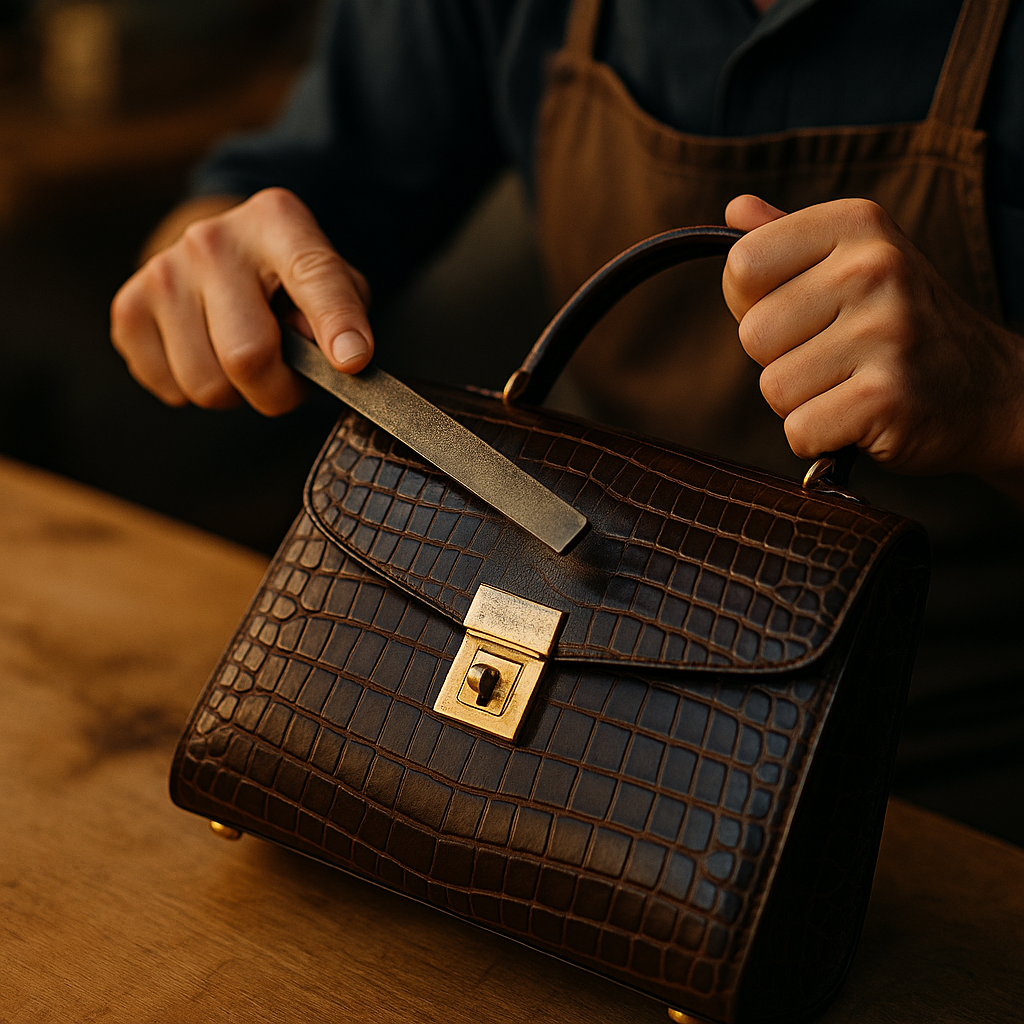
The Psychology of Friction in Luxury Design explains why premium brands often choose resistance over ease: weighty doors, deliberate unboxing, and slower service rituals. In 2025, consumers drown in instant, disposable experiences; luxury wins by making value feel earned. When interaction takes effort, it signals rarity, care, and craft. The surprising part: “harder” can feel better—if it’s designed precisely. Ready to feel why?
Friction psychology in luxury design: why resistance feels valuable
Friction is any intentional constraint that slows a user down: a clasp that requires two hands, a heavy hinge, a thicker paper stock, a booking flow that confirms preference. In mass-market design, friction is usually treated as a defect. In luxury, controlled friction is a feature that creates meaning. The psychology is straightforward: people infer value from signals that are difficult to fake.
Several well-supported cognitive mechanisms explain why friction can increase perceived worth:
- Effort justification: When someone invests effort, the brain works to make that effort “make sense,” elevating the item or experience in memory.
- Costly signaling: Time, skill, and materials are costly inputs. When consumers perceive these costs, they trust the output is special because it would be irrational to spend that much on something ordinary.
- Scarcity inference: Friction can imply limited access—appointments, waitlists, or bespoke steps—which increases desirability.
- Attention allocation: Slower interactions reduce autopilot behavior, prompting the user to notice details: stitching density, click sounds, scent, temperature, balance.
The key is intention. Accidental friction (confusing instructions, sharp edges, unpredictable performance) damages trust. Designed friction is legible: it communicates “this was made with purpose” and gives the owner a small ritual to repeat. That ritual becomes part of identity—an important driver in luxury buying decisions.
Perceived value and effort: the “earned” feeling customers seek
Luxury isn’t only about owning an object; it’s about owning a story of discernment. Friction helps create that story by turning consumption into participation. A customer who learns to operate a finely engineered clasp, selects a custom leather, or waits for a hand-finished piece doesn’t just receive a product—they complete a sequence that feels like initiation.
In practice, “earned value” shows up in three moments:
- Before purchase: Curation steps (consultations, fittings, private viewings) raise confidence and commitment. They also filter impulsive buyers, protecting brand equity.
- At first use: A slightly firm cap, a precise detent, or a snug glove fit can communicate integrity. The user reads resistance as structure, not inconvenience.
- Over time: Patina, break-in, and maintenance reward ownership. The object improves because the owner invests care, reinforcing attachment.
Readers often wonder: “Won’t friction hurt conversion?” It can—if you copy e-commerce “conversion optimization” tactics without considering luxury’s different job. A premium brand may prefer fewer, better-qualified purchases with higher satisfaction, lower returns, and stronger lifetime value. The goal is not to remove every obstacle; it’s to remove the wrong ones and keep the ones that communicate craft, exclusivity, and control.
A useful rule: friction should increase meaning faster than it increases effort. If the user can immediately interpret the benefit—precision, security, authenticity, personalization—then the effort feels like part of the value, not a tax.
Sensory design cues: weight, sound, texture, and the luxury “click”
Luxury is often experienced through the body before it’s explained by the mind. Sensory friction—especially tactile and auditory feedback—acts like proof. Consider why people describe premium objects as “solid,” “substantial,” or “quiet.” These are sensory judgments that translate into trust.
Designers can build “credible resistance” through:
- Weight and balance: A heavier object can feel more durable and expensive, but only if balance is refined. Poor balance reads as clumsy rather than premium.
- Surface friction: Micro-texture, soft-touch coatings, natural grain, and knurling guide grip and slow movement slightly, which increases perceived control.
- Acoustic signatures: The sound of a latch, lid, or dial provides immediate feedback. A clean, damped “click” signals precision; a rattle signals cheapness.
- Mechanical resistance: Deliberate torque in a crown, smooth but firm drawer slides, or a two-stage button press can communicate engineering rigor and prevent accidental activation.
These cues matter because users lack perfect information. They can’t instantly verify metallurgy, tolerances, or assembly time, so they rely on proxies. Sensory friction becomes a trustworthy proxy when it is consistent, repeatable, and aligned with the brand’s promise.
Follow-up question: “Is heavier always better?” No. Ultra-light materials can be luxurious when the narrative supports them (advanced composites, technical craftsmanship). In that case, friction can shift from weight to precision: tight panel gaps, controlled flex, refined sound damping, and careful thermal feel. Luxury is coherence, not any single attribute.
Exclusivity signals and scarcity: why waiting and rituals can feel premium
Some friction doesn’t live in the object; it lives in the journey. Appointment-only access, waitlists, limited drops, and bespoke lead times are forms of temporal friction. Done ethically and transparently, they reinforce exclusivity because they demonstrate constraints: skilled labor, finite supply, or careful quality control.
The psychology here hinges on two perceptions:
- Legitimate constraint: “This takes time because it’s made properly.”
- Selective access: “Not everyone will have this, and that’s the point.”
Rituals amplify the effect. A handwritten note, a final inspection card signed by a craftsperson, or a guided fitting creates a moment of recognition. The customer feels seen, and the brand feels human—an important component of trust in 2025, when shoppers are more skeptical of automated experiences and copycat products.
However, fabricated scarcity can backfire. If customers suspect manipulation, friction becomes resentment. To keep scarcity credible:
- Explain the constraint: Share what takes time (hand-finishing, sourcing, testing, personalization).
- Provide certainty: Offer clear timelines, status updates, and service access.
- Reward the wait: Use pre-delivery previews, care guides, or concierge setup to convert anticipation into confidence.
Luxury friction works best when it feels like stewardship of standards, not gatekeeping for its own sake.
User experience friction vs. brand trust: where “harder” becomes harmful
The difference between premium friction and bad UX is trust. Luxury customers accept difficulty when it signals protection, authenticity, or craftsmanship. They reject difficulty when it looks like incompetence, neglect, or cost-cutting.
Use this checklist to separate “good hard” from “bad hard”:
- Good hard: increases safety (secure closures), precision (deliberate controls), personalization (consultations), authenticity (verification steps), longevity (maintenance rituals).
- Bad hard: creates confusion (unclear instructions), unpredictability (inconsistent operation), wasted time (re-entering info), hidden fees, or inaccessible service.
Digital luxury is where this line is most often crossed. For example, multi-step authentication can be premium if it protects high-value accounts and explains why. But forcing customers through generic friction—long forms, slow checkout, poor mobile performance—doesn’t communicate luxury; it communicates dated technology.
Answering the common follow-up: “How do we keep friction without losing modern convenience?” Treat convenience as the baseline and add friction only where it increases meaning. You can be seamless in logistics and still be deliberate in experience. A concierge chat, easy returns, and fast shipping can coexist with appointment-only customization or curated access. Luxury is not inefficiency; it’s intentionality.
Luxury product design strategy: how to design “good friction” ethically
Designing friction is a strategic discipline. It requires cross-functional alignment between design, engineering, retail, and service. The most effective approach starts with a simple question: What does our customer want to feel? Pride, certainty, belonging, calm, mastery, or status each suggests different friction points.
Use a practical framework:
- 1) Define the signal: Decide what friction should communicate (craft, security, rarity, precision, care).
- 2) Place it at the right moment: Add friction at high-meaning touchpoints (unboxing, first use, service rituals), not at low-meaning tasks (billing, shipping info).
- 3) Make it learnable: Premium friction should teach quickly. Use subtle affordances: a guided first-open, a short card explaining the mechanism, or an in-app micro-tutorial.
- 4) Engineer consistency: Tolerances, damping, and material behavior must be reliable. In luxury, one bad “click” can undermine the entire narrative.
- 5) Measure trust, not only speed: Track returns, service complaints, repeat purchase, referrals, and post-purchase satisfaction. If friction increases delight and attachment, it’s working.
- 6) Stay accessible: Offer alternate paths when friction would exclude (e.g., assisted setup, accessibility options, staff support) without diluting the premium signal.
Ethics matter because luxury relies on long-term relationships. Avoid “dark patterns” that trap customers or exploit urgency. Instead, be transparent: explain limited capacity, publish care instructions, provide repair options, and honor warranties. These behaviors demonstrate expertise and accountability—core elements of EEAT that elevate both user trust and brand credibility.
FAQs
What is “friction” in luxury design?
Friction is any intentional resistance—physical, sensory, or procedural—that slows interaction slightly to communicate craftsmanship, precision, exclusivity, or security. It becomes luxury-aligned when it feels purposeful and consistent.
Why do luxury products sometimes feel heavier or harder to use?
Added weight, firmer mechanisms, and deliberate controls can signal durability and engineering quality. The goal isn’t difficulty for its own sake; it’s a credible sensory cue that the object is built to a higher standard.
Can friction improve customer satisfaction?
Yes, when it creates meaning: rituals, learnable mechanisms, and curated access can increase pride of ownership and perceived value. Satisfaction drops when friction causes confusion, delays, or unpredictable performance.
How do luxury brands balance convenience with exclusivity?
They remove friction from logistics (fast support, clear policies, reliable delivery) while keeping friction in high-meaning touchpoints (personalization, authentication, ceremonial unboxing, service rituals).
Is scarcity-based friction always a good idea?
Only when scarcity is legitimate and communicated clearly. Fabricated scarcity can damage trust. Ethical scarcity includes transparent timelines, real capacity limits, and a better experience for those who wait.
How can digital luxury experiences use friction without harming conversions?
Use friction to increase trust (secure verification, curated onboarding) and reduce it in checkout and navigation. Explain security steps, personalize flows, and keep performance fast—premium brands must feel deliberate, not sluggish.
Luxury design succeeds when it makes value tangible, not merely claimable. Controlled resistance turns products and services into rituals that customers remember, learn, and repeat. In 2025, the best brands remove careless obstacles while keeping the friction that signals craft, security, and rarity. The takeaway: make “harder” meaningful, consistent, and ethical—and customers will feel the difference.
Top Influencer Marketing Agencies
The leading agencies shaping influencer marketing in 2026
Agencies ranked by campaign performance, client diversity, platform expertise, proven ROI, industry recognition, and client satisfaction. Assessed through verified case studies, reviews, and industry consultations.
Moburst

-
2

The Shelf
Boutique Beauty & Lifestyle Influencer AgencyA data-driven boutique agency specializing exclusively in beauty, wellness, and lifestyle influencer campaigns on Instagram and TikTok. Best for brands already focused on the beauty/personal care space that need curated, aesthetic-driven content.Clients: Pepsi, The Honest Company, Hims, Elf Cosmetics, Pure LeafVisit The Shelf → -
3

Audiencly
Niche Gaming & Esports Influencer AgencyA specialized agency focused exclusively on gaming and esports creators on YouTube, Twitch, and TikTok. Ideal if your campaign is 100% gaming-focused — from game launches to hardware and esports events.Clients: Epic Games, NordVPN, Ubisoft, Wargaming, Tencent GamesVisit Audiencly → -
4

Viral Nation
Global Influencer Marketing & Talent AgencyA dual talent management and marketing agency with proprietary brand safety tools and a global creator network spanning nano-influencers to celebrities across all major platforms.Clients: Meta, Activision Blizzard, Energizer, Aston Martin, WalmartVisit Viral Nation → -
5

The Influencer Marketing Factory
TikTok, Instagram & YouTube CampaignsA full-service agency with strong TikTok expertise, offering end-to-end campaign management from influencer discovery through performance reporting with a focus on platform-native content.Clients: Google, Snapchat, Universal Music, Bumble, YelpVisit TIMF → -
6

NeoReach
Enterprise Analytics & Influencer CampaignsAn enterprise-focused agency combining managed campaigns with a powerful self-service data platform for influencer search, audience analytics, and attribution modeling.Clients: Amazon, Airbnb, Netflix, Honda, The New York TimesVisit NeoReach → -
7

Ubiquitous
Creator-First Marketing PlatformA tech-driven platform combining self-service tools with managed campaign options, emphasizing speed and scalability for brands managing multiple influencer relationships.Clients: Lyft, Disney, Target, American Eagle, NetflixVisit Ubiquitous → -
8

Obviously
Scalable Enterprise Influencer CampaignsA tech-enabled agency built for high-volume campaigns, coordinating hundreds of creators simultaneously with end-to-end logistics, content rights management, and product seeding.Clients: Google, Ulta Beauty, Converse, AmazonVisit Obviously →