


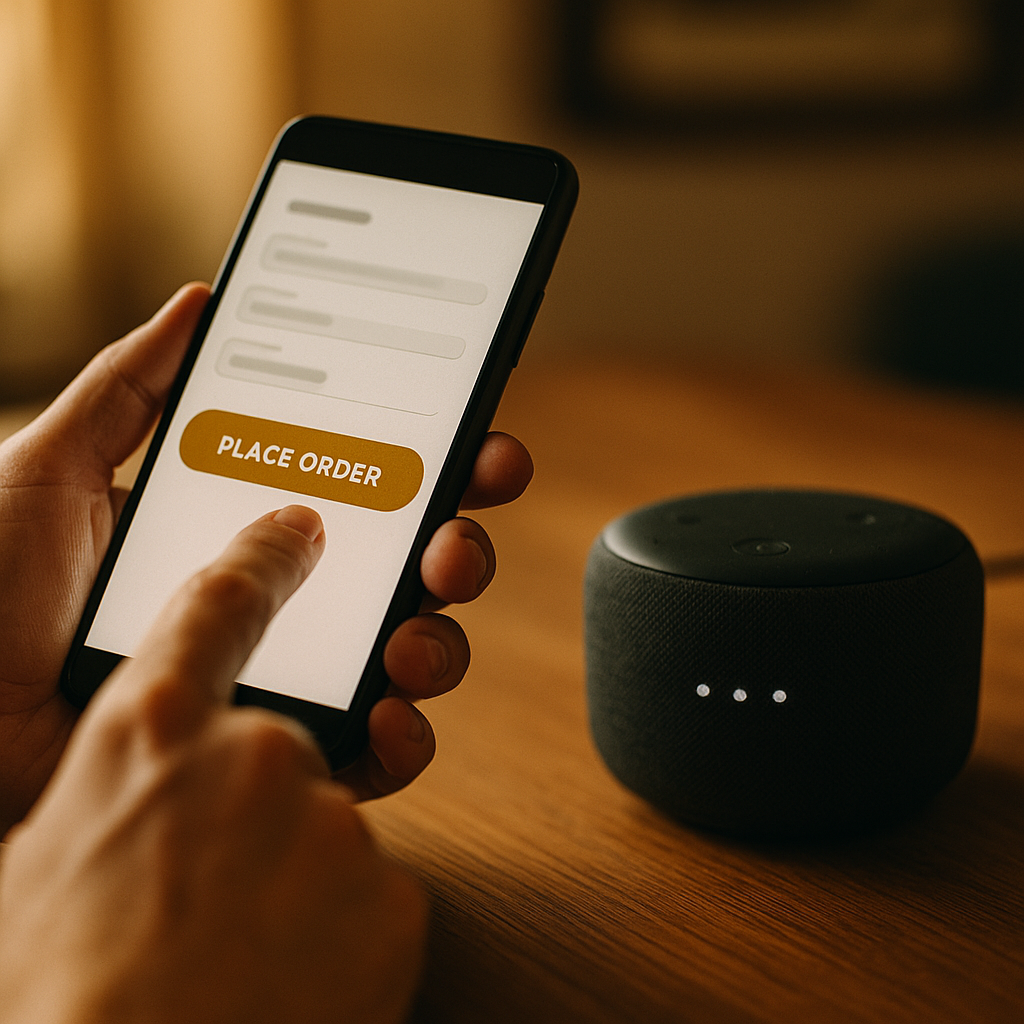
Voice commerce is now a practical checkout option in 2025, and tiny wording choices can decide whether customers finish or abandon. The science of micro copy for AI driven voice checkout interfaces blends cognitive psychology, conversation design, and trust engineering to reduce friction and prevent errors. In this article, you’ll learn what to say, when to say it, and why it works—before the next “confirm purchase” moment.
Voice commerce microcopy: how tiny phrases shape decisions
Microcopy is the short, functional language that guides users through actions: confirmations, error prompts, permissions, disclosures, and reassurance. In voice commerce microcopy, those same moments happen without visual scaffolding, which changes how people interpret risk, effort, and control.
Two constraints make voice checkout uniquely sensitive to wording:
- Low scan-ability: Users cannot skim. They must hold details in working memory while the system speaks.
- High social and ambient noise: People speak in kitchens, cars, and shared spaces, which raises misrecognition risk and privacy concerns.
Microcopy should therefore do three jobs at once: compress information, confirm intent, and protect the user. When you get this right, you reduce cognitive load and improve completion rates without adding steps.
Design the language around “decision points,” not screens. In voice checkout, the key decision points are: adding an item, choosing shipping, selecting a payment method, reviewing totals, confirming purchase, handling errors, and post-purchase next steps (receipt, tracking, returns). If your microcopy is vague at any of these, users will ask follow-up questions—or worse, stop trusting the flow.
AI voice UX writing: cognitive load, attention, and memory limits
AI voice UX writing performs best when it respects how people process spoken information. Spoken content is ephemeral; it disappears unless repeated. That means your microcopy should be chunked, sequenced, and repeatable on demand.
Use these principles to reduce mental effort:
- One intent per turn: Ask for one decision at a time. Avoid stacking choices (“Would you like standard shipping, express shipping, or pickup, and should I use your Visa ending 1234?”).
- Progressive disclosure: Give essentials first, details second. For example: “Your total is $42.18. Want a breakdown?”
- Short confirmations: Confirm the system’s understanding in 6–10 words when possible: “Got it: two items, standard shipping.”
- Memory-safe numbers: Speak numbers clearly and with context. Prefer “Visa ending 1234” over reading full digits. For addresses, confirm the city and ZIP, then offer to repeat the full line.
- Offer control commands: Provide simple escapes: “Say ‘repeat,’ ‘change,’ or ‘cancel.’” This reduces anxiety and improves perceived control.
Anticipate follow-up questions by embedding optional branches. Instead of reciting a long policy, provide a concise summary and a choice: “Returns are free within 30 days. Want the details sent to your email?” That keeps the main path fast while remaining transparent.
Also design for speech repair. People correct themselves mid-sentence. Microcopy should accept partial intents and confirm: “No problem—did you mean change the shipping speed or the address?” Clear repair prompts prevent users from repeating everything.
Conversational checkout design: turn-taking, confirmations, and error recovery
Conversational checkout design treats checkout like a structured dialogue with guardrails. The microcopy must signal turn-taking, manage interruptions, and recover from misunderstandings without blame.
Build a predictable rhythm:
- System states its understanding (“I have your cart ready.”)
- System asks for the next decision (“Use your saved address in Austin?”)
- User answers
- System confirms and moves forward (“Great—standard shipping. Next, payment.”)
Use the right confirmation type for the risk level:
- Implicit confirmation for low-risk actions: “Adding oat milk to your cart.”
- Explicit confirmation for high-risk actions: “To place the order for $42.18, say ‘confirm purchase.’”
- Read-back confirmation when errors are costly: shipping address changes, delivery windows, or substituting items.
Error microcopy is where trust is won or lost. Keep it:
- Neutral: Avoid “You said…” when recognition is uncertain. Prefer “I heard…” or “I may have misheard.”
- Specific: State what failed and what to do next: “I couldn’t verify the card. Say ‘try again’ or ‘use a different card.’”
- Non-blocking: Offer an alternative channel when needed: “I can send a secure link to finish payment.”
Design for interruptions and barge-in (users speaking over the assistant). Microcopy can invite it: “You can interrupt me anytime by saying ‘stop.’” That reduces frustration and speeds up experienced users.
Voice checkout conversion optimization: trust signals and compliance microcopy
Voice checkout conversion optimization depends heavily on perceived security and transparency because users cannot “see” badges, totals, or policies. Microcopy must carry those trust cues without sounding like legalese.
Include trust signals at the moments users are most likely to hesitate:
- Before payment: “I’ll only charge you after you confirm.”
- Before using a saved method: “Use Visa ending 1234?” (Never read full card numbers.)
- Before sharing personal data aloud: “For privacy, I can send a link to confirm your address.”
Compliance and consent should be clear, proximate, and revocable. That means:
- Ask at the point of need: permissions for biometrics, voice profile, or sending links should appear right when used.
- Use plain language: “I’ll store your address for faster checkout. You can delete it anytime.”
- Separate marketing from transactional consent: “Want order updates by text?” should not be bundled into purchase confirmation.
Pricing transparency matters more in voice. Always confirm the total and the largest drivers of change (shipping, tax, tip, discounts). If totals change, say why: “Your total increased by $4.99 for express shipping.” This prevents “surprise cost” abandonment and reduces chargeback risk.
For regulated products, age gates, or subscription terms, avoid dumping long disclosures. Use a two-layer approach:
- Layer 1 (spoken): a short, clear summary of the key commitment.
- Layer 2 (available): send full terms via email/SMS or read them on request: “Say ‘details’ to hear the full policy.”
This approach supports helpful content standards: it answers the immediate decision while offering deeper information without derailing checkout.
Microcopy testing for voice AI: metrics, experiments, and personalization
Microcopy testing for voice AI should combine quantitative funnel metrics with qualitative conversation reviews. Because voice is sequential, small wording changes can produce big differences in completion time, error rate, and trust.
Measure outcomes that map to user experience, not just sales:
- Checkout completion rate and step-level drop-off (e.g., payment selection, final confirmation).
- Time to complete and turn count (how many back-and-forth exchanges).
- Repair rate (how often users must correct the system) and repeat rate (“repeat that”).
- Escalation rate to human support or link-out flows.
- Post-purchase regret signals such as cancellations, refunds, and “I didn’t mean to” contacts.
Run experiments responsibly:
- A/B test one variable at a time: verb choice, confirmation phrasing, or ordering of information.
- Stratify by context: home smart speakers vs. mobile voice; returning vs. new customers; noisy vs. quiet environments (proxy via ASR confidence).
- Guardrail metrics: do not improve conversion at the expense of consent clarity, pricing transparency, or error recovery.
Personalization should be situational, not creepy. Use behavior-based cues (“You usually choose standard shipping”) rather than sensitive inferences. Always provide an opt-out: “Want me to remember that for next time?”
Close the loop with human review. Conversation designers should regularly audit transcripts for ambiguity, coercive language, and failure modes. If users keep asking “What’s the total again?” that is not a user problem; it is a microcopy sequencing problem.
Inclusive voice interface copy: accessibility, accents, and multilingual clarity
Inclusive voice interface copy improves performance for everyone, not only users with disabilities or nonstandard speech patterns. In voice checkout, inclusivity reduces errors, increases trust, and expands reach.
Key practices:
- Use simple, global English (or local equivalent): prefer “delivery” over region-specific jargon; avoid idioms.
- Provide alternatives to speech-only input: “I can text you a secure link to confirm” supports users in public spaces or with speech impairments.
- Design for accents and varied phrasing: microcopy should invite multiple valid responses: “Say ‘yes,’ ‘confirm,’ or ‘that’s right.’”
- Avoid homophones and similar-sounding options: If two shipping methods sound alike, add distinguishing descriptors: “Express (1–2 days)” vs. “Standard (3–5 days).”
- Speak at a steady pace: For critical info, slow slightly and pause between chunks: total, address city/ZIP, delivery window.
Accessibility also includes cognitive accessibility. Keep prompts consistent across sessions, avoid surprise branching, and make the “undo” path easy: “If anything looks wrong, say ‘change’ and tell me what to update.” When users trust they can correct mistakes quickly, they commit faster.
Strong voice checkout copy in 2025 is engineered, not improvised. It reduces cognitive load, confirms intent at the right risk moments, and earns trust with transparent totals, consent, and error recovery. Treat every prompt as a decision aid: short, specific, and controllable. When your interface anticipates questions and offers clear exits, customers move from hesitation to confident confirmation.
FAQs
What is microcopy in a voice checkout?
It is the short spoken (and sometimes follow-up text) language that guides the user through payment, shipping, confirmations, errors, and receipts. In voice, microcopy replaces many visual cues, so it must be clear, concise, and easy to repeat.
How do I confirm purchases safely in a voice interface?
Use explicit confirmation for the final step, include the total, and require a distinct action phrase: “To place the order for $42.18, say ‘confirm purchase.’” Also offer “cancel” and “change” commands, and avoid confirming on ambiguous “yes” alone when risk is high.
How much information should the assistant read aloud?
Read the minimum needed to make the next decision, then offer optional detail. For example: total, delivery date range, and payment method label first; breakdown, policies, and full address only on request or when changes occur.
What’s the best way to handle recognition errors during checkout?
Use neutral language (“I may have misheard”), restate what you understood, and offer two clear next actions (“try again” or “choose from options”). Keep the user’s progress, and provide a secure link fallback for sensitive steps.
How do I test voice microcopy effectively?
Combine A/B tests with conversation reviews. Track completion rate, turn count, repair rate, repeats, and escalation. Test one wording change at a time and use guardrails so conversion gains do not reduce consent clarity or pricing transparency.
Can microcopy improve trust in AI-driven checkout?
Yes. Clear totals, transparent explanations for price changes, consent that is specific and revocable, and privacy-respecting alternatives (like sending a secure link) are trust signals users can understand instantly in audio form.
Top Influencer Marketing Agencies
The leading agencies shaping influencer marketing in 2026
Agencies ranked by campaign performance, client diversity, platform expertise, proven ROI, industry recognition, and client satisfaction. Assessed through verified case studies, reviews, and industry consultations.
Moburst

-
2

The Shelf
Boutique Beauty & Lifestyle Influencer AgencyA data-driven boutique agency specializing exclusively in beauty, wellness, and lifestyle influencer campaigns on Instagram and TikTok. Best for brands already focused on the beauty/personal care space that need curated, aesthetic-driven content.Clients: Pepsi, The Honest Company, Hims, Elf Cosmetics, Pure LeafVisit The Shelf → -
3

Audiencly
Niche Gaming & Esports Influencer AgencyA specialized agency focused exclusively on gaming and esports creators on YouTube, Twitch, and TikTok. Ideal if your campaign is 100% gaming-focused — from game launches to hardware and esports events.Clients: Epic Games, NordVPN, Ubisoft, Wargaming, Tencent GamesVisit Audiencly → -
4

Viral Nation
Global Influencer Marketing & Talent AgencyA dual talent management and marketing agency with proprietary brand safety tools and a global creator network spanning nano-influencers to celebrities across all major platforms.Clients: Meta, Activision Blizzard, Energizer, Aston Martin, WalmartVisit Viral Nation → -
5

The Influencer Marketing Factory
TikTok, Instagram & YouTube CampaignsA full-service agency with strong TikTok expertise, offering end-to-end campaign management from influencer discovery through performance reporting with a focus on platform-native content.Clients: Google, Snapchat, Universal Music, Bumble, YelpVisit TIMF → -
6

NeoReach
Enterprise Analytics & Influencer CampaignsAn enterprise-focused agency combining managed campaigns with a powerful self-service data platform for influencer search, audience analytics, and attribution modeling.Clients: Amazon, Airbnb, Netflix, Honda, The New York TimesVisit NeoReach → -
7

Ubiquitous
Creator-First Marketing PlatformA tech-driven platform combining self-service tools with managed campaign options, emphasizing speed and scalability for brands managing multiple influencer relationships.Clients: Lyft, Disney, Target, American Eagle, NetflixVisit Ubiquitous → -
8

Obviously
Scalable Enterprise Influencer CampaignsA tech-enabled agency built for high-volume campaigns, coordinating hundreds of creators simultaneously with end-to-end logistics, content rights management, and product seeding.Clients: Google, Ulta Beauty, Converse, AmazonVisit Obviously →