


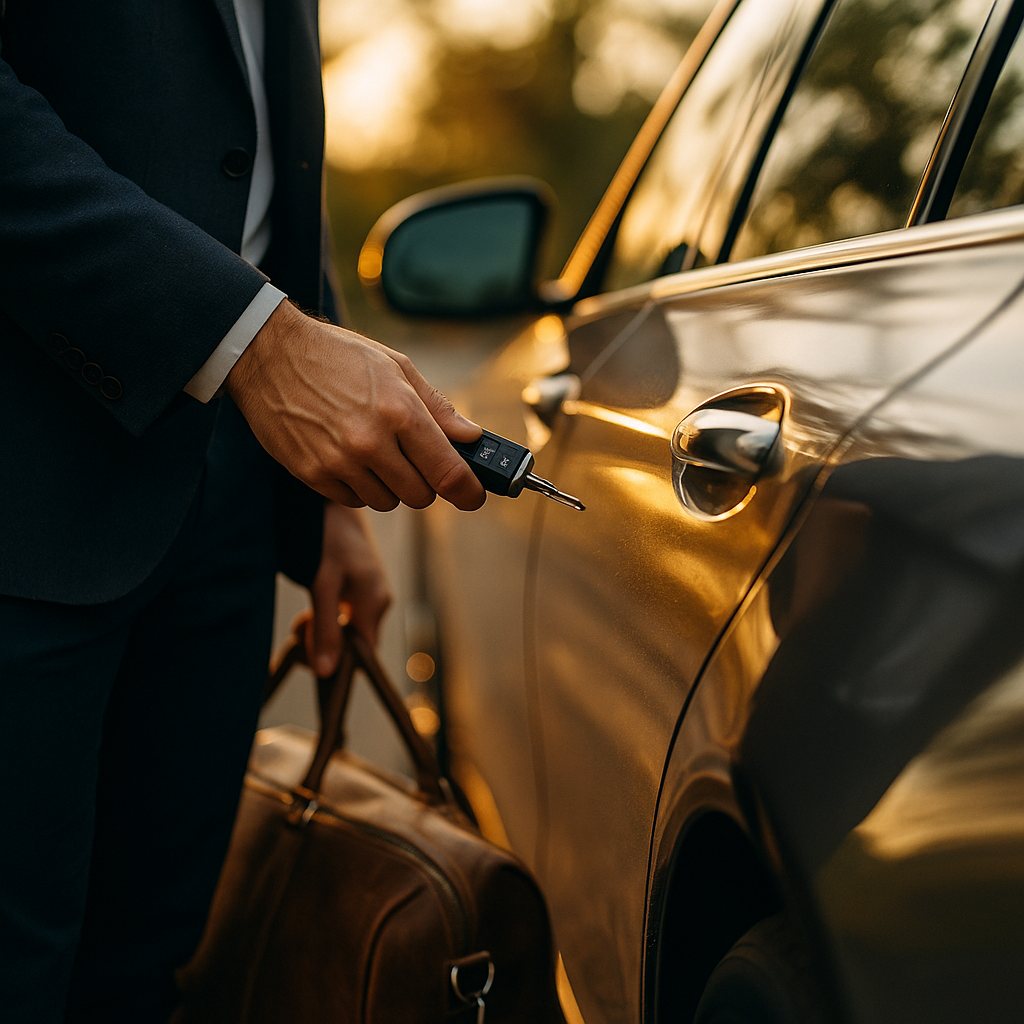
The Psychology of Friction in Luxury Design explains why premium products often feel better when they ask more of you. From stiff leathers to weighty lids and deliberate rituals, “harder” can signal value, authenticity, and care. In 2025, as digital convenience peaks, luxury increasingly competes on meaningful effort and tactile proof. The real question is: where does friction elevate—and where does it annoy?
Perceived value cues: why effort can feel premium
Luxury is rarely judged on function alone. Buyers also evaluate meaning: craftsmanship, rarity, authenticity, and the sense that a product was made with intention. Friction—small, deliberate obstacles—acts as a perceived value cue. When a task takes slightly more effort, people often infer that the outcome is more valuable, more serious, or more expertly made. This is not about making things difficult for its own sake; it is about shaping interpretation.
Designers use friction to create “proof points” that are easy to sense and hard to fake. A heavy clasp that closes with a precise resistance can imply robust engineering. A mechanical crown that takes a firm, smooth twist can imply sealed tolerances. A dense paper stock can imply editorial seriousness. These cues reduce uncertainty in a category where the buyer cannot fully verify quality at a glance.
Friction also creates a moment of attention. If everything is instantaneous, nothing feels significant. When a brand introduces a measured step—lifting a lid, untying a ribbon, turning a latch—the user slows down. That pause supports story: this is special, handle it differently. This is why the same object can feel ordinary in one packaging system and premium in another, even when the material bill is similar.
Follow-up you may be asking: Doesn’t adding effort risk frustrating customers? Yes—if the friction blocks progress or feels arbitrary. Premium friction must feel purposeful, reliable, and proportionate to the reward.
Sensory design: tactile feedback, weight, and resistance
Luxury is experienced through the body. Sensory design uses weight, texture, sound, temperature, and resistance to create a perception of quality that is immediate and difficult to argue with. Friction is central here because it is felt as controlled resistance—an embodied signal that something is substantial and engineered.
Common luxury “harder is better” moves include:
- Weight with balance: Not simply heavy, but stable and centered. A well-balanced weight suggests thoughtful internal architecture.
- High-resolution tactility: Fine grain, crisp knurling, or leather that is firm at first touch. The detail feels intentional, not mushy or generic.
- Controlled friction surfaces: Micro-textured metals, matte coatings, or ceramic finishes that resist slips and leave less visible wear.
- Mechanical “gating”: A cap that requires a half-turn and a lift; a latch that needs a press-and-slide. The sequence communicates precision.
- Sound design: A muted click, a low thud, a soft hiss. These are acoustic confirmations of closure, seal, and stability.
Done well, these details reduce the buyer’s fear of being fooled. Luxury buyers are often purchasing across distance—online, through a reseller, or after limited physical exposure. Sensory cues that translate through short interactions help validate a price.
Practical implication for brands: If you remove too much friction, you may also remove sensory evidence. A featherlight lid can be convenient, but it can also feel fragile. The goal is not maximum resistance; it is legible quality.
Luxury rituals: how intentional inconvenience builds attachment
Luxury rituals turn use into ceremony. Rituals create attachment because they structure attention and memory. When a product asks you to do something slightly slower—wrap, tie, polish, wind, decant—you participate in the brand’s world. That participation can strengthen ownership pride and reduce post-purchase doubt.
Ritual friction works best when it creates one or more of these outcomes:
- Anticipation: A short sequence before access increases perceived reward. Opening becomes an event.
- Competence: Learning a mechanism (without struggling) creates mastery. Mastery feels premium because it is earned.
- Care signaling: If a product “asks” to be cared for, owners treat it as valuable. This supports longevity and resale value.
- Story continuity: Repeated actions create a personal narrative: “This is my routine.”
Examples are everywhere: the deliberate pull of a drawstring pouch, the slow reveal of nested packaging, the measured press of a flush button, the firm snap of a case. Even fragrance can use friction as ritual—removing a cap, pressing a stiff atomizer, applying with controlled dosage. The point is not delay. The point is meaningful steps that match the brand’s promise.
Follow-up you may be asking: Do younger buyers still want rituals? Many do, but they want rituals that feel honest and sustainable. If the ritual is mostly waste (excess layers, disposable spectacle), it undermines trust. Ritual must earn its footprint.
Brand trust signals: craftsmanship, security, and “anti-counterfeit” friction
Brand trust signals matter more when prices are high and counterfeits are common. Friction can act as a trust layer: it makes a product harder to copy convincingly and easier to authenticate through use. A complicated clasp, a precisely threaded closure, or a multi-stage mechanism requires tighter manufacturing control than a simple snap.
Friction also supports security and product integrity:
- Seals and closures: Resistance can indicate a proper seal that protects contents (skincare, spirits, high-value electronics).
- Tamper evidence: A first-open “break” moment provides reassurance that the item is untouched.
- Authentication rituals: Serial plates, micro-engravings, or NFC-enabled verification can add a step that feels premium when integrated seamlessly.
In 2025, buyers are alert to “performative luxury”—items that look expensive but feel flimsy in the hand. Controlled friction helps counter that suspicion. However, it must be paired with reliability. If a mechanism sticks unpredictably, it stops being a trust signal and becomes a defect.
EEAT note (how to evaluate claims): Strong brands test friction elements for durability (cycle testing), environmental tolerance (temperature, humidity, grit), and variance control (tight tolerances across production). When you audit a luxury experience, look for consistency: the same smooth resistance every time, not occasional grinding or wobble.
UX friction in premium experiences: where to add it—and where to remove it
UX friction in premium experiences is the difference between “delightfully deliberate” and “needlessly difficult.” In physical luxury, friction often supports meaning. In digital luxury, friction should be used sparingly and strategically, because users interpret digital delays as incompetence unless they are clearly intentional and beneficial.
Use friction when it protects the customer or deepens confidence:
- High-stakes confirmation: Extra confirmation for large purchases, custom orders, or irreversible personalization reduces regret.
- Human access: A short step to reach a specialist (not an endless maze) can signal service, not obstruction.
- Provenance and care guidance: A guided step that teaches storage, maintenance, or sizing can prevent returns and build satisfaction.
- Queueing for scarcity: When transparent and fair, a queue can reinforce exclusivity and reduce bot abuse.
Remove friction when it feels like the brand is protecting itself at the customer’s expense:
- Hidden fees and opaque policies: Complexity here reads as manipulation, not luxury.
- Unclear navigation: Confusion is not exclusivity. It is poor design.
- Unnecessary account creation: For browsing or basic support, forced sign-ups feel like data extraction.
Rule of thumb: Premium friction should either (1) create sensory evidence of quality, (2) increase safety and certainty, or (3) strengthen ritual and attachment. If it does none of these, it is likely harming conversion and loyalty.
Design ethics: sustainability, accessibility, and the right amount of “hard”
Design ethics decides whether friction is respectful. Luxury can justify deliberate steps, but it cannot justify waste, exclusion, or harm. In 2025, customers scrutinize sustainability claims and accessibility choices. The challenge is to keep “harder is better” aligned with real value—durability, repairability, and responsible materials—rather than disposable theatrics.
Ethical friction design practices include:
- Durability-first friction: Choose resistance that comes from robust construction (metal hinges, quality threads), not from cheap tightness that will wear out quickly.
- Repairable mechanisms: A premium clasp should be serviceable. If friction elements fail and cannot be repaired, the brand’s credibility drops.
- Accessible alternatives: Offer options for people with limited grip strength or dexterity—without downgrading status. For example, optional assist features, better leverage, or alternative closures that remain premium.
- Less waste, more permanence: If packaging ritual creates friction, let it become storage, display, or reuse—rather than immediate trash.
- Transparent rationale: Explain why a step exists (protection, authenticity, care). Customers accept friction more readily when they understand the benefit.
Luxury earns permission to slow the user down when the result is a better object and a better relationship with it. When friction becomes exclusionary or wasteful, it stops being luxury and starts being ego.
FAQs: The Psychology of Friction in Luxury Design
What does “friction” mean in luxury design?
Friction is any intentional resistance or extra step in using a product or service—like a firm closure, a multi-step opening, or a guided purchase flow. In luxury, it often functions as a cue for quality, craft, security, or ritual.
Why does “harder” sometimes feel more luxurious?
Because controlled effort can signal precision, durability, and authenticity. When resistance is smooth and consistent, users read it as evidence of engineering and materials that justify a premium price.
Can friction hurt customer satisfaction?
Yes. Friction hurts when it feels arbitrary, unreliable, or self-serving (for example, confusing policies or unnecessary hoops). The best luxury friction is purposeful, predictable, and paired with a clear benefit.
How can brands test whether friction is “good” friction?
Run usability testing for frustration points, measure task completion time, and add product cycle testing for mechanical elements. If customers describe the experience as “precise,” “reassuring,” or “ritual-like,” friction is likely adding value; if they say “annoying” or “fiddly,” it is not.
Is friction compatible with sustainability?
Yes—when it supports durability, repair, and reuse. For example, a robust reusable case with a satisfying latch can be both premium and waste-reducing. Wasteful, disposable layers of packaging are harder to justify in 2025.
How should digital luxury use friction?
Digital friction should protect customers and reinforce confidence—such as clear authentication, thoughtful confirmations, and access to real experts. Avoid friction that looks like poor performance, dark patterns, or data harvesting.
What’s an example of “too much” friction?
A closure that regularly requires excessive force, a mechanism that jams, or a buying process that hides key information until late stages. If friction creates uncertainty or physical strain, it stops signaling quality.
Luxury designers can use friction to make quality legible: weight that steadies the hand, closures that confirm precision, and rituals that reward attention. In 2025, when convenience is easy to copy, brands win by engineering resistance that feels intentional and consistent. The takeaway is simple: add friction only when it creates proof—of craft, security, or care—and remove it everywhere else. That’s how harder becomes better.
Top Influencer Marketing Agencies
The leading agencies shaping influencer marketing in 2026
Agencies ranked by campaign performance, client diversity, platform expertise, proven ROI, industry recognition, and client satisfaction. Assessed through verified case studies, reviews, and industry consultations.
Moburst

-
2

The Shelf
Boutique Beauty & Lifestyle Influencer AgencyA data-driven boutique agency specializing exclusively in beauty, wellness, and lifestyle influencer campaigns on Instagram and TikTok. Best for brands already focused on the beauty/personal care space that need curated, aesthetic-driven content.Clients: Pepsi, The Honest Company, Hims, Elf Cosmetics, Pure LeafVisit The Shelf → -
3

Audiencly
Niche Gaming & Esports Influencer AgencyA specialized agency focused exclusively on gaming and esports creators on YouTube, Twitch, and TikTok. Ideal if your campaign is 100% gaming-focused — from game launches to hardware and esports events.Clients: Epic Games, NordVPN, Ubisoft, Wargaming, Tencent GamesVisit Audiencly → -
4

Viral Nation
Global Influencer Marketing & Talent AgencyA dual talent management and marketing agency with proprietary brand safety tools and a global creator network spanning nano-influencers to celebrities across all major platforms.Clients: Meta, Activision Blizzard, Energizer, Aston Martin, WalmartVisit Viral Nation → -
5

The Influencer Marketing Factory
TikTok, Instagram & YouTube CampaignsA full-service agency with strong TikTok expertise, offering end-to-end campaign management from influencer discovery through performance reporting with a focus on platform-native content.Clients: Google, Snapchat, Universal Music, Bumble, YelpVisit TIMF → -
6

NeoReach
Enterprise Analytics & Influencer CampaignsAn enterprise-focused agency combining managed campaigns with a powerful self-service data platform for influencer search, audience analytics, and attribution modeling.Clients: Amazon, Airbnb, Netflix, Honda, The New York TimesVisit NeoReach → -
7

Ubiquitous
Creator-First Marketing PlatformA tech-driven platform combining self-service tools with managed campaign options, emphasizing speed and scalability for brands managing multiple influencer relationships.Clients: Lyft, Disney, Target, American Eagle, NetflixVisit Ubiquitous → -
8

Obviously
Scalable Enterprise Influencer CampaignsA tech-enabled agency built for high-volume campaigns, coordinating hundreds of creators simultaneously with end-to-end logistics, content rights management, and product seeding.Clients: Google, Ulta Beauty, Converse, AmazonVisit Obviously →