


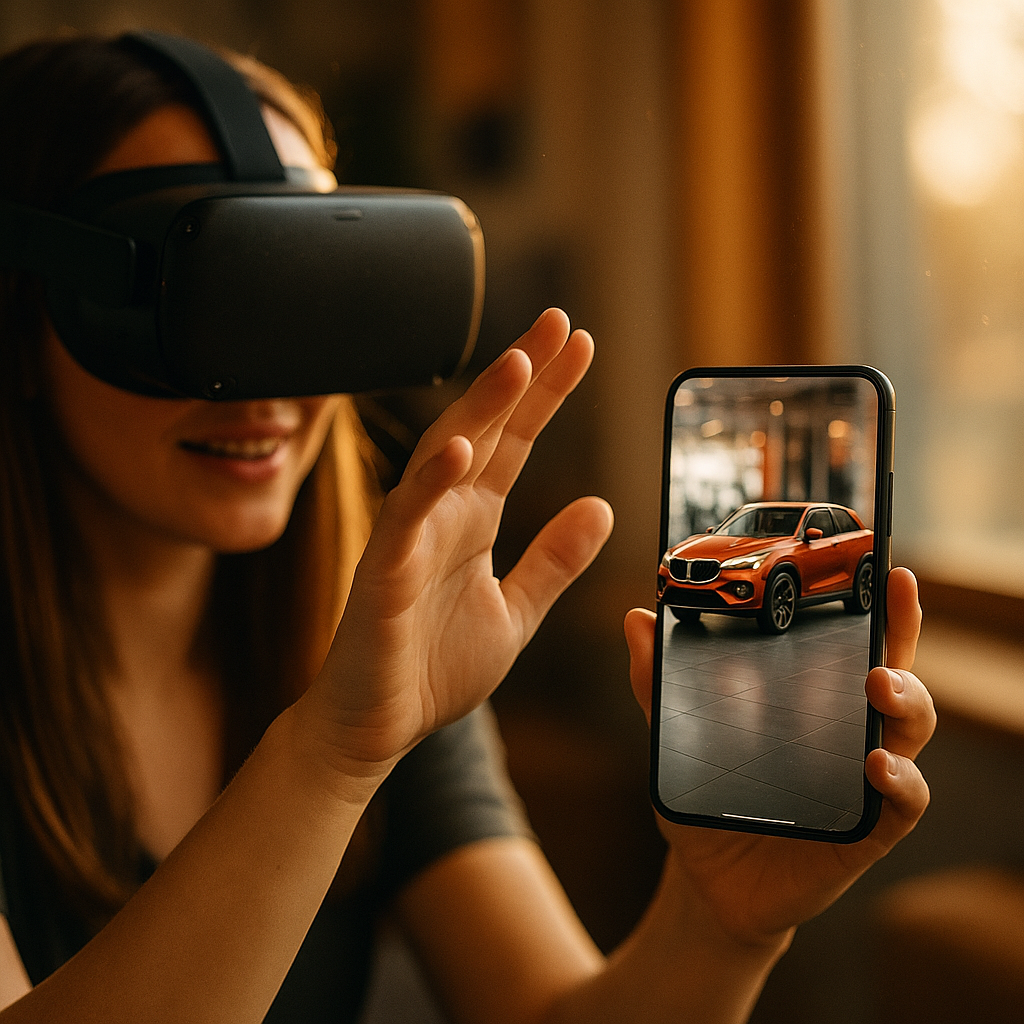
The Science of Visual Anchoring in 3D Immersive Brand Advertisements is reshaping how audiences notice, remember, and trust brands in interactive spaces. When visuals “stick” in a viewer’s mind, it is rarely accidental; it is engineered through perception, attention, and memory science. This guide explains what makes anchors work, how to measure them, and how to deploy them without breaking immersion—ready to see why some 3D ads feel unforgettable?
What Is Visual Anchoring in 3D Advertising (secondary keyword: visual anchoring)
Visual anchoring is the deliberate placement and design of a stable, meaningful visual element that helps viewers orient, interpret, and remember a brand message. In 3D environments, anchors do more than catch the eye. They act like perceptual “home bases” that the brain returns to while scanning a scene, interacting with objects, or navigating space.
In traditional 2D ads, anchors often take the form of a logo lockup, hero product shot, or a distinctive color field. In 3D immersive contexts, anchors can be spatial: a branded object that remains consistently positioned, a light source that highlights the product, a signature motion path, or a repeated icon that appears at key interaction moments.
Anchors matter because immersion increases sensory load. A viewer can look anywhere, move closer, ignore a message, or focus on details unrelated to the brand. A well-built anchor reduces cognitive effort by answering key questions quickly: Where should I look? What is important? What does it mean? What do I do next?
To be effective, an anchor must be (1) salient enough to be found, (2) stable enough to be trusted, and (3) semantically tied to the brand promise so it drives memory and preference rather than mere attention.
How Spatial Attention and Depth Cues Drive Recall (secondary keyword: spatial attention)
In 3D, attention is guided by the same core systems as in everyday perception: bottom-up signals (contrast, motion, brightness) and top-down goals (intent, curiosity, task). Spatial attention becomes more complex because depth, occlusion, and viewer movement continuously change what is visible and what feels important.
Visual anchors win when they leverage how the brain selects information under load:
- Salience: High-contrast edges, distinct silhouettes, and controlled motion attract attention. In 3D, motion should be purposeful; constant animation can become “visual noise” and reduce recall.
- Depth cues: Scale, parallax, shading, and focus effects help the viewer judge distance and importance. A product that is slightly forward in depth, cleanly lit, and unobstructed is easier to parse and remember.
- Occlusion management: If a key branded element is frequently blocked by other objects, the brain treats it as unreliable. Ensure anchors remain discoverable from typical viewing angles.
- Attentional rhythm: People scan in cycles. Place secondary brand signals (tagline, icon, packaging detail) at natural “pause points,” such as after an interaction, at scene transitions, or when the viewer completes a micro-task.
Recall improves when anchors align with task flow. If the ad invites a viewer to pick up an item, rotate it, or “try” a feature, the anchor should reinforce that action. For example, a subtle highlight that consistently points to the interaction zone, followed by a crisp brand mark appearing at completion, forms a memory chain: action → reward → brand.
A common follow-up question is whether anchors should always be central. In immersive ads, not always. Center placement can feel intrusive if it blocks exploration. Instead, design for “findability” using spatial cues: gentle leading lines, light cones, sound direction (where supported), and consistent brand geometry that the user can recognize even in peripheral vision.
Neuroscience of Memory Encoding in Immersive Experiences (secondary keyword: memory encoding)
Strong anchors work because they improve memory encoding: the brain’s process of converting perception into durable memory. In immersive experiences, encoding depends on attention, emotional relevance, and meaning. If an element is noticed but feels irrelevant, it may not consolidate into brand memory.
Several evidence-backed mechanisms help explain why visual anchoring boosts brand impact:
- Distinctiveness: The brain remembers what differs from the background. A unique silhouette, material, or color signature that remains consistent across scenes supports recognition later.
- Association: Memory strengthens when multiple cues point to the same meaning. When product design, iconography, and microcopy all reinforce a single promise (speed, safety, comfort), the anchor becomes easier to retrieve.
- Chunking: Viewers store information in compact units. A well-designed anchor collapses complexity into one “chunk,” such as a signature product form plus a single benefit statement.
- Repetition with variation: Repeating the same anchor in the same way can become invisible. Repeating it with slight contextual changes (different angles, use moments, lighting) strengthens memory without boredom.
Immersion can also increase emotional engagement, which supports encoding when used ethically. Avoid manipulating fear or discomfort. Instead, focus on competence signals: clarity, responsiveness, and a sense of control. When a 3D ad feels stable and intuitive, the viewer’s brain has more bandwidth to store the brand message.
Another practical question: should you prioritize the logo as the primary anchor? Not necessarily. In many categories, the product itself is the better anchor—especially if its form factor or packaging is distinctive. Use the logo as a reinforcing cue at high-value moments (first comprehension, feature confirmation, purchase intent), not as constant wallpaper.
Design Principles for High-Trust Immersive Brand Ads (secondary keyword: immersive brand ads)
Effective immersive brand ads rely on design discipline: anchoring must support user goals while keeping the brand unmistakable. In 2025, audiences also evaluate experiences through a trust lens: they notice when an ad is confusing, misleading, or overly aggressive.
Use these principles to build anchors that feel native to the environment and credible to the viewer:
- Stability over spectacle: Keep the primary anchor consistent in position or behavior. If the anchor teleports, changes scale unpredictably, or violates physics, it can reduce perceived reliability.
- Material realism (or consistent stylization): Whether you aim for photoreal or stylized, apply materials consistently. An anchor that looks “pasted on” reads as an ad artifact rather than part of the world.
- Hierarchy that respects exploration: Design a primary anchor (what must be remembered), secondary anchors (supporting proof), and tertiary elements (atmosphere). Too many anchors compete and dilute memory.
- Micro-interactions that confirm meaning: When the user looks at, approaches, or touches the anchor, provide a subtle response (highlight, haptic if available, short label) that clarifies what it is and why it matters.
- Accessibility and comfort: Avoid rapid flicker, aggressive motion, or forced camera moves. Comfort is a trust factor; discomfort can transfer negative affect to the brand.
Brand safety and clarity also support EEAT expectations. Disclose sponsorship where required, avoid false demonstrations, and ensure any performance claims can be substantiated. If you show a feature in 3D, depict it accurately or label it as a conceptual visualization.
To answer a common implementation question: start by identifying the single most valuable memory you want the viewer to keep (for example, “this product removes a step” or “this service reduces risk”). Build the primary anchor to encode that memory in one glance, then let interactions deepen proof rather than introducing new claims.
Measurement: Eye Tracking, Gaze Maps, and Brand Lift (secondary keyword: eye tracking)
If you cannot measure whether viewers noticed and understood your anchor, you cannot reliably improve it. Eye tracking and gaze-based analytics are especially useful in immersive formats because they reveal what people actually attend to, not what they say they noticed.
Use a measurement stack that matches the maturity of your campaign:
- Gaze heatmaps and dwell time: Identify whether the primary anchor gets early attention and whether it holds attention long enough for comprehension. Pair dwell time with comprehension checks; long attention can also signal confusion.
- Sequence analysis: Track common gaze paths (first look, second look, final look). Strong anchors often appear early and reappear at key decision points.
- Interaction telemetry: Measure grabs, rotations, proximity, feature toggles, and completion rates. Anchors should correlate with meaningful actions, not idle fiddling.
- Brand lift studies: Validate outcomes like ad recall, brand favorability, and purchase intent. Combine with creative diagnostics so you can link lift to specific anchor choices.
- A/B testing of anchor variables: Test one variable at a time: silhouette, color accent, placement depth, motion cadence, or label style. Otherwise, results are hard to interpret.
When interpreting results, avoid a common trap: optimizing for attention alone. An anchor that pulls gaze but lowers sentiment (because it feels intrusive) may hurt long-term brand equity. Balance metrics across attention, comprehension, trust, and conversion signals. If you run only one diagnostic question post-exposure, prioritize “What do you remember?” followed by “What does the brand offer?” to confirm that the anchor encoded the right meaning.
Privacy and consent are non-negotiable. In 2025, treat gaze and interaction data as potentially sensitive. Collect the minimum needed, communicate clearly, and align storage and usage with applicable regulations and platform policies.
Implementation Playbook: Building Anchors That Scale Across Platforms (secondary keyword: 3D immersive advertising)
Scaling 3D immersive advertising across devices and platforms requires an anchor system that survives changes in field of view, rendering quality, lighting, and interaction models. What works in a high-end headset may fail on a mobile AR experience if the anchor relies on subtle shading or tiny typography.
Apply this practical playbook:
- Define the anchor system: Document the primary anchor (form, color, placement rules), secondary anchors (icons, UI chips, packaging detail), and “do not change” elements (brand geometry, key materials).
- Design for discoverability: Use multi-sensory cues where available (spatial audio, haptics). If not, rely on robust visual cues like silhouette and contrast rather than fine texture.
- Set platform-specific thresholds: Establish minimum legibility sizes, safe contrast ratios, and motion limits per device class. Maintain the same meaning even if fidelity changes.
- Plan anchor moments: Place anchors at (1) entry, (2) first interaction, (3) proof moment, and (4) exit. This supports repetition with variation without spamming the viewer.
- Build for performance: Optimize meshes, textures, and shaders so anchors render smoothly. Stutter breaks immersion and reduces trust; a stable anchor is a technical as well as creative goal.
- Validate with real users: Run moderated tests to check if people can explain the offering after a short session. If they cannot, refine the anchor’s clarity before scaling.
When teams ask how many seconds an immersive ad needs, focus instead on time-to-understanding. A strong anchor should communicate the core value quickly, then let the user explore deeper benefits. If understanding takes too long, simplify: reduce competing objects, remove unnecessary motion, and strengthen the semantic link between the anchor and the promise.
FAQs (secondary keyword: visual anchors in XR)
- What are visual anchors in XR, and how are they different from logos?
Visual anchors in XR are stable cues that guide attention and meaning in 3D space. A logo can be an anchor, but anchors can also be product forms, light beams, UI markers, or repeated icons. The key is stability and semantic relevance, not just brand presence.
- How many anchors should a 3D immersive ad include?
Use one primary anchor tied to the main takeaway, supported by two to four secondary anchors that provide proof or guidance. More than that often creates competition and weakens recall.
- Do visual anchors reduce immersion?
They reduce immersion only when they feel forced, block exploration, or behave inconsistently. Anchors that follow the environment’s rules, respect comfort, and reinforce user goals typically increase immersion by reducing confusion.
- What’s the best way to test whether an anchor works?
Combine gaze or attention metrics (dwell time, gaze sequence) with outcome measures (brand recall, message comprehension, favorability). If viewers look at the anchor but cannot explain the offering, the issue is meaning, not visibility.
- Which design element is the strongest anchor: color, motion, or shape?
Shape and silhouette often remain robust across devices and lighting, while color can shift by display and motion can become distracting. The best anchors typically combine a distinctive silhouette with controlled contrast and minimal, purposeful motion.
- How do you keep anchors consistent across AR, web-based 3D, and headsets?
Define non-negotiable anchor attributes (geometry, proportions, placement logic, key materials), then adapt secondary details (texture resolution, UI labels) to each platform’s performance and legibility constraints.
Visual anchoring works in 2025 because it matches how perception and memory operate under immersive load: viewers need stable cues to find meaning quickly and store it reliably. Build one unmistakable primary anchor, reinforce it at key interaction moments, and validate it with gaze, comprehension, and brand lift data. When anchors respect comfort and truthfulness, immersive ads become memorable for the right reasons.
Top Influencer Marketing Agencies
The leading agencies shaping influencer marketing in 2026
Agencies ranked by campaign performance, client diversity, platform expertise, proven ROI, industry recognition, and client satisfaction. Assessed through verified case studies, reviews, and industry consultations.
Moburst

-
2

The Shelf
Boutique Beauty & Lifestyle Influencer AgencyA data-driven boutique agency specializing exclusively in beauty, wellness, and lifestyle influencer campaigns on Instagram and TikTok. Best for brands already focused on the beauty/personal care space that need curated, aesthetic-driven content.Clients: Pepsi, The Honest Company, Hims, Elf Cosmetics, Pure LeafVisit The Shelf → -
3

Audiencly
Niche Gaming & Esports Influencer AgencyA specialized agency focused exclusively on gaming and esports creators on YouTube, Twitch, and TikTok. Ideal if your campaign is 100% gaming-focused — from game launches to hardware and esports events.Clients: Epic Games, NordVPN, Ubisoft, Wargaming, Tencent GamesVisit Audiencly → -
4

Viral Nation
Global Influencer Marketing & Talent AgencyA dual talent management and marketing agency with proprietary brand safety tools and a global creator network spanning nano-influencers to celebrities across all major platforms.Clients: Meta, Activision Blizzard, Energizer, Aston Martin, WalmartVisit Viral Nation → -
5

The Influencer Marketing Factory
TikTok, Instagram & YouTube CampaignsA full-service agency with strong TikTok expertise, offering end-to-end campaign management from influencer discovery through performance reporting with a focus on platform-native content.Clients: Google, Snapchat, Universal Music, Bumble, YelpVisit TIMF → -
6

NeoReach
Enterprise Analytics & Influencer CampaignsAn enterprise-focused agency combining managed campaigns with a powerful self-service data platform for influencer search, audience analytics, and attribution modeling.Clients: Amazon, Airbnb, Netflix, Honda, The New York TimesVisit NeoReach → -
7

Ubiquitous
Creator-First Marketing PlatformA tech-driven platform combining self-service tools with managed campaign options, emphasizing speed and scalability for brands managing multiple influencer relationships.Clients: Lyft, Disney, Target, American Eagle, NetflixVisit Ubiquitous → -
8

Obviously
Scalable Enterprise Influencer CampaignsA tech-enabled agency built for high-volume campaigns, coordinating hundreds of creators simultaneously with end-to-end logistics, content rights management, and product seeding.Clients: Google, Ulta Beauty, Converse, AmazonVisit Obviously →