


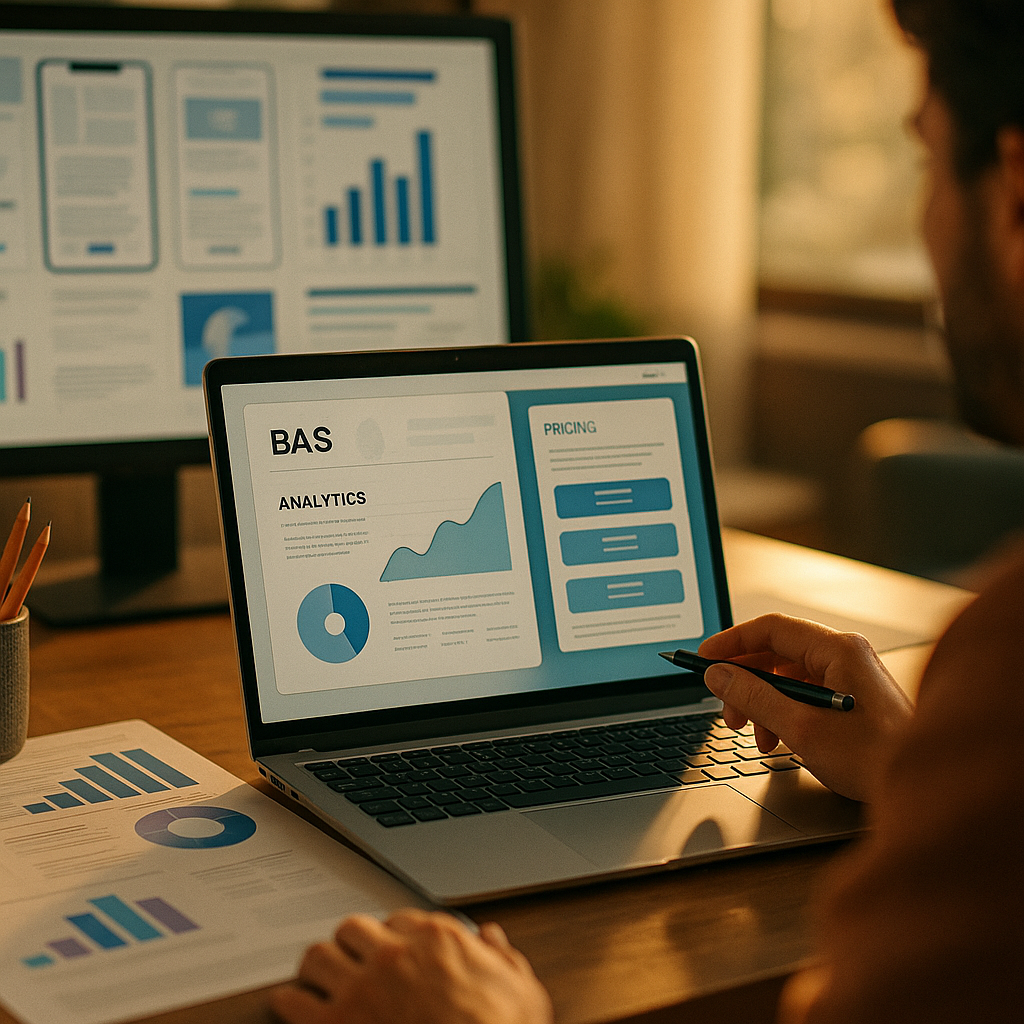
In crowded software markets, B2B SaaS design aesthetics shape first impressions before a demo ever starts. Buyers judge credibility, product maturity, and ease of use within seconds of landing on a site or opening an interface. Visual polish is no longer decorative; it influences trust, conversion, and sales velocity. So why do polished products consistently win more leads?
Why visual credibility matters in SaaS lead generation
In B2B SaaS, buyers are rarely making impulsive decisions. They are assessing risk, involving multiple stakeholders, and comparing vendors that often promise similar outcomes. That makes visual credibility a commercial advantage. A polished interface, consistent brand system, and modern website signal that the company is stable, detail-oriented, and capable of delivering a reliable product.
This matters because software buyers often encounter design before they encounter proof. A visitor may see your homepage, pricing page, product screenshots, or LinkedIn ads long before speaking with sales. If those assets feel dated, cluttered, or inconsistent, prospects may infer deeper problems: weak onboarding, poor support, slow innovation, or low security discipline. Those inferences are not always fair, but they are real.
Visual polish also affects how clearly a value proposition lands. Strong hierarchy, readable typography, thoughtful spacing, and consistent iconography reduce cognitive effort. Prospects grasp what the product does faster, understand who it serves, and feel more confident taking the next step. In practical terms, aesthetics support lead generation by improving:
- Landing page conversion rates
- Demo request completion
- Product-tour engagement
- Brand recall across buying committees
- Perceived product quality and market fit
Teams sometimes dismiss aesthetics as subjective, but the business effect is measurable. Lower bounce rates, longer session duration, stronger click-through on calls to action, and higher free-trial starts often follow improvements in visual clarity and cohesion. The goal is not “pretty design.” The goal is reducing friction and increasing confidence at every lead touchpoint.
How user experience design influences buyer trust
Aesthetics and user experience are tightly linked, especially in B2B environments where buyers must justify software choices to finance, operations, IT, and leadership. An attractive interface can earn attention, but trust comes from how that visual layer supports usability. When design feels intentional, buyers assume the product thinking is intentional too.
Trust grows through small, repeatable signals. Clean layouts suggest order. Consistent navigation suggests predictability. Accessible contrast and readable text suggest care for real users. Clear empty states, progress indicators, and well-designed forms suggest the team understands operational workflows. These are not cosmetic details. They help answer a buyer’s silent questions: Will my team adopt this? Will training be painful? Will this vendor create more work than it removes?
In enterprise and mid-market sales, trust is often cumulative. A prospect may move from ad to landing page, from landing page to case study, from case study to demo, and from demo to trial. If the design language changes dramatically at each step, confidence drops. If the journey feels cohesive, confidence compounds.
Strong user experience design also helps sales and marketing teams tell a more believable story. Consider two vendors offering similar AI-driven automation. One presents the product through pixelated screenshots, overloaded pages, and dense feature lists. The other shows a clean dashboard, well-structured workflows, and concise visuals that demonstrate outcomes. Even before technical evaluation, buyers often perceive the second vendor as more mature.
That perception affects lead quality as well. Better visual communication tends to attract buyers who understand the product’s value faster. This can shorten discovery calls, reduce confusion, and improve qualification efficiency. It can also reduce the number of leads that convert out of curiosity but never had true intent.
Website design for SaaS conversions across the buyer journey
Visual polish matters most when it is aligned with conversion strategy. A beautiful website that buries its core message will still underperform. The best SaaS websites connect aesthetics to buyer intent at each stage of the funnel.
At the top of funnel, visual design should clarify positioning immediately. Buyers should understand what the product does, who it is for, and why it is different without hunting for answers. Hero sections need focused messaging, strong visual hierarchy, and product imagery that feels credible. Generic stock visuals or abstract graphics often weaken understanding unless they support a clear brand narrative.
In the consideration stage, aesthetics should help prospects compare and validate. Product pages, integrations, security content, pricing explanations, and case studies need to feel organized and easy to scan. Buyers evaluating several vendors are looking for signs of operational maturity. Cohesive design systems, professional diagrams, and well-crafted UI previews communicate that the company has invested in the full customer experience, not just acquisition.
At the decision stage, polish can reduce hesitation. Demo forms, contact pages, ROI calculators, and customer proof assets should feel frictionless. Complex forms, inconsistent button styles, weak spacing, or outdated visuals subtly increase anxiety. A clean interface lowers the emotional resistance to commitment.
Several design practices consistently improve SaaS conversions:
- Use product screenshots that show real workflows, not decorative mockups
- Maintain consistent styling from ads to landing pages to in-app experiences
- Design calls to action with clear contrast and plain-language labels
- Break long pages into scannable sections with strong hierarchy
- Use customer logos and proof points without overwhelming the layout
- Prioritize mobile responsiveness, even for B2B audiences researching on phones
Decision-makers do not separate visual quality from business quality as neatly as internal teams do. For them, the website is often part of the product. If the front door feels neglected, they may assume the roadmap, onboarding, or support experience is also uneven.
Brand perception in B2B marketing and the power of polish
In B2B SaaS, brand perception does more than create awareness. It influences pricing power, sales confidence, and shortlist inclusion. A polished visual identity can make a newer company appear more established, while weak aesthetics can make an innovative product feel less credible than it is.
Brand polish is especially important because many SaaS categories have feature parity. If several vendors offer similar capabilities, buyers rely on cues beyond the feature list. Those cues include tone, design consistency, product presentation, and the emotional impression the brand leaves behind. Visual quality tells buyers whether a company understands its market and respects the seriousness of the problems it claims to solve.
This does not mean every B2B SaaS brand should look identical. In fact, sameness is a risk. Many companies overuse safe gradients, generic dashboards, and interchangeable messaging. Effective aesthetics support distinctiveness without sacrificing clarity. A strong brand system should make the company memorable while still helping buyers navigate information quickly.
Visual polish also strengthens internal alignment. When marketing, product, and sales use the same design language, the brand feels coherent across channels. That coherence improves campaign performance because prospects receive a unified message. It also helps sales teams present more confidently, especially in competitive deals where trust and professionalism shape the room before the first objection appears.
For category creators and challengers, polish can be decisive. If the market does not yet fully understand the problem, the visual system has to educate as well as persuade. Diagrams, motion, interface previews, and simplified layouts can turn a complex concept into something immediately legible. This is where aesthetics become strategic communication, not decoration.
Product UI design best practices that help win enterprise leads
Enterprise buyers are not only evaluating whether software works. They are assessing whether it will work at scale, across teams, with minimal disruption. Product UI design plays a major role in that judgment. During demos and trials, visual polish can either support the sales narrative or undermine it.
Well-designed product interfaces create a sense of readiness. They suggest the platform has been tested, refined, and built for sustained use. That matters in enterprise sales, where stakeholders often include people who will never log in daily but still influence the purchase. Executives, procurement teams, and technical evaluators form opinions quickly from what they see in demos.
The most effective UI design choices for lead conversion are often straightforward:
- Consistency: Buttons, menus, labels, and patterns should behave predictably across modules.
- Clarity: Dashboards should surface key actions and outcomes without visual overload.
- Feedback: Users need immediate confirmation when actions are completed or errors occur.
- Accessibility: Contrast, font size, focus states, and keyboard support improve usability for everyone.
- Context: Empty states, onboarding cues, and inline guidance reduce time-to-value.
- Performance feel: Even small delays feel worse inside a cluttered or unstable-looking interface.
Sales teams often ask whether prospects really care about aesthetics if the ROI is strong. The answer is yes, because buyers use aesthetics as evidence. A polished UI suggests the vendor pays attention to quality. It supports the claim that implementation will be smoother, user adoption will be higher, and support tickets will be lower.
It is also important to recognize where visual polish should stop. Excessive motion, style-first dashboards, or trendy patterns that complicate workflows can hurt trust. Enterprise buyers want modern software, but they also want control, readability, and efficiency. The best UI design balances sophistication with restraint.
Conversion optimization through design audits and measurable improvement
If aesthetics influence leads, the next question is practical: how should SaaS teams improve them? The answer starts with design audits tied to conversion metrics. Visual polish should be treated as an optimization discipline, not an isolated creative exercise.
A useful audit reviews the entire buyer journey, from first impression to trial activation. Look for inconsistencies between brand promise and visual execution. Does the website feel more premium than the product, or vice versa? Do ads and landing pages use the same design language? Are product screenshots current? Does the pricing page feel clear and trustworthy? Is the demo flow visually aligned with the website experience?
Then connect those observations to performance data. High traffic pages with weak conversion rates are often the best place to start. Form abandonment, short time on page, low CTA clicks, and trial drop-off can all point to design friction. Session recordings, heatmaps, usability tests, and sales-call feedback can reveal what analytics alone cannot.
Experienced teams usually improve aesthetics in phases:
- Fix obvious trust issues such as outdated visuals, inconsistent branding, and poor readability.
- Strengthen hierarchy and messaging alignment on core conversion pages.
- Upgrade product presentation with realistic screenshots and clearer workflow storytelling.
- Refine in-app onboarding and trial experiences to match acquisition promises.
- Test changes against meaningful metrics, not personal preference.
EEAT principles matter here. Buyers want evidence that your claims are trustworthy. That means pairing polished design with transparent proof: customer stories, security details, pricing clarity, leadership credibility, and realistic product views. Helpful content should answer buyer questions directly, not hide details behind flashy visuals. The companies that win in 2026 are the ones that combine polished aesthetics with substance buyers can verify.
In short, visual polish wins leads when it reduces uncertainty. It helps prospects understand the offer, trust the company, and imagine successful adoption. When design supports those outcomes, it becomes one of the highest-leverage tools in the B2B SaaS growth stack.
FAQs about B2B SaaS design aesthetics
Why do aesthetics matter so much in B2B SaaS if buyers are rational?
Because B2B buyers are managing risk, not just comparing features. Visual quality influences whether a company appears credible, current, and capable of supporting complex needs. Aesthetics shape trust before a sales conversation begins.
Can better design really improve lead generation?
Yes. Better design can improve message clarity, reduce bounce rates, increase CTA clicks, strengthen demo requests, and support trial activation. The impact is strongest when visual improvements are tied to conversion goals and buyer intent.
What is the difference between aesthetics and usability?
Aesthetics refers to the visual presentation of the brand, website, or product. Usability refers to how easily people can understand and use it. In strong SaaS experiences, the two work together. Attractive design without usability creates friction, while usable but outdated design can weaken trust.
Do enterprise buyers care about visual polish?
Yes. Enterprise buyers often see visual polish as a sign of maturity, consistency, and readiness for scale. During demos and evaluations, design quality can influence how stakeholders perceive implementation risk and user adoption potential.
Should SaaS companies invest in branding or product UI first?
It depends on the biggest conversion gap. If top-of-funnel performance is weak, brand and website clarity may need attention first. If demos convert poorly or trials stall, product UI and onboarding may deserve priority. The best long-term approach aligns both.
How often should a SaaS company review its design quality?
At least quarterly for core acquisition assets and after major product updates. Design quality should also be reviewed whenever metrics change, such as falling conversion rates, rising bounce rates, or lower demo-to-close performance.
What are the biggest design mistakes that cost SaaS leads?
Common issues include inconsistent branding, outdated product screenshots, weak hierarchy, hard-to-scan pages, generic visuals, cluttered dashboards, poor mobile responsiveness, and design choices that make the product seem harder to use than it is.
Is visual polish still important for technical audiences?
Absolutely. Technical buyers may evaluate architecture and security in detail, but they still respond to clarity, consistency, and credibility. Clean design helps technical audiences process complex information faster and trust the vendor’s execution.
Aesthetics in B2B SaaS are not surface-level extras; they influence trust, comprehension, and conversion at every stage of the funnel. Visual polish helps buyers see a company as credible, modern, and easy to adopt. The clearest takeaway is simple: invest in design that reduces uncertainty, aligns with product reality, and makes the path to “yes” feel obvious.
Top Influencer Marketing Agencies
The leading agencies shaping influencer marketing in 2026
Agencies ranked by campaign performance, client diversity, platform expertise, proven ROI, industry recognition, and client satisfaction. Assessed through verified case studies, reviews, and industry consultations.
Moburst

-
2

The Shelf
Boutique Beauty & Lifestyle Influencer AgencyA data-driven boutique agency specializing exclusively in beauty, wellness, and lifestyle influencer campaigns on Instagram and TikTok. Best for brands already focused on the beauty/personal care space that need curated, aesthetic-driven content.Clients: Pepsi, The Honest Company, Hims, Elf Cosmetics, Pure LeafVisit The Shelf → -
3

Audiencly
Niche Gaming & Esports Influencer AgencyA specialized agency focused exclusively on gaming and esports creators on YouTube, Twitch, and TikTok. Ideal if your campaign is 100% gaming-focused — from game launches to hardware and esports events.Clients: Epic Games, NordVPN, Ubisoft, Wargaming, Tencent GamesVisit Audiencly → -
4

Viral Nation
Global Influencer Marketing & Talent AgencyA dual talent management and marketing agency with proprietary brand safety tools and a global creator network spanning nano-influencers to celebrities across all major platforms.Clients: Meta, Activision Blizzard, Energizer, Aston Martin, WalmartVisit Viral Nation → -
5

The Influencer Marketing Factory
TikTok, Instagram & YouTube CampaignsA full-service agency with strong TikTok expertise, offering end-to-end campaign management from influencer discovery through performance reporting with a focus on platform-native content.Clients: Google, Snapchat, Universal Music, Bumble, YelpVisit TIMF → -
6

NeoReach
Enterprise Analytics & Influencer CampaignsAn enterprise-focused agency combining managed campaigns with a powerful self-service data platform for influencer search, audience analytics, and attribution modeling.Clients: Amazon, Airbnb, Netflix, Honda, The New York TimesVisit NeoReach → -
7

Ubiquitous
Creator-First Marketing PlatformA tech-driven platform combining self-service tools with managed campaign options, emphasizing speed and scalability for brands managing multiple influencer relationships.Clients: Lyft, Disney, Target, American Eagle, NetflixVisit Ubiquitous → -
8

Obviously
Scalable Enterprise Influencer CampaignsA tech-enabled agency built for high-volume campaigns, coordinating hundreds of creators simultaneously with end-to-end logistics, content rights management, and product seeding.Clients: Google, Ulta Beauty, Converse, AmazonVisit Obviously →