


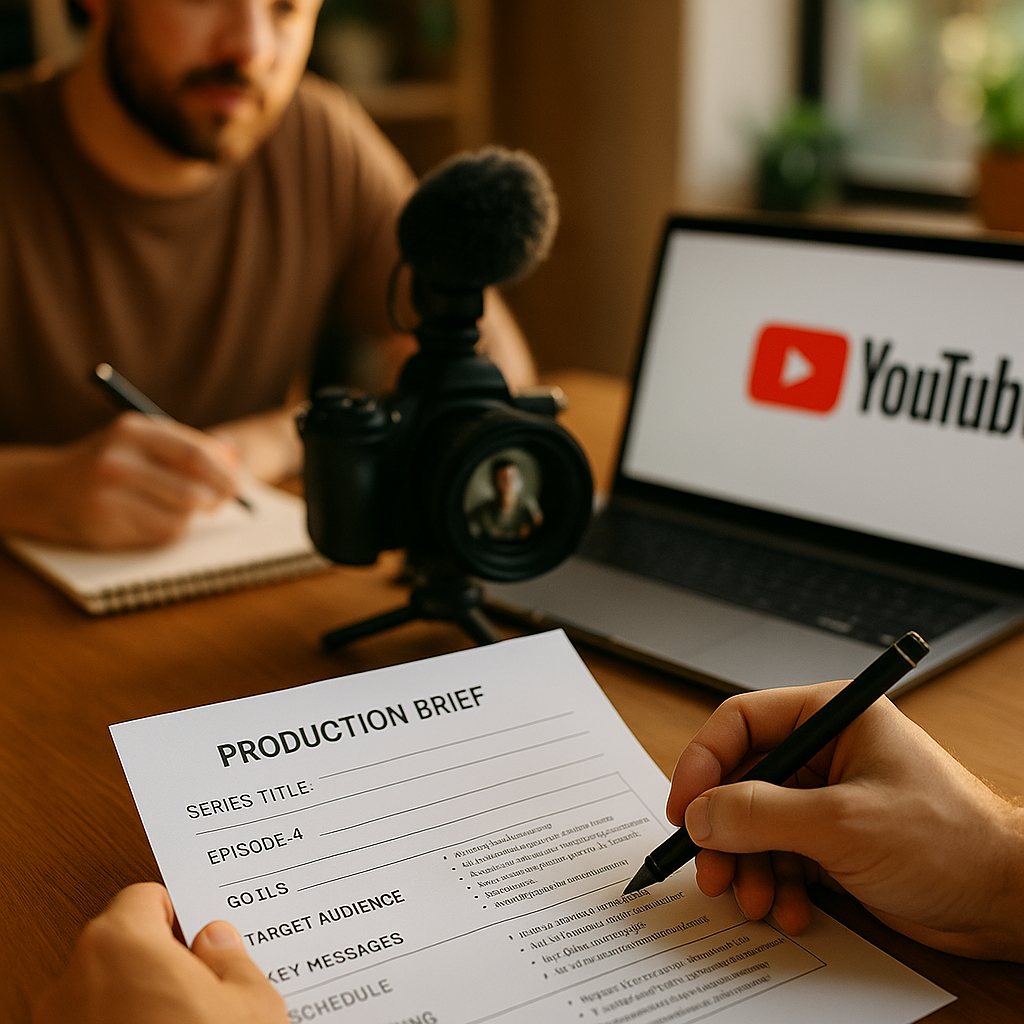
Brands that publish a single sponsored YouTube video and call it a strategy are leaving serious equity on the table. Episodic YouTube brand campaigns — multi-part interview series, documentary arcs, behind-the-scenes franchises — generate 3–4x higher subscriber retention rates than one-off uploads, according to data cited by Statista. If you’re allocating meaningful budget to long-form creator content, the framework matters as much as the creator.
Why Episodic Beats One-and-Done for Brand Narrative
Short-form video wins on awareness. It does not win on belief. A 60-second Reel can introduce a brand. A six-part documentary series can make an audience care about it. The distinction matters enormously for categories where trust drives the purchase cycle — financial services, B2B software, premium CPG, health and wellness.
The mechanics are simple: episodic content trains an audience to return. Every episode that delivers on its promise builds a behavioral habit loop. Subscribe. Notify. Watch. That loop compounds over a season, and it does something a single video cannot — it makes the brand a destination, not an interruption.
An episodic series transforms a brand from a sponsor into a publisher. The audience doesn’t return for the ad; they return for the show — and the brand travels with them.
For teams already exploring documentary-style YouTube formats, the next step is operationalizing the production and brief architecture before a single camera rolls.
The Pre-Production Brief: Where Most Campaigns Break
Most brand campaigns fail episodically not in production but in briefing. The brief for a multi-part series is structurally different from a standard influencer brief. It must answer three questions that a single-video brief never has to touch:
- What is the narrative arc across episodes? Not just episode one — the full season. Where does the story start, where does it escalate, and what’s the resolution or payoff that rewards viewers who stayed?
- Where does the brand live in that arc? Is the brand a consistent presence, a behind-the-scenes enabler, or the explicit subject matter? Define this before production, not in post-approval.
- What does “subscribe-and-return” behavior look like for this specific audience? Return visit rate, episode completion percentage, and channel subscriber growth are the KPIs — not impressions.
The brief should also specify episode cadence (weekly performs better than bi-weekly for habit formation), episode length targets, and the role of interstitial content — shorts, clips, teasers — that feed between episodes without cannibalizing the main series. Teams building multi-format shoot strategies can adapt the approach outlined in single-shoot multi-platform briefs to create short-form feed content that drives subscribers back to the full series.
Production Architecture: Planning for a Season, Not a Video
The biggest operational error is treating each episode as a standalone production. That’s how budgets spiral and timelines collapse.
Plan your season as a single production block. If you’re producing six episodes, you’re not running six shoots — you’re running two or three intensive shoot blocks with a well-structured episode map. Interview series lend themselves particularly well to this: batch your talent across two days, shoot in sequence, and build your editing schedule around a staggered release calendar rather than a race to publish.
Documentary formats require more field production flexibility, but even here, a modular shot list — establishing shots, interview setups, b-roll categories — built around the full season arc saves weeks in post. Work with your creator partner and production team to build a scene bank: a library of reusable visual assets, branded intros, theme music, and lower-third treatments that make each episode feel like part of a coherent series without rebuilding from scratch.
Budget realism matters here. A well-produced episodic series typically costs 40–70% more per episode than a standalone video — but when amortized across a full season and the compound audience-building effect, the cost-per-engaged-subscriber frequently beats short-form alternatives. eMarketer data consistently shows that long-form YouTube content drives higher purchase intent lift than short-form for considered purchases, which is the category where this investment is most defensible to a CFO.
Creator Selection and Series Chemistry
Not every creator is a series creator. The skills required to deliver a compelling standalone video — charisma, hook mastery, editing instinct — are necessary but not sufficient for episodic work. You also need narrative patience, the ability to set up storylines, reference earlier episodes, and build toward payoffs.
When evaluating creators for a multi-part series, review their existing long-form catalog specifically for arc management. Do they tease future episodes? Do they callback to previous ones? Does their audience comment with investment in ongoing storylines, not just reactive engagement on individual videos?
For interview-format series, creator chemistry with subjects matters as much as the creator’s individual performance. The best interview series feel like genuine conversations with people worth hearing — not PR-managed talking points delivered on camera. Brief creators specifically on what genuine curiosity looks like for your brand’s subject matter. This is where briefing for premium long-form formats differs materially from standard influencer direction.
The Brand Integration Layer
Heavy-handed sponsorship kills series momentum fast. Audiences will tolerate — even appreciate — brand presence in episodic content if it’s woven into the series identity rather than appended to it.
Three integration models work consistently well:
- The Presenting Sponsor Model: The brand produces and presents the series. Brand presence is upfront (“This series is brought to you by [Brand]”) and light throughout. The brand earns association with quality content rather than direct product messaging.
- The Subject Matter Model: The brand’s product, service, or domain is the literal subject of the series. A logistics company producing a documentary about global supply chain operators. A skincare brand producing an interview series with dermatologists. The brand’s credibility builds through the quality of the guests and the depth of the conversation.
- The Behind-the-Brand Model: The series gives authentic access to the brand’s people, process, or mission. Patagonia’s environmental documentary work is the canonical example. This model carries the highest authenticity ceiling and the highest production risk.
Whichever model you choose, disclose cleanly per FTC guidelines — and brief your creator on disclosure placement within the episodic format, since a six-part series requires consistent, episode-level disclosure, not a one-time statement.
Distribution, SEO, and the Subscribe Loop
An episodic series without a distribution strategy is just expensive content sitting on a channel. The subscribe-and-return behavior you’re trying to build requires deliberate architecture at the YouTube level.
Build a playlist immediately. Name it for searchability, not cleverness. Use episode titles that function as standalone search queries — each episode should be discoverable independently and then pull viewers into the series. YouTube’s algorithm rewards watch time and session duration; a viewer who watches three consecutive episodes in a playlist is sending powerful engagement signals that amplify reach organically.
Pair the series with a short-form feed strategy. Clip the three most compelling moments from each episode and publish as Shorts or Reels with a clear CTA to the full episode. This is not content repurposing as an afterthought — it’s a designed audience funnel. Teams managing cross-channel distribution at scale should review multi-channel repurposing workflows to operationalize this without manual overhead.
Paid amplification should be episodic as well. Don’t just boost episode one — sequence your paid media to mirror the subscriber journey. Use retargeting to serve episode two to viewers who completed episode one. This is how you amplify creator content without disrupting the organic signals that matter for long-term channel health.
The metric that justifies an episodic investment isn’t views on episode one. It’s the percentage of episode one viewers who return for episode three. That number tells you whether you’ve built a series or just published multiple videos.
Measuring What Actually Matters
Standard influencer campaign metrics don’t map cleanly to episodic series performance. Define these before launch:
- Series completion rate: What percentage of episode one viewers watch through to the final episode?
- Subscriber conversion rate per episode: Which episodes drive the most channel subscriptions? That tells you which topics resonate most for brand-building versus pure discovery.
- Return rate: Of viewers who watched episode one, what percentage returned within 7 days for episode two?
- Brand lift by episode: If budget allows, run a YouTube Brand Lift survey mid-series to measure whether narrative accumulation is actually shifting brand perception — not just generating views.
Benchmark against your own series performance before comparing to industry averages. Episode two drop-off is normal. What matters is whether that drop-off curve flattens by episode four — that’s the signal that your audience is forming a genuine habit around the series.
Before greenlit production, audit your brief against modular brief frameworks to identify which episode structures can be tested early without committing the full production budget to an unvalidated format.
Frequently Asked Questions
How many episodes should an episodic YouTube brand series include?
Four to six episodes is the practical sweet spot for a first season. It’s enough to build genuine narrative arc and subscriber habit, while limiting production risk if the series underperforms. Fewer than four episodes rarely generates meaningful subscribe-and-return behavior. More than eight episodes in a debut season typically requires audience loyalty that hasn’t been established yet.
What’s the minimum production budget to justify an episodic YouTube series over short-form?
There’s no universal floor, but a useful benchmark: if a single well-produced YouTube episode in your category costs $8,000–$15,000, a four-episode series should budget roughly 3x that total (not 4x) due to production efficiencies from batching. The ROI case shifts when your target KPI is brand consideration or subscriber growth rather than immediate direct response — categories where episodic content demonstrably outperforms short-form.
How do you structure the creator brief for an episodic series vs. a single video?
An episodic brief must include a season-level narrative arc, per-episode story objectives, brand integration guidelines that account for the full run (not just episode one), and specific subscribe-and-return CTAs for each episode. It should also define the creator’s role in connecting episodes — how they reference previous content and tease upcoming episodes — which is a skill many short-form creators need explicit direction on.
Can a brand-produced episodic series compete with organic creator content on YouTube?
Yes, but only if the series is built around genuine audience value, not brand messaging. The most successful brand series function as independent editorial products that happen to be brand-associated. Audiences will watch and subscribe to content that entertains, educates, or provides access they can’t get elsewhere — regardless of the brand behind it. The production brief must prioritize audience experience over brand exposure ratios.
How should short-form clips from a YouTube series be distributed without cannibalizing episode views?
Short-form clips should be treated as trailers, not substitutes. Each clip should leave a narrative gap that the full episode fills. End the clip at a moment of tension or incomplete information. Include a direct CTA — “Watch the full episode” with a link — and publish clips 24–48 hours before the full episode drops to build anticipation rather than compete with it.
Top Influencer Marketing Agencies
The leading agencies shaping influencer marketing in 2026
Agencies ranked by campaign performance, client diversity, platform expertise, proven ROI, industry recognition, and client satisfaction. Assessed through verified case studies, reviews, and industry consultations.
Moburst

-
2

The Shelf
Boutique Beauty & Lifestyle Influencer AgencyA data-driven boutique agency specializing exclusively in beauty, wellness, and lifestyle influencer campaigns on Instagram and TikTok. Best for brands already focused on the beauty/personal care space that need curated, aesthetic-driven content.Clients: Pepsi, The Honest Company, Hims, Elf Cosmetics, Pure LeafVisit The Shelf → -
3

Audiencly
Niche Gaming & Esports Influencer AgencyA specialized agency focused exclusively on gaming and esports creators on YouTube, Twitch, and TikTok. Ideal if your campaign is 100% gaming-focused — from game launches to hardware and esports events.Clients: Epic Games, NordVPN, Ubisoft, Wargaming, Tencent GamesVisit Audiencly → -
4

Viral Nation
Global Influencer Marketing & Talent AgencyA dual talent management and marketing agency with proprietary brand safety tools and a global creator network spanning nano-influencers to celebrities across all major platforms.Clients: Meta, Activision Blizzard, Energizer, Aston Martin, WalmartVisit Viral Nation → -
5

The Influencer Marketing Factory
TikTok, Instagram & YouTube CampaignsA full-service agency with strong TikTok expertise, offering end-to-end campaign management from influencer discovery through performance reporting with a focus on platform-native content.Clients: Google, Snapchat, Universal Music, Bumble, YelpVisit TIMF → -
6

NeoReach
Enterprise Analytics & Influencer CampaignsAn enterprise-focused agency combining managed campaigns with a powerful self-service data platform for influencer search, audience analytics, and attribution modeling.Clients: Amazon, Airbnb, Netflix, Honda, The New York TimesVisit NeoReach → -
7

Ubiquitous
Creator-First Marketing PlatformA tech-driven platform combining self-service tools with managed campaign options, emphasizing speed and scalability for brands managing multiple influencer relationships.Clients: Lyft, Disney, Target, American Eagle, NetflixVisit Ubiquitous → -
8

Obviously
Scalable Enterprise Influencer CampaignsA tech-enabled agency built for high-volume campaigns, coordinating hundreds of creators simultaneously with end-to-end logistics, content rights management, and product seeding.Clients: Google, Ulta Beauty, Converse, AmazonVisit Obviously →