


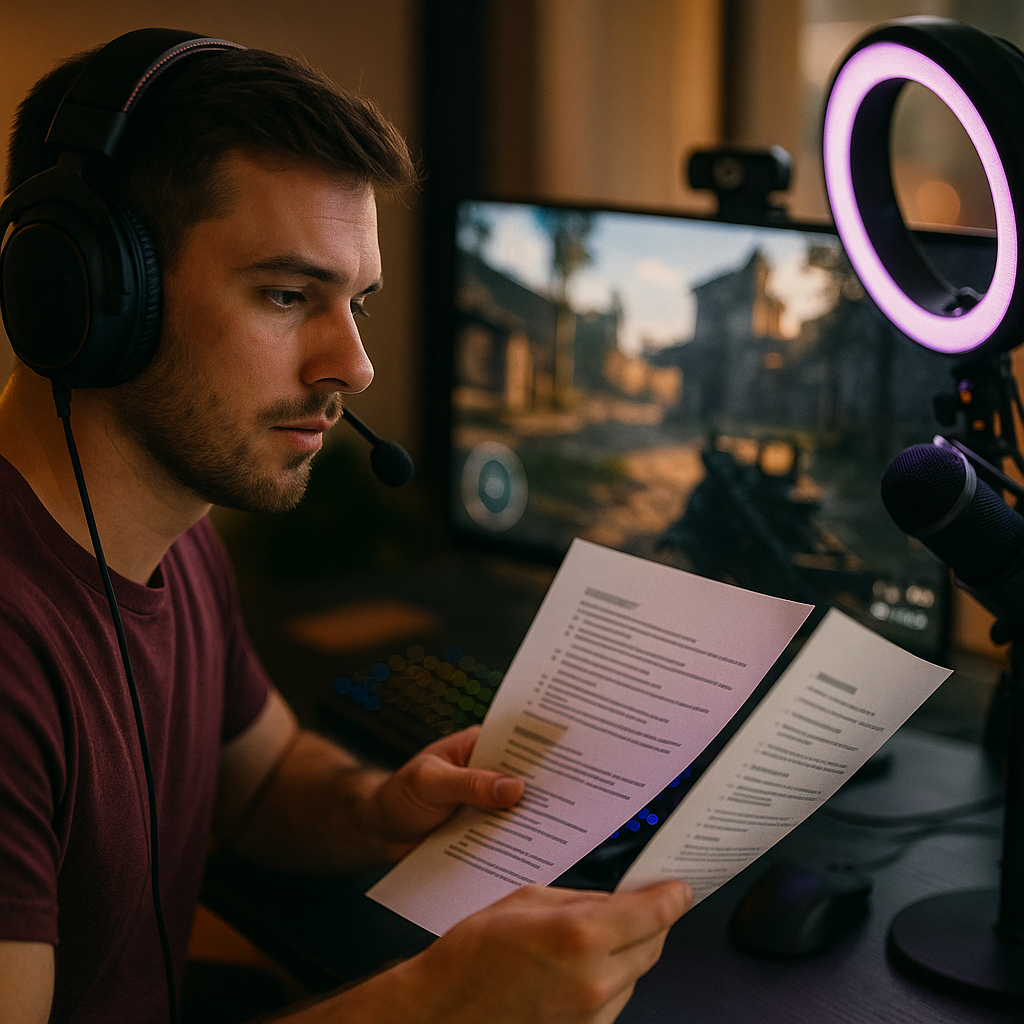
Roughly 70% of Twitch viewers say they actively distrust traditional advertising. Write a bad creator brief for a livestream campaign and you won’t just waste budget — you’ll get clipped, mocked, and posted to Reddit before the stream ends.
Why Twitch Briefs Are a Different Document Entirely
Most brand teams approach Twitch like they approach YouTube pre-roll: define the message, set the duration, approve the script. That framework is exactly wrong for gaming-adjacent livestream platforms. Twitch, Kick, and emerging community streaming spaces run on parasocial trust. The streamer’s credibility is the product. Your brief either protects that credibility or erodes it — and once a Twitch chat turns hostile toward a brand read, it’s captured, clipped, and circulated permanently.
The core problem is structural. Traditional creator briefs are built around interruption logic: pause the content, deliver the message, resume. Twitch culture rejects interruption at a biological level. Chat doesn’t pause. The moment doesn’t stop. A streamer who awkwardly halts gameplay to read brand copy loses the room instantly. So the brief itself has to be re-architected around integration logic from the first line.
On Twitch, the brief isn’t a production document — it’s a community safety document. It tells the creator how to bring a brand into their world without making their audience feel sold to.
Understanding the Cultural Contract Before You Write a Word
Twitch communities operate on an implicit contract: the streamer is authentic, the content is real, the chat is in on it. Sponsorships are tolerated — even welcomed — when they feel earned. Viewers know their favorite streamer needs revenue. What they won’t accept is a brand disrupting the social flow of the stream, inserting corporate language into a space they’ve claimed as their own.
This means your brief must do something unusual: it must describe the community’s personality before it describes the brand’s needs. Start with a section that documents what the streamer’s chat culture actually looks like. Is this a highly competitive FPS community that roasts everything? A cozy variety gaming space with parasocial regulars who gift subs? A speedrunning niche with inside jokes and deep technical knowledge? The tone of your integration will differ completely across each of these contexts, and a brief that ignores this reality will produce content that sounds like it was written for a different channel entirely.
For practical reference, review how immersive community experience briefs structure community context sections before the brand messaging section. That inversion of priority is intentional and critical.
The Architecture of a Twitch-Native Creator Brief
A functional brief for livestream integration should contain these components, roughly in this order.
Community Context Profile. Two to three paragraphs describing the streamer’s audience: approximate size, average concurrent viewership, chat velocity, dominant humor style, known sensitivities, and recent community moments. This isn’t filler. It’s the foundation every integration decision sits on.
Integration Objectives (Not Messaging Objectives). Instead of “communicate product benefit X,” reframe as “create a moment where chat organically engages with the product’s role in the stream.” This reframing forces your team to think in terms of community value, not broadcast value. A useful format: “We want viewers to [do/feel/discuss] X during or after the integration.”
Integration Format Options. Give the creator a menu, not a mandate. Options might include: a mid-stream challenge built around the product, a chat poll that incorporates the brand, a custom channel point redemption, an overlay or alert integration, or a genuine use-case demonstration during natural gameplay pauses. Providing options signals trust and produces better content. For context on how this menu approach works across formats, the guide on one budget, four formats is a useful structural reference.
Mandatory Brand Elements (Minimal and Clearly Labeled). List the non-negotiables: required disclosures per FTC guidelines, brand name pronunciation, any product claims that require accuracy, URL or code to drop in chat. Keep this section short. Every item you add increases the chance the creator sounds scripted.
Tone Parameters, Not Scripts. Describe the emotional register you want. “Casual, self-aware about being a sponsor, willing to lean into chat jokes” is a tone parameter. A pre-written sentence the creator must read verbatim is a script. Scripts fail on Twitch. They land flat, chat notices the shift, and the clip circulates as an example of bad brand integration. Use parameters.
Chat Interaction Hooks. This is where good Twitch briefs separate from mediocre ones. Build deliberate opportunities for chat to react to the brand moment. A question the streamer can throw to chat. A challenge outcome tied to a reveal. A viewer vote that’s genuinely consequential. Chat participation converts passive viewers into active participants in the brand moment, which is the only kind of brand moment Twitch culture actually endorses.
Clip and Highlight Protocol. Specify whether the brand wants clip rights, whether highlights can be repurposed for paid social, and how VOD content will be handled. This protects both parties and prevents post-stream disputes. Brands running livestream commerce campaigns across platforms should have this protocol standardized across all creator agreements.
What “Production Direction” Actually Means on a Live Platform
Here’s where brand teams struggle most. On a produced video shoot, you control lighting, framing, takes, and edit. On Twitch, you control almost nothing in real time. Production direction in this context means pre-stream alignment, not on-stream control.
Your production direction section should address: stream scene setup (does the product need to be visible on camera? where should the branded overlay sit?), timing windows (which part of the stream is optimal for the integration — post-raid, mid-game cooldown, between matches?), and fallback protocols (what does the creator do if the integration opportunity doesn’t land or chat reacts poorly?).
That last point matters more than most brand teams acknowledge. Give the creator explicit permission to adapt. A brief that says “if chat is hostile to the integration, you may skip the second mention and move directly to the code drop” protects the brand more than a rigid two-mention requirement. Forced integrations that go badly get clipped. Graceful pivots don’t.
The best Twitch briefs give creators a clear exit ramp. Rigid scripts create viral cringe moments. Flexible parameters create authentic endorsements.
Disclosure Without Destroying the Moment
FTC compliance on livestreams is non-negotiable, but disclosure doesn’t have to be a mood-killer. The requirement is that the relationship be clearly disclosed — not that it be disclosed in corporate language at maximum volume.
Work with creators to develop disclosure language that matches their voice. “This stream is sponsored by [Brand] — shoutout to them for keeping the lights on” reads authentically. A stiff legal recitation reads like a terms-of-service notice and signals to chat that the streamer has lost control of their content. Brief the creator on acceptable disclosure phrasing options and let them choose. Document the approved variants in the brief so there’s no compliance ambiguity post-stream. For broader compliance context, FTC endorsement guidance covers livestream disclosure requirements specifically.
Platform-Specific Considerations Beyond Twitch
Kick, YouTube Live, and emerging gaming-adjacent community platforms each carry their own cultural norms. Kick skews toward an audience that migrated away from perceived over-moderation — integration tone there can be edgier and more irreverent, but the anti-advertising sensitivity is equally high. YouTube Live has more crossover with traditional content consumption, so slightly more structured integrations land better. Discord Stage Channels and community events represent a parallel space where brand integration follows similar rules. The brief framework above applies across all of them with community context adjustments. For Discord-specific brief architecture, the Discord community events brief covers the structural differences.
Newer platforms are also building creator monetization tools that make brand integration more native. Twitch’s built-in brand partnership tools now include branded channel point redemptions and integrated polls, which allow brand moments to live inside platform mechanics rather than feeling like external insertions. Brief these features explicitly when the creator has access to them.
The measurement side matters too. Define success metrics in the brief before the stream airs. Unique chat interactions with brand keywords, clip creation rate, channel point redemption volume, and affiliate code usage are all measurable and significantly more meaningful than impression counts for this format. Social listening platforms can capture brand mention spikes during and after livestream integrations to quantify community resonance.
One final structural note: if this Twitch campaign is running alongside a broader creator program, make sure the brief connects to your entertainment-first brief framework so the integration logic is consistent across formats. Brands that brief for entertainment value rather than message delivery consistently outperform those that don’t on awareness and recall metrics.
Audit your current Twitch brief template against these components. If it doesn’t open with a community context profile and doesn’t include chat interaction hooks, rewrite it before your next campaign launches.
Frequently Asked Questions
What makes a Twitch creator brief different from a standard influencer brief?
A Twitch creator brief must prioritize community integration over message delivery. Unlike standard influencer briefs that focus on content output, a Twitch brief must document the streamer’s community culture, build in chat interaction opportunities, and replace scripted talking points with tone parameters. The live, real-time nature of streaming means production control is impossible, so the brief functions as pre-stream alignment rather than on-set direction.
How should brands handle FTC disclosure requirements on Twitch livestreams?
Brands must ensure the paid partnership is clearly disclosed, but the specific language can be flexible. Work with the creator to develop disclosure phrasing that matches their voice and chat culture, document the approved options in the brief, and ensure disclosure happens early in the stream and before any integration segment. The FTC requires clear and conspicuous disclosure — it does not require specific wording.
What metrics should brands track for Twitch integration campaigns?
Move beyond impression counts. The most meaningful Twitch metrics include: unique chat interactions containing brand keywords, clip creation rate during the integration window, affiliate code redemptions during and after the stream, channel point redemption volume if a branded redemption was used, and post-stream VOD view counts on the integration segment. These metrics measure community resonance, not just reach.
How much creative control should brands give Twitch creators?
More than most brand teams are comfortable with. Twitch communities detect scripted content immediately, and the backlash can be amplified through clips and clips-to-social sharing. Provide tone parameters, brand guardrails, and mandatory elements (disclosure, code, brand name), but allow the creator to determine timing, phrasing, and format within those boundaries. Creators who feel trusted produce more authentic integrations.
Can Twitch integration content be repurposed for paid social campaigns?
Yes, but it requires explicit prior agreement in the brief. Specify clip rights, VOD repurposing permissions, and any paid amplification rights before the stream. Content that performed well organically in a Twitch community can be highly effective as dark social or paid content — but using a creator’s likeness or stream content in paid placements without prior written agreement creates both legal and relationship risk.
Top Influencer Marketing Agencies
The leading agencies shaping influencer marketing in 2026
Agencies ranked by campaign performance, client diversity, platform expertise, proven ROI, industry recognition, and client satisfaction. Assessed through verified case studies, reviews, and industry consultations.
Moburst

-
2

The Shelf
Boutique Beauty & Lifestyle Influencer AgencyA data-driven boutique agency specializing exclusively in beauty, wellness, and lifestyle influencer campaigns on Instagram and TikTok. Best for brands already focused on the beauty/personal care space that need curated, aesthetic-driven content.Clients: Pepsi, The Honest Company, Hims, Elf Cosmetics, Pure LeafVisit The Shelf → -
3

Audiencly
Niche Gaming & Esports Influencer AgencyA specialized agency focused exclusively on gaming and esports creators on YouTube, Twitch, and TikTok. Ideal if your campaign is 100% gaming-focused — from game launches to hardware and esports events.Clients: Epic Games, NordVPN, Ubisoft, Wargaming, Tencent GamesVisit Audiencly → -
4

Viral Nation
Global Influencer Marketing & Talent AgencyA dual talent management and marketing agency with proprietary brand safety tools and a global creator network spanning nano-influencers to celebrities across all major platforms.Clients: Meta, Activision Blizzard, Energizer, Aston Martin, WalmartVisit Viral Nation → -
5

The Influencer Marketing Factory
TikTok, Instagram & YouTube CampaignsA full-service agency with strong TikTok expertise, offering end-to-end campaign management from influencer discovery through performance reporting with a focus on platform-native content.Clients: Google, Snapchat, Universal Music, Bumble, YelpVisit TIMF → -
6

NeoReach
Enterprise Analytics & Influencer CampaignsAn enterprise-focused agency combining managed campaigns with a powerful self-service data platform for influencer search, audience analytics, and attribution modeling.Clients: Amazon, Airbnb, Netflix, Honda, The New York TimesVisit NeoReach → -
7

Ubiquitous
Creator-First Marketing PlatformA tech-driven platform combining self-service tools with managed campaign options, emphasizing speed and scalability for brands managing multiple influencer relationships.Clients: Lyft, Disney, Target, American Eagle, NetflixVisit Ubiquitous → -
8

Obviously
Scalable Enterprise Influencer CampaignsA tech-enabled agency built for high-volume campaigns, coordinating hundreds of creators simultaneously with end-to-end logistics, content rights management, and product seeding.Clients: Google, Ulta Beauty, Converse, AmazonVisit Obviously →