


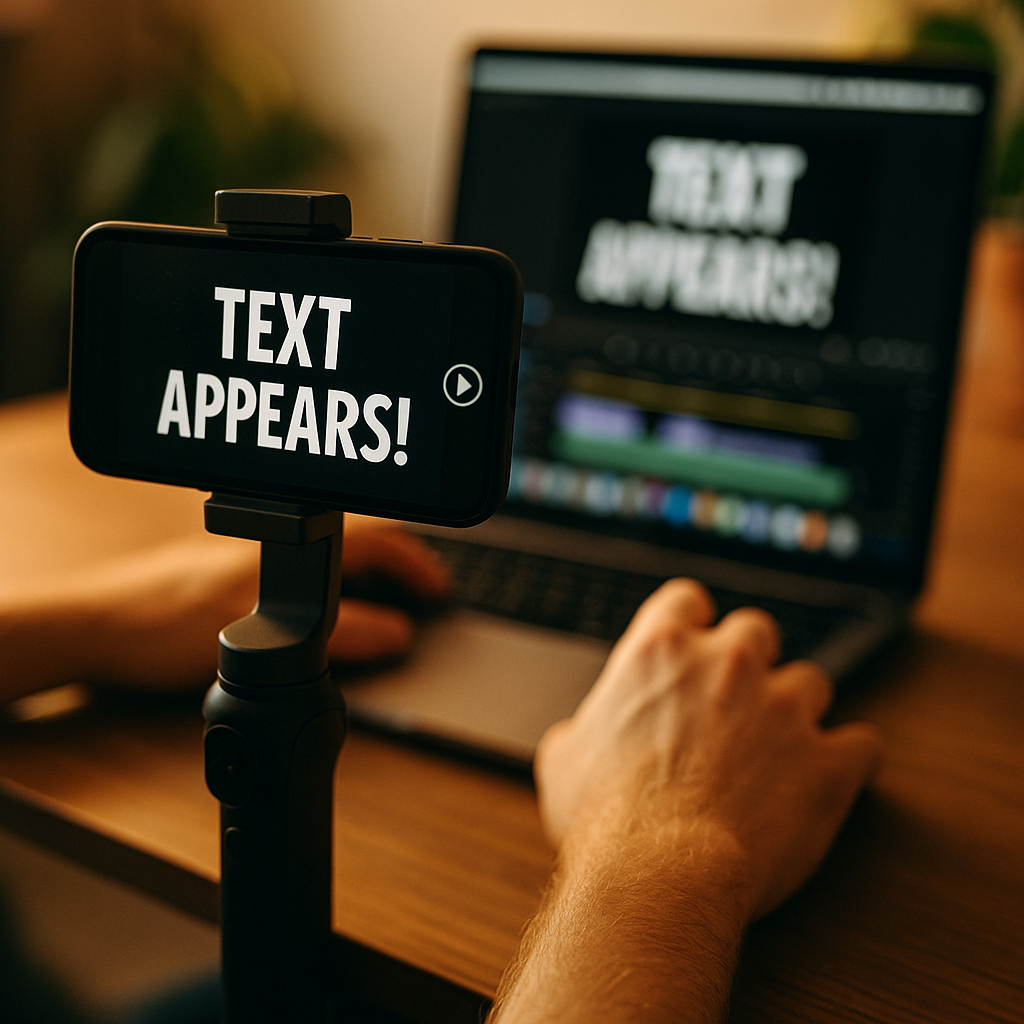
In 2026, creators and brands compete for attention in milliseconds, making kinetic typography in enhancing short form video completion more relevant than ever. Animated text does more than decorate a frame. It guides the eye, reinforces meaning, and keeps viewers oriented without sound. When used strategically, it can lift retention, comprehension, and action. So what separates effective motion text from noise?
Why short-form video retention depends on readable motion
Short-form platforms reward videos that hold attention. Completion rate, average watch time, rewatches, shares, and saves all signal whether a video deserves broader distribution. Kinetic typography supports these signals because it gives viewers a visual path to follow, especially during the first seconds when drop-off is highest.
Many people watch with sound off, in transit, at work, or in crowded spaces. In those moments, animated text becomes the narrator. It clarifies the hook, frames the payoff, and reduces the mental effort required to understand the message. That matters because viewers abandon videos when they feel confused, overloaded, or unsure why they should keep watching.
From an experience perspective, the best motion text works like subtle direction. It tells the viewer:
- What the video is about
- Why the next few seconds matter
- Which words are most important
- When a transition, reveal, or punchline is coming
This improves comprehension and creates momentum. Instead of passively watching, the audience anticipates the next beat. That sense of progression is one reason completion rises when typography is paced to the message rather than added as a visual afterthought.
There is also a trust factor. Clean, intentional text animation makes a video feel produced, current, and easy to consume. Sloppy timing, tiny fonts, or overdesigned effects do the opposite. Helpful content is not just accurate; it is accessible. Kinetic typography supports accessibility when it increases readability, not when it competes with the idea.
How kinetic typography strategy influences completion rates
Strong results start with strategy, not software. The most effective creators decide what text must appear, when it should enter, and what job it needs to do in each scene. A sound kinetic typography strategy usually serves one of four functions: hook, explain, emphasize, or convert.
Hook: In the opening one to three seconds, text can frame a pain point, promise a result, or challenge a common assumption. This immediately answers the viewer’s silent question: why should I care?
Explain: Once attention is earned, text helps simplify steps, statistics, examples, or comparisons. This is useful in tutorials, product demos, commentary clips, and expert explainers.
Emphasize: Animated type can spotlight key words at the exact moment they matter. A single phrase scaling in at the right beat often lands better than a full sentence lingering too long.
Convert: Near the end, typography can reinforce the takeaway or call to action without sounding abrupt. It might summarize a benefit, introduce urgency, or direct viewers to the next action.
Completion improves when these functions are mapped to audience intent. For example, an educational audience often stays longer when text breaks information into fast, digestible chunks. Product-focused audiences may respond better to typography that labels benefits and outcomes while the visuals demonstrate proof. Entertainment audiences tend to reward text that sharpens timing and punchlines.
To align text with behavior, creators should ask:
- What must the viewer understand before the next cut?
- Which phrase is most likely to stop the scroll?
- Where does attention typically dip?
- What text can be removed to reduce clutter?
This strategic approach reflects EEAT principles. Experience shows what viewers actually tolerate in a feed. Expertise shapes message hierarchy. Authoritativeness comes from clear, accurate communication. Trust is built when videos respect the viewer’s time and make claims easy to follow.
Best practices for animated text design in vertical video
Design choices decide whether kinetic typography helps or hurts completion. The goal is not to use more motion. It is to create faster understanding. In vertical video, every element competes for limited space, so typography must be disciplined.
Keep fonts highly legible. Sans-serif typefaces with strong weight contrast typically perform best on mobile screens. Prioritize size and clarity over novelty. If a viewer cannot read the text instantly, it has failed.
Use short bursts of copy. One idea per line is usually enough. Dense paragraphs force viewers to choose between reading and watching. That friction reduces retention.
Animate with purpose. Entrance, emphasis, and exit should match the message. Fast cuts can pair with snappy text reveals. More reflective content may need slower easing and steadier movement. Motion should reinforce tone, not fight it.
Respect safe zones. Platform interfaces can cover captions, buttons, and lower-third elements. Keep critical text away from edges and areas commonly blocked by UI.
Build visual hierarchy. Use scale, weight, color, and timing to signal what matters most. If every word arrives with the same energy, nothing stands out.
Maintain contrast. Text needs clear separation from the background. Use shadows, overlays, color blocks, or blur where necessary, but do not overcomplicate the frame.
Sync to speech and scene changes. Poor timing is one of the fastest ways to lose attention. If the viewer hears or sees one thing while the text says another, trust drops.
Limit effects. Excessive bouncing, spinning, and glitching may impress editors more than audiences. Motion that calls attention to itself too often increases cognitive load.
For most short-form videos, the best formula is simple: readable type, clear pacing, restrained motion, and strong alignment with the spoken or visual narrative. That combination improves completion because it removes hesitation from the viewing experience.
Using video engagement metrics to test kinetic typography
Good creative teams do not guess. They test. Kinetic typography affects several measurable outcomes, so the best way to improve it is through structured iteration. In 2026, creators have enough platform analytics and editing flexibility to test text treatment systematically.
Start with the metrics closest to completion:
- Hold rate in the first three seconds
- Average watch time
- Completion rate
- Rewatch rate
- Drop-off points
Then connect those metrics to text variables:
- Hook phrasing on the opening frame
- Caption density per scene
- Animation speed
- Text placement
- Keyword emphasis
- Color contrast
For example, if viewers leave before the midpoint, the issue may not be the overall concept. It may be that the text asks too much reading too early. If drop-off spikes after a transition, the typography may be disrupting continuity rather than supporting it. If rewatches rise after shortening on-screen copy, viewers may be responding to cleaner pacing.
A practical testing workflow looks like this:
- Create one base edit with the same footage and script.
- Produce two to three typography variants changing only one major variable.
- Publish to comparable audience segments or use controlled paid testing.
- Measure performance after enough impressions to avoid false signals.
- Document what changed and why the result likely occurred.
This process strengthens EEAT because it grounds creative recommendations in observable evidence. If you advise a client, team, or audience on what works, your authority grows when you can explain the reasoning behind the recommendation and the conditions under which it applies.
It is also important to interpret metrics in context. A lower completion rate on a longer educational short may still be a strong outcome if saves and profile visits are high. A punchy entertainment clip may complete well but fail to convert because the ending text is weak. Typography should be judged by its contribution to the video’s real objective, not only by one metric in isolation.
Common short-form video editing mistakes that reduce watch-through
Many creators use kinetic typography but still struggle with completion because execution issues undermine the concept. The most common mistakes are preventable.
Too much text. If viewers need to read constantly, they will tire quickly. Animated typography should support the message, not replace the video with a slideshow.
Inconsistent pacing. When some lines appear for too little time and others stay too long, the viewing rhythm feels unstable. This often causes exits during transitions.
Decorative overkill. Fancy effects may look impressive in a portfolio but perform poorly in-feed. If the animation distracts from the meaning, completion drops.
Weak opening frame. The best typography cannot rescue a vague intro. If the first on-screen words do not establish relevance, viewers keep scrolling.
Unreadable mobile formatting. Tiny fonts, low contrast, and crowded layouts remain common despite obvious mobile-first viewing behavior.
Misaligned text and narrative. Text that arrives before the idea is introduced or after the visual payoff has passed creates friction. Timing matters as much as wording.
Ignoring audience sophistication. A beginner audience may need more clarifying labels. An expert audience may prefer lighter annotation and faster pacing. The same text style does not fit every viewer.
Forgetting accessibility. Not everyone processes information the same way. Clear type, reasonable speed, and plain language broaden usefulness and trust.
A strong editing review process catches these problems before publishing. Watch the video once with sound on, once muted, and once at reduced brightness on a phone. If the message still lands clearly, the typography is likely doing its job.
Building a content marketing strategy with kinetic typography
Kinetic typography is most valuable when treated as a repeatable system, not a one-off visual trick. Brands and creators who scale short-form effectively usually define text rules across formats so teams can produce quickly without sacrificing quality.
A durable system includes:
- Brand type rules: approved fonts, weights, colors, and contrast standards
- Motion rules: preferred entrances, exits, and emphasis animations
- Message rules: how to write hooks, highlights, and calls to action
- Platform rules: safe zones, pacing expectations, and caption conventions by channel
- Testing rules: what variables to experiment with each month
This creates consistency for the audience and efficiency for the team. It also improves trust because viewers know what to expect from your videos. When every short teaches, entertains, or sells in a clear visual language, completion becomes easier to grow over time.
Different content categories benefit in different ways. Tutorials use text to sequence steps. Founder-led content uses it to pull out quotes and insights. Product marketing uses it to label benefits and objections. Social proof clips use it to foreground outcomes and credibility markers. The common thread is utility. The text must make the video easier to understand and more rewarding to finish.
If you are deciding where to begin, start small. Choose one video format you publish often. Create a typography template for the hook, the key idea, and the ending takeaway. Test it for a few weeks. Review completion and watch-time trends. Then refine. Reliable improvement usually comes from repeated small upgrades, not one dramatic creative overhaul.
In a crowded feed, viewers reward clarity. Kinetic typography delivers that clarity when every word earns its place and every movement has a reason.
FAQs about kinetic typography for video
What is kinetic typography in short-form video?
Kinetic typography is animated text used to communicate or emphasize ideas inside a video. In short-form content, it often appears as hooks, captions, callouts, and highlighted phrases timed to speech, music, or scene changes.
Does kinetic typography really improve video completion?
It can, when used well. It improves clarity, supports sound-off viewing, reinforces the hook, and guides attention through the narrative. Poorly executed text can have the opposite effect, so readability and pacing are critical.
How much text should appear on screen?
Usually less than creators think. Keep lines short, focus on one idea at a time, and avoid forcing viewers to read continuously. The right amount depends on audience, platform, and content type, but simplicity tends to perform better.
What fonts work best for mobile-first short videos?
Clear sans-serif fonts with strong legibility work best in most cases. Choose weights and sizes that remain readable on smaller screens, and maintain strong contrast against the background.
Should every short-form video use kinetic typography?
No. It is most useful when it improves comprehension, emphasis, or accessibility. Some visual stories work better with minimal text. The decision should depend on the message and audience behavior, not trend pressure.
What is the biggest mistake brands make with animated text?
The biggest mistake is treating it as decoration instead of communication. Overdesigned motion, cluttered layouts, and generic hooks often reduce clarity and hurt watch-through.
How can I test whether my typography is working?
Test one variable at a time, such as hook wording, animation speed, or caption density, while keeping the footage consistent. Compare hold rate, average watch time, and completion rate to identify which text treatment improves performance.
Is kinetic typography important for sound-off viewing?
Yes. Since many users browse with muted audio, animated text often carries the message. It helps viewers understand the point quickly and stay engaged even without narration or dialogue.
Kinetic typography turns text into a retention tool. In short-form video, it helps viewers understand faster, stay oriented, and reach the final frame with less effort. The takeaway is simple: prioritize readability, timing, and purpose over flashy effects. When motion text clarifies the message instead of competing with it, completion rates usually improve, and stronger business results often follow.