


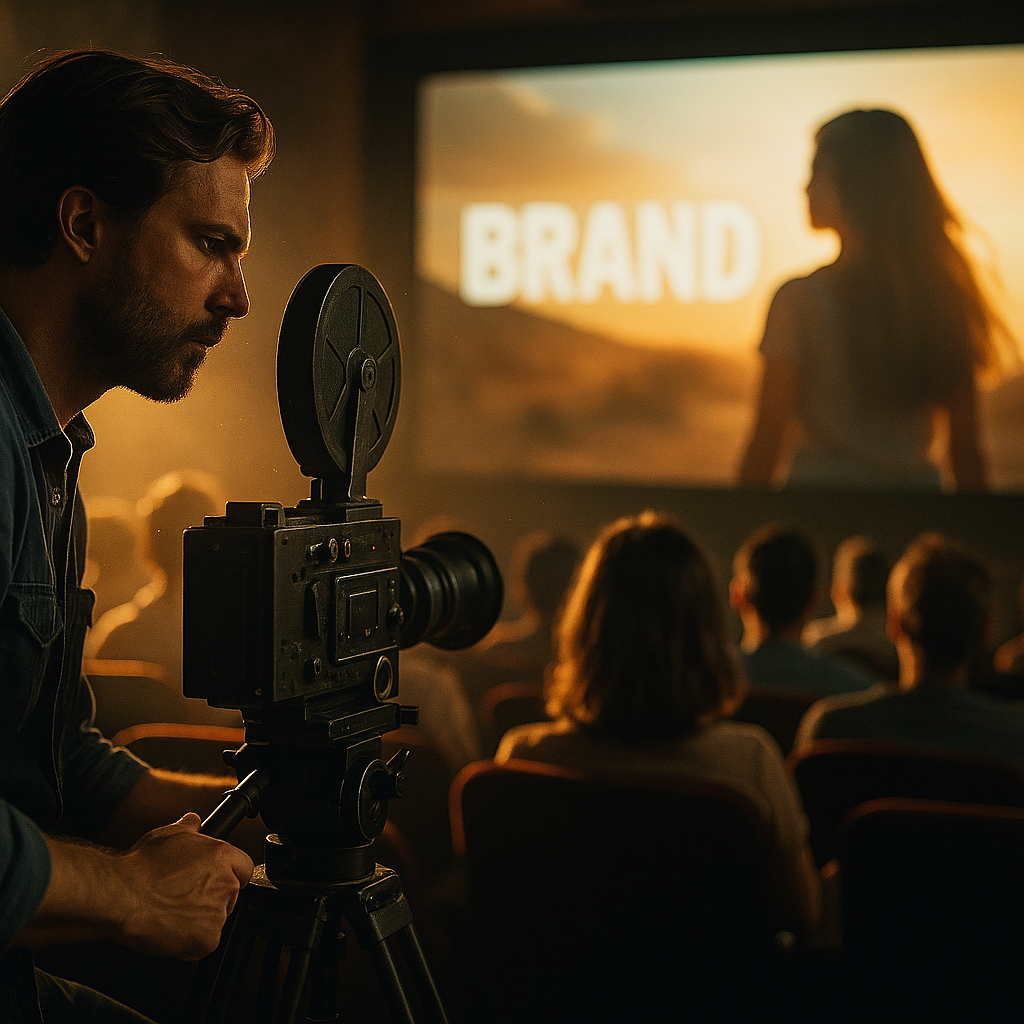
In 2025, audiences skip, mute, and scroll past most ads, yet they still lean in for stories that feel human and cinematic. The Art Of The Cinematic Brand Story is about earning attention through narrative craft, not forcing it through repetition. When you move beyond standard commercials, you don’t just sell a product—you build meaning, memory, and trust. Ready to make viewers watch on purpose?
Why cinematic brand storytelling outperforms standard commercials
Standard commercials often aim for fast recall: show the product, state the offer, repeat the brand name. That approach still has a place—especially for price-led promotions and direct-response campaigns—but it can struggle in a world where attention is fragmented and skepticism is high.
Cinematic brand storytelling uses the tools of film—character, tension, pacing, sound, and visual language—to create emotional value before asking for a transactional one. The payoff is not just “awareness,” but earned attention: people choose to watch, rewatch, share, and search.
To make this practical, ask three questions that standard commercials rarely answer well:
- Why should anyone care right now? Not “why buy,” but “why feel.”
- Who is the story really about? The viewer should recognize themselves, their pressure, or their aspiration.
- What changes by the end? A story needs movement—an internal shift, a revealed truth, a reframed choice.
Many brands worry that “story” means sacrificing clarity. It doesn’t. A cinematic approach can still drive measurable business outcomes when you build the narrative around a single human problem your product credibly resolves, then connect that resolution to a distinctive brand worldview.
Narrative structure for branded films: character, conflict, change
If you want film-like impact, start with film-like structure. The simplest cinematic framework for brand teams is Character → Conflict → Choice → Change. It keeps the story human while leaving room for the brand to play a meaningful role.
Character is not a demographic. It’s a person with a specific pressure. Instead of “busy parents,” create “a parent who feels guilty about being present but distracted.” Specificity drives empathy.
Conflict should be relatable and escalating. In brand storytelling, the conflict is rarely “villain vs. hero.” More often it’s an internal friction: doubt, fatigue, social pressure, time scarcity, fear of being left behind, or the tension between values and convenience.
Choice is where the brand can earn its place. The choice should not feel like an ad pivot. It should feel like a believable decision inside the world of the story. If the product appears, it must do real work: enable, protect, simplify, connect, or transform.
Change is the emotional proof. The ending should show what’s different—how the character’s life or perspective shifts. This is where brand affinity is built. A “happy ending” isn’t required, but resolution is.
Follow-up question brands ask: “How long does a branded film need to be?” The honest answer: as long as it takes to create change and no longer. A cinematic brand story can work at 30 seconds if the structure is tight, and it can work at several minutes if the pacing justifies it. The real constraint is attention, so design the first five seconds to signal tone, stakes, and curiosity.
Film production value and visual language: craft that earns trust
“Cinematic” is not code for “expensive.” It means intentional craft. Viewers detect when a brand is borrowing the look of film without the discipline of filmmaking. In 2025, production quality signals competence, but visual language signals taste and trust.
Focus on the components that most strongly affect perceived quality:
- Lighting and color: Choose a palette that matches the emotion. Warmth for belonging, cooler tones for uncertainty, contrast for tension. Keep it consistent with brand identity.
- Sound design: Sound is often the difference between “content” and “cinema.” Prioritize clean dialogue, purposeful ambience, and music that supports pacing rather than overpowering it.
- Camera choices: Close-ups build intimacy; wider shots express isolation or scale. Movement should be motivated—handheld can feel immediate, locked-off can feel controlled, slow push-ins can heighten stakes.
- Production design: Wardrobe, locations, and props should carry subtext. If the brand claims “simplicity,” the world should feel uncluttered and calm—unless the story is about moving from chaos to clarity.
A common follow-up: “How do we keep brand consistency without turning it into a commercial?” Use tone consistency rather than logo repetition. Your brand shows up in the story’s worldview: what it celebrates, what it challenges, what it refuses to compromise on. Then reinforce with subtle brand assets—color accents, product integration, and a restrained end card—so the viewer feels the brand’s presence without being pushed.
Emotional resonance and brand authenticity: building meaning without manipulation
Emotion drives memory, but audiences also punish inauthenticity. The line between moving and manipulative is crossed when the story uses big feelings without a credible connection to what the brand does or believes.
To keep brand authenticity intact, anchor the story in verifiable truth:
- Start from a real customer insight: Use interviews, reviews, support tickets, and community conversations to find the pressure point your story will dramatize.
- Match the promise to the proof: If the story implies safety, sustainability, or performance, ensure the brand can substantiate it with clear claims and accessible evidence.
- Represent people responsibly: Casting and characterization should avoid stereotypes. Authenticity also means showing complexity—people are not props for a brand message.
Another follow-up: “Should we include a moral or a message?” Include a point of view, not a lecture. The message should be implied through choices and consequences, not explained in voiceover. If you must state it, do so in a single, plain line—then get out of the way.
Authentic emotional storytelling also benefits from constraints. Pick one feeling to build toward—relief, pride, hope, connection, courage—and design the narrative beats to earn it. When brands chase every emotion at once, the result feels engineered.
Content distribution strategy: launching cinematic campaigns across platforms
A cinematic brand story is only as effective as its distribution. In 2025, “publish and pray” is not a strategy. Build a content distribution strategy that respects how people actually watch: in feeds, on TVs, with sound off, and across multiple sessions.
Plan distribution in layers:
- Hero film: The full cinematic piece for YouTube, connected TV, your website, sales decks, and PR outreach.
- Cutdowns: 6s, 15s, and 30s versions that preserve the story’s core turn, not just highlights.
- Vertical edits: Native 9:16 versions with reframed composition, not cropped afterthoughts.
- Story assets: Character vignettes, behind-the-scenes craft clips, and creator-friendly snippets that extend the world.
Answering a common question: “How do we adapt a cinematic style to short-form?” Keep cinematic choices: motivated close-ups, intentional sound, clear stakes, and a satisfying micro-arc. A 15-second story can still have a setup, tension, and change.
Don’t ignore owned channels. A cinematic story can raise conversion rates when your landing pages, email sequences, and retail screens echo the same narrative. Consistency across touchpoints is how story becomes brand memory rather than a one-off film.
Measuring brand film performance: KPIs, lift studies, and long-term equity
Cinematic work must be measurable, or it becomes art without accountability. The right measurement approach depends on your goal: immediate action, brand lift, or long-term equity. In practice, you should track all three, with different expectations.
Use a balanced measurement stack for brand film performance:
- Attention and retention: 3-second views, average watch time, completion rate, and drop-off points to diagnose pacing.
- Engagement quality: Shares, saves, meaningful comments, and creator remixes—signals the story resonates beyond passive viewing.
- Search and direct traffic: Brand search lift, direct site visits, and branded query growth after launch.
- Brand lift studies: Ad recall, favorability, consideration, and message association. These help you prove story impact even when sales cycles are long.
- Business outcomes: Assisted conversions, lead quality, sales velocity, or in-store impact where trackable.
A frequent follow-up: “What if the film performs well but doesn’t convert?” That’s not automatically failure. Cinematic storytelling often operates higher in the funnel, improving efficiency for performance campaigns that follow. The practical fix is sequencing: retarget viewers with product-focused assets that continue the same narrative, and ensure your site experience delivers on the emotional promise with clear proof and next steps.
Finally, document learnings like a studio would: what moments held attention, which lines were quoted, where viewers rewatched, which characters drove comments. Over time, this becomes proprietary insight—an EEAT advantage—because your brand learns what your audience truly values, not what you assume they value.
FAQs
What is a cinematic brand story?
A cinematic brand story is a narrative-driven piece of branded content that uses filmmaking craft—character, conflict, pacing, sound, and visual language—to create emotional meaning, with the brand integrated as a credible enabler of the story’s change.
How is a cinematic brand story different from a commercial?
A commercial typically prioritizes quick product messaging and repetition. A cinematic brand story prioritizes narrative tension and resolution first, then ties the brand to that transformation. The goal shifts from interruption to earned attention.
How long should a branded film be in 2025?
Long enough to create a clear character change and no longer. Many effective hero films run 60–180 seconds, supported by shorter cutdowns for feeds. Length is less important than pacing, clarity of stakes, and a satisfying turn.
Do cinematic ads need big budgets?
No. Cinematic results come from intentional choices: strong casting, disciplined scripts, good sound, thoughtful lighting, and careful editing. A smaller budget can still feel premium when the concept is simple and execution is precise.
How do we integrate the product without ruining the story?
Make the product solve a real problem inside the plot, not appear as a last-second reveal. Show it in use at the moment of choice, keep branding subtle in-scene, and reserve explicit calls-to-action for the end card and follow-up assets.
What KPIs matter most for cinematic storytelling?
Track retention (watch time and completion), brand search lift, engagement quality, and brand lift metrics like consideration and favorability. Then connect to downstream outcomes through sequencing, retargeting, and assisted conversion analysis.
Can cinematic brand stories work for B2B?
Yes. B2B cinematic storytelling often focuses on human stakes—career risk, operational stress, customer expectations, or team pride—then shows how the solution reduces friction or enables better decisions. Pair the film with clear proof points and sales enablement assets.
What’s the biggest mistake brands make with cinematic campaigns?
Confusing “cinematic” with “pretty.” Without a strong character problem and a clear change, high production value becomes empty style. Start with insight and structure, then elevate with craft.
In 2025, cinematic brand stories win because they respect the audience’s time and intelligence. They lead with human stakes, deliver a real narrative turn, and integrate the product as a credible helper—not a forced pitch. When you pair film craft with smart distribution and measurable KPIs, you build both performance and brand equity. The takeaway: tell stories people choose to watch, then earn the right to be remembered.