


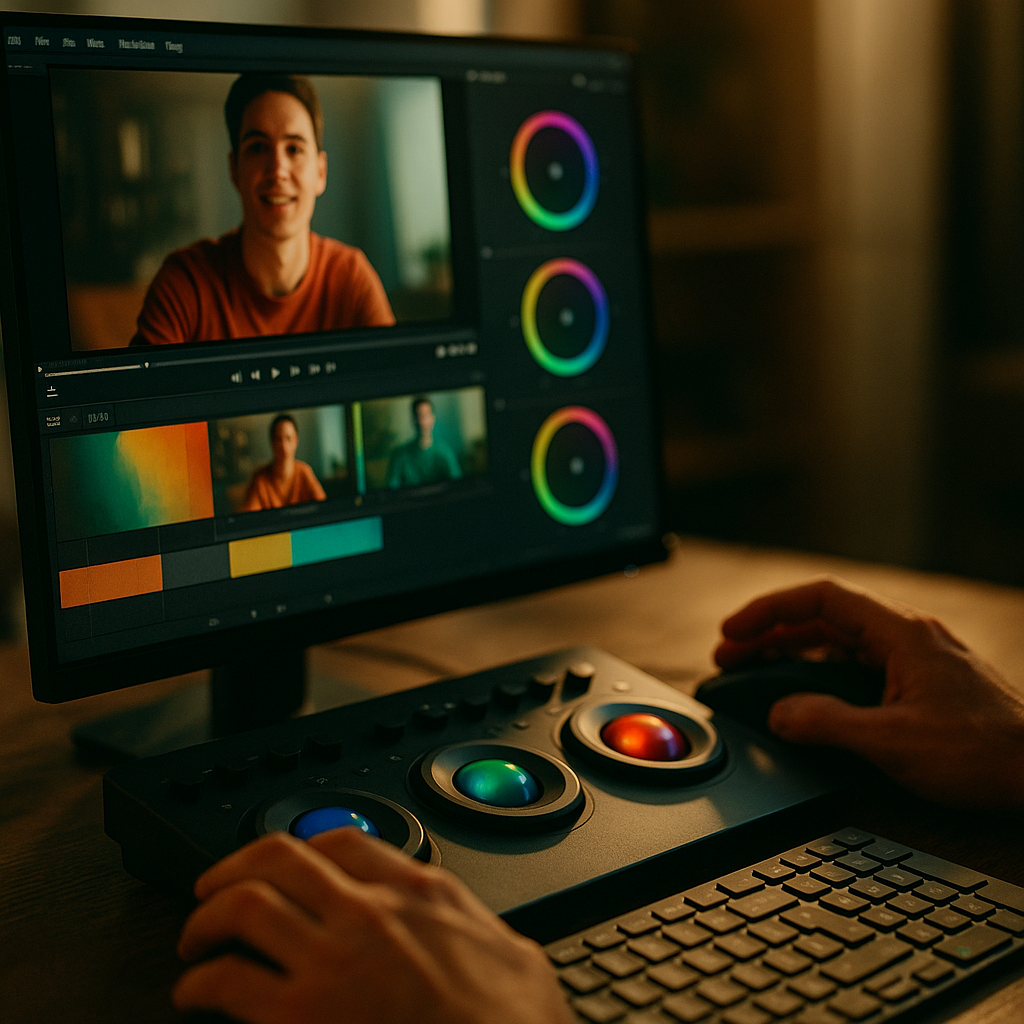
In 2026, attention is won or lost in fractions of a second, and color pacing in short video editing has become a decisive retention lever. Beyond visual style, timed color shifts guide emotion, direct focus, and control perceived speed. Editors who understand this psychology create videos that feel impossible to skip. So what makes color pacing hold attention so effectively?
Why color psychology in video drives retention
Color does more than decorate a frame. It shapes expectation, emotional tone, and cognitive load. In short-form video, where viewers make instant decisions, color works as a pre-verbal signal. Before a viewer processes words, they register brightness, contrast, saturation, and harmony. That first impression influences whether they continue watching.
High-retention editors use color psychology in video to create emotional sequencing. A warm palette can make a scene feel urgent, intimate, or energetic. Cooler tones can signal relief, authority, calm, or detachment. The effect depends on context, but the principle stays consistent: color changes alter how the audience feels moment to moment.
Retention improves when emotional cues match the narrative beat. If a video opens with a highly saturated frame, then drops into muted tones during a reflective point, viewers sense progression. That progression reduces monotony. Monotony is a retention killer in short-form content because the brain quickly predicts what comes next. Once a video feels predictable, swiping away becomes easy.
Color also helps separate information. When a key object, face, caption, or product appears within a controlled palette, viewers find it faster. Less effort means smoother comprehension. Smoother comprehension usually means stronger watch time.
From an EEAT perspective, practical editing advice should be grounded in how people actually process visual stimuli. Editors, creative directors, and performance marketers increasingly test these effects through retention curves, rewatch points, and drop-off moments. The lesson from that work is clear: color is not only aesthetic. It is structural.
How visual pacing in editing changes viewer behavior
Visual pacing in editing is the rhythm created by changes in motion, framing, text, transitions, and color over time. Most creators think first about cut speed, but color pacing can be just as powerful. It determines whether the video feels flat, escalating, chaotic, or controlled.
When color intensity stays constant for too long, the brain adapts. Adaptation lowers sensitivity. In practical terms, a consistently loud visual look stops feeling loud. That is why aggressive saturation across an entire 20-second clip often underperforms despite looking “bold” in isolation.
By contrast, intentional pacing uses variation. An editor may begin with high contrast to establish urgency, shift to cleaner neutrals while delivering information, then return to bold color at the payoff. This creates a perceptual arc. Viewers experience movement even when the camera itself is relatively static.
Behaviorally, well-paced color can influence:
- Attention allocation: Brightness and contrast draw the eye to the intended focal point.
- Perceived speed: Fast color changes can make a video feel more dynamic without increasing cut frequency.
- Memory encoding: Distinct palette changes help viewers mentally segment moments, which improves recall.
- Emotional continuity: Controlled shifts keep the viewer emotionally aligned with the message.
This matters because retention is not only about grabbing attention at the start. It is about renewing attention throughout the clip. Every few seconds, the viewer needs a reason to keep watching. Color pacing can provide that renewal in subtle ways that do not feel manipulative or exhausting.
A useful rule is to treat color like music dynamics. If every frame shouts, none of them stands out. If intensity rises and falls with purpose, the story feels alive.
Best color grading for social media retention
The best color grading for social media retention is not a single look. It is a system that matches audience expectations, platform behavior, and content intent. A grading style that works for beauty tutorials may fail for finance explainers. A palette that performs on one platform may not hold on another, especially if viewing conditions differ.
Still, several principles consistently support retention:
- Prioritize subject separation. Skin tones, products, or key objects should stand apart from the background. Viewers should understand the focal point instantly.
- Control saturation strategically. Use saturation spikes for hooks, reveals, emotional emphasis, or transitions. Avoid keeping every scene equally intense.
- Protect readability. If captions, overlays, or UI demonstrations appear on screen, grading must support legibility. Retention drops when viewers struggle to parse information.
- Match palette to message. Educational content often benefits from cleaner, more consistent grading. Entertainment can tolerate sharper palette swings.
- Grade for mobile screens first. Most short-form content is consumed on phones under varied lighting conditions. Micro-contrast, highlight control, and midtone clarity matter more than cinematic subtlety.
Editors often ask whether warm or cool content performs better. The better question is: which emotional response should this scene trigger? Warmth tends to feel immediate and human. Coolness can feel polished and credible. Neither is universally superior. What matters is alignment between tone and intent.
Another common question is how many palette changes a short video should have. There is no fixed number, but too many shifts can feel random and lower trust. In most high-performing short videos, color changes are tied to moments of new information, a tonal pivot, a reveal, or a call to action. They are motivated, not decorative.
The most effective social editors build color systems into the pre-production process. They do not wait until the grade to decide emotional flow. They define palette zones in advance: hook, explanation, tension, payoff, and end frame. That workflow leads to more coherent retention results.
Emotional triggers in short form content and color transitions
Emotional triggers in short form content often happen before the viewer consciously identifies them. A sudden move from muted tones to vivid color can create surprise. A drop from bright, warm imagery to desaturated coolness can signal seriousness. These changes influence the viewer’s nervous system and expectations in real time.
Color transitions work best when they support one of four retention functions:
- Interrupt prediction: A palette shift resets attention when the video risks becoming visually repetitive.
- Mark significance: A color change can tell the viewer, “This next part matters.”
- Reinforce emotion: Tension, relief, curiosity, confidence, and excitement can all be amplified through controlled color movement.
- Create closure: Returning to an earlier palette or landing on a stable tone helps the ending feel complete.
For example, a product demo might open with punchy, high-energy color to stop the scroll. Once the product benefit is introduced, the grade can settle into cleaner tones to build trust and clarity. At the transformation moment, the video may reintroduce stronger color contrast to emphasize the result. This is pacing with psychological intent.
One caution: emotional color cues are influenced by culture, niche, and brand familiarity. Red may feel urgent in one context and premium in another. Green may suggest wellness, money, growth, or technical confirmation. That is why expert editors test assumptions against audience data instead of relying on universal color myths.
Accessibility also matters. Not all viewers perceive color in the same way. Strong value contrast, shape cues, and text clarity should support the message alongside palette choices. Good color pacing improves retention, but inclusive design protects comprehension for a wider audience.
Short video editing techniques that use color without overwhelming viewers
Many creators understand that color affects mood, but they overuse it. The result is visual fatigue. Strong short video editing techniques rely on restraint as much as intensity. The goal is not to make every second louder. It is to make each shift meaningful.
Here are effective techniques editors use in high-retention workflows:
- Open with contrast, not chaos. Use one dominant visual cue in the first second: a bright background, a bold subject color, or a high-contrast product shot. Too many competing colors weaken the hook.
- Anchor the eye with consistency. Keep one visual constant, such as skin tone treatment, product color, or background family. This gives viewers stability while other elements change.
- Use color to separate beats. When the script shifts from problem to solution or from setup to reveal, let the palette reflect that change.
- Pair color changes with edit points. Color shifts feel intentional when they land on cuts, motion transitions, or sound cues.
- Reserve the strongest grade for the payoff. If the most emotionally important moment looks only slightly different from the rest, it loses force.
- Test hold times. Some colors need more screen time to register emotionally. A fast flash of a new tone may read as noise; a slightly longer hold may create impact.
These techniques become more effective when paired with analytics. Review audience retention graphs and identify where viewers drop. Then compare those moments to your visual pacing. Did the grade stay flat too long? Did a dramatic color transition happen without narrative support? Did the frame become harder to read?
Experienced editors treat retention data as creative feedback, not just performance reporting. That approach reflects EEAT best practices: show practical expertise, explain process clearly, and prioritize what genuinely helps the reader create better outcomes.
Video retention strategies for testing color pacing in 2026
In 2026, strong video retention strategies depend on testing. Color pacing is powerful, but it is not guesswork-friendly. Small differences in luminance, saturation, and transition timing can change performance. The only reliable approach is controlled experimentation.
Start with a simple framework:
- Create one core edit. Keep script, structure, and audio identical.
- Produce two to three grading variants. Change only the color pacing pattern, not the entire creative concept.
- Measure retention milestones. Compare hook hold, mid-point drop-off, completion rate, and rewatches.
- Review qualitative signals. Comments often reveal whether the video felt “clean,” “stressful,” “boring,” or “cinematic.” Those words point to pacing effects.
- Build a reference library. Track which palette arcs perform best by content type, audience segment, and platform.
What should you test first? Focus on high-leverage variables:
- Hook saturation: Does a stronger opening grade improve first-three-second retention?
- Mid-video reset: Does a palette shift around the information-dense section reduce drop-off?
- Payoff emphasis: Does increased contrast or warmth at the reveal improve completions?
- Caption readability under grade changes: Do viewers stay longer when text remains consistently clear?
Another useful practice is platform-native benchmarking. Study top-performing videos in your niche and note their color rhythm, not just their color style. How often does the palette shift? Are bright tones front-loaded? Do successful creators calm the visual field during explanatory moments? This kind of pattern recognition helps editors move from instinct to repeatable process.
Finally, protect brand trust. Retention tactics should never make the viewer feel tricked. If color pacing creates false intensity around weak content, any watch-time gain will be short-lived. Sustainable performance comes from aligning visual psychology with genuine value.
FAQs about color pacing in short video editing
What is color pacing in short video editing?
Color pacing is the planned timing of changes in color intensity, contrast, temperature, or palette throughout a video. It helps direct attention, signal emotional shifts, and keep the visual experience dynamic enough to support retention.
Why does color pacing affect retention?
Because viewers adapt quickly to constant visual stimuli. When color remains unchanged, the brain predicts the pattern and attention drops. Intentional color variation renews interest, improves focus, and supports emotional progression.
How often should color change in a short-form video?
Only when the story or message changes. Good pacing is tied to beats such as the hook, problem, solution, reveal, or call to action. Random or overly frequent shifts can feel distracting and reduce trust.
Is bright, saturated color always better for social video?
No. High saturation can help stop the scroll, but constant intensity creates fatigue. The strongest retention usually comes from contrast between calmer and more vivid moments, not from nonstop visual loudness.
Does color pacing work for educational and B2B content too?
Yes. In those formats, the effect is often subtler. Clean, stable grading can build credibility, while controlled shifts can highlight important ideas, transitions, or key takeaways without undermining clarity.
What is the biggest mistake editors make with color pacing?
Treating color as a final aesthetic layer instead of a storytelling tool. When pacing is not planned, videos often look polished but feel flat. Retention improves when color changes are intentional and tied to the narrative structure.
How can I test whether my color pacing is effective?
Create multiple versions of the same edit with different color pacing patterns and compare retention data. Focus on early hold rate, mid-video drop-offs, completions, and rewatches. Small changes can produce measurable differences.
Color pacing shapes how short videos feel, not just how they look. When editors time palette shifts to match story beats, they reduce visual fatigue, sharpen focus, and strengthen emotional flow. The clearest takeaway is simple: use color deliberately, test it rigorously, and treat every tonal change as a retention decision. That is how short-form editing wins attention in 2026.