


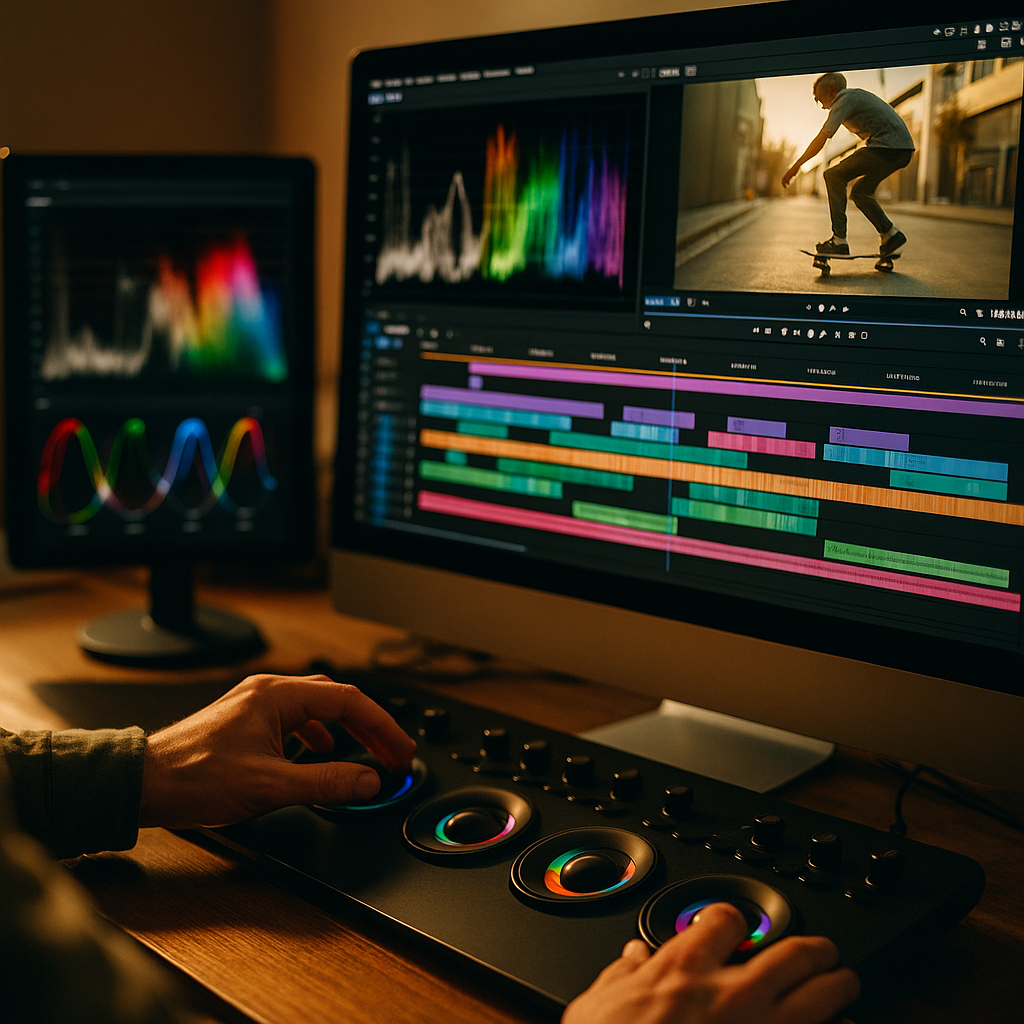
The Psychology of Color Pacing in High Retention Video Editing is the difference between a video that feels effortless and one that quietly drains attention. When you plan how color shifts over time, you guide emotion, clarity, and momentum without adding extra words. In 2025, viewers decide fast, and your palette can either stabilize their focus or trigger drop-offs. Want to control that decision?
Color psychology in video editing: how viewers feel before they think
Color is processed quickly and often pre-verbally. That matters in retention-focused editing because attention is frequently decided before a viewer can explain why they stayed or left. Color psychology in video editing is not about vague symbolism (“blue equals trust”) as much as it is about predictable perceptual effects: contrast draws the eye, saturation elevates arousal, and hue temperature influences perceived intimacy or distance.
Start by separating three layers that influence retention:
- Perceptual clarity: Can the viewer instantly understand what to look at? Clean luminance separation and consistent skin tones reduce cognitive load.
- Emotional tone: Warmth, coolness, and saturation subtly bias interpretation of a moment (comfort, urgency, seriousness).
- Expectation management: If your color “language” changes randomly, the viewer expends effort re-orienting. If it changes with purpose, it becomes a map.
Retention comes from making the brain’s job easier while keeping the experience stimulating. Color pacing does both: it simplifies orientation when consistent, and it creates “micro-events” when it shifts.
Color pacing strategy: using timed shifts to control attention
Color pacing strategy means you plan color changes like you plan cuts, music hits, or on-screen text: not as decoration, but as timing. High-retention edits usually follow a rhythm of stability → contrast → recovery. Color can execute that rhythm without increasing cut rate.
Use these pacing principles:
- Hold a baseline look during explanations. A stable grade reduces fatigue and makes information easier to follow.
- Introduce a color “beat” at moments of novelty: reveal, punchline, key proof, new step, or example. A small saturation bump or background hue change can act like a nonverbal underline.
- Return to baseline after the beat. If every moment is “highlighted,” nothing is. Recovery protects the viewer’s attention budget.
Timed shifts work best when they align with story structure. For example, when you move from problem to solution, you can slightly warm the image and lift midtones to signal relief. When you switch to a cautionary note, a subtle cool shift and lower saturation can signal seriousness. The viewer may not consciously notice, but they will feel the transition.
To avoid artificial-looking edits, keep shifts small: in many cases, a 5–10% change in saturation or a modest color temperature drift is enough. The goal is control, not spectacle.
Visual retention editing: reducing cognitive load with consistent color language
Visual retention editing is often framed as faster cuts and tighter scripting, but color consistency is a quieter retention lever. When color is inconsistent, viewers spend effort recalibrating: skin tones change, whites shift, backgrounds vary unpredictably. That friction compounds over time and increases the likelihood of a swipe-away.
Build a “color language” that stays consistent across the video:
- Protect skin tone realism: Audiences read credibility through faces. If skin tones drift green/magenta, trust can drop, especially in educational or product content.
- Standardize neutrals: Whites and grays anchor perception. If they drift, everything feels unstable.
- Use limited accent colors: Choose 1–2 accents (often tied to brand or topic) and reuse them in graphics, props, or backgrounds to create familiarity.
Answer the practical follow-up: “Should I grade every shot the same?” Not exactly. You want a consistent baseline across cameras and lighting conditions, then you pace variation intentionally. Think of it as a controlled vocabulary: most sentences use common words; emphasis uses a few bold terms.
For multi-scene videos, keep scene-to-scene transitions predictable. If you jump from a warm indoor shot to a cool outdoor shot, add a brief bridge: either a neutral cutaway, a graphic card, or a transitional grade that eases the temperature shift. You’re smoothing perception to keep the viewer oriented.
Emotional color grading: aligning hue and saturation with narrative beats
Emotional color grading is most effective when it tracks what the viewer should feel right now, not the creator’s mood in general. Retention improves when emotion and information reinforce each other: the grade supports comprehension and anticipation.
Use emotion-driven grading choices tied to common narrative beats:
- Curiosity and setup: Slightly higher contrast and cooler neutrals can create tension and sharpen focus, especially in the first 10–20 seconds.
- Clarity and teaching: Neutral-to-warm midtones, controlled saturation, and stable luminance help viewers relax into learning.
- Urgency and stakes: A touch more saturation in accents (not skin) and deeper shadows can increase intensity without looking “overgraded.”
- Relief and payoff: Warmer highlights and gentle saturation lift signal resolution.
Answer the likely follow-up: “How do I avoid manipulating viewers?” Treat emotional grading as coherence, not coercion. You’re clarifying what the scene already communicates. If the tone of voice is calm but the grade is aggressive and neon, viewers feel discordance and bounce.
Keep special attention on saturation. Saturation is a strong arousal lever, but it has a cost: too much makes the eye work harder and can cause fatigue in longer videos. For high-retention formats, reserve high saturation for short moments: product reveals, key graphs, or scene changes that need a clean reset.
Attention and eye tracking: directing gaze with contrast and color hierarchy
Attention and eye tracking are often discussed as hardware and lab science, but editors can apply the practical implications immediately. The eye is drawn to luminance contrast first, then color contrast, then motion and detail. Color pacing succeeds when it respects that hierarchy.
Build a color hierarchy in every frame:
- Primary subject separation: Ensure the subject’s face or the main object has the clearest luminance separation from the background. This can be done with subtle background darkening, gentle vignettes, or selective contrast.
- Accent isolation: If you want the viewer to notice a button, chart line, or on-screen keyword, isolate it as the most saturated element in frame.
- Avoid competing hotspots: Bright colored objects in the background pull attention away from the speaker and increase drop-offs in talking-head content.
When you pace color, you can also pace hierarchy changes. For example, during an explanation, keep the speaker dominant. When the video switches to a demonstration, shift the hierarchy so the product becomes dominant: slightly desaturate the environment and lift the product’s highlight detail.
Answer the follow-up: “Do I need masks and power windows?” Not always, but selective tools often pay off. Even basic secondary corrections (skin tone protection, background saturation trim) can dramatically improve clarity. Use them sparingly and consistently to avoid a “cutout” look.
Brand color consistency: retaining viewers across series, channels, and formats
Brand color consistency supports retention beyond a single video. When viewers recognize your visual signature, they re-orient faster and trust the structure. This matters in 2025 because most audiences encounter your work in feeds where context is thin and decisions are quick.
Build a repeatable system:
- Create a master LUT cautiously: Use it as a starting point, not a one-click solution. Calibrate exposure and white balance first, then apply the look.
- Define brand-safe ranges: Document acceptable skin tone warmth, contrast level, and saturation ceilings. This prevents drift as your content volume grows.
- Standardize graphics color: Match lower-thirds, captions, and callouts to the grade. If graphics are neon but the footage is muted, your palette fights itself.
- Plan for platform delivery: Different platforms compress differently. Protect gradients, avoid extreme saturation in reds, and test on a phone screen before publishing.
EEAT in practice means you make your process transparent and repeatable. When you can explain why you chose a palette (clarity, hierarchy, emotional beat, brand consistency) and you apply it consistently, your videos look more credible. That perceived credibility often translates into higher watch time and better viewer satisfaction.
FAQs: Psychology of color pacing in high retention video editing
What is color pacing in video editing?
Color pacing is the intentional timing of color changes (temperature, saturation, contrast, and hue emphasis) to support story beats, guide attention, and reduce fatigue. It functions like visual rhythm: stable sections for comprehension, brief shifts for emphasis, and returns to baseline for recovery.
How do I know if my color changes are helping retention?
Check audience retention graphs around moments where the grade shifts (scene changes, reveals, on-screen graphics). If dips align with abrupt or inconsistent shifts, reduce intensity and add transitional bridges. If spikes or steadier retention align with emphasized moments, your pacing is likely supporting comprehension and interest.
Should I use warm colors to increase engagement?
Warmth can increase perceived closeness and comfort, but engagement depends on context. Use warm tones for reassurance, explanation, and payoff. Use cooler or more neutral tones for focus, tension, or technical clarity. The best approach is consistency plus purposeful contrast, not a single “engaging” temperature.
What’s the safest way to add color beats without overgrading?
Make small, reversible moves: modest saturation lifts on accents, slight midtone warmth shifts, or gentle contrast increases. Protect skin tones and keep neutrals stable. If you can notice the effect immediately on every frame, it’s often too strong for retention-focused pacing.
How do I keep skin tones consistent across scenes?
Normalize exposure and white balance first, then use a targeted skin adjustment (hue/sat or secondary correction). Keep skin saturation within a natural range, avoid green/magenta casts, and match luminance on faces between shots so cuts feel smooth.
Does color pacing matter in short-form videos?
Yes, but the timing compresses. Use a stable baseline for clarity, then one or two strong emphasis beats (e.g., reveal or key proof). Too many rapid color shifts can feel chaotic on small screens and reduce comprehension.
Color pacing works when you treat color as structure, not decoration. Build a stable baseline grade, protect skin tones and neutrals, and design intentional “beats” where saturation, contrast, or temperature shifts underline key moments. In 2025, retention follows clarity and controlled emotion more than flashy looks. Plan your palette like a rhythm track, and viewers will keep watching.