


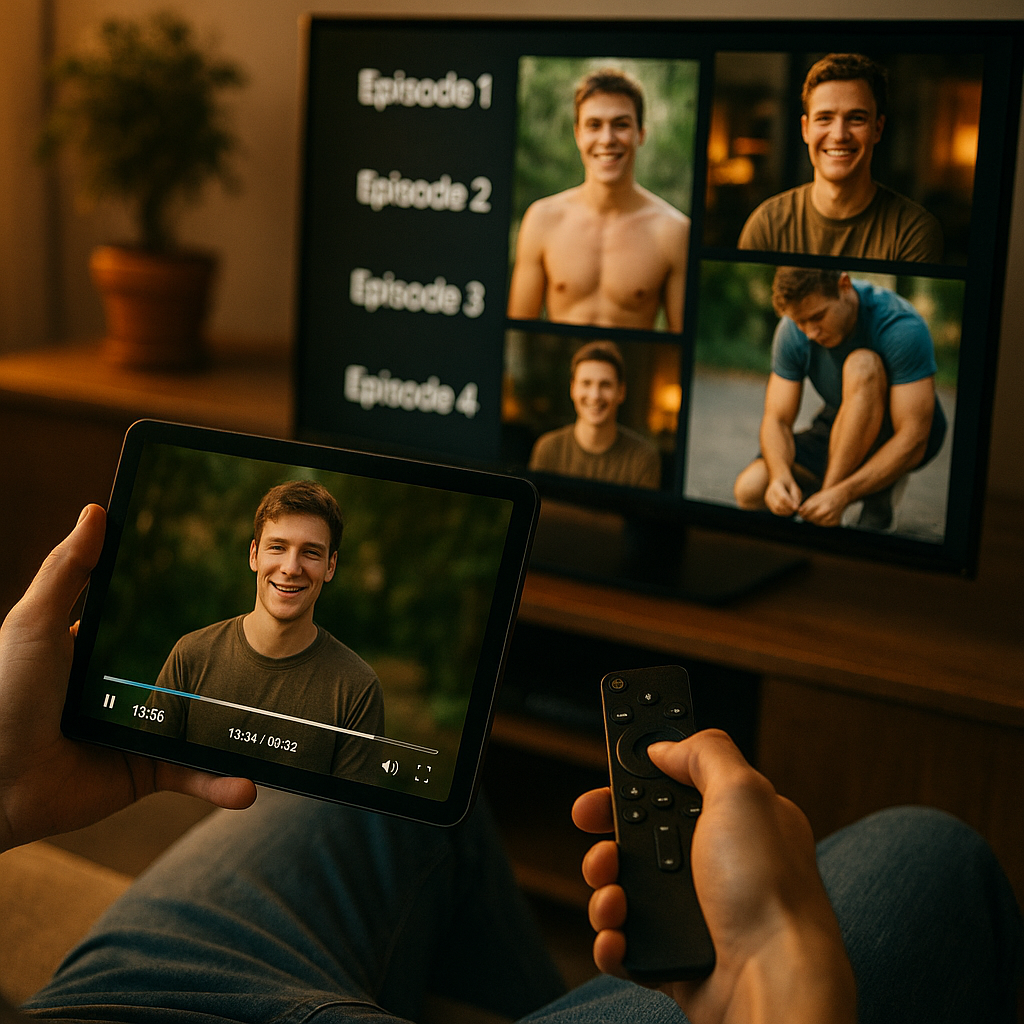
In 2025, attention is fragmented, yet routines still form through repetition and smart design. Serialized video content turns one-off inspiration into a guided sequence that viewers return to, day after day. By pairing narrative momentum with habit science, creators and brands can help people practice small actions consistently until they stick. Want to know what makes a series addictive in the best way?
Why serialized video content sustains behavior change
Habits rarely form from a single burst of motivation. They form when people repeat a behavior in a stable context, with a clear cue and a satisfying payoff. A serialized format supports this process because it creates structured repetition without feeling repetitive. Each episode becomes a familiar container: same host, same framing, same expected length, same call to action. That consistency reduces decision fatigue and makes “show up and do it” feel automatic.
Unlike standalone videos that must re-earn attention each time, a series builds commitment through continuity. Viewers don’t just “watch a video,” they “continue the program.” This subtle identity shift matters: when the audience sees themselves as someone who follows the series, skipping an episode feels like breaking a streak. Serialized formats also make progress visible—episode numbers, milestones, and recap moments all reinforce the sense of movement.
From an EEAT perspective, serialization also signals intent and responsibility. A creator who plans a sequence implies they’ve thought through the learning path, common obstacles, and safe progression. That increases perceived credibility, especially for health, fitness, finance, and productivity topics where viewers need more than hype—they need guidance and guardrails.
Habit formation psychology: cues, rewards, and friction
To build long-term habits, your series must map to how habits actually develop. The most reliable approach is to design each episode around a simple loop: cue → action → reward. In video, the cue can be a consistent release schedule, a notification, or a predictable opening ritual (“Grab water, stand up, start timer”). The action is the behavior you want repeated. The reward is the immediate benefit: relief, clarity, accomplishment, or a quick win.
Friction is the enemy of consistency. If an episode requires special equipment, lots of setup, or complex instructions, people drop off. High-performing habit series reduce friction by:
- Making the first minute actionable (no long intros; start with the cue and the first step).
- Keeping the action small (5 minutes of stretching beats a 45-minute workout for habit formation).
- Using predictable formats (same structure every time so viewers don’t have to “learn” the video).
- Offering tiered difficulty (baseline option plus “if you want more” progressions).
Reward design should be immediate and specific. “You’ll feel better someday” doesn’t compete with distractions. Instead, aim for “Your shoulders will feel looser in two minutes” or “You’ll close one open loop before you start work.” When viewers experience a fast payoff, they associate the series with relief and competence—two powerful reinforcers.
Answering a common follow-up question: How long should a habit series run? There’s no universal number because difficulty, audience context, and goal complexity vary. What matters is whether the series creates enough repeated “wins” for viewers to internalize the behavior. Design for a clear starting ramp, a middle phase that protects consistency, and a final phase that helps viewers continue without you.
Episode structure and content design for long-term habits
Serialized video works best when every episode feels like part of a system. That system should be obvious, not hidden. Viewers should instantly know: what to do, how long it takes, and what “done” looks like. A strong episode template also supports accessibility and trust because it reduces confusion and keeps claims grounded in what you can demonstrate.
Use a repeatable structure such as:
- 10–15 seconds: recap + today’s micro-goal (“Yesterday we did X; today we add Y”).
- 30 seconds: setup + safety notes (especially for health, exercise, or tools).
- Core action: guided practice with clear cues, timers, or checklists.
- 30–60 seconds: reflection prompt (“Rate difficulty 1–5; what got in the way?”).
- Call to continuation: preview next episode and a simple between-episode task.
To maintain EEAT, separate demonstration from interpretation. Demonstration is what the viewer can verify (“Do this breathing cadence for 60 seconds”). Interpretation is why it helps (“This may reduce perceived stress for some people”). When you’re discussing health or mental wellbeing, avoid absolute promises and frame benefits responsibly. If you’re qualified in a field, state your credentials in the channel bio and reinforce them subtly within the series (“As a registered dietitian…”). If you’re not, cite reputable sources in video descriptions and encourage viewers to consult professionals for personalized advice.
Also design for drop-ins without undermining continuity. Many viewers will discover episode 7 first. Add quick navigation prompts: “If you’re new, start at episode 1; if you’re continuing, today is fine.” Then make the action doable even for newcomers, with optional progressions for regulars.
Retention strategy and community building through video series
Habit content fails when viewers feel alone, behind, or judged. Serialization gives you a built-in retention toolkit: anticipation, belonging, and accountability. Use it deliberately.
Start with anticipation. End each episode by naming the next micro-win (“Tomorrow you’ll learn the 2-minute reset that makes this automatic”). This creates a psychological open loop. Pair that with a consistent release schedule so viewers can attach the habit to a time-of-day routine.
Build belonging by giving the audience a shared language: a series name, a simple mantra, or a weekly checkpoint. Encourage comments with prompts that normalize struggle (“What was the hardest minute today?”) and highlight diverse experiences. Feature viewer adaptations—this improves trust and shows the habit can fit real lives.
Create accountability without shame. Use lightweight mechanisms such as:
- Streak-friendly prompts: “If you missed a day, restart today—no catch-up.”
- Weekly review episodes: recap, troubleshoot, and reset expectations.
- Simple tracking: a one-line checklist viewers can copy into notes.
- Office-hours style Q&A: address common barriers with practical fixes.
A likely follow-up: Does this work for brands without a charismatic host? Yes. The “host” can be a consistent voice-over, a recognizable on-screen style, or a recurring expert guest. What matters is continuity and clarity, not celebrity. If you do use experts, introduce them with role and relevant experience, and keep advice within their scope. That’s good ethics and good retention.
Measurement and optimization for long-term engagement metrics
To prove your series builds habits, track metrics that reflect repeat behavior, not just reach. Views and likes matter, but habit-building shows up in return patterns and completion behaviors.
Useful indicators include:
- Episode-to-episode return rate: how many viewers of episode N watch episode N+1.
- Average view duration on the action segment: are people staying for the practice?
- Completion rate on short episodes: short content should finish strong; low completion signals confusion or weak payoff.
- Comment quality: look for “I did it” reports, barrier notes, and adaptation stories.
- Saved/shared rate: a proxy for perceived utility and future intent.
Optimization should focus on removing friction. If drop-off happens before the action starts, shorten the intro and move the “why” later. If drop-off happens mid-practice, simplify the steps or add clearer timing cues. If viewers binge but don’t return, introduce “daily anchors” like a morning version and an evening version, each with a stable duration.
For EEAT and trust, document your update process. When you refine an episode, say why (“Many of you asked for a knee-friendly alternative; here it is”). This signals responsiveness and care. Also, keep claims aligned with evidence and user outcomes. If you cite research in descriptions, favor major medical institutions, government health agencies, and peer-reviewed journals, and summarize in plain language so viewers understand what the evidence does and doesn’t show.
Content repurposing and omnichannel habit loops
Serialized video becomes more powerful when it connects to the rest of your ecosystem. People don’t live on one platform. They switch between phone, desktop, TV, and audio. Your job is to keep the habit intact as the context changes.
Repurpose episodes into habit “supports” that reinforce the same cue-action-reward loop:
- Short clips: one-minute “cue” videos that lead to the full episode practice.
- Printable or mobile checklists: a minimal tracker that matches episode numbers.
- Email or SMS prompts: a daily nudge with the micro-goal and a direct link.
- Audio-only versions: for walks, commutes, or screen-free routines.
- Community posts: weekly threads for wins, obstacles, and resets.
Keep the habit language consistent everywhere: same naming, same episode order, same “minimum effective dose.” When the audience hears the same cue phrase in a newsletter and in the video, it becomes a trigger. That’s how omnichannel marketing becomes omnichannel behavior change.
Answering another follow-up: How do you avoid content fatigue? Rotate emphasis without changing the core behavior. For example, a daily writing habit can cycle through prompts, constraints, and environments while keeping the same 10-minute timer. Viewers stay interested, but the habit remains stable.
FAQs
What makes serialized video content different from a playlist?
A playlist is a container. Serialized video content is a planned progression with recurring structure, intentional milestones, and narrative continuity that motivates return viewing and repeat practice.
How long should each episode be to build a habit?
Keep episodes as short as possible while still delivering a clear action and payoff. For many habits, 5–12 minutes works well because it lowers friction. If the habit is complex, use short daily episodes plus occasional longer “workshop” episodes.
Can a video series build habits without daily posting?
Yes. Consistency matters more than frequency. A three-times-per-week cadence can work if each episode includes a between-episode practice and a clear plan for what viewers should do on off days.
How do I design a series for beginners and advanced viewers at the same time?
Use a baseline action that anyone can complete, then add optional progressions (“level up” steps) for advanced viewers. This keeps the habit accessible while preventing plateaus.
What topics work best for habit-based video series?
Topics with small repeatable actions perform well: mobility, strength basics, language practice, budgeting routines, meal prep, focus sprints, decluttering, skincare basics, and skill drills. Avoid goals that require major one-time effort without repetition.
How do I show EEAT if I’m not a certified expert?
Be transparent about your background, avoid medical or financial absolutes, cite reputable sources in descriptions, demonstrate techniques clearly, and encourage viewers to seek professional guidance for personalized situations. Show your process, your limitations, and your commitment to viewer safety.
Serialized video series succeed because they replace willpower with structure: clear cues, small actions, and immediate rewards repeated over time. In 2025, creators and brands that plan progression, reduce friction, and support viewers between episodes earn trust and long-term engagement. Build one consistent format, measure return behavior, and refine based on real obstacles. When viewers can practice daily with ease, habits follow.