


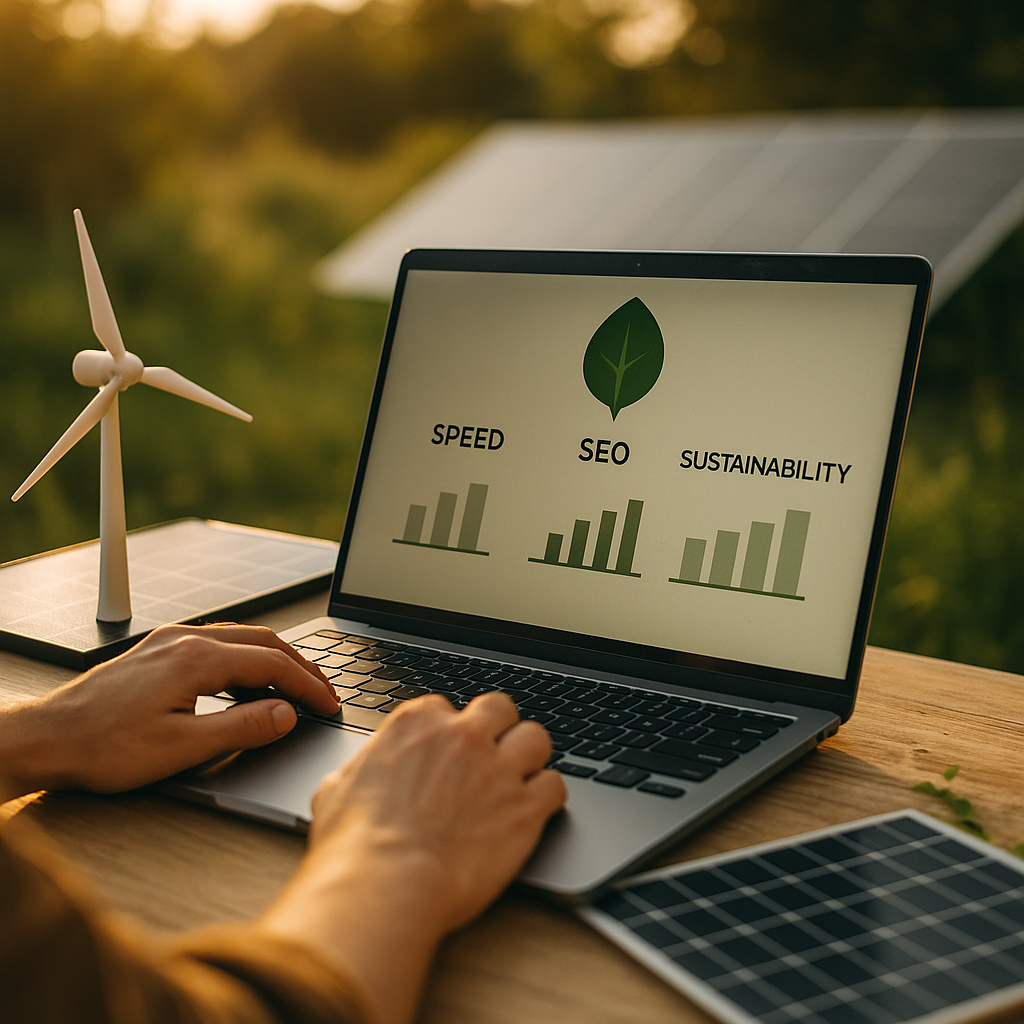
Designing low carbon websites is no longer a niche practice in 2026. It is a practical strategy for improving speed, accessibility, SEO, and environmental impact at the same time. As digital services expand across every market, websites that use fewer resources can deliver better user experiences and support global sustainability goals. Here is how to build cleaner, faster web experiences that scale.
Why low carbon web design matters for sustainable web development
Every webpage visit consumes electricity across a chain of devices and infrastructure: the user’s phone or laptop, mobile or fixed networks, data centers, third-party services, and content delivery networks. Multiply that by thousands or millions of visits, and small design choices begin to matter. Sustainable web development focuses on reducing this digital waste without sacrificing usability or business results.
From an EEAT perspective, this topic deserves practical guidance rather than vague claims. Teams that measure page weight, optimize code, limit unnecessary scripts, and choose efficient hosting can often lower emissions while improving real-world performance metrics such as Largest Contentful Paint, Interaction to Next Paint, and bounce rate. That matters because users abandon slow, cluttered pages quickly, especially on mobile connections.
A low carbon website is not simply a “green-looking” site. It is a site engineered to transfer less data, execute less JavaScript, reduce CPU usage, and avoid needless requests. The environmental benefit comes from efficiency. The commercial benefit comes from faster rendering, stronger engagement, and more resilient global delivery.
This approach also aligns with broader accessibility and inclusion goals. In many regions, users still rely on lower-bandwidth networks, older devices, expensive data plans, or inconsistent power access. A lighter site serves them better. Designing for lower carbon output often means designing for real-world constraints, which is a strong sign of helpful, user-first content and product thinking.
Core principles of website performance optimization that reduce emissions
Website performance optimization is the foundation of low carbon design. The less work a browser and network must do, the lower the resource use. Start with the principle of subtraction: if an element, effect, script, or asset does not support a user goal or business goal, remove it.
Prioritize essential content first. Pages should load the primary message, product details, article text, or call to action immediately. Decorative elements can wait or disappear entirely if they add little value. This keeps the critical rendering path short and lowers total transferred bytes.
Reduce page weight aggressively. Large pages are one of the clearest sources of unnecessary energy use. Compress images, avoid autoplay video by default, subset fonts, and remove duplicate libraries. A smaller page loads faster and consumes less power across the delivery chain.
Use less JavaScript. Heavy client-side frameworks can create high CPU activity on the device, which affects battery life and responsiveness. In many cases, server-rendered or progressively enhanced experiences offer better outcomes. Ask whether each script is essential, whether it can load later, or whether native HTML and CSS can do the job.
Limit third-party tools. Tag managers, ad scripts, chat widgets, personalization engines, A/B testing platforms, social embeds, and analytics tools often account for a large share of requests and processing. Audit them regularly. If a tool does not produce measurable value, remove it.
Cache intelligently. Effective browser caching, CDN caching, and stale-while-revalidate strategies can reduce repeated transfers for returning users. That lowers load times and reduces demand on origin servers.
Design for resilience. Not every user arrives with a strong connection. A good low carbon site still works under constrained conditions. Resilient design improves sustainability because it avoids waste caused by retries, stalled requests, and broken interactive features.
- Set performance budgets for page weight, scripts, fonts, and requests.
- Audit third-party scripts every quarter.
- Prefer static generation or server-side rendering for content-heavy pages.
- Use modern image formats and responsive image sizing.
- Load only what is needed for the current viewport or task.
Green hosting and clean infrastructure choices for carbon conscious websites
Infrastructure decisions matter as much as front-end design. Carbon conscious websites depend on hosting environments that use energy efficiently and, where possible, support renewable power procurement. In 2026, many hosting providers publish sustainability commitments, power usage effectiveness data, and regional infrastructure details. Still, marketing language can be vague, so buyers should ask precise questions.
Look for providers that disclose how their facilities are powered, how efficiently they operate, and whether they match usage with credible renewable energy sourcing. Also assess location strategy. Hosting content closer to users through efficient edge delivery can reduce latency and improve performance, though the full footprint depends on network routing, cache hit rates, and architecture choices.
Efficient infrastructure is not only about the data center. It includes the software stack. A lean CMS, optimized database queries, image transformation at the edge, and a properly configured CDN can significantly lower server workload. Dynamic pages that trigger expensive backend operations for every request can waste energy and slow the user experience.
Teams should also review deployment practices. Overprovisioned servers, always-on development environments, and inefficient CI pipelines create background waste. While users do not see this directly, sustainable engineering includes operational efficiency across the lifecycle of the website.
For organizations publishing sustainability claims, evidence matters. Document what hosting choices were made, what performance gains were achieved, and how those changes were measured. This builds trust and supports EEAT by showing first-hand implementation and verifiable outcomes rather than unsupported assertions.
UX design for faster websites and better energy efficiency
UX design for faster websites is not about stripping away personality. It is about making interfaces clearer, quicker, and easier to use. Many high-carbon design patterns are also poor UX: endless carousels, oversized hero videos, intrusive popups, bloated animation, and hidden navigation that forces extra interaction.
Good UX reduces friction and therefore waste. If users can complete tasks quickly, they use fewer page views, fewer searches, and less repeated loading. This matters for ecommerce, publishing, SaaS, education, and public service websites alike.
Content design plays a direct role. Clear information architecture helps users find the right page the first time. Concise copy reduces scroll fatigue and improves comprehension. Well-structured pages with descriptive headings, relevant summaries, and visible next steps shorten task completion time. A sustainable website is often a clearer website.
Accessibility also supports lower carbon outcomes. Semantic HTML, sufficient contrast, keyboard support, and restrained motion reduce the need for workarounds or failed interactions. Users on assistive technologies benefit from efficient markup, and so do search engines. When websites rely less on script-heavy components and more on native browser features, they usually become both more accessible and more efficient.
Mobile-first thinking is especially important. Mobile traffic remains dominant in many sectors, and mobile devices often operate under tighter battery, memory, and network limits. Test pages on mid-range devices, not only flagship phones or powerful desktops. A site that performs well there is more likely to deliver both lower emissions and stronger global reach.
- Replace autoplay video with click-to-play previews.
- Use motion only where it aids comprehension.
- Keep navigation shallow and predictable.
- Prefer system fonts or carefully subset web fonts.
- Design forms to complete in as few steps as possible.
Technical SEO and low carbon websites: a shared efficiency mindset
Technical SEO and low carbon websites work well together because both reward efficiency, clarity, and crawlability. Search engines favor pages that load quickly, present clear structure, and avoid barriers to rendering. While sustainability itself is not a direct ranking factor in a simple sense, the practices behind low carbon design can strengthen SEO performance.
Start with clean HTML and logical content hierarchy. Search engines and assistive technologies both benefit from semantic structure. Avoid rendering essential content only through complex scripts. If a crawler or a constrained device struggles to access your main content, users probably will too.
Page speed remains important. Faster sites can improve user satisfaction, reduce abandonment, and support stronger engagement signals. Efficient image delivery, minimized render-blocking resources, and reduced script execution all contribute. Canonical tags, sitemaps, schema where appropriate, and clean internal linking can be implemented without adding unnecessary weight.
Content strategy matters just as much. Publish pages that solve user problems directly instead of creating thin, overlapping, or redundant content. This lowers crawl waste and gives each page a clearer purpose. Helpful content is sustainable content because it respects both user attention and system resources.
International sites should localize thoughtfully. Serving the right language and regional content early can reduce pogo-sticking and unnecessary page loads. Edge delivery, regional image variants, and local performance testing help global websites remain both competitive and efficient.
Finally, avoid vanity features that interfere with discoverability. Search engines are better than they once were at rendering modern sites, but heavy front-end complexity still introduces risk. Simpler architecture remains the safer path for performance, maintenance, and sustainability.
How to measure digital sustainability metrics and improve continuously
You cannot improve what you do not measure. Digital sustainability metrics should be tracked alongside performance and business KPIs. The goal is not to chase a single score but to create a repeatable process for reducing unnecessary resource use over time.
Begin with baseline measurements for page weight, requests, Core Web Vitals, server response time, and major template types such as homepage, category page, article page, product page, and checkout. Then identify the biggest contributors to load: usually images, scripts, fonts, and third-party tags.
Use a combination of lab and field data. Lab testing helps teams compare builds under controlled conditions. Real user monitoring shows how the experience behaves across actual devices, geographies, and network speeds. Both are necessary because a page that looks acceptable on a fast office connection may perform poorly for users in other markets.
To estimate carbon impact, use a consistent methodology and disclose its limits. Web carbon calculations are directional, not perfectly precise, because electricity grids, caching behavior, device energy use, and traffic patterns vary. What matters most is using the same method over time so improvements remain comparable.
Create governance around these metrics. Add performance budgets to the development workflow. Require review for any new third-party integration. Include sustainability and accessibility in design sign-off. Monitor regressions after launches, redesigns, and campaign deployments. This turns low carbon design from a one-time project into a lasting operating standard.
- Track: page weight, requests, render time, and Core Web Vitals.
- Review: top templates and top landing pages monthly.
- Benchmark: mobile performance in key global markets.
- Document: what changed, why it changed, and the measured result.
- Govern: sustainability checks in design, engineering, and content workflows.
FAQs about eco friendly web design
What is a low carbon website?
A low carbon website is designed to use fewer digital resources across devices, networks, and servers. It typically has lighter pages, fewer scripts, efficient media handling, and optimized infrastructure. The result is lower energy use, faster performance, and often better accessibility.
Does low carbon web design hurt creativity or branding?
No. It encourages disciplined creativity. Strong branding does not require bloated assets or heavy animation. Many of the best digital experiences feel more premium because they are fast, clear, and focused.
Can sustainable web design improve SEO?
Yes, indirectly and often significantly. Faster pages, cleaner code, better mobile usability, and stronger accessibility can support search visibility and user engagement. These are all outcomes associated with effective low carbon design.
How do I reduce website emissions quickly?
Start with the biggest wins: compress and resize images, remove unnecessary third-party scripts, reduce JavaScript, enable caching, optimize fonts, and review hosting efficiency. These changes usually produce both carbon and performance gains quickly.
Is green hosting enough on its own?
No. Hosting matters, but front-end inefficiency can still create a heavy website. The best results come from combining efficient infrastructure with lightweight design, clean code, and clear content strategy.
How often should I audit a website for carbon and performance issues?
Run ongoing monitoring and complete a deeper audit at least quarterly, or after any major redesign, migration, or campaign launch. Performance and carbon regressions often appear when new scripts, media, or plugins are added over time.
Do low carbon websites work better in global markets?
Usually, yes. Lighter pages perform better across varied devices and network conditions. That makes them more inclusive for users in regions with slower connections, higher data costs, or older hardware.
Designing low carbon websites in 2026 means building for speed, clarity, inclusion, and accountability. The same decisions that cut digital waste also improve user experience, technical SEO, and global reach. Start with measurement, remove what is unnecessary, and make sustainability part of every design and engineering decision. Cleaner websites are not a compromise. They are simply better websites.