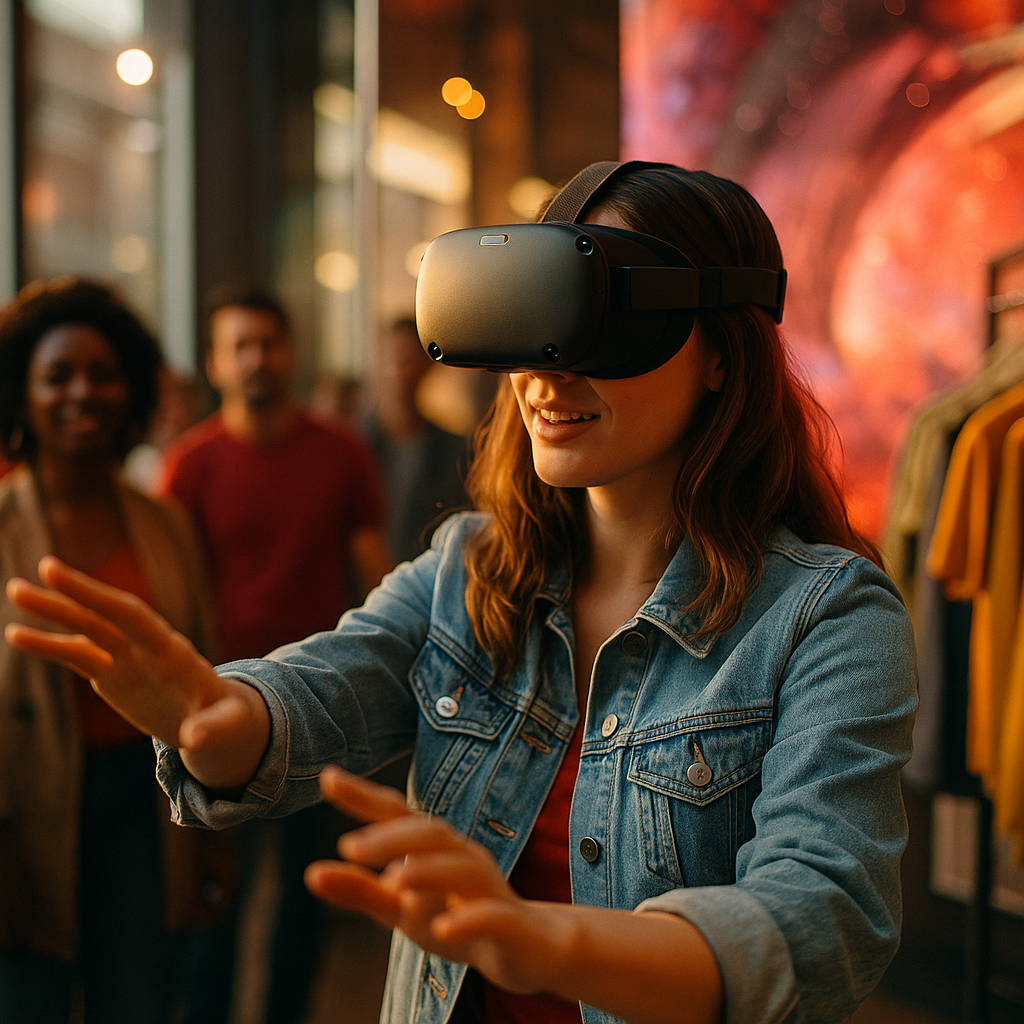
In 2025, shoppers expect more than displays; they want moments that feel personal, shareable, and worth leaving the couch for. Designing Immersive Sensory Experiences for Live Retail Activations blends strategy with psychology to turn foot traffic into brand affinity and measurable sales. This guide shows how to plan, execute, and evaluate multi-sensory retail events—so your next activation doesn’t just look good, it lands.
Customer engagement strategy: define outcomes, audience, and context
Immersion starts before a single prop is built. The strongest live retail activations begin with a clear customer engagement strategy that aligns experience design with business goals. Decide what “success” means: new customer acquisition, product trial, email/SMS opt-ins, loyalty sign-ups, social reach, or conversion lift. Each goal requires different sensory priorities, staffing, and measurement.
Map the audience in practical terms: who is coming, what motivates them, and what barriers exist? A beauty pop-up targeting trend-driven shoppers needs rapid sampling, mirrors, and quick education. A premium electronics showcase needs guided demos, sound isolation, and time for comparison. Build personas around intent (curious passerby vs. planned visitor), not just demographics.
Next, audit the context: store layout, neighborhood traffic patterns, nearby competitors, and noise levels. A mall corridor already has high ambient sound, so your audio plan needs precision. A flagship with large windows needs glare and heat management so the experience remains comfortable. Confirm operational constraints early—power, load-in access, permits, peak hours—so the creative concept remains executable.
Helpful planning checklist:
- Single sentence objective: “We will drive X action from Y audience within Z timeframe.”
- Primary journey: how a visitor enters, engages, tries, decides, and exits.
- Two fallback pathways: what happens if the space becomes crowded or staff are pulled away.
- Measurement plan: tools, data owner, privacy notice placement, and reporting cadence.
Multi-sensory marketing: orchestrate sight, sound, scent, touch, and taste
Multi-sensory marketing works when the senses support a single story rather than competing for attention. Start with the brand’s core promise—calm, performance, indulgence, play—and translate it into a sensory “score.” Keep intensity appropriate: immersion should feel intentional, not overwhelming.
Sight: Use lighting to guide attention and shape emotion. Warm, low-contrast light can signal comfort; bright, high-contrast light can emphasize precision. Make key moments “camera-ready” with clean backgrounds and flattering light, but avoid visual clutter that dilutes the hero product.
Sound: Audio is often the fastest way to change perceived energy. Choose a soundscape that matches dwell-time goals. If you want quick throughput, use upbeat pacing and clear staff cues. If you want longer demos, reduce tempo and manage noise bleed with directional speakers or soft materials. Ensure voice content is intelligible and not fatiguing.
Scent: Scent can anchor memory, but it must be handled carefully. Work with compliant, reputable scent partners, disclose sensitizer information where appropriate, and keep diffusion subtle. Tie scent to the product story (e.g., botanical notes for skincare, “fresh tech” cleanliness for electronics) rather than novelty.
Touch: Tactility drives confidence—especially for apparel, home goods, and beauty tools. Design “touchpoints” that invite interaction: fabric swatch walls, temperature-safe material samples, textured packaging comparisons, and ergonomic try-on stations. Maintain hygiene with clear protocols and visible cleaning.
Taste: If food or beverage sampling fits the brand, use it to reinforce positioning (premium, functional, playful). Keep it operationally simple: short menu, allergy labels, and fast replenishment. Taste should add meaning, not create lines that block the experience.
Practical tip: Limit each zone to one “lead sense” and two supporting senses. This prevents sensory overload and makes the journey feel coherent.
Experiential retail design: build a journey with moments, not just decor
Experiential retail design succeeds when it turns a floor plan into a narrative. Think in chapters: arrival, orientation, discovery, trial, decision, and sharing. Each chapter should have a clear purpose and a measurable action.
Arrival: The first five seconds determine whether someone steps in. Use a bold, simple message and one unmistakable invitation: “Try,” “Scan,” “Test,” or “Customize.” If the entry feels confusing, sensory elements won’t matter because visitors won’t commit.
Orientation: Visitors should instantly understand where to go and what to do. Use friendly staff positioning, overhead signage, and a “starter interaction” that takes under 20 seconds—like a quiz, a scent strip, a quick skin scan, or a product comparison card.
Discovery and trial: Offer progressive disclosure. Start with low-effort interactions (touch, smell, watch) then move to higher-effort ones (demo, customization, consultation). Keep wait times visible and managed; nothing breaks immersion like uncertainty in a queue.
Decision: Make buying frictionless. Place checkout or assisted purchase near the moment of highest confidence, not far away. Include clear value cues: bundles, limited-edition items, or a “today only” benefit tied to the activation.
Sharing: Build one “signature shot” moment with lighting and framing designed for phone cameras. Add subtle prompts (“Tag us to unlock…”) without forcing behavior. Provide a QR code that lands on a fast mobile page with opt-in, product links, and event details.
Accessibility and comfort: Immersion must include everyone. Ensure pathways accommodate mobility devices, provide seating options, offer low-sensory times if possible, and use readable typography. Comfort is not a nice-to-have; it directly affects dwell time and conversion.
Brand storytelling: translate product truth into sensory cues that earn trust
Brand storytelling in live activations works best when it is grounded in product truth. Shoppers are quick to detect “set dressing” that doesn’t match reality. Connect each sensory cue to a credible claim: ingredients, craftsmanship, performance, sustainability practices, or community impact. When possible, show proof in the space—materials, demos, behind-the-scenes visuals, or expert-led explanations.
Use language that is specific and verifiable. Replace vague promises with clear benefits: “lasts 12 hours,” “made with recycled aluminum,” “clinically tested,” or “designed to reduce noise by X.” If a claim requires context, provide it on signage or via QR, and train staff to explain it accurately.
Human expertise is part of EEAT. Staff and hosts should function like guides, not scripts. Train them on product fundamentals, common objections, and safe usage. If you bring specialists (makeup artists, baristas, stylists, technicians), display credentials in a simple way: role, expertise, and what they’ll help with. Visitors trust transparent authority.
Also anticipate follow-up questions inside the experience. If customers ask, “Is this right for me?” provide a simple diagnostic tool. If they ask, “How does it compare?” offer a side-by-side demo. If they ask, “Is it safe?” show compliance notes and care instructions. Every answered question reduces decision friction.
Retail event technology: use data, interactivity, and privacy-first measurement
Retail event technology should serve the experience, not distract from it. Use tech where it increases clarity, personalization, or speed. In 2025, shoppers expect seamless mobile flows and transparent data practices, so design for consent and simplicity.
High-value tech layers:
- QR-led journeys: fast landing pages for product education, booking, and opt-in perks.
- Interactive kiosks: short quizzes that recommend products and save results to a digital cart.
- RFID or tap-to-learn: quick product details without searching, ideal for galleries.
- Appointment and queue tools: visible wait times, SMS alerts, and smooth handoffs.
- POS integration: attribute purchases to the activation without manual reconciliation.
Measurement that executives trust: Combine behavioral metrics (dwell time, interaction counts, demo completions) with outcome metrics (opt-ins, add-to-cart, conversion rate, average order value). Where possible, benchmark against a comparable period or similar store location to isolate lift.
Privacy-first essentials: Post clear notices where scanning happens, collect only what you need, and explain the value exchange (“opt in to receive your personalized routine and event-only offer”). Keep consent granular and easy to revoke. Assign a data owner responsible for governance, storage, and vendor access.
Event staffing and operations: deliver consistency, safety, and memorable service
Even the most beautiful activation fails if the service is inconsistent. Event staffing and operations determine whether immersion feels effortless or chaotic. Build a staffing plan around roles, not headcount: greeter, guide, demo specialist, runner, checkout support, and floater for issues.
Train for moments that matter: the welcome, the first interaction, the handoff to trial, and the close. Give staff short scripts that emphasize outcomes (“Let’s find your best match in 60 seconds”) and empower them to adapt. Reinforce tone: calm, energetic, premium, playful—whatever fits the brand.
Operational details that protect the experience:
- Throughput design: avoid bottlenecks with parallel stations and clear signage.
- Hygiene and safety: visible cleaning, safe testers, allergy disclosures, and incident protocols.
- Inventory readiness: ensure hero SKUs and take-home samples won’t run out mid-peak.
- Contingency plans: weather, tech failures, crowd surges, and staff breaks.
Finally, close the loop with a daily debrief. Capture what visitors asked for, where they hesitated, which zones slowed down, and which sensory elements got positive reactions. This turns a one-off activation into an improving system.
FAQs
What makes a live retail activation “immersive” rather than just experiential?
Immersive activations create a cohesive, multi-sensory journey with clear participation—visitors don’t only watch, they do. The environment, staff guidance, and interactive elements work together to shape attention, emotion, and decision-making, leading to measurable actions like trials, opt-ins, and purchases.
How do I choose which senses to include for my brand?
Start with the product truth and the desired feeling (calm, energy, precision, indulgence). Select one lead sense per zone and two supporting senses. If your product relies on fit or material quality, prioritize touch. If it relies on ambiance, prioritize sound and light. Add scent and taste only when they strengthen the story and operations can support them.
How long should a customer journey take in an activation?
Design for multiple paths: a 1–2 minute “passerby” experience, a 5–8 minute guided trial, and a 15–20 minute deep-dive for high-intent visitors. Clear signage and queue tools help customers self-select without feeling rushed or stuck.
How can we measure ROI without being intrusive?
Use aggregated metrics like footfall, dwell time, demo completions, and conversion at POS, plus optional QR opt-ins with transparent consent. Offer a value exchange—personalized recommendations, receipts, how-to content, or event-only bundles—so visitors choose to share data.
What are common mistakes in sensory design for retail events?
Common issues include sensory overload, unclear flow, poor acoustics that make staff hard to hear, scent diffusion that is too strong, and tech that adds friction. Another frequent mistake is designing for photos but not for comfort, accessibility, or purchase convenience.
How do we ensure the activation feels authentic to the brand?
Anchor every design decision to a verifiable product or brand truth. Train staff to explain claims clearly, provide proof points in the space, and keep the tone consistent across visuals, sound, language, and service. Authenticity shows up in details—materials, demos, and how confidently questions get answered.
Immersive live retail works when strategy and sensation move in the same direction. Define measurable goals, design a clear journey, and let each sense reinforce a single brand truth. Use technology to simplify participation and measurement, not to distract. When operations, staffing, and privacy are handled professionally, the experience becomes trustworthy—and shoppers leave remembering what they felt and why it mattered.