


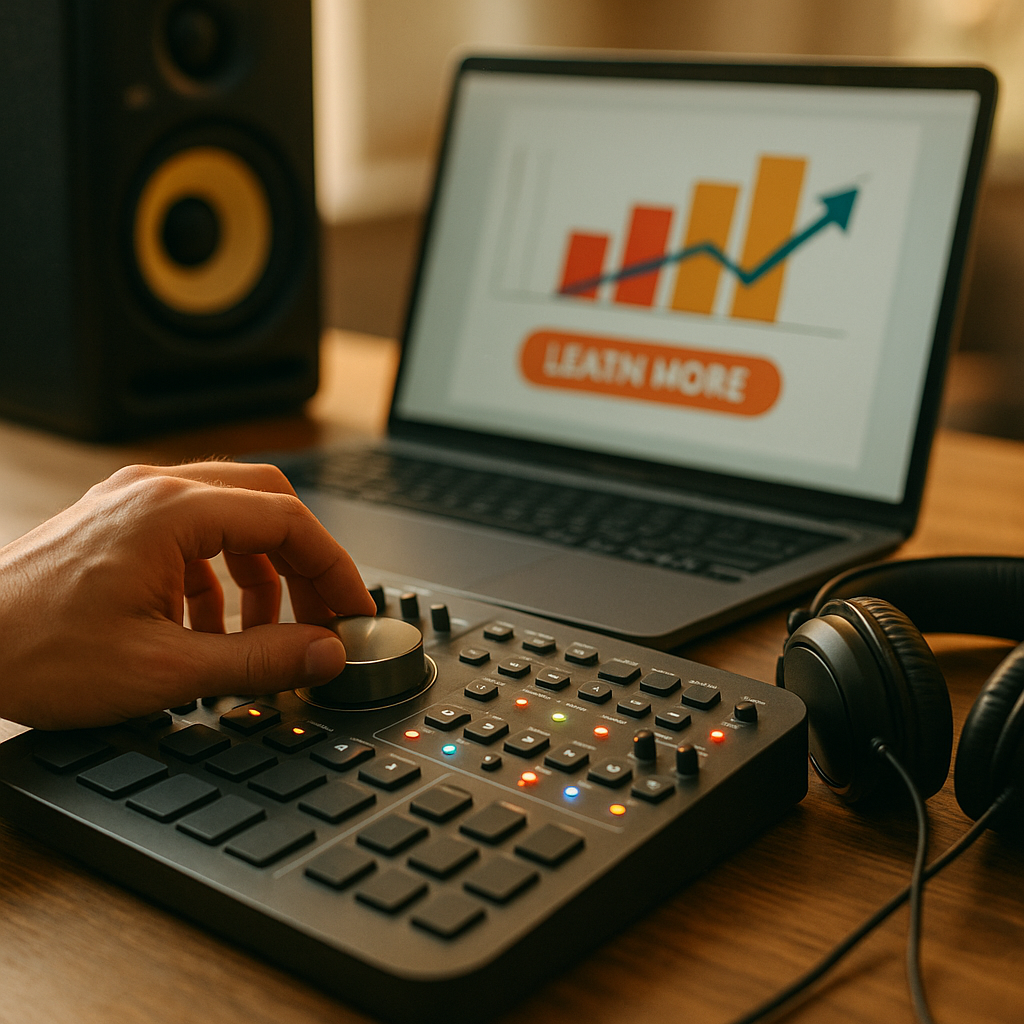
In 2025, brands compete on attention, trust, and memory across crowded screens. Designing For Sensory Branding means moving beyond visuals to build recognition that people can hear, feel, and recall instantly. When you integrate sound into digital campaigns with intention, you strengthen identity, improve accessibility, and shape emotion without adding clutter. Ready to make your brand recognizable with eyes closed?
Sound branding strategy: why audio belongs in digital campaigns
Sound is not an “extra layer” for big-budget brands; it is a practical, repeatable system for recognition. A strong sound branding strategy helps a brand show up consistently across touchpoints where visual attention is limited: background browsing, mobile multitasking, short-form video feeds, podcasts, connected TV, and even product UI moments like confirmations and alerts.
What sound does especially well in digital:
- Builds instant recognition through short, repeatable audio signatures (sonic logos, mnemonic phrases, identifiable tones).
- Guides behavior by signaling state changes (success, error, progress, urgency) without forcing users to read.
- Creates emotional framing before a viewer processes the message, improving message receptivity.
- Extends brand presence into audio-first channels like podcasts, smart speakers, and in-car streaming.
To keep your work aligned with Google’s EEAT expectations for helpful content, treat sound as a measurable design system rather than a subjective “vibe.” Define your purpose (recognition, usability, persuasion), document standards, and validate choices with user testing and performance signals such as completion rates, ad recall studies, or brand lift surveys.
Answering the common follow-up: “Will adding sound annoy users?” It can—if it auto-plays, conflicts with context, or lacks controls. The goal is respectful, opt-in, context-aware audio that supports the experience and the brand.
Sonic identity design: core elements that make a brand recognizable
Sonic identity design is the structured creation of audio assets that communicate your brand’s personality consistently. Like visual identity, it needs rules, components, and clear do’s and don’ts. The best sonic systems stay recognizable at low volume, on small speakers, and when used for only a second or two.
Core sonic building blocks to define:
- Sonic logo: a short signature sound (often 1–3 seconds) designed for end cards, app opens, confirmations, and ad bumpers.
- Brand mnemonic: a melodic motif or vocal phrase that can be re-arranged across contexts (fast, slow, playful, serious).
- Sound palette: approved instruments, textures, tempo ranges, and sound design “materials” (warm analog tones vs. crisp digital clicks).
- Voice and VO rules: tone, pace, accent guidance, pronunciation, and inclusive language standards.
- UI sound style: micro-sounds for actions (tap, send, error) aligned with your brand personality and usability needs.
How to translate brand traits into sound: If your brand is “efficient,” choose tight timing, clean transients, and minimal reverb. If it is “luxury,” use richer harmonics, longer decay, and slower pacing. If it is “approachable,” prioritize warm timbres and human elements (soft percussion, subtle vocal textures) while keeping clarity high.
Practical quality check: Test for “recognizability under constraint.” Play the sonic logo at low volume on a phone speaker, then immediately ask listeners to pick the brand from a list. If recall depends on volume or full music beds, the system is too fragile.
Audio in digital marketing: high-impact placements and formats
Audio in digital marketing works best when planned as a channel-and-format matrix rather than a single track reused everywhere. Each touchpoint has different attention patterns, device limitations, and user intent. Your job is to match sound to the moment—then keep it consistent enough to build memory.
Where sound delivers outsized value:
- Short-form video (social feeds): Use a recognizable sting in the first second for users who watch with sound on; include captions for silent viewing. Create a “sound-on bonus” rather than a “sound-required” narrative.
- Connected TV (CTV) and online video: End cards and transitions are prime territory for sonic logos because viewers often look away while listening.
- Podcast advertising and sponsorships: Integrate a sonic mnemonic under VO to avoid feeling bolted-on. Keep frequency balance optimized for spoken-word clarity.
- Web and app experiences: Reserve sound for meaningful feedback—checkout confirmation, security prompts, guided onboarding—always with user control and respect for system settings.
- Retail media and shoppable video: Use subtle sonic cues for “add to cart,” “limited stock,” or “deal unlocked,” but avoid alarm-like frequencies that feel manipulative.
Common follow-up: “What if most people watch with sound off?” Design for dual-mode. Ensure the campaign works silently through visuals and text, while rewarding sound-on viewers with added clarity, emotion, or recognition—especially through a consistent sonic signature.
Implementation tip: Build an “audio moment map” for each campaign: identify the top 3 moments where sound can (1) anchor brand identity, (2) reduce confusion, or (3) increase perceived quality. Then design specifically for those moments instead of filling every second with music.
Multisensory brand experience: pairing sound with motion, copy, and UX
A multisensory brand experience succeeds when sound supports comprehension and emotion without competing with the message. In digital campaigns, sound must harmonize with motion design, pacing, typography, and interaction patterns. If your motion is snappy but your music is slow, you create cognitive friction; if your copy is calm but your sound is aggressive, trust erodes.
Ways to integrate sound cohesively:
- Sync sound to motion cues: Micro “swells” can match product reveals; gentle clicks can confirm transitions; avoid overusing whooshes that feel generic.
- Use copy rhythm: Let VO pacing guide music tempo. If the script has short sentences, keep music patterns simple and unobtrusive.
- Design for hierarchy: Dialogue and key message first, brand signature second, background texture third. Mix accordingly.
- Align interaction feedback: Success sounds should feel reassuring; error sounds should be clear but not punitive; loading sounds should be subtle and optional.
Reduce fatigue with restraint: Repetition is useful for recognition, but constant loops increase annoyance. Use “selective repetition”: reserve the sonic logo for start/end frames, key conversions (signup/checkout), or a consistent recurring series intro.
Answering the follow-up: “How do we avoid sounding like everyone else?” The fastest route to sameness is using stock stings and trendy synth presets without customization. Build a distinctive palette (instrument choices, intervals, rhythm, and dynamics) and document it so every creator can apply it consistently.
Audio accessibility and compliance: inclusive, respectful sound design
Sound can improve accessibility—if implemented responsibly. In 2025, inclusive design expectations are higher, and many teams align their digital work with widely used accessibility guidance such as WCAG practices, even when not legally mandated for every asset. Audio should never trap users, surprise them at high volume, or become the only way to understand a message.
Accessibility and user-respect checklist:
- Avoid autoplay with sound on landing pages and display placements; give users control.
- Respect device settings: honor mute switches, reduced motion preferences (where relevant to audio-triggered motion), and system volume.
- Provide equivalents: captions for spoken content, on-screen text for key prompts, and visual indicators for important audio cues.
- Mix for clarity: keep VO intelligible; reduce low-end rumble that masks speech; avoid harsh high frequencies that cause listener fatigue.
- Prevent startling cues: use comfortable attack times and predictable dynamics, especially for UI sounds.
- Mind cultural and sensory sensitivity: alarm-like tones, sirens, and aggressive distortion can trigger anxiety in some contexts.
Follow-up: “Is silence ever the best choice?” Yes. Silence is a design tool. Use it to create contrast, signal calm, or reduce overload in high-stakes moments like payment, security, or error recovery.
Measuring sonic brand recall: testing, governance, and optimization
If sound is part of your brand system, you need proof it works and processes that keep it consistent. Measuring sonic brand recall is achievable with a mix of qualitative testing, campaign analytics, and governance.
How to test and improve sonic performance:
- Distinctiveness testing: play your sonic logo alongside competitors and measure correct attribution.
- Brand lift studies: compare ad recall, favorability, and intent between sound-on assets and sound-minimized variants.
- A/B creative experiments: test different placements (first second vs. end card), lengths (1.0 vs. 2.5 seconds), and instrumentation while keeping the message constant.
- UX metrics: for product sounds, measure task completion time, error rates, and satisfaction for sound-enabled vs. sound-off experiences.
- Consistency audits: review major channels quarterly to ensure the sonic palette, VO rules, and mixing levels remain aligned.
Governance that scales: Create a lightweight “sonic style guide” with downloadable assets, mixing targets, VO specs, and examples of correct/incorrect usage. Assign ownership—typically a brand lead in partnership with a sound designer or audio producer—and define an approval workflow for new audio.
Follow-up: “Do we need a custom composer?” Not always, but you do need professional audio direction. A skilled audio producer can customize stock elements into a unique palette, ensure licensing is clean, and deliver mixes optimized for each platform.
FAQs
What is sensory branding in digital campaigns?
Sensory branding uses more than visuals—sound, motion, and interaction cues—to create a consistent brand experience. In digital, it often means a defined sonic identity plus UX sound behavior that supports recognition and usability.
What is the difference between a sonic logo and a jingle?
A sonic logo is a short audio signature (often 1–3 seconds) used for quick recognition. A jingle is typically longer, includes a fuller melody (sometimes lyrics), and functions more like a song built around a brand message.
How do we integrate sound without annoying users?
Avoid autoplay, keep sounds purposeful, provide controls, and design for silent mode. Use sound to clarify actions, mark transitions, and reinforce the brand at key moments rather than filling every second with audio.
Which channels benefit most from sound branding?
Online video, CTV, podcasts, radio-style streaming ads, and product experiences (apps and web) benefit strongly. Any channel where users can listen while multitasking is a high-leverage opportunity.
How long should a sonic logo be?
Many effective sonic logos land between 1 and 3 seconds. The right length depends on your placements and pacing, but shorter assets typically perform better across formats and are easier to repeat without fatigue.
What should we include in a sonic brand guideline?
Include the sonic logo files, mnemonic variations, approved instrument and texture palette, VO standards, mixing targets, accessibility rules, usage examples, licensing notes, and an approval workflow for new assets.
Sound can be a brand’s fastest route to recognition when it is designed as a system, not a soundtrack. Focus on a clear sonic identity, place it strategically across video, podcasts, and product moments, and keep accessibility and user control non-negotiable. Measure recall, govern usage, and iterate based on evidence. Integrate sound with intention—and your brand becomes memorable on every screen.