


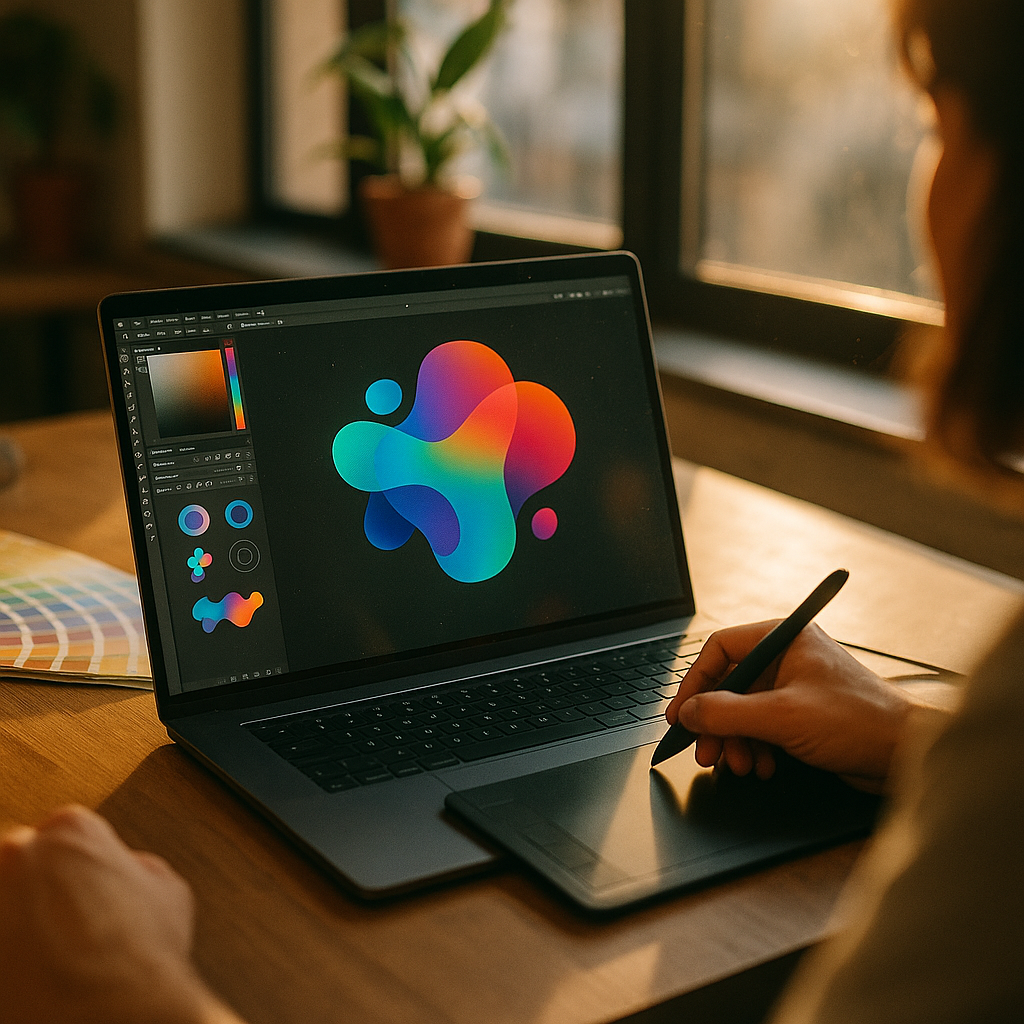
In 2025, brands compete across dozens of screens, surfaces, and contexts where a single static mark often feels rigid. The Art of Living Logos: Using Generative Design for Fluid Branding explains how identity systems can adapt in real time while staying unmistakably “you.” From algorithms to governance, you’ll learn what makes these identities credible, scalable, and safe—so your logo can evolve without losing trust. Ready to make your brand breathe?
Why fluid branding is replacing one-size-fits-all identity
Traditional identity programs were built for fixed placements: letterheads, signage, and a small set of ad formats. Today, audiences encounter brands in motion: app micro-interactions, social video, responsive web layouts, digital out-of-home, AR filters, and product UI. A static logo can still work, but it often forces compromises—either it becomes too generic to fit everywhere or too intricate to survive small sizes.
Fluid branding solves this by treating the logo as a living system rather than a single file. The goal is not constant novelty; it is contextual fit with consistent recognition. A living logo adapts to constraints like screen size, color mode, motion settings, cultural context, and accessibility preferences—while preserving core identifiers (shape DNA, proportions, signature movement, or a distinctive structural rule).
Teams typically adopt fluid systems for three practical reasons:
- Omnichannel coherence: One identity logic that works across UI, print, video, and environments.
- Content velocity: Faster production of variations without reinventing the mark each time.
- Personalization with control: Local relevance without fragmenting the brand.
If you’re wondering, “Will people still recognize us?”—that question should guide every decision. Recognition comes from repeatable signals, not from freezing the logo in place.
How generative design creates living logos that still feel consistent
Generative design uses rules—often encoded as algorithms—to produce a family of outputs. In branding, those outputs can include logo variants, textures, layouts, animations, icon sets, and patterns. The system can be deterministic (same input always yields the same output) or stochastic (controlled randomness within boundaries).
A strong living-logo system starts with a clear hierarchy of constraints:
- Non-negotiables: Elements that never change, such as a base silhouette, a monogram structure, a specific countershape, or a wordmark lockup used in legal contexts.
- Variable parameters: Controlled ranges for color, line weight, curvature, density, motion timing, and composition.
- Context inputs: Triggers like platform, audience segment, event theme, location, time of day, content category, or accessibility settings.
To keep the identity coherent, designers define what stays “constant” in human terms (what people notice) and in system terms (what the algorithm must preserve). For example, the logo might always keep a recognizable outer contour while interior textures shift. Or the wordmark remains fixed while a generative emblem changes as a responsive frame around it.
Answering the common follow-up—“Is this just AI art?”—helps clarify value. Generative branding is not about letting a model invent your identity. It is about codifying your design intent so variation becomes a repeatable capability. The best systems feel designed first, generated second.
Designing a dynamic logo system: rules, constraints, and recognizability
A living logo succeeds when it balances expression with discipline. The practical way to get there is to build a dynamic logo system like a product: define requirements, design components, test, iterate, and document.
1) Define the brand’s “DNA” signals
List the cues that make your identity recognizable within one second. Examples include a distinctive angle language, a specific negative-space motif, a recurring rhythm of shapes, or a signature motion easing. This becomes your recognition checklist.
2) Build a variable matrix
Create a matrix that maps where variability is helpful and where it’s risky:
- High-variability zones: Background patterns, container shapes, secondary emblems, motion textures.
- Moderate-variability zones: Color palettes within bounds, stroke thickness ranges, modular symbol assemblies.
- Low-variability zones: Wordmark geometry, spacing rules, minimum sizes, core silhouette.
3) Set recognition thresholds
Test small-size legibility, grayscale performance, motion-off environments, and fast-scrolling contexts. A simple internal standard helps: if the logo is shown for half a second at small size, can users identify it correctly?
4) Establish “safe modes”
Every living system needs fallbacks: a static master mark, a one-color version, and a reduced-motion version. These variants prevent the brand from failing in restricted environments and keep production teams from improvising.
When teams ask, “How many variations is too many?” a better framing is: how many variations can your governance support without increasing risk? Systems that scale well often limit visible variability while maximizing behind-the-scenes flexibility.
Brand governance for living logos: tools, approvals, and safety
Fluid identities can either improve consistency or create chaos. The difference is brand governance—the rules, roles, and tooling that keep outputs on-brand and legally safe.
Governance essentials
- Clear ownership: Name a brand system owner (often brand design) and a technical owner (often design engineering or creative technology).
- Versioned design system: Treat the logo generator like software. Track versions, document changes, and define release notes.
- Approval tiers: Pre-approved templates for everyday use, and a review pathway for high-visibility campaigns.
- Asset provenance: Record how each output is produced and which inputs were used, especially when content is localized or personalized.
Legal and ethical guardrails
Living logos introduce new questions: Can the mark drift into something confusingly similar to a competitor? Can generative outputs accidentally create offensive shapes or unintended symbols in certain cultures? Do personalized variations create privacy concerns?
Practical mitigations include:
- Similarity checks: Automated testing against internal libraries of restricted forms and competitor sets where appropriate.
- Content filters: Constraints that prevent problematic combinations of shapes, colors, or text overlays.
- Privacy-by-design: Avoid embedding personal data in the visual output. If context uses location or behavior, aggregate it and keep it non-identifying.
If you anticipate a follow-up like “Will our trademark still hold?” the typical approach is to trademark the core mark (and sometimes a family of marks), then document the generative rules as part of your usage guidelines. Work with qualified counsel for your jurisdiction and markets, and align the system so the protected elements remain stable.
Proving brand consistency: metrics, accessibility, and performance testing
Living logos earn executive confidence when they show measurable outcomes. The most useful metrics connect identity behavior to recognition, usability, and production efficiency—without pretending a logo alone drives revenue.
Recognition and coherence testing
- Recall tests: Show rapid exposures of variants and measure correct brand identification.
- Variant equivalence: Check whether different outputs are perceived as belonging to the same brand family.
- Confusion risk: Test similarity against category competitors, especially in small-size icons.
Accessibility and inclusive design
In 2025, accessibility is a baseline expectation. Living logos must respect user settings and remain legible across conditions:
- Reduced motion: Provide a motion-off option that preserves identity through shape and contrast.
- Color contrast: Ensure sufficient contrast when the logo appears over imagery or gradients; use adaptive color rules rather than manual fixes.
- Small-size clarity: Maintain minimum stroke widths and simplified variants for favicons and app icons.
Operational performance
- Production time saved: Track how many campaign variants ship without custom design requests.
- Load performance: Ensure generative assets don’t slow pages or apps; prefer lightweight formats and pre-rendering where needed.
- Error rates: Monitor off-brand outputs and the frequency of manual overrides.
If you’re anticipating “How do we roll this out without disruption?” start with a pilot: apply the living system to one channel (e.g., social templates or event branding), measure recognition and workflow impact, then expand.
Implementing generative branding in real workflows: from concept to rollout
Execution determines whether a living logo becomes an asset or a novelty. A reliable implementation plan bridges creative intent and real production constraints.
Step 1: Align on use cases
Choose 3–5 high-value contexts where adaptability matters: app splash screens, social video end cards, event identities, data-driven dashboards, or retail displays. Avoid trying to make every touchpoint generative on day one.
Step 2: Choose the right generation approach
- Rule-based generators: Ideal for predictability, brand safety, and long-term maintainability.
- Model-assisted generation: Useful for exploring creative directions, but should be constrained and curated to protect recognition.
- Hybrid: Use model-assisted exploration in the studio; ship rule-based generators in production.
Step 3: Build a toolkit people will actually use
Adoption increases when teams can access outputs without specialized skills. Offer:
- Templates: Pre-built layouts for common needs.
- A simple interface: Sliders for approved parameters, not open-ended prompts.
- Export standards: Clear specs for web, video, print, and signage.
Step 4: Document the system like a product
Your guidelines should answer everyday questions: Which variants are approved for partnerships? What happens on dark mode? How do we handle co-branding? When must we use the static master mark? Include examples of correct and incorrect usage, and specify who to contact for exceptions.
Step 5: Train and monitor
Run short trainings for marketing, product, and agencies. Then monitor outputs with periodic audits. Living systems improve over time when you treat them as evolving software—measured, maintained, and refined.
FAQs
What is a living logo in branding?
A living logo is an identity mark designed as a system of controlled variations rather than one fixed graphic. It adapts to context—such as platform, motion, or layout—while preserving recognizable brand elements like core shape, structure, or typographic signatures.
Is generative design the same as using AI to create logos?
No. Generative design can be purely rule-based and does not require AI. AI can help explore options, but production-quality living logos usually rely on explicit constraints and repeatable rules so the brand stays consistent, accessible, and legally defensible.
How do you keep a fluid logo recognizable?
Define non-negotiable “DNA” signals (silhouette, proportions, spacing, wordmark geometry, signature motion) and limit variability to controlled parameters. Validate recognition through small-size testing, rapid-exposure recall studies, and clear fallback versions.
Will a living logo work for regulated or enterprise brands?
Yes, if governance is strong. Regulated brands often keep a fixed wordmark or master mark for legal use and apply generative elements around it (frames, textures, motion, or patterns). Version control, approvals, and audit trails are essential.
What deliverables should a generative logo project include?
At minimum: a static master mark, a reduced-motion version, a one-color version, a ruleset (what changes and what cannot), a generator/tool or templates, export specifications for each channel, and governance documentation including ownership and approval paths.
How long does it take to launch a generative branding system?
Timelines vary by complexity and tooling, but many teams start with a limited pilot in one channel, then expand. A phased rollout reduces risk and allows recognition, accessibility, and performance testing before full adoption.
Living logos work in 2025 because brands now live in responsive, motion-first environments where static marks can’t cover every context. Generative systems turn identity into a controlled set of variations, anchored by non-negotiable brand DNA and supported by governance, accessibility, and testing. The takeaway: build rules before outputs—then scale your creativity safely across every touchpoint.