


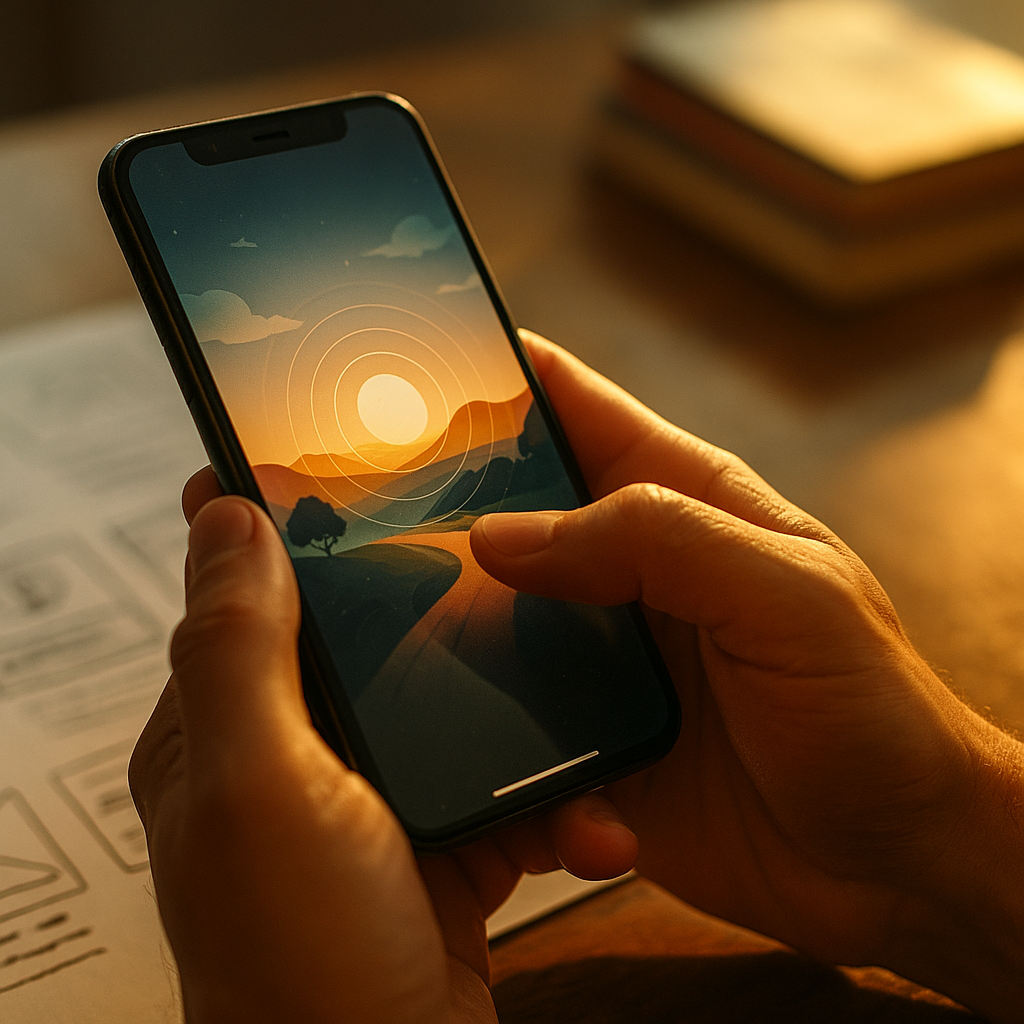
The Role Of Haptic Interaction In Modern Mobile Brand Storytelling is growing because audiences now judge experiences as much as messages. In 2025, the smartphone is a multisensory channel: people see, hear, and increasingly feel the brand through vibration patterns, pressure responses, and tactile cues. When used with intent, haptics make digital moments memorable, accessible, and trustworthy—so what does “good” haptics actually look like?
Mobile brand storytelling and why touch now matters
Mobile brand storytelling used to rely on visuals, copy, and motion. Today, it also relies on tactile feedback that guides actions and shapes emotion. Haptics can signal “success,” “warning,” “progress,” or “delight” without adding clutter to the screen. That matters in a mobile context where attention is fragmented and interfaces compete for space.
Brands tell stories through repeated micro-moments: unlocking an app, completing a payment, saving a favorite, receiving a status update, or confirming a booking. Each moment can either reinforce brand confidence or introduce uncertainty. Haptic cues reduce uncertainty by confirming that the device registered an action. This is especially valuable when users are moving, using one hand, or dealing with noisy environments.
Touch also adds character. A crisp, brief confirmation pulse can feel “precise” and “premium,” while a softer, longer response can feel “calm” or “supportive.” The point is not to decorate interactions with vibration, but to make the narrative of the experience coherent: a beginning (onboarding), rising action (task flow), and resolution (completion) that the user can sense.
To keep the storytelling honest, haptics should map to real system states. If you vibrate to indicate a payment went through, it must correspond to verified success—not a hopeful transition screen. Consistency between tactile cues and outcomes is where trust is built.
Haptic feedback design principles for believable narratives
Strong haptic feedback design follows the same logic as strong writing: clarity, pacing, and intent. The best patterns are simple, recognizable, and used consistently across the app. In 2025, many mobile platforms provide standardized haptic types (selection, impact, notification), and using them thoughtfully can improve learnability while still allowing brand differentiation.
Design principles that translate well into brand storytelling:
- State-based meaning: Tie each haptic to a specific state (selected, confirmed, error, boundary reached). Avoid “random” vibrations.
- Hierarchy and restraint: Save the strongest patterns for the most important moments (security confirmation, transaction completion, critical errors).
- Temporal alignment: Trigger the haptic at the exact moment the state changes (e.g., when the button press is accepted, not after an animation ends).
- Consistency across journeys: If one short pulse means “saved,” it should mean “saved” everywhere—wish lists, bookmarks, downloads.
- Environment-aware design: Assume users may be walking, commuting, or multitasking. Haptics can replace reliance on sound, but should not become noise.
Common mistakes undermine credibility. Overusing haptics can feel manipulative, like an app trying to manufacture excitement. Using intense alerts for minor events can create anxiety. The fix is to build a “tactile vocabulary” and document it: what each pattern means, where it appears, and when it must never appear.
Readers often ask whether haptics should sound “on brand.” Yes, but not at the cost of usability. Treat brand tone as a constraint on top of interaction clarity, not a replacement for it. Your haptics should first be understandable, then distinctive.
Multisensory UX and the science of attention, emotion, and trust
Multisensory UX works because the brain integrates signals across senses. A subtle confirmation pulse can improve perceived responsiveness, and perceived responsiveness influences trust. Users may not consciously notice the haptic, but they notice the absence when an interface feels unresponsive.
Haptics can also reduce cognitive load. Instead of forcing a user to re-check the screen after every tap, tactile confirmation lets them keep focus on the task (or the world around them). That is not just convenience; it changes how users feel about the brand: capable, guided, and in control.
Where haptics reliably improve experience quality:
- Form entry and validation: A light warning tap for invalid input prevents repeated errors without intrusive modals.
- Navigation and boundaries: Micro-pulses when reaching the end of a list or snapping to a card create spatial understanding.
- Progress and completion: Distinct completion patterns reinforce accomplishment and reduce ambiguity.
- Security and identity: Tactile confirmation during authentication can feel more assured when paired with clear visual language.
Trust depends on the alignment of cues. If the screen says “success” but the haptic is the same as a warning, users hesitate. If the app provides a confident pulse but then shows “processing,” users feel misled. Coordinating copy, motion, and haptic timing is part of responsible storytelling.
If you want a practical approach, define three emotional targets for your experience—such as “calm,” “capable,” and “clear”—and evaluate haptic choices against them. The goal is not to provoke emotion; it is to support the user’s intent with minimal friction.
Tactile branding strategy: building a consistent haptic signature
A tactile branding strategy treats haptics as a repeatable brand asset—like typography or sonic identity—while respecting platform conventions. In practice, “signature” doesn’t mean inventing exotic vibrations everywhere. It means creating a consistent system for key brand moments and applying it with discipline.
How to build a brand haptic system:
- Identify your “story beats”: onboarding success, primary CTA tap, save/favorite, error recovery, checkout completion, and key notifications.
- Assign patterns by importance: use softer, shorter patterns for minor confirmations and reserve complex patterns for major milestones.
- Create a tactile style guide: document intent, duration, intensity, and where each pattern is allowed.
- Map to brand values: a wellness brand may prioritize gentle, minimal cues; a productivity brand may emphasize crisp, fast confirmations.
- Define guardrails: limit frequency per session, avoid haptics on every scroll, and never use haptics to pressure users into purchases.
Brands often ask how to keep haptics consistent across devices. You do it by designing for perceived intent, not identical waveforms. Different phones produce different tactile strength. So you standardize categories (light/medium/strong, short/long) and test across representative hardware to ensure the meaning stays consistent.
Another common question: should marketing campaigns include haptics? Yes, when the interaction is meaningful. Examples include interactive product stories, AR try-ons with boundary feedback, or limited-time drops where “add to cart” and “secured” moments benefit from unmistakable confirmation. If the campaign is passive viewing, haptics usually add little.
Accessibility and user control in mobile haptics
Accessibility is not optional in 2025, and haptics can either improve inclusion or create discomfort. Some users rely on tactile cues when audio is unavailable or when visual attention is limited. Others are sensitive to vibration, find it distracting, or use device settings that disable it. Strong brand storytelling respects both realities.
Inclusive haptic interaction guidelines:
- Always provide redundancy: pair haptics with clear visual feedback and, where appropriate, optional audio cues.
- Respect system preferences: if the user disables vibration, your app should not attempt to circumvent it.
- Offer in-app controls: allow users to reduce or disable non-essential haptics while keeping critical safety or security confirmations aligned with system standards.
- Avoid continuous vibration: sustained patterns can be uncomfortable and drain battery; use short, meaningful signals.
- Be careful with error haptics: a harsh pattern can feel punitive. Favor guidance: “what happened” and “what to do next.”
Haptics can support motor accessibility by confirming taps when precision is difficult. They can also help users who are neurodivergent by making states more predictable—if the cues are consistent and not overly intense. The key is control: users should feel the brand is helping, not commandeering their device.
If your product includes critical alerts (health, safety, security), coordinate haptics with explicit messaging and clear escalation rules. Do not rely on vibration alone for high-stakes communication; treat it as one layer in a robust alerting system.
Measurement and implementation: proving impact with mobile engagement metrics
To apply EEAT-minded rigor, you need measurable outcomes. The goal is not “more vibration,” but better comprehension, faster task completion, fewer errors, and higher confidence. You can test haptics like any UX change through controlled experiments, qualitative research, and instrumentation.
Metrics that tend to reveal the value of haptics:
- Task success rate: do users complete key flows more reliably with haptic confirmation?
- Time to complete: does tactile feedback reduce hesitation and re-tapping?
- Error rate: do validation haptics lower form errors or mis-taps?
- Rage taps and backtracks: fewer repeated taps can signal clearer state communication.
- Checkout abandonment: do confident confirmations reduce drop-off at high-friction steps?
- Support tickets: are there fewer “did it go through?” questions after adding verified success cues?
How to implement responsibly: start with a small set of high-impact moments (primary CTA, save, error, success). Create a baseline, then A/B test with well-defined hypotheses. Pair analytics with usability sessions: ask participants what they thought happened at each step, and whether the feedback felt reassuring or distracting. This balances quantitative results with real user perception.
Engineers and designers should collaborate early because timing matters. Haptics triggered from the wrong layer (late network response, delayed animation completion) can feel laggy. Tie haptic events to deterministic UI state changes, and ensure critical confirmations are only emitted when the app has verified success.
FAQs
What is haptic interaction in mobile apps?
Haptic interaction is the use of tactile feedback—usually vibration patterns—to communicate UI states such as selection, confirmation, error, or completion. It helps users feel what happened without relying only on visuals or sound.
How does haptic feedback improve brand storytelling?
It adds a consistent sensory layer to key moments in the user journey. When haptics match the brand’s tone and the app’s real states, they make interactions feel more responsive, trustworthy, and memorable.
Should every tap have a vibration?
No. Overuse quickly becomes irritating and reduces the meaning of feedback. Use haptics for important state changes—like confirmations, boundaries, errors, and major milestones—then keep the rest quiet.
Can haptics increase conversions or retention?
They can, indirectly, by reducing uncertainty and friction in flows like sign-up and checkout. The impact varies by audience and use case, so validate with A/B tests and track metrics like task completion, abandonment, and rage taps.
How do you keep haptics accessible?
Respect system settings, provide visual equivalents, avoid intense or continuous vibration, and offer in-app controls for non-essential haptics. Treat haptics as supportive cues, not mandatory signals.
What’s the difference between a haptic signature and gimmicks?
A haptic signature is a documented, consistent tactile language used at meaningful moments. Gimmicks are random, frequent, or overly intense vibrations that don’t map to real states and distract from user goals.
Do haptics work the same across all phones?
No. Hardware varies in strength and feel. Design for consistent meaning (light/medium/strong; short/long; success/error) and test across representative devices to ensure the cues remain recognizable.
What are the first haptic moments a brand should implement?
Start with primary actions and high-risk moments: button confirmation for key CTAs, save/favorite, form validation errors, authentication confirmation, and verified transaction success. These usually deliver the most clarity and trust.
Conclusion
Haptics turn mobile storytelling into something users can feel, not just see. In 2025, the brands that win with touch do so through restraint, consistency, and integrity: tactile cues must match real states, support accessibility, and reinforce the product’s tone. Build a clear haptic vocabulary, test it against outcomes, and give users control—then every tap can strengthen the story.