


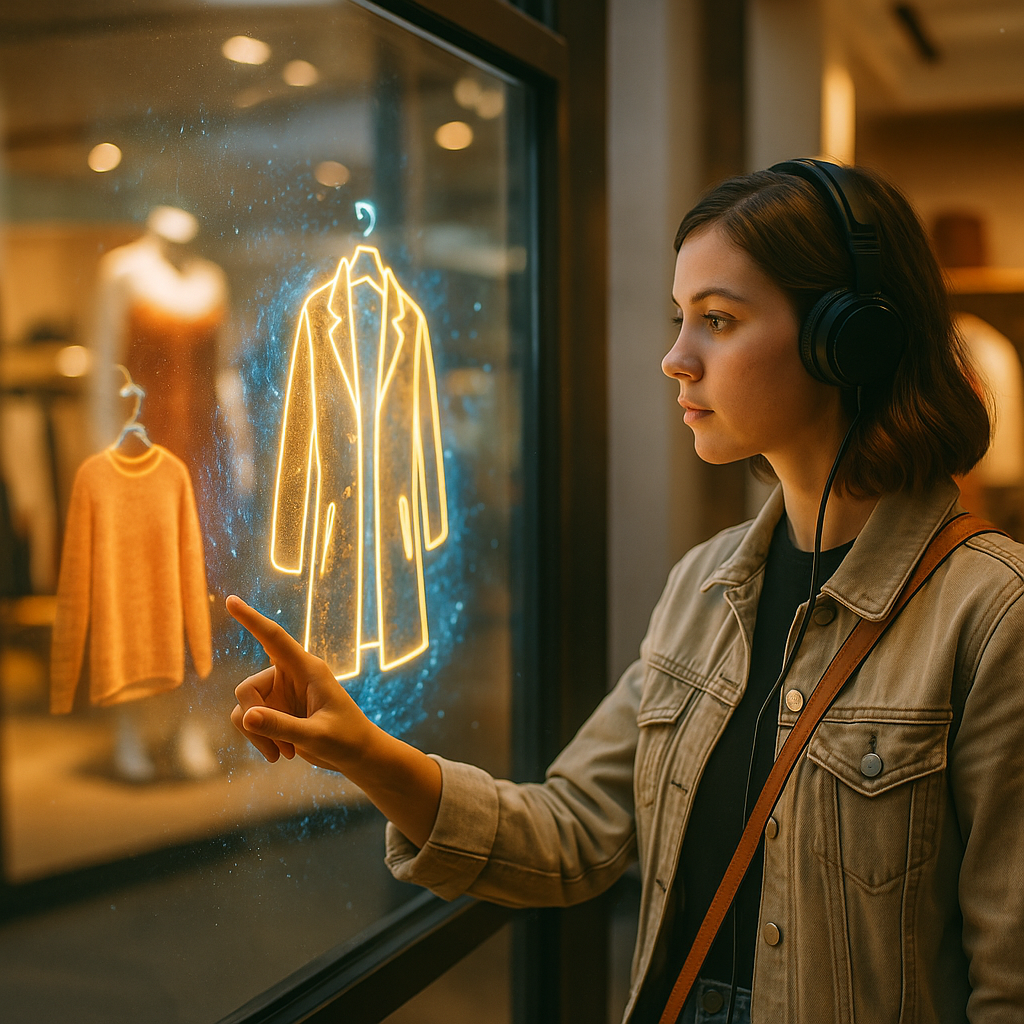
In 2025, shoppers expect more than shelves and signage: they want moments they can feel, hear, smell, and share. Designing immersive sensory experiences for live retail activations blends strategy, psychology, and production craft to turn foot traffic into genuine connection. When every cue supports the brand story, conversion and content creation follow naturally. Ready to build an activation people remember—and revisit?
Define goals and audience for live retail activations
Immersion starts long before set build. The most effective live retail activations are designed backward from a clear business outcome and a specific audience behavior. Without that clarity, sensory elements become expensive decoration.
Start with measurable intent. Pick one primary goal and two supporting goals. Examples:
- Primary: product trial that leads to purchase within the same visit
- Support: collect first-party opt-ins; generate user-generated content (UGC) with a defined hashtag
Translate goals into on-site actions. If the goal is trial, the experience must reduce friction: clear queue management, quick demo cycles, accessible samples, and visible social proof. If the goal is awareness, the experience should prioritize spectacle, photo moments, and brand storytelling over long dwell times.
Use audience insight, not assumptions. In 2025, privacy expectations are high. Rely on consent-based sources: loyalty data, post-purchase surveys, retailer insights, and small on-site intercepts. Define:
- Motivations: discovery, deals, status, community, wellness, convenience
- Sensory sensitivities: scent intolerance, noise sensitivity, neurodiversity needs
- Barriers: time pressure, uncertainty, fear of being sold to, accessibility constraints
Answer the “why here, why now?” question. A live activation must earn its footprint. Tie the concept to a seasonal need, a new product benefit, or a cultural moment relevant to your shopper. If it can be understood in under 10 seconds, staff can explain it quickly and customers can opt in confidently.
Build a cohesive sensory brand experience across the five senses
Immersion works when every sensory choice reinforces one story. Treat the five senses as a system. If visuals promise calm and premium, but the audio is loud and chaotic, you create cognitive dissonance that reduces trust.
1) Sight: design for distance-to-detail. Plan the experience in three viewing zones:
- Attract (10–30 meters): bold shapes, clear headline, strong contrast
- Engage (2–10 meters): product benefits, demonstration cues, staff visibility
- Convert (0–2 meters): ingredient/feature proof, pricing clarity, add-to-bag prompts
2) Sound: manage attention and comfort. Sound is powerful and often mishandled. Use directional speakers or localized soundscapes to avoid contaminating the wider store. Keep voice prompts concise, and ensure staff can be heard at the demo counter. Consider “quiet windows” during peak hours or for neuroinclusive accessibility.
3) Scent: deploy with restraint and safety. Scent can boost memorability, but it also carries risk. Use micro-diffusion, small test zones, and clear signage. Provide fragrance-free paths and seating areas. If the product category is fragrance, skincare, or food, integrate scent as an optional layer rather than saturating the whole footprint.
4) Touch: give hands a role in the story. Texture communicates quality faster than copy. Offer material samples, interactive packaging, or guided product handling. Hygiene matters: visible sanitizing, single-use applicators where needed, and a “clean-to-use” signal that staff can maintain.
5) Taste: design trust before flavor. Tastings require operational discipline: allergen labeling, temperature control, and clear portioning. Keep menus short. If taste is central, create a simple progression (e.g., base → topping → pairing) so customers understand what to do without instructions.
Make it coherent with a sensory brief. Create a one-page document that lists: emotion target, sensory cues by sense, do-not-use list (e.g., certain notes, decibel limits), accessibility requirements, and staff language guidelines. This becomes your north star for agencies, fabricators, and in-store teams.
Use experiential retail design to choreograph the customer journey
Designing immersive sensory experiences for live retail activations succeeds when the journey is choreographed like a performance: entry, build-up, peak moment, and resolution. Spatial design is the silent script.
Map a simple journey with three decisions.
- Decision 1: Approach. Make the invitation obvious: a clear “what is this?” statement and a visible payoff (sample, reveal, personalization).
- Decision 2: Participate. Remove intimidation. Use open counters, friendly signage, and a “start here” marker.
- Decision 3: Purchase or opt-in. Present the next step before the peak ends: a quick add-to-bag option, QR code for saved cart, or staff-led checkout handoff.
Control flow and dwell time. If you expect queues, design them intentionally: preview content, scent-free buffer zones, and small “micro-education” panels that reduce perceived wait time. Keep high-touch demos fast (e.g., 2–4 minutes) and offer deeper exploration zones for those who want more.
Create one “hero moment.” A hero moment is the part that customers film. It can be a reveal (lighting change), personalization (name label, engraving, custom blend), or transformation (before/after scan). Make it:
- Visible: not hidden behind staff-only counters
- Repeatable: works every 2–3 minutes, not only hourly
- Branded: recognizable even without captions
Design for accessibility and comfort. Provide wide pathways, seating, and clear signage. Offer multiple interaction modes: touchless QR learning, staff-led demos, and self-serve sampling where appropriate. Comfort increases participation, especially for families, older shoppers, and people with sensory sensitivities.
Integrate multisensory marketing with digital, social, and commerce
Live activations win when they connect to the full funnel—without forcing customers into awkward “scan to continue” moments. Digital should enhance immersion, not interrupt it.
Build a content system, not just a photo spot. Plan three capture types:
- Quick UGC: 5–10 seconds, one clear angle, good lighting
- Staff-assisted captures: short clips during the hero moment
- Brand assets: professional footage that documents the experience and product proof
Use QR codes strategically. Place them where intent is highest: after the demo, at checkout handoff, and near the hero moment. Each QR should lead to one action only—such as “save your personalized routine,” “add bundle to cart,” or “book a follow-up.” If you ask for data, say why and what customers get in return.
Connect to commerce with low friction. Depending on retailer rules, options include:
- Immediate add-to-bag: staff brings product to checkout or scans shelf tags
- Digital cart: QR to pre-filled basket for later purchase
- Offer logic: a simple incentive for same-day conversion (bundle, gift with purchase)
Keep brand voice consistent on-site and online. The script staff uses should match landing pages and social captions. Provide a short language guide: key claims, approved benefit statements, and compliance notes (especially for health, beauty, and ingestibles).
Operationalize event production and safety for reliable execution
Immersion collapses when operations fail. The strongest activations feel effortless because production is disciplined: staffing, safety, inventory, and contingencies are handled before doors open.
Staffing and training drive trust. Train staff on:
- The “10-second story”: what it is, who it’s for, what you get
- Demo steps: consistent, timed, and hygienic
- Objection handling: price, ingredients, scent sensitivity, time constraints
- Accessibility: offering alternatives without making people ask
Safety and compliance are non-negotiable. For food and beverage, include allergen signage, gloves, temperature control, and sanitation logs. For cosmetics, include patch-test guidance where relevant and single-use applicators. For electronics, manage cables and trip hazards. Align with retailer policies, local regulations, and insurer requirements.
Plan inventory like a media buy. Nothing damages credibility faster than running out early. Forecast by hour, not by day. Hold back a reserve for peak times. If samples are limited, communicate clearly and offer a backup (digital coupon, mini consultation, or scheduled return slot).
Engineer reliability into sensory elements. Scent diffusion, lighting cues, and interactive tech must have “manual mode” fallbacks. If the touchscreen fails, the experience should still work with staff-led prompts and printed options. Add a daily checklist for calibration: audio levels, scent intensity, lighting scenes, and sanitation supplies.
Measure retail activation ROI and optimize in real time
Measurement protects your budget and improves performance while the activation is live. In 2025, retailers and brands expect proof that experiential spend drives sales, brand lift, and data capture responsibly.
Use a simple KPI stack.
- Behavioral: footfall into zone, participation rate, dwell time, demo completion
- Commercial: units sold, conversion rate, average basket, bundle attachment
- Brand: recall or preference via short intercept surveys
- Digital: QR scans, opt-in rate, content shares, saves
Choose measurement methods that match reality. Common options include staff clickers, sensor-based counters (where permitted), POS correlation during activation hours, unique QR parameters, and brief consent-based surveys. Keep surveys short: two questions can be enough if they are well-designed.
Optimize during the run. Make daily changes based on data:
- Adjust staffing to match peak participation hours
- Move signage to reduce confusion at the entry point
- Refine the script if customers ask the same question repeatedly
- Tune sound and scent intensity if dwell time drops
Close the loop with a post-mortem that improves the next build. Document what worked and why: which sensory cues drove the hero moment, what converted fastest, and what caused friction. Share a concise report with retailer partners to strengthen future placement opportunities.
FAQs about designing immersive sensory experiences for live retail activations
How many sensory elements should a live retail activation include?
Use as many as you can control well. Most activations perform best with two to four dominant senses (usually sight + touch, plus sound or scent). Overloading all five senses can reduce comfort and make the brand message harder to understand.
What’s the biggest mistake brands make with sensory retail experiences?
Chasing spectacle without a clear customer action. If the experience looks impressive but doesn’t guide shoppers to try, learn, or buy, it becomes a cost center. Tie each sensory cue to a specific behavior in the journey.
How do you make sensory activations accessible for people with sensitivities?
Offer choice and clear signaling: fragrance-free paths, quieter hours or zones, lower-stimulation lighting options, and simple opt-out routes. Train staff to proactively offer alternatives (e.g., scent strip instead of diffusion, captioned video instead of loud audio).
How long should an on-site demo take?
Design a “fast path” of 2–4 minutes for most shoppers, plus an optional deeper consultation of 5–10 minutes for high-intent visitors. This keeps queues manageable while still serving customers who want more guidance.
How do you measure success if the store doesn’t share detailed sales data?
Use proxy metrics you can control: participation rate, sample-to-purchase coupon redemption, QR-driven add-to-cart, and opt-ins. Pair these with time-based observations (peak hours, repeat visits) and short intercept surveys to estimate lift.
Do live retail activations still work if shoppers prefer online buying?
Yes—when the activation provides what ecommerce cannot: real product trial, human guidance, and a memorable moment. Connect the experience to a digital cart or personalized follow-up so shoppers can purchase later without losing momentum.
In 2025, the best retail activations feel intentional: every sound, texture, scent, and visual cue supports a clear customer journey. Build from goals, create a cohesive sensory brief, choreograph flow, and back it with strong operations and measurement. When sensory design is disciplined, the experience becomes both memorable and measurable—turning real-world attention into real-world results.