


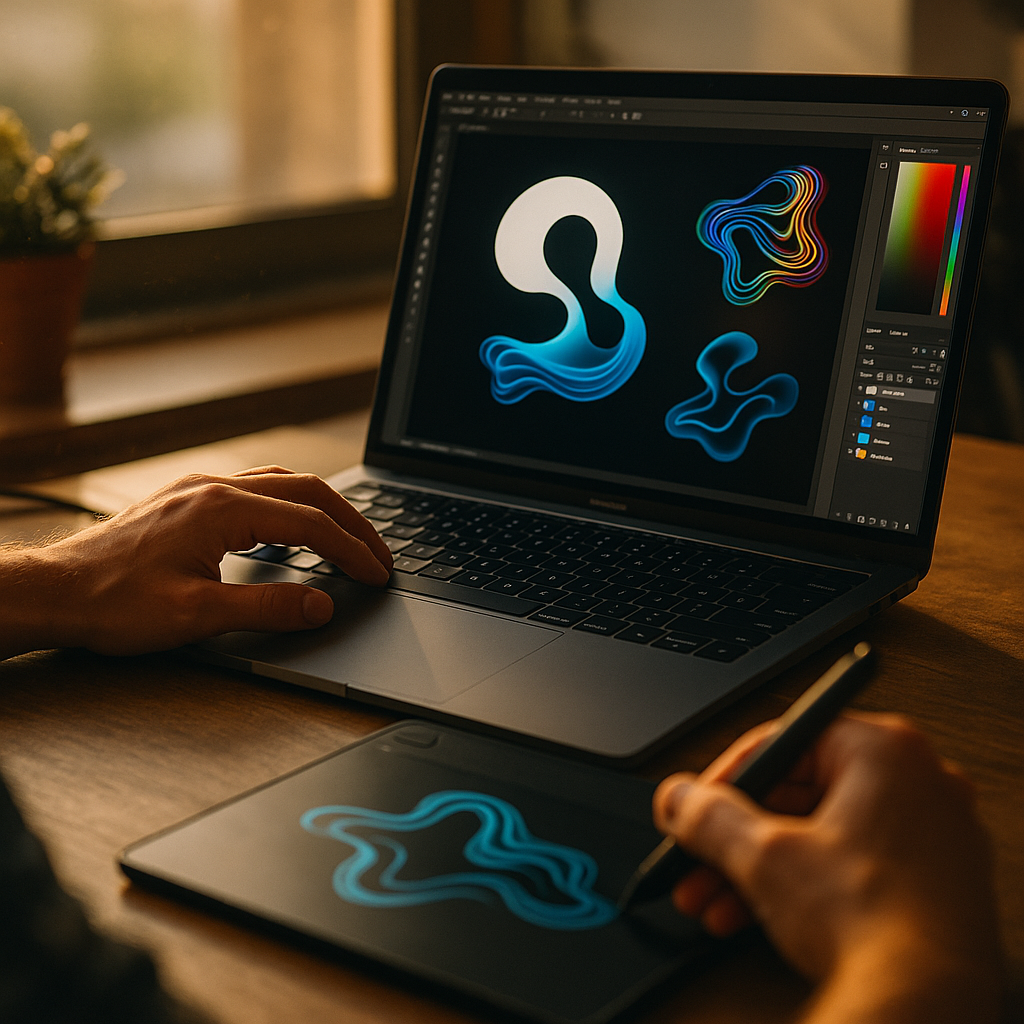
The Art of Living Logos and Using Generative Design for Fluid Branding is reshaping how brands show up across screens, spaces, and moments. Instead of one fixed mark, identity becomes a responsive system that adapts while staying recognizable. In 2025, audiences meet brands in motion, in apps, in AI interfaces, and in real time—so why shouldn’t logos behave the same?
Living logos: why brands need identity systems, not static marks
A living logo is a mark designed to change—within defined rules—while preserving recognizable DNA. Think of it less as “a logo” and more as a behavior: a set of constraints that ensure the brand remains consistent even when it flexes across contexts.
In practice, living logos work because modern brand touchpoints are fragmented. Your audience may encounter you as a tiny app icon, a social avatar, a smartwatch notification, a billboard animation, or an in-product AI assistant. A static, one-size mark often fails either by losing legibility at small sizes or by feeling rigid in motion-first environments.
What makes a logo “living” (and not just variable)? It changes meaningfully in response to context—such as content, user interaction, location, time, or data—while staying within a system that protects brand recognition. If the changes feel random, it becomes visual noise. If the changes are constrained by clear rules, it becomes brand equity in motion.
When living logos are especially effective:
- Digital-first brands that appear primarily in apps, SaaS, and social platforms
- Media, culture, and events where identity must scale across themes and programming
- Global brands needing localization without losing cohesion
- Product ecosystems where sub-brands need a shared language
Before you pursue flexibility, confirm the business goal. Most living identities succeed when they solve a real problem: making the brand recognizable across volatile layouts, dynamic content, and rapid publishing cycles.
Generative design: turning brand rules into responsive visuals
Generative design uses algorithms to produce variations from defined inputs. In branding, that means converting identity guidelines into a system that can create many on-brand outputs—intentionally and repeatably. This is not “letting the computer design your logo.” It is designing the rules, then using computation to apply them at scale.
Generative approaches typically combine:
- Constraints (grid, proportions, shape grammar, safe areas, min/max stroke, contrast thresholds)
- Parameters (color sets, motion tempo, curvature, density, texture intensity)
- Inputs (time, audio, user behavior, product data, language, location, content metadata)
- Outputs (logo variants, patterns, backgrounds, motion frames, icon families)
How this supports a fluid brand system: once you define what must remain constant (the “signature”) and what can vary (the “expression”), you can generate endless assets without reinventing the wheel. That’s valuable in 2025, when brands ship daily content and need design that keeps pace.
To keep it practical, avoid starting with complicated AI. Many robust living systems are built with simple math and design logic: procedural geometry, modular shapes, controlled noise, and templated motion. If you do use machine learning, treat it as an accelerator for variation—not a replacement for brand strategy and art direction.
Likely follow-up: “Will this dilute recognition?” Not if you anchor the system with consistent cues (shape silhouette, key proportions, core color behavior, and typographic pairing). Recognition comes from repeated, stable signals—not from freezing every pixel.
Fluid branding strategy: define the constants, the variables, and the boundaries
A successful living logo starts with clarity. You need a strategy that maps your brand’s meaning to visual behaviors. The simplest way to plan a fluid identity is to define three layers: constants, variables, and boundaries.
1) Constants (non-negotiables)
- Primary silhouette or a stable frame that reads instantly
- Core color logic (one hero color, or a fixed relationship between colors)
- Typography pairing that remains consistent across applications
- Clear-space and legibility standards for small sizes
2) Variables (allowed change)
- Secondary colors or gradients within set ranges
- Texture, pattern density, or line weight within thresholds
- Motion style (e.g., elastic vs. linear), duration, and easing rules
- Context-driven elements (seasonal sets, product states, localization)
3) Boundaries (guardrails)
- Minimum contrast ratios for accessibility
- Maximum distortion so the mark never becomes unrecognizable
- Approved backgrounds and forbidden combinations
- Fail-safe static versions for legal documents and constrained media
Answering the next question: “How many variations is too many?” The right number is “as many as you can govern.” If your team cannot review, approve, and reproduce outcomes, the system will drift. A good rule is to launch with a small, well-tested parameter set and expand after you validate performance.
Also align the identity with brand voice. A finance brand might use subtle generative variation: controlled geometry, restrained motion, conservative palettes. A youth culture brand may embrace higher variability: bold color behavior, reactive patterns, and expressive motion. The system should match risk tolerance and audience expectations.
Dynamic identity design: building recognizable variation across channels
Designing a living logo is as much about application as it is about the mark itself. A dynamic identity must perform in multiple environments—often with conflicting requirements. Build your system by designing for extremes first: the tiniest icon and the largest motion canvas.
Key channel considerations:
- App icons and favicons: prioritize silhouette and contrast. Use simplified variants with reduced detail.
- Social avatars: design for circular crops and fast recognition in feeds.
- Video and motion: define an animation “signature” (one repeatable motion motif) so movement itself becomes a brand cue.
- Web and product UI: ensure the logo doesn’t compete with UI hierarchy; provide calm states for functional screens.
- Print and packaging: include deterministic outputs and a locked static master for quality control.
- Environmental and signage: test legibility at distance and in varied lighting; plan fabrication constraints.
Design system tip: create a “logo family” rather than a single file: full lockup, symbol-only, micro-mark, monochrome, and a motion-ready version. Then connect them through shared rules so the brand feels coherent, not inconsistent.
How to avoid the most common failure: brands often make the living behavior too subtle to matter or too chaotic to recognize. Use intentional contrast: keep one or two cues constant, and let one cue vary clearly. For example, hold the silhouette steady while allowing color and internal pattern to shift—this reads as “alive” without breaking recognition.
Algorithmic branding workflow: tools, governance, and production readiness
Living logos succeed when the workflow is as thoughtfully designed as the visuals. In 2025, teams need repeatability, speed, and control—especially when multiple stakeholders publish assets daily.
A practical workflow that scales:
- Prototype: explore behaviors in a rapid environment (motion tests, procedural sketches, interactive demos).
- Specify: document parameters, constraints, and intent in plain language, not only in design files.
- Operationalize: convert rules into templates, scripts, or a generator that outputs approved formats.
- Govern: define who can generate assets, which presets are allowed, and how approvals work.
- Distribute: publish outputs and rules in a central brand hub with version control.
Tooling considerations: choose tools your team can maintain. A simple generator that produces predictable SVG/PNG/video outputs is often more valuable than an advanced system only one specialist can run. If you rely on AI or code, plan for onboarding, documentation, and future maintenance.
Governance is part of brand safety: define guardrails that prevent off-brand or risky outputs. For example, limit color combinations that might reduce readability, avoid shapes that resemble competitors, and block parameters that create unintended symbols in certain cultures.
Likely follow-up: “What about trademarks?” Many organizations trademark a core static mark and treat generative variants as brand expressions derived from that mark. Work with qualified legal counsel to determine what to register and how to document consistent usage, especially if the variants will appear in commerce.
Brand consistency and trust: accessibility, ethics, and measurement for EEAT
Fluid branding must still build trust. That means prioritizing clarity, accessibility, and responsible use of technology. Google’s EEAT expectations reward content and experiences that demonstrate real expertise, transparent intent, and user-first decisions—your identity system can support that if it is designed responsibly.
Accessibility essentials for living logos:
- Contrast: enforce minimum contrast thresholds for key applications, especially in UI contexts.
- Motion sensitivity: provide reduced-motion variants and avoid flashing or rapid oscillation.
- Legibility: test at small sizes and low-quality displays; simplify details when necessary.
- Color meaning: don’t rely on color alone to communicate critical states.
Ethical and practical AI considerations:
- Data inputs: if the logo reacts to user data, disclose it and avoid sensitive signals.
- Bias and cultural risk: test generated outputs across languages and regions to prevent unintended symbolism.
- IP hygiene: ensure training assets and generative components don’t introduce copyright conflicts.
How to measure whether a living logo works:
- Recognition testing: run quick brand recall studies comparing static vs. living applications.
- Performance metrics: track engagement where the identity is present (video completion, click-through, dwell time) without over-attributing.
- Consistency audits: review real-world assets quarterly to catch drift.
The strongest proof of trust is coherence: the audience should feel that variation is purposeful, not arbitrary. When your system is accessible, governed, and measurably recognizable, fluid branding becomes a credibility advantage rather than a design experiment.
FAQs
What is the difference between a living logo and a logo animation?
A logo animation is usually one fixed sequence. A living logo is a system that can produce multiple approved expressions based on rules, context, or data while staying recognizable.
Do living logos work for small businesses, or only big brands?
They work for small businesses if the system is simple and maintainable. A small brand can use controlled variation—like a fixed silhouette with a rotating color set—without needing complex tooling.
How do you keep a generative logo consistent across designers and teams?
Define non-negotiable constants, publish parameter presets, and centralize asset generation or templates. Add a lightweight approval process and version control so outcomes remain predictable.
Will a fluid brand identity confuse customers?
It can if too many elements change at once. Keep one or two cues stable (often silhouette and typography) and limit variation to a small set of controlled parameters.
What file formats should a living logo system deliver?
Plan for SVG for scalable digital use, PNG for platform constraints, and video formats for motion. Many brands also maintain a static master for legal, print, and environments that cannot support variation.
How do you trademark a logo that changes?
Most brands protect a core static version and document how variants derive from it. Trademark strategies vary by jurisdiction and use case, so involve qualified legal counsel early.
Conclusion
Living logos let brands behave like modern products: responsive, contextual, and built for constant change. Generative design makes that flexibility practical by turning identity into a governed system of rules, outputs, and safeguards. In 2025, the winning approach balances variation with recognition, accessibility, and legal clarity. Define your constants, control your variables, and build tooling your team can actually run.