


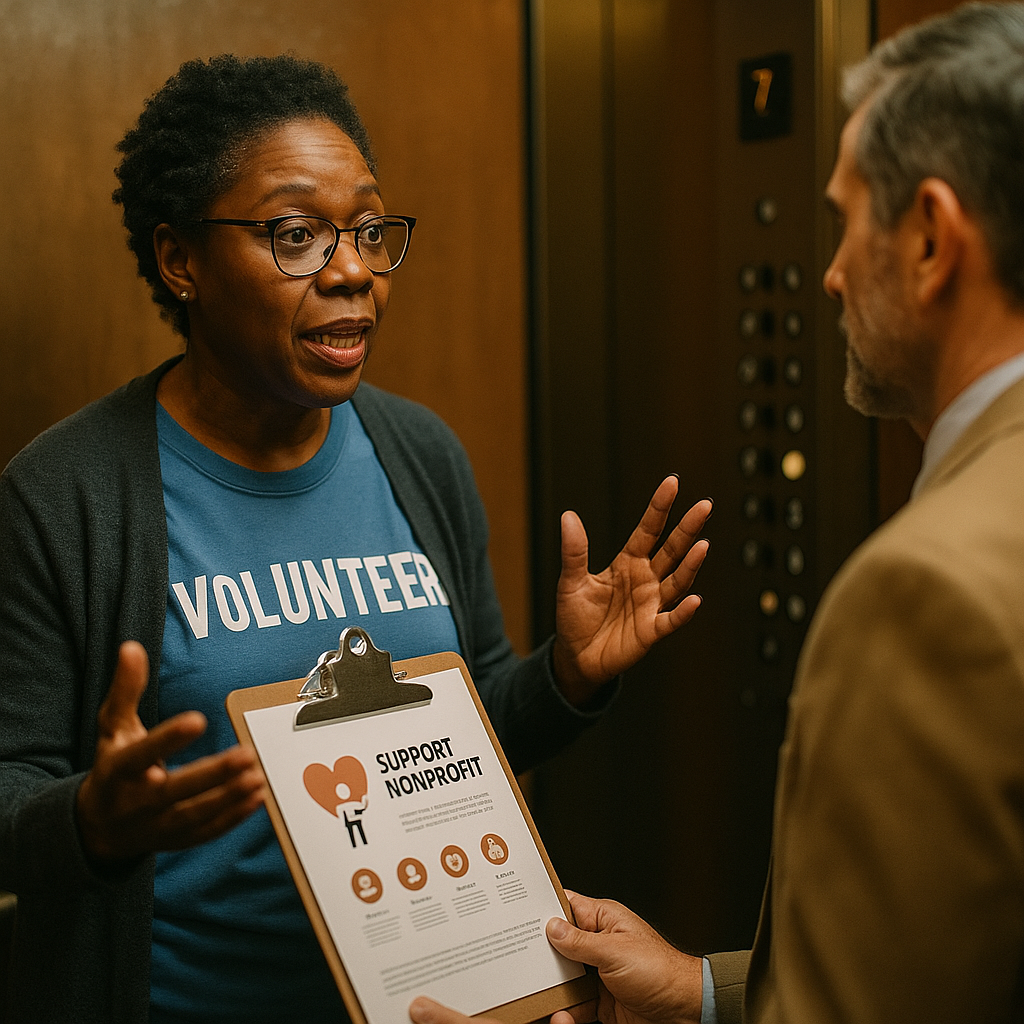
The Power of First Impressions in Your Elevator Pitch
The art of the elevator pitch for a non-profit organization can open doors to partnerships, funding, and community support. In a world that values quick, meaningful connections, crafting a concise and memorable pitch is essential for making a strong impact. Ready to turn spontaneous moments into transformative opportunities? Let’s explore how to master this vital skill.
What Is an Elevator Pitch for a Non-Profit?
An elevator pitch for a non-profit is a 30–60 second speech that clearly articulates your mission, impact, and value in an engaging way. The term comes from the idea that you should be able to deliver your pitch in the time it takes to ride an elevator. This concise format respects people’s time while making a memorable impression. Non-profit elevator pitches differ from for-profit ones by emphasizing social impact, emotional resonance, and the organization’s vision for change. In an era when people receive thousands of messages daily, capturing and holding attention quickly is crucial.
To succeed, a non-profit elevator pitch must answer three questions:
- What does your organization do?
- Why does it matter?
- What do you need from your listener?
Recent studies, including a 2025 report from the Nonprofit Communications Benchmark, highlight that leaders with refined elevator pitches are 2.3 times more likely to engage new supporters during short encounters.
Crafting a Compelling Non-Profit Value Proposition
A non-profit value proposition is the unique promise you offer your community and supporters. It sets you apart, clarifies your aspirations, and motivates action. When developing your elevator pitch, the value proposition should form its core, distilled to one or two sentences.
- Identify Your Core Problem: What societal issue drives your mission?
- Propose Your Solution: What is your approach to addressing this problem?
- Highlight Impact with Evidence: Share a compelling statistic or a brief success story.
- End with an Invitation: Specify what you need—donations, volunteers, corporate partners.
For example: “Our non-profit connects children from low-income families with reading mentors, resulting in a 42% improvement in literacy rates last year. We’re seeking local businesses to become reading partners—together, let’s give every child the chance to succeed.”
Techniques for Clarity, Authenticity, and Emotional Resonance
The most effective elevator pitch strategies for non-profits leverage clarity, authenticity, and emotion. Research in behavioral psychology highlights how these elements boost recall and personal connection.
- Simplify Your Language: Remove jargon and focus on everyday words that your grandmother would understand.
- Show Genuine Passion: Allow your dedication to shine through. Authentic enthusiasm is contagious and persuasive.
- Include a Human Element: Frame your message through a relatable beneficiary story—a face and context ignite empathy.
- End with a Clear Ask: Be explicit about what you want. If your audience doesn’t know how to help, inspiration may fade.
According to a 2025 Social Impact Survey, donors are 38% more likely to act when presented with vivid, personal stories rather than abstract mission statements.
Practicing and Tailoring Your Pitch for Different Audiences
Perfecting your non-profit fundraising elevator pitch requires practice with diverse audiences. Politely adapt your approach based on who you meet—potential donors, volunteers, community leaders, or journalists. Each group listens for different cues and motivators.
- For Donors: Emphasize results and transparency. Highlight how their support translates to measurable outcomes.
- For Volunteers: Illustrate the rewarding experience and skills gained through participation.
- For Community Partners: Underscore shared values and mutual benefits.
Role-play scenarios with colleagues, use feedback to refine your wording, and record yourself to polish tone and pacing. Many successful non-profit leaders rehearse new versions before team meetings or outreach events. Over-prepare, but never sound rehearsed—freshness and flexibility boost trust.
Common Elevator Pitch Mistakes and How to Avoid Them
Avoiding pitfalls is as important as getting the basics right when creating an elevator pitch for social impact. Despite good intentions, even seasoned professionals can stumble in short-form storytelling. Here are frequent traps to watch for:
- Information Overload: Too many facts or details overwhelm listeners. Stick to essentials and anchor on one idea.
- Abstract Language: Phrases like “empowering communities” without specifics can feel flat. Always give real-life examples.
- Passive Voice: Active statements inspire confidence. Say “We build homes” instead of “Homes are built by us.”
- Unclear Call to Action: Don’t leave your listener guessing. Say exactly what you hope they’ll do next.
By focusing on clarity, brevity, and specificity, you’ll transform brief interactions into the beginnings of lasting support.
Real-World Examples of Non-Profit Elevator Pitches That Work
Examining real non-profit elevator pitch examples can spark ideas for your own organization. Here are samples based on successful pitches from award-winning non-profits in 2025:
- “In our city, one in four seniors lives alone. Our non-profit sends volunteers to offer emotional support and practical help, reducing hospital admissions by 30% last year. Join us—your time can deliver compassion and savings.”
- “We rescue surplus produce from local farms and distribute it to families in need. In 2025, we provided 1 million meals and kept 500 tons of food out of landfill. Help us expand—every dollar rescues five meals.”
- “Our after-school STEM clubs increase girls’ graduation rates by 18%. We need local sponsors and mentors to keep inspiring the next generation of innovators.”
Note how these pitches spotlight a problem, position a solution, and offer a clear, actionable request to the listener.
Conclusion: Mastering the Art of the Elevator Pitch for Non-Profits
Delivering an effective, engaging elevator pitch for a non-profit organization is both art and science. Focus on clarity, authenticity, and tailored messaging. With regular practice and feedback, you’ll convert brief encounters into meaningful connections that advance your mission.
FAQs About Non-Profit Elevator Pitches
-
How long should a non-profit elevator pitch be?
Aim for 30–60 seconds, enough to deliver a clear, concise message and invite a follow-up conversation. -
What’s the most important element in a non-profit pitch?
A specific, emotionally resonant story or statistic that illustrates your mission’s real-world impact. -
Should my elevator pitch be the same for every audience?
No—adjust tone, examples, and your call to action depending on whether you’re speaking to donors, volunteers, or community partners. -
How can I make my pitch sound natural and not rehearsed?
Practice with different people, vary your delivery, and refresh your language regularly to keep your pitch engaging and authentic. -
Can digital tools help with my elevator pitch?
Yes—many non-profits use video snippets, audio recordings, and AI writing assistants in 2025 to practice and perfect pitches.