


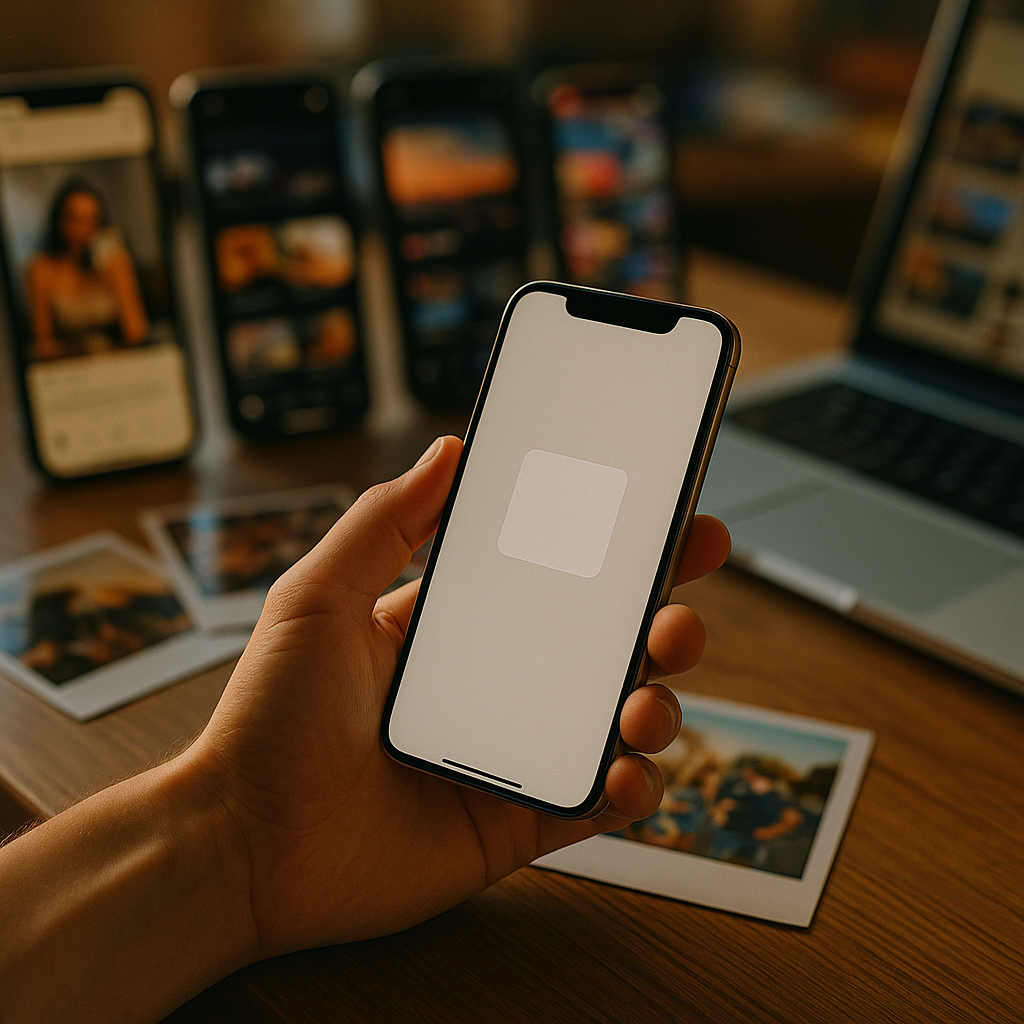
Designing Minimalist Content That Stands Out In High-Stimulus Feeds sounds contradictory in 2025, when audiences scroll past endless color, motion, and noise. Yet minimalism can outperform maximalism when it’s built on clarity, intent, and strong visual hierarchy. This guide shows how to create calm, high-impact posts that earn attention, build trust, and drive action without shouting. Ready to make less feel like more?
Minimalist content design principles for crowded feeds
Minimalist design is not “empty.” It is deliberate reduction that makes the message easier to notice and faster to understand. In high-stimulus feeds—where viewers decide in fractions of a second—minimalism works when it improves three outcomes: recognition (what is this?), comprehension (what does it mean?), and next step (what do I do?).
Start with a single job for each asset. If you try to educate, entertain, sell, and build brand identity in one tile, you’ll likely end up with a cluttered compromise. Minimalist content stands out because it commits to one primary message.
Use these principles as your baseline:
- One core idea per piece: One promise, one insight, or one action. If you need more, make it a carousel or a short thread.
- High contrast hierarchy: A big headline and a small supporting line beat five equal-weight lines every time.
- Purposeful whitespace: Space is not decoration; it is a tool for pace and priority.
- Consistency over novelty: Repeat a recognizable layout system so your audience identifies your posts instantly.
- Frictionless consumption: Readable sizes, short lines, and clear focal points. If it’s hard to parse, it loses in the first scroll.
Follow-up question most teams ask: “Won’t minimalism look generic?” Not if you define a brand system (type, spacing, voice, and one signature element) and apply it consistently. Minimalism becomes distinctive through repeatable choices, not decorative complexity.
Visual hierarchy and whitespace for scroll-stopping clarity
High-stimulus feeds reward assets that resolve quickly. Minimalist design can “stop the scroll” by giving the eye a clean route: focal point → meaning → action. That route comes from hierarchy, not extra effects.
Build hierarchy with these levers:
- Scale: Make the headline meaningfully larger than everything else. If the difference is subtle, it won’t read as priority.
- Weight: Use bold for the key phrase, regular for support, and avoid multiple competing emphases.
- Position: Place the core message where the eye naturally lands first (often upper third or center, depending on platform norms).
- Contrast: Prioritize legibility. Light gray text on white may look “minimal,” but it performs poorly in real-world viewing conditions.
- Spacing: Increase line spacing and margins to create a calm rhythm and reduce cognitive load.
Whitespace is your strategic amplifier. It creates a frame that signals confidence: “This is important enough to stand alone.” Practically, whitespace also increases readability on small screens, where feeds are consumed.
To apply this reliably, use a simple layout recipe:
- Headline: 6–10 words maximum, focused on a single benefit or claim.
- Subhead: One sentence that adds specificity (who it’s for, what changes, what to do next).
- One anchor: A single shape, line, icon, or highlight block that becomes your recognizable signature.
- One CTA (if needed): A short verb phrase, not a paragraph.
Common follow-up: “How much text is too much?” If the viewer must zoom or pause to decode the main point, it’s too much for a feed. Move detail to the caption, comments, a second slide, or the landing page.
Typography and color palette choices that stand out
Minimalist content often wins through typography. In a feed filled with busy visuals, a typographic post can look like a clear sign in traffic—if the type system is strong.
Typography rules that translate into performance:
- Choose one primary typeface: Use one family with multiple weights. If you need contrast, use size and weight before adding a second font.
- Prioritize x-height and clarity: Screen-first fonts with clean shapes stay readable at small sizes.
- Keep line length short: Short lines scan faster on mobile. Break long headlines intentionally.
- Avoid faux-minimalism: Ultra-thin fonts and low-contrast colors reduce readability and trust.
Color is where minimalist design can become unmistakable. Instead of many colors, use one dominant color strategy:
- Monochrome + one accent: Black/white/neutral plus one brand accent for highlights or the CTA.
- Single bold background: A strong solid color with white or black text can cut through visual clutter.
- Muted background + sharp type: Soft neutrals with high-contrast typography signal calm authority.
Answering the next question: “How do we keep it accessible?” Check contrast and size for mobile. Make sure the headline can be read quickly by someone outdoors on a phone screen. Accessibility is not just compliance; it is conversion insurance.
Also consider brand recognition. If your posts are shared, they travel without your profile context. A consistent accent color, a signature highlight block, or a repeated corner marker helps your content stay identifiable even when reposted.
Brand identity consistency without visual clutter
Minimalism becomes memorable when it is systematic. That system is your brand identity in a feed environment: predictable enough to recognize, flexible enough to avoid repetition fatigue.
Build a minimalist brand system with these components:
- Layout grid: Define margins, text blocks, and safe areas so every post shares a family resemblance.
- Signature element: One recurring motif—an underline style, a corner tab, a dot pattern used sparingly, or a thin frame.
- Voice-to-visual alignment: If your copy is direct and technical, your design should be crisp and structured. If your tone is warm, your spacing and shapes can soften.
- Content types: Create a few templates for recurring formats (myth vs fact, checklist, quote-with-context, data point, how-to steps).
Minimalist content can still carry personality. Personality does not require more elements; it requires clearer choices. For example, a brand can feel premium through generous spacing and restrained color, or energetic through a bold accent and punchy verbs, without adding layers of decoration.
EEAT considerations matter here. In 2025, audiences are trained to look for signals of credibility. You can build trust visually by:
- Using precise claims: Replace “game-changing” with a specific outcome or constraint.
- Adding context cues: A small “Source:” line when citing statistics (kept minimal, but present).
- Showing accountability: If content is advice, clarify the scenario and limits. “For B2B landing pages” is more trustworthy than “for everyone.”
Likely follow-up: “Won’t templates make our feed boring?” Not if the content varies and your system includes controlled variation: swap the accent placement, rotate among two background tones, or alternate between headline-first and question-first formats while keeping the same grid.
Feed performance optimization and micro-interactions
Minimalist content must still compete with motion and novelty. In 2025, you can keep minimalism and add performance-oriented techniques that respect attention rather than exploit it.
Optimize for the way people actually scroll:
- Lead with the payoff: Put the benefit or surprising insight in the first line of the visual, not in the caption.
- Design for thumbnail view: Many feeds show posts small at first. Test your design at reduced size to ensure it still reads.
- Use motion sparingly: A subtle 0.3–0.6s text reveal, underline draw, or highlight wipe can increase stopping power without turning into noise.
- Carousels for depth: Minimal front slide, deeper steps inside. This matches how people commit attention: first to decide, then to learn.
- Caption as the second layer: The visual earns the stop; the caption earns the save, click, or follow.
Micro-interactions can stay minimalist if they serve comprehension. Examples:
- Progress markers in carousels (e.g., “1/6”) for orientation.
- Emphasis transitions that highlight one key phrase at a time.
- Animated pointer to the CTA or next slide, kept subtle and consistent.
Follow-up: “How do we know what’s working?” Define success per post type. If your goal is awareness, track shares and follows. If it’s education, track saves and completion on carousels. If it’s conversion, track clicks and landing-page behavior. Minimalism is a design strategy; measurement keeps it honest.
A/B testing minimalist creatives and avoiding common mistakes
Minimalist content is easy to produce poorly because small decisions carry more weight. A systematic testing approach helps you improve without drifting into clutter.
Test one variable at a time:
- Headline framing: benefit-first vs pain-first vs contrarian statement.
- Contrast level: white background vs dark background vs brand-color background.
- Signature element placement: top-left vs bottom-right vs centered.
- CTA presence: explicit CTA vs no CTA (letting the caption do the work).
- Density: one sentence vs two; single idea vs three bullets on-slide.
Common mistakes to avoid:
- Confusing minimalism with low effort: If alignment, spacing, or typography is sloppy, the post looks untrustworthy.
- Too little context: A vague headline may look clean but fails to deliver meaning. Minimal should still be specific.
- Legibility sacrificed for aesthetics: Thin fonts, tiny text, and low contrast hurt performance.
- Over-reliance on quotes: Quote tiles get shared, but without original insight they don’t build authority. Add a crisp takeaway or application.
- Brand invisibility: If there is no recognizable brand marker, your best posts can be reshared without attribution.
EEAT in practice means your content should demonstrate experience and accuracy. When you provide advice, include a short constraint that signals real-world use, such as: “This layout works best for educational carousels and product announcements, but not for dense comparisons.” That kind of specificity makes minimalist content feel expert, not generic.
FAQs
What makes minimalist content stand out in high-stimulus feeds?
Speed of understanding. A single clear focal point, high contrast, and disciplined hierarchy let the viewer grasp the value instantly, which can outperform visually noisy posts that take longer to decode.
How do I keep minimalist posts from looking boring?
Use controlled variation: rotate headline styles, adjust the accent color placement, and alternate between static and subtle motion. Keep the grid consistent so the feed feels cohesive while each post still feels fresh.
Should minimalist content include photos or be text-only?
Either can work. Use photos when they add information or emotion that supports the message. Choose text-only when the idea is the product, especially for tips, frameworks, or strong claims that benefit from typographic clarity.
What are the best dimensions and text sizes for mobile readability?
Design for the platform’s recommended post sizes, then test at thumbnail scale and full-screen. Ensure the headline remains readable without zooming. If you must shrink the headline to fit, the copy is too long.
How do I apply EEAT to minimalist social content?
Be specific, avoid exaggerated claims, and add lightweight credibility cues: clear definitions, practical constraints, and source attribution when citing data. Consistency in voice and design also increases perceived trustworthiness.
How many brand elements should a minimalist post include?
Usually one signature element plus consistent typography and color usage. Over-branding adds clutter; under-branding loses attribution when posts are shared.
Minimalist content can win in high-stimulus feeds in 2025 because it reduces friction, communicates faster, and signals confidence. Focus on one idea, build strong hierarchy, and use whitespace as an amplifier. Anchor everything in a repeatable brand system, then test small changes to improve performance. The takeaway: make every element earn its place, and your “less” will land harder.