


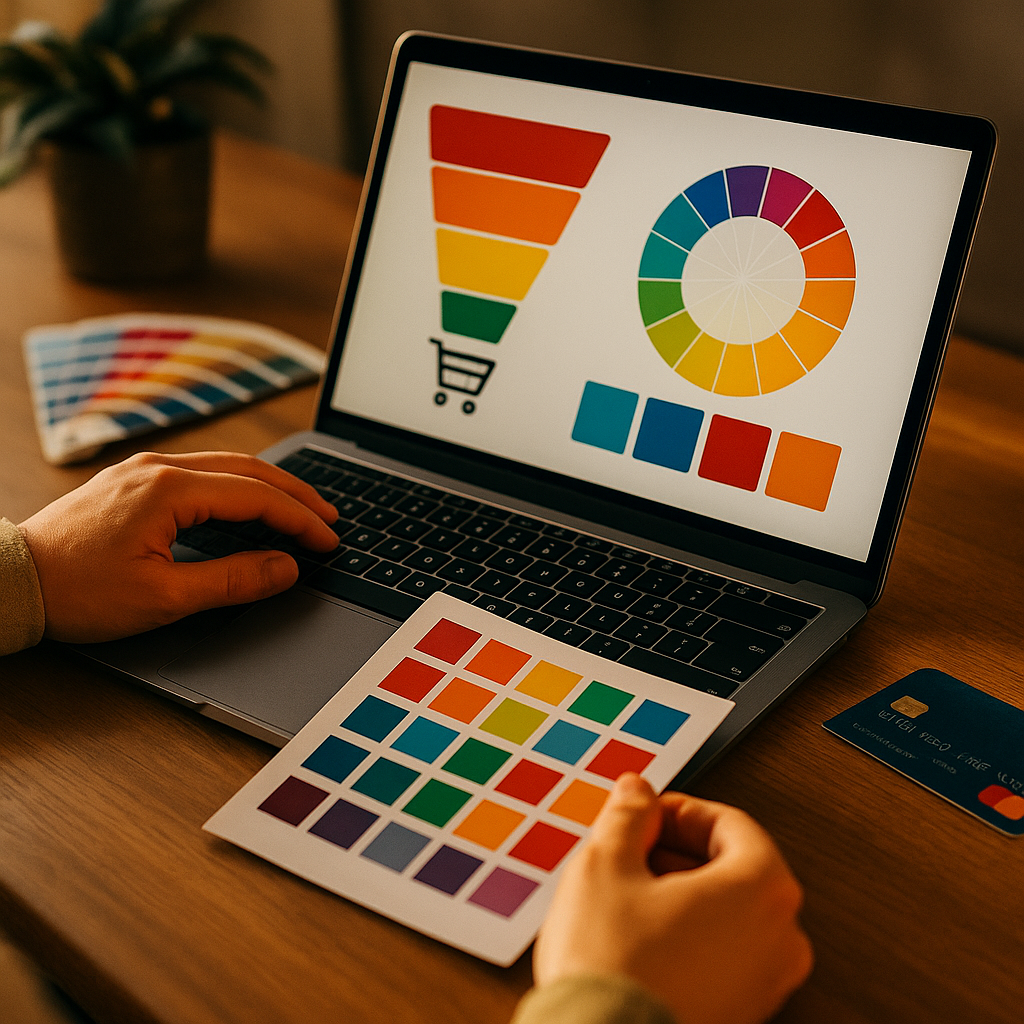
The psychology of color in high-ticket e-commerce conversion funnels shapes how premium shoppers judge trust, value, and risk in seconds. In 2025, buyers compare brands fast, scan for credibility signals, and hesitate when design feels inconsistent or “salesy.” Color choices can reduce friction, clarify decisions, and support confident spending—if you apply them strategically. Here’s how to use color to guide high-intent visitors toward yes.
Color psychology for premium e-commerce trust signals
High-ticket shoppers don’t just want a product; they want certainty. Color is one of the fastest nonverbal cues for “Is this brand legitimate?” and “Will I regret this purchase?” Trust is built when your color system is consistent, accessible, and aligned with category expectations.
How premium buyers interpret common color families
- Blues: Competence, stability, and reduced perceived risk. Often effective for warranties, guarantees, financing, and “secure checkout” zones where anxiety spikes.
- Blacks and charcoals: Luxury, authority, restraint. Works well for high-end fashion, watches, tech, and services where exclusivity matters.
- Whites and neutrals: Clarity, honesty, editorial quality. Strong for premium DTC brands that want a “quiet confidence” aesthetic.
- Greens: Assurance, wellbeing, sustainability. Effective when your premium price is justified by quality, ethics, or long-term value.
- Reds: Urgency and intensity. Useful in small doses for warnings and time-bound prompts, but risky if it makes a luxury brand feel discounted or aggressive.
Trust is also about coherence. A single great color can’t rescue a funnel where the product page, cart, and checkout all “feel” like different brands. Maintain a consistent palette, button style, and contrast standards across every step, including post-click pages from ads and emails.
Answering the follow-up question: “Should premium brands avoid bright colors?” Not necessarily. Bright accents can work when they’re controlled and intentional—used for navigation cues, small callouts, or one primary action. The issue isn’t brightness; it’s visual noise and “discount-store” signaling when everything competes for attention.
High-ticket conversion funnel design and emotional triggers
In high-ticket funnels, color supports emotional regulation. A buyer may want the item, but their nervous system is scanning for reasons to pause: return risk, hidden fees, unreliable shipping, or “am I being manipulated?” Your goal is to create a calm, guided experience where the next step feels obvious and safe.
Map color to funnel psychology by stage
- Landing and category pages (orientation): Use neutral backgrounds and consistent brand hues to reduce cognitive load. Make filters and sorting clear without overpowering product imagery.
- Product pages (evaluation): Use color to separate content blocks: benefits, specifications, social proof, and guarantees. Subtle tinted panels can improve scanning without shouting.
- Cart and checkout (commitment): Increase clarity and reassurance. Use stable colors (often blue/neutral) for security, shipping, and payment microcopy. Reserve your strongest accent for a single primary button.
- Post-purchase (relief): Use warm confirmation colors and clear next steps (tracking, setup, concierge onboarding). This reduces buyer’s remorse and supports referrals.
Emotional triggers color can support—without becoming manipulative
- Control: Clear hierarchy and predictable button colors reduce “Where do I click?” anxiety.
- Competence: Clean palettes and high contrast make the experience feel engineered, not improvised.
- Belonging: Brand colors used consistently in testimonials, community badges, and founder notes can increase identification.
Practical check: If your funnel uses three different accent colors for three different CTAs, you’re not increasing options—you’re increasing hesitation. High-ticket funnels perform best when they remove decisions that don’t add value.
CTA button color optimization for luxury products
Button color is rarely about “red vs. green.” In high-ticket contexts, it’s about contrast, uniqueness, and meaning. The best CTA color is the one that is unmistakably the primary action, fits brand positioning, and stays consistent from product page to checkout.
Principles that convert without cheapening the brand
- One primary CTA color per page: Use one dominant action color for “Add to cart,” “Continue,” and “Complete purchase.” Secondary actions (e.g., “Save,” “Compare,” “Chat”) should be visually quieter.
- High contrast against the background: Premium design can still be highly readable. Low-contrast “aesthetic” buttons often reduce conversions and accessibility.
- Consistent semantics: If green means “Proceed” on the product page, don’t make green mean “Apply coupon” later. Semantic drift creates micro-confusion.
- Use color to reduce risk: Near the CTA, add supportive trust cues with calmer tones: “Free returns,” “2-year warranty,” “Secure payment.”
What to test in 2025
- Accent shade within the same hue: For example, testing a deeper, more muted green vs. a brighter green can preserve luxury positioning while improving visibility.
- Button fill vs. outline: Filled buttons usually win for primary actions. Outlines can work for secondary actions in premium layouts.
- Button area and spacing: Color works best with sufficient padding and whitespace to signal importance.
Answering the follow-up question: “Can I use black buttons for luxury?” Yes, especially on white or light-neutral backgrounds. Ensure the button label meets contrast guidelines and that hover/focus states remain clear. Black can communicate authority, but it must still look clickable and accessible.
Brand color palette strategy for premium positioning
A high-ticket offer needs a palette that signals value before a single word is read. Premium positioning usually relies on restraint: fewer colors, more intentional contrast, and consistent application across ads, landing pages, product photography overlays, email, and checkout.
Build a palette system, not a mood board
- Primary brand color: Used for identity anchors (headers, key icons, highlight lines) and sometimes the primary CTA.
- Action color: Dedicated to conversion actions. It can match the brand color or be a controlled accent if your brand color is too subtle for buttons.
- Neutral foundation: Whites, off-whites, grays, charcoals. Premium brands often win with a strong neutral base that lets product imagery carry emotion.
- Status colors: Success, warning, error. These must be functional and accessible; avoid using “error red” as a marketing urgency color.
Match palette to price justification
- Engineering and performance: Cooler palettes, crisp neutrals, and disciplined use of bright accents can reinforce precision.
- Craft and heritage: Warm neutrals, deep greens, burgundies, and textured backgrounds can support authenticity.
- Wellness and longevity: Greens, soft blues, and natural neutrals can suggest safety and sustainable value.
Operational detail many teams miss: Document your palette with usage rules. Include hex values, accessibility contrast targets, and where each color should appear in the funnel. This reduces inconsistency when multiple designers, CRO specialists, and developers ship updates.
Checkout color accessibility and conversion rate optimization
High-ticket checkouts fail for predictable reasons: uncertainty, friction, and readability issues—especially on mobile. Accessibility is not just compliance; it is conversion insurance. When users can’t read labels, see errors, or identify the next step, they abandon.
Make “critical path” elements unmistakable
- Form labels and helper text: Use high-contrast text. Avoid light gray text on white backgrounds for key inputs and required fields.
- Error states: Never rely on color alone. Pair color with clear text like “Card number is invalid” and an icon or outline change.
- Progress indicators: Use a single, calm accent to show where the user is in the process. Too many colors turn progress into noise.
- Payment trust cues: Place security and privacy reassurance near payment fields using steady, non-alarming colors (often blues or neutrals).
CRO testing approach that respects brand
- Test in context: A button color that wins on a product page may lose in checkout if it conflicts with error or warning colors.
- Segment by device: Mobile users are more sensitive to contrast and tap-target clarity; color/contrast issues show up faster.
- Measure the right outcomes: For high-ticket offers, track not only conversion rate but also checkout completion time, error frequency, and support chat triggers.
Answering the follow-up question: “Should I add urgency colors in checkout?” Usually no. High-ticket buyers interpret urgency at checkout as pressure. If you have legitimate scarcity, communicate it earlier (product page) with restrained emphasis, and keep checkout focused on completion confidence.
Cross-cultural color meaning in global high-ticket funnels
If you sell globally, color meaning can shift by region, category, and context. Premium buyers are also more design-literate; they notice when a brand uses culturally mismatched cues that feel generic or imported without care.
How to reduce cultural risk without overcomplicating design
- Prioritize function over symbolism for UI colors: Keep error, success, and navigation colors consistent and accessible. Functional clarity travels well.
- Localize marketing accents, not the entire UI: If you need adaptation, adjust hero imagery overlays, seasonal banners, or campaign creative first.
- Validate with regional data: Use regional A/B tests or user testing rather than assumptions about “what a color means.”
- Consider category expectations: In luxury, black/white minimalism often signals premium globally, but the supporting accent color may need refinement by market.
Practical workflow: Maintain a global core palette and allow a small set of “campaign accents” that can be swapped per region. This keeps engineering and brand governance manageable while respecting local response patterns.
FAQs
What is the best color for high-ticket e-commerce conversion funnels?
There isn’t a universal best color. The best-performing choice is the one that (1) fits your premium positioning, (2) is uniquely identifiable as the primary action, and (3) maintains strong contrast and consistency across the entire funnel, especially in checkout.
Should luxury brands avoid red CTA buttons?
Not always, but red can signal discount urgency or alarm if overused. If your brand relies on calm authority, consider deeper, muted accents or use red only for true warnings and errors. Test red cautiously and evaluate impact on trust, not just clicks.
How many colors should a premium funnel use?
Most premium funnels work best with a restrained system: a neutral foundation, one primary brand color, one dedicated action color, and a small set of functional status colors. Too many accents create decision friction and weaken perceived quality.
Can changing button color really increase conversions on expensive products?
Yes, when the current design suffers from low contrast, inconsistent meaning, or competing CTAs. However, the biggest gains usually come from improving hierarchy and reassurance near the CTA—warranty, returns, shipping clarity—supported by a coherent color system.
How do I apply color psychology without being manipulative?
Use color to clarify choices, reduce anxiety, and communicate real information (security, availability, progress). Avoid false urgency, confusing “dark pattern” contrast tricks, or hiding costs. Premium buyers reward transparency with higher confidence and fewer returns.
What accessibility basics matter most for checkout colors?
High contrast for text and buttons, clear focus states for keyboard navigation, and error messages that do not rely on color alone. Accessible checkouts reduce abandonment, lower support requests, and improve completion rates on mobile.
Color is a conversion tool when it earns trust, reduces mental effort, and keeps the buyer oriented from first click to confirmation. In 2025, high-ticket funnels win with disciplined palettes, clear CTA hierarchy, and accessible checkout design that feels calm and precise. Use color to communicate meaning—then validate with testing. The takeaway: make your primary action unmistakable and your brand unmistakably credible.