


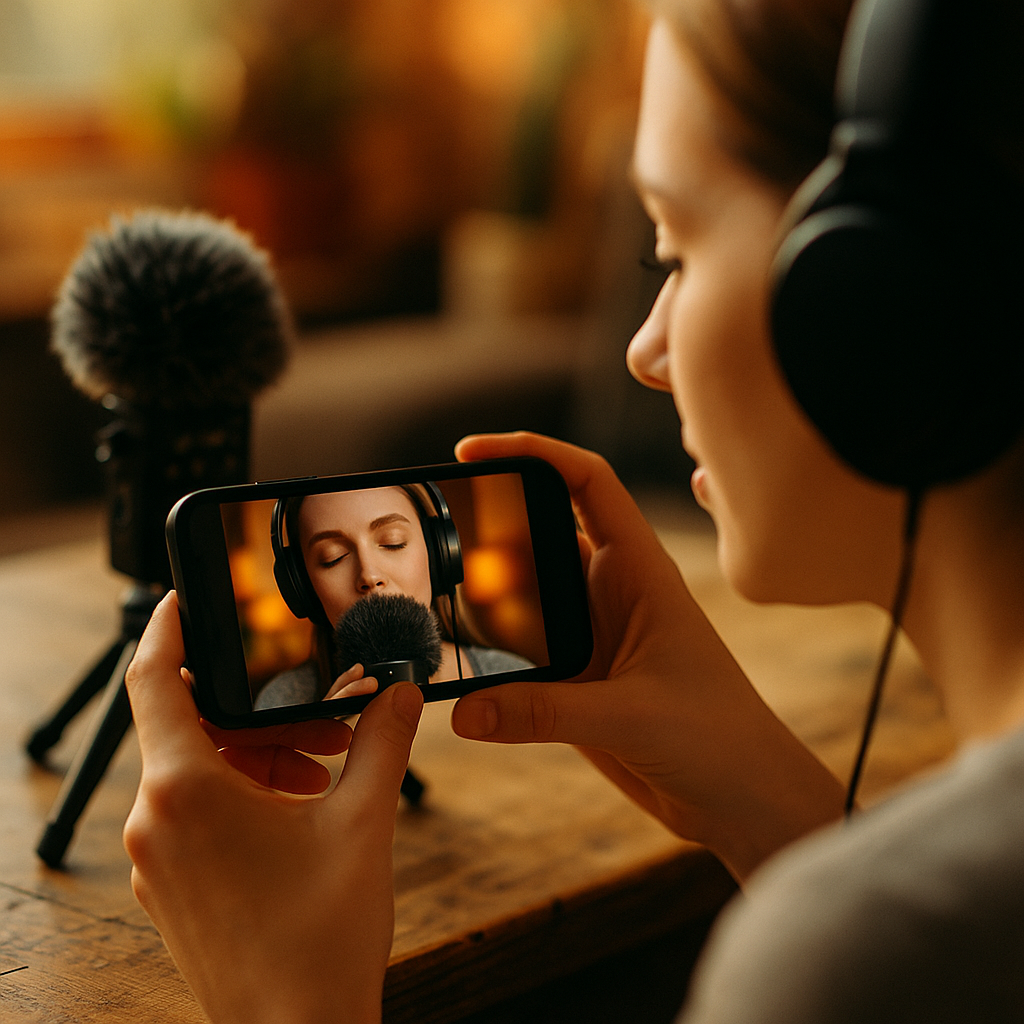
In 2025, brands compete for attention on smaller screens and louder feeds, yet audiences still crave calm, clarity, and connection. The Power Of Soundscapes And ASMR In Immersive Branded Video lies in guiding emotion through detail—breath, texture, distance, and space—so a story feels lived-in, not merely watched. When audio becomes tactile, viewers lean in, stay longer, and remember more. Ready to design that pull?
Immersive branded video sound design
Immersive branded video succeeds when the audience feels present inside the scene. Sound is the fastest way to create that presence because it shapes perceived space: how near a subject feels, what surfaces surround them, and what the environment “means” emotionally. While visuals explain what is happening, sound often decides how it feels.
For marketers, “soundscape” refers to a layered bed of environmental audio—room tone, ambient movement, distant activity, micro-events—organized to support a story beat. ASMR (autonomous sensory meridian response) describes a response some people experience from gentle, intimate sounds (soft speech, tapping, brushing, crinkling) that can evoke calm and focused attention. In branded video, you can use ASMR techniques without claiming everyone will experience tingles; the practical goal is to increase intimacy and reduce cognitive load.
Sound design is also a trust signal. Clean production, consistent loudness, and deliberate spatial choices communicate competence and care. That matters for EEAT: audiences judge expertise and reliability through craft. If the audio is harsh, clipped, or confusing, viewers may assume the brand is careless in other areas too.
To make audio genuinely immersive, plan for it early. Treat sound as a narrative system—not a post-production patch. That means aligning creative, production, and legal teams on what sounds are essential, what can be captured on set, and what will be built in post.
ASMR marketing strategy
ASMR in marketing works best when it matches the brand’s promise and the viewer’s context. A financial app might use soft, precise UI clicks and a close, reassuring voice to convey control and calm. A skincare brand might emphasize slow cap twists, product dispensing, and fabric movement to express sensory benefits without exaggerated claims. A travel brand can pair close “packing” sounds with a wide environmental soundscape to transition from anticipation to arrival.
Use ASMR as a strategy, not a gimmick. Ask three questions before committing:
- What emotion should dominate? Calm, focus, confidence, anticipation, relief, delight.
- What behavior do we want? Watch-through, product consideration, app install, store visit, email signup.
- Where will it be watched? Phone with earbuds, living-room TV, in-feed with sound off, retail display.
Then choose an ASMR style that serves those answers. Common, brand-safe approaches include:
- “Process ASMR”: making, preparing, assembling, cleaning—ideal for products with craftsmanship or routine value.
- “Precision ASMR”: subtle mechanical sounds, tool clicks, careful measuring—useful for tech, automotive, DIY, and premium goods.
- “Personal attention”: gentle guidance, concierge tone, spa-like pacing—effective for service brands when handled respectfully.
Address a likely concern: Will ASMR alienate viewers? It can if it feels forced, overly wet-mouthed, or sexualized. Keep it natural, maintain tasteful distance, and test with diverse listeners. Also provide alternative mixes for broader comfort: an “ASMR-forward” version for headphones and a “standard” version for general playback.
Binaural audio and spatial sound
Binaural and spatial audio can make branded video feel three-dimensional, especially on headphones. They also increase realism when used subtly. The key is restraint: exaggerated left-right panning can distract, while gentle depth cues (near/far, height, reflections) support immersion.
In practical terms, you can create spatial realism in three ways:
- Capture it: record with binaural microphones or stereo techniques that preserve room depth and movement.
- Design it: build a soundscape with layered ambiences, spot effects, and reverb that matches the location.
- Hybrid approach: use production audio for authenticity, then enhance transitions and clarity in post.
For branded storytelling, spatial audio is especially effective in:
- Product interaction: a zipper passes close to the listener; a bottle cap twists slightly right; a keyboard sits forward and centered.
- Retail or hospitality: doors open behind you, footsteps cross a lobby, a coffee machine hisses in the distance.
- Outdoor scenes: wind layers, birds, traffic beds—helpful for travel, automotive, and lifestyle categories.
Follow-up question: Do we need special platforms to use spatial audio? No. A well-mixed stereo track can deliver a convincing spatial impression, especially with headphone viewers. If you publish on platforms that support spatial formats, you can create a dedicated version, but prioritize translation: your mix must still sound clear on phone speakers and in noisy environments.
Protect brand clarity with disciplined loudness and dynamic range. Many ASMR-style mixes rely on quiet moments; ensure dialogue and key cues remain intelligible without forcing viewers to crank volume. Consider producing two masters: one optimized for social feeds and one for long-form/OTT where dynamics can breathe.
Sonic branding and brand recall
Sonic branding goes beyond a logo sting. It is a consistent set of audio behaviors—instrumentation, texture, pacing, ambience, and signature cues—that viewers can recognize across campaigns. Soundscapes and ASMR can strengthen sonic branding by making your audio identity feel personal rather than promotional.
Build a sonic system with three layers:
- Signature cue: a short, distinctive sound motif (could be a chord, tone, or physical sound linked to the product).
- Sound palette: recurring textures (warm room tone, soft fabric movement, crisp UI clicks, gentle water).
- Mix philosophy: your consistent approach to loudness, brightness, space, and pacing.
ASMR techniques can turn ordinary brand elements into recognizable signatures. For example, the soft magnetic snap of a case, the whisper of a premium paper stock, or the subtle “lock” sound of an app confirmation can become part of a brand’s sensory memory. The emphasis should be on authenticity: capture real product sounds where possible. When you must design or sweeten them, keep them plausible.
A likely follow-up: How do we avoid sounding like everyone else? Start with brand truths. If your brand is about speed and certainty, your soundscape should be crisp, controlled, and efficient—not sleepy. If you’re about nature and restoration, use airy, organic ambiences with minimal synthetic artifacts. Document your choices in a simple sonic style guide so partners and agencies can reproduce them consistently.
Audio post-production workflow
Great immersive audio depends on a workflow that protects detail from script to final delivery. In 2025, audiences notice noise reduction artifacts, mismatched room tone, and unnatural reverb faster than ever—especially with headphones. Build a process that makes the “quiet parts” as intentional as the loud ones.
Pre-production
- Audio concepting: define the emotional arc and identify “hero sounds” per scene (e.g., pour, brush, click, fabric).
- Location planning: scout for noise issues (HVAC, traffic) and decide what must be recorded cleanly.
- Gear and coverage plan: decide on lavs, boom, stereo/binaural ambience, and close Foley capture.
Production
- Record room tone: at least 60 seconds per setup to support seamless edits.
- Capture wild tracks: close-ups of product handling, footsteps, and key actions without dialogue.
- Monitor like a listener: check headphone playback; ASMR detail can vanish if the mic is too far or the room is too reflective.
Post-production
- Clean with restraint: remove distractions, but avoid over-denoising that produces watery artifacts.
- Foley for clarity: reinforce important textures (packaging, fabric, tool contact) so they read on small speakers.
- Spatial placement: use subtle panning and depth, matching visual perspective and continuity.
- Music discipline: keep music sparse when ASMR cues lead; let it enter when the story expands.
- Accessibility: create accurate captions and consider audio descriptions when appropriate; captions should include meaningful sound cues (e.g., “soft tapping,” “kettle hiss”).
Also plan for compliance and safety. If you use whispering or intimate voice, avoid manipulative language, especially for sensitive categories. Ensure claims remain factual and substantiated. And always clear licensed sound libraries properly; ownership and usage rights support trustworthiness and protect distribution.
Viewer attention and conversion metrics
Immersive sound should produce measurable business outcomes, not just “vibes.” Define success metrics that connect audio choices to viewer behavior. Start with a simple measurement plan that compares versions: an ASMR-forward cut versus a standard mix, holding visuals constant where possible.
What to measure
- Attention: 3-second views, view-through rate, average watch time, completion rate.
- Engagement: shares, saves, comments that reference sound (“so satisfying,” “love the audio,” “calming”).
- Brand lift: ad recall, brand favorability, message association via platform studies or third-party surveys.
- Action: click-through rate, landing-page time on site, add-to-cart, conversion rate, cost per acquisition.
How sound affects these metrics
- Micro-detail increases patience: subtle, predictable textures can encourage viewers to stay through slower pacing.
- Clarity improves comprehension: clean voice and intentional sound effects reduce confusion, which can reduce drop-off.
- Emotion supports memory: calm or satisfaction can make product benefits feel more believable and less “sold.”
Answering the practical follow-up: What if most viewers watch with sound off? Design for dual-mode viewing. Use strong visuals and on-screen text for silent autoplay, but reward sound-on viewers with an enhanced layer—ASMR cues, spatial transitions, and a refined sonic logo. Then prompt sound-on behavior without nagging: subtle “Headphones recommended” in the first seconds can be enough for longer-form placements.
Finally, test for comfort. Some audiences are sensitive to certain frequencies or mouth sounds. Monitor comment sentiment, run small audience tests, and keep a “clean” mix available. Responsible iteration supports EEAT by demonstrating care for the viewer experience.
FAQs
What is a soundscape in branded video?
A soundscape is the designed layer of environmental audio—ambience, movement, and subtle effects—that creates a sense of place and mood. In branded video, it supports the story by making scenes feel real, guiding emotion, and improving continuity between edits.
Is ASMR effective for every brand?
No. ASMR techniques work best when they align with the brand’s tone and the product experience. If intimacy or sensory detail fits your promise—comfort, craftsmanship, wellness, precision—ASMR can help. If your brand relies on high energy or urgency, use lighter micro-detail rather than a fully quiet ASMR mix.
Do we need binaural recording for immersive audio?
Not always. You can achieve immersive results with high-quality stereo recording and thoughtful post-production using depth, reverb, and consistent ambience. Binaural capture can add realism for headphone listeners, but it’s optional if the mix translates well across devices.
How do we prevent ASMR audio from sounding creepy or awkward?
Keep performances natural, avoid exaggerated mouth sounds, maintain respectful language, and match perspective to the camera distance. Use real product sounds, avoid overly wet or hyper-close Foley, and test with a broad audience before publishing.
What deliverables should we request from an audio team?
Ask for at least two mixes: a standard full mix and an ASMR-forward or headphone-optimized mix. Also request stems (dialogue, music, effects/ambience), a sonic logo version, and platform-specific loudness deliverables suitable for social, web, and OTT placements.
How can we prove ROI from sound design?
Run A/B tests where the visuals remain consistent and only the audio strategy changes. Track watch time, completion rate, brand lift, and conversions. Also analyze qualitative feedback that mentions sound, since it often correlates with attention and memorability.
Sound can turn branded video from a message into an experience. In 2025, soundscapes provide believable space, while ASMR techniques add intimacy, texture, and calm that encourages viewers to stay and trust what they’re seeing. Plan audio early, capture authentic hero sounds, and mix for both sound-on and sound-off realities. When sound supports story and measurement, immersion becomes a repeatable advantage.