


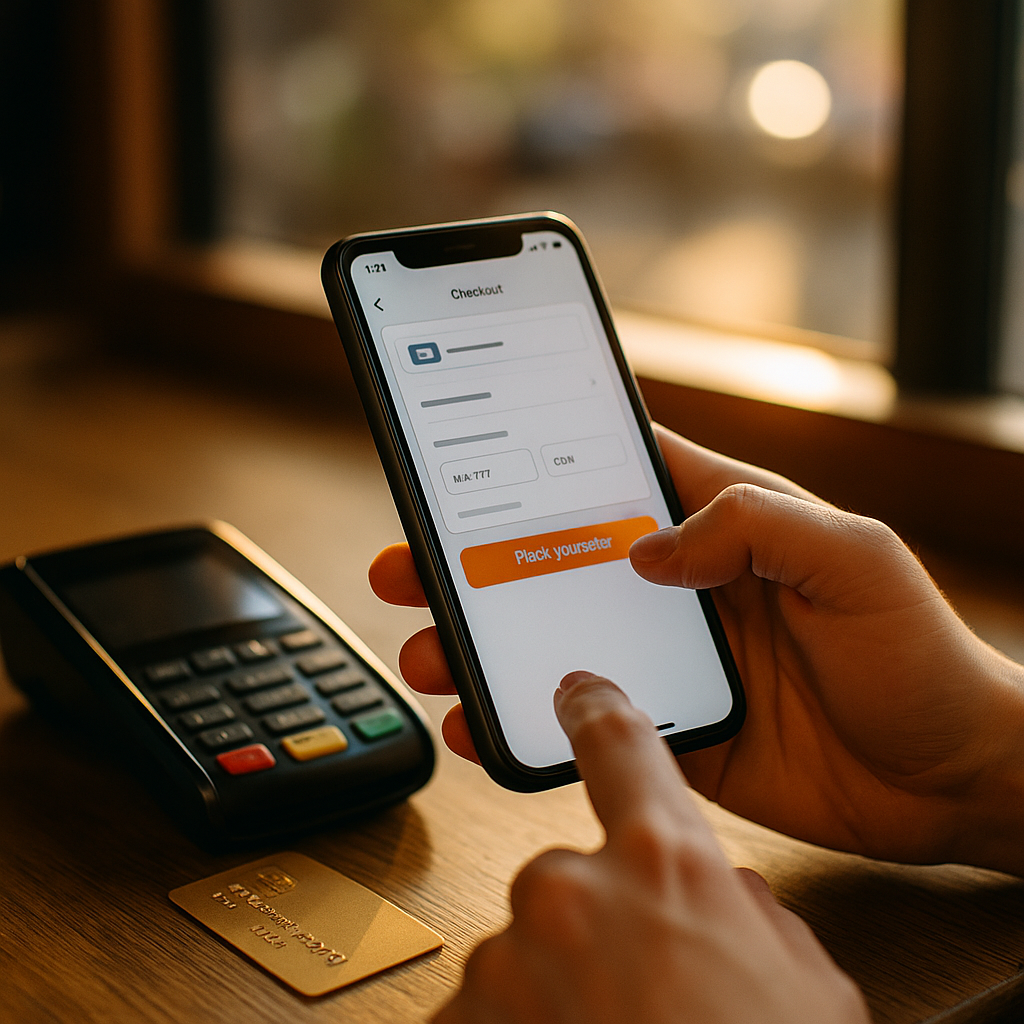
The psychology of choice architecture in mobile checkout design shapes how shoppers decide, hesitate, or complete a purchase on small screens. In 2026, checkout success depends less on adding features and more on reducing friction, guiding attention, and building trust at each step. When every tap matters, smart design can turn uncertainty into action—but how?
Why choice architecture matters in mobile checkout
Choice architecture is the practice of organizing decisions so people can act with less effort and more confidence. In mobile checkout, that means deciding what users see first, which options are preselected, how many steps appear, and what information is shown at the exact moment it matters. The goal is not manipulation. The goal is clarity.
Mobile users operate under tighter cognitive limits than desktop users. They are often distracted, on the move, and working within a constrained interface. A checkout that presents too many options at once increases mental load. A checkout that prioritizes the most relevant action lowers perceived effort and improves completion rates.
Good mobile checkout design respects how people actually make decisions. Behavioral science shows that users do not evaluate every option equally. They rely on shortcuts: default bias, loss aversion, social proof, anchoring, and the desire to avoid uncertainty. An effective checkout uses these predictable tendencies ethically.
For example, if a checkout asks users to choose among five shipping methods with similar labels, many will pause. If the interface instead highlights the best-value option, explains delivery timing clearly, and tucks advanced alternatives behind a secondary control, the user can decide faster. The architecture of the choice changed the outcome.
From an EEAT perspective, this matters because helpful checkout content should demonstrate practical expertise, not theory alone. Designers, product managers, and marketers should evaluate checkout choices against real user behavior, test results, accessibility standards, and trust expectations. The strongest designs are evidence-based, transparent, and easy to use.
Reducing decision fatigue with mobile checkout UX
Mobile checkout UX should reduce decision fatigue before it appears. When people face repeated micro-decisions—guest or account, shipping speed, payment type, promo code, address format, contact preferences—their confidence drops. Some continue while making poorer decisions. Others leave.
The first principle is to remove unnecessary choices. If a field is optional and not essential for fulfillment, do not place it in the main flow. If one payment method dominates among your customers, show it prominently rather than giving equal visual weight to every option. If the vast majority of orders ship to home addresses, make that route the default and let users change it if needed.
The second principle is progressive disclosure. Show only what the user needs for the current step. Billing address fields can remain hidden until a payment type requires them. Promo code boxes should not dominate the screen if only a small share of buyers use them. A visible promo field can trigger abandonment by making full-price customers feel they are missing out.
The third principle is sequencing. Put low-friction actions first to build momentum. Asking for an email early can be useful if it supports recovery and receipt delivery, but requiring password creation before purchase creates resistance. Guest checkout remains one of the clearest ways to preserve momentum, especially on mobile.
To reduce fatigue, structure the experience like this:
- Step 1: Confirm cart summary with clear item names, prices, and delivery estimates
- Step 2: Collect shipping details with autofill and address validation
- Step 3: Present payment methods in a prioritized, familiar order
- Step 4: Review order with taxes, fees, and timing visible before commitment
This structure answers a common follow-up question: should checkout be one page or multiple steps? The right answer depends on context, but on mobile, a short, well-signposted sequence often performs better than one dense page. Users need to feel progress, not complexity.
Using behavioral design principles in payment choices
Behavioral design principles are especially powerful in the payment stage because this is where hesitation peaks. Users ask themselves practical questions: Is this safe? Can I use the fastest option? What happens if something goes wrong? The interface must answer these questions before doubt grows.
One of the most effective tools is the default effect. People often accept a preselected option if it feels reasonable and reversible. In mobile checkout, that could mean defaulting to the most commonly used saved card, the most balanced shipping method, or a digital wallet when the device supports it. The key is ethical use. Defaults should reflect user benefit, not just merchant preference.
Anchoring also shapes perception. If users first see premium expedited shipping, a standard paid option can appear more affordable. If they first see a flexible buy-now-pay-later option without context, they may overfocus on monthly cost and underweight total price. Anchors should clarify value, not obscure it.
Loss aversion matters too. People react more strongly to the possibility of losing a benefit than gaining one. Messaging such as “Complete your order now to keep next-day delivery availability” can be more motivating than “You can get next-day delivery.” Still, pressure tactics can erode trust. The best version is factual, specific, and time-sensitive only when true.
Payment choice design works best when it follows a few standards:
- Use recognizable logos and plain labels for cards, wallets, and installment options
- Show security and encryption cues near payment submission, not buried in footers
- Display total cost clearly before the final tap
- Explain what happens after payment: confirmation, receipt, shipping update, support access
- Keep error recovery simple if a payment fails
Another common question is whether offering more payment methods always increases conversions. Not necessarily. More options help only when they match real customer demand. Too many low-use methods can increase visual noise and slow decisions. Prioritize based on audience data, region, operating system, and previous checkout behavior.
Building trust signals through checkout conversion optimization
Checkout conversion optimization is not only about shortening forms. It is also about reducing perceived risk. In mobile checkout, trust is fragile because users cannot inspect the site as easily as on desktop, and even small uncertainties feel larger on a small screen.
Trust starts with transparency. The final amount should never surprise the customer. Show shipping fees, taxes, discounts, and delivery windows as early as possible. If costs depend on location, say so before users invest time. Hidden costs remain one of the strongest triggers of abandonment because they violate user expectations at the worst moment.
Visual trust signals help, but they work only when paired with substance. Security badges, payment logos, return policy links, and customer support access should support real policies. Empty reassurance is easy to spot. Shoppers want evidence that the transaction is legitimate, recoverable, and easy to manage if something changes.
Strong trust design includes:
- Transparent totals: No hidden fees between review and payment
- Clear delivery promises: Realistic dates, not vague estimates
- Accessible support: Chat, email, or help links visible during checkout
- Easy editing: Users can change address, shipping, or payment without restarting
- Concise policies: Returns, refunds, and billing terms summarized in plain language
Trust also depends on technical performance. Slow-loading payment screens, broken autofill, or unstable digital wallet prompts signal risk even if the brand is reputable. In 2026, users expect checkout to feel native, fast, and reliable. If your form stutters or a payment sheet fails to open, users may abandon not because of price, but because the experience feels unsafe.
This is where EEAT becomes practical. Experience means you understand real user pain points. Expertise means your checkout decisions reflect proven usability and behavioral science. Authoritativeness comes from consistent policies, secure infrastructure, and accurate information. Trustworthiness is the sum of all of it, visible in every tap.
Applying cognitive load theory to cart abandonment
Cart abandonment often rises when cognitive load exceeds motivation. Users may want the product, but the checkout asks for too much attention at once. Cognitive load theory helps explain why. Working memory is limited. On mobile, that limit becomes even more relevant because users process text, buttons, errors, and payment prompts in a compressed space.
Every extra field, unclear label, and competing call to action consumes attention. A checkout can fail even when each element seems reasonable on its own. The problem is cumulative burden. That is why teams should audit the entire flow, not just single screens.
To lower cognitive load:
- Group related information so users can scan quickly. Shipping details belong together. Payment choices belong together. Policies should support, not interrupt.
- Use familiar patterns such as floating labels, wallet buttons, numeric keyboards for card entry, and clear progress indicators.
- Write microcopy that answers doubts like “We’ll send your receipt here” or “Used only for delivery updates.”
- Prevent errors before they happen with input masks, real-time validation, and address suggestions.
- Keep calls to action singular so the next step is obvious on every screen.
Many brands ask whether adding urgency helps reduce abandonment. It can, but only if it reflects reality. “Only 2 left” or “Sale ends soon” may lift action when true and clearly tied to inventory or timing. False urgency may create short-term gains but damages long-term trust, repeat purchase behavior, and brand credibility.
Another useful tactic is reassurance at friction points. If a user pauses at payment, a short line such as “Secure checkout. You can review before placing the order” can lower anxiety. If a shopper enters an address incorrectly, the correction should be polite and precise, not punitive. Good choice architecture guides behavior while preserving user confidence.
Testing mobile commerce strategy for better checkout outcomes
Mobile commerce strategy should treat checkout as a living system, not a one-time design project. Choice architecture works best when it is measured, tested, and improved over time. What feels intuitive to a team may confuse actual customers. Behavioral design should always be validated with data.
Start by defining the metrics that matter most. Conversion rate is important, but it is not enough. Track step completion, error frequency, payment method selection, digital wallet usage, field drop-off, time to complete, return visits after abandonment, and customer support contacts related to checkout. These reveal where choices are helping or hurting.
Then run focused experiments. Instead of redesigning everything at once, test one decision structure at a time:
- Defaulting to guest checkout versus account-first
- Showing one recommended shipping option versus a full list
- Moving promo code entry behind a link versus showing it openly
- Prioritizing digital wallets on supported devices
- Using single-column review summaries with clearer totals
Qualitative research matters as much as analytics. Session recordings, moderated usability tests, on-site surveys, and support transcripts often reveal the emotional side of friction: confusion, fear of hidden costs, uncertainty about delivery, or distrust of a payment method. These are psychological barriers, not just interface issues.
Accessibility should be included in every test plan. If a checkout works only for fast, sighted, highly motivated users, it is not well designed. Button size, contrast, focus order, screen reader labels, and error messaging all influence decision confidence. Accessible design is not separate from conversion. It is part of it.
Finally, align checkout design with brand promises. A premium brand should not feel chaotic at payment. A value brand should not create doubt around price transparency. Choice architecture is strongest when the checkout feels like a natural extension of the product and the customer relationship.
FAQs about the psychology of choice architecture in mobile checkout design
What is choice architecture in mobile checkout?
It is the way checkout options are organized to help users make decisions more easily. This includes defaults, option order, form structure, labels, progress indicators, and how information is revealed across steps.
Is choice architecture manipulative?
No, not when used ethically. Good choice architecture reduces confusion and helps users complete tasks with confidence. It becomes problematic only when it hides costs, uses deceptive defaults, or pressures people into choices they would not make with full clarity.
Why do users abandon mobile checkout even when they want the product?
Common reasons include high cognitive load, hidden fees, forced account creation, poor payment options, slow performance, unclear delivery information, and lack of trust. Small uncertainties have a bigger effect on mobile because the interface leaves less room for error and review.
Should guest checkout always be the default?
In many cases, yes. Guest checkout lowers friction, especially for first-time buyers. You can still invite account creation after purchase, when motivation is higher and the transaction is already complete.
Do more payment methods improve mobile conversion?
Only if the added methods match customer preferences. Too many options can slow decision-making. Prioritize the methods your users trust and use most, especially digital wallets on compatible devices.
What are the best trust signals in mobile checkout?
The most effective trust signals are transparent pricing, clear delivery dates, concise return policies, visible support access, secure payment cues, and reliable technical performance. Substance matters more than decorative badges.
How can teams measure whether checkout choice architecture is working?
Track conversion rate, drop-off by step, field errors, payment method selection, completion time, wallet adoption, and support inquiries. Pair quantitative data with usability testing to understand why users hesitate or leave.
What role does accessibility play in checkout psychology?
Accessibility improves comprehension, confidence, and ease of action. Clear labels, readable text, proper focus states, and understandable errors reduce effort for all users, not only those with disabilities.
How often should mobile checkout be tested?
Continuously. Review checkout performance after product changes, payment updates, seasonal campaigns, and shifts in device or traffic mix. User behavior changes, and checkout should adapt with it.
The psychology of choice architecture in mobile checkout design is ultimately about making decisions easier, safer, and faster on a small screen. The best checkouts reduce cognitive load, present options clearly, use behavioral cues ethically, and reinforce trust at every step. If you simplify choices and validate each change with user data, mobile conversion gains usually follow.