


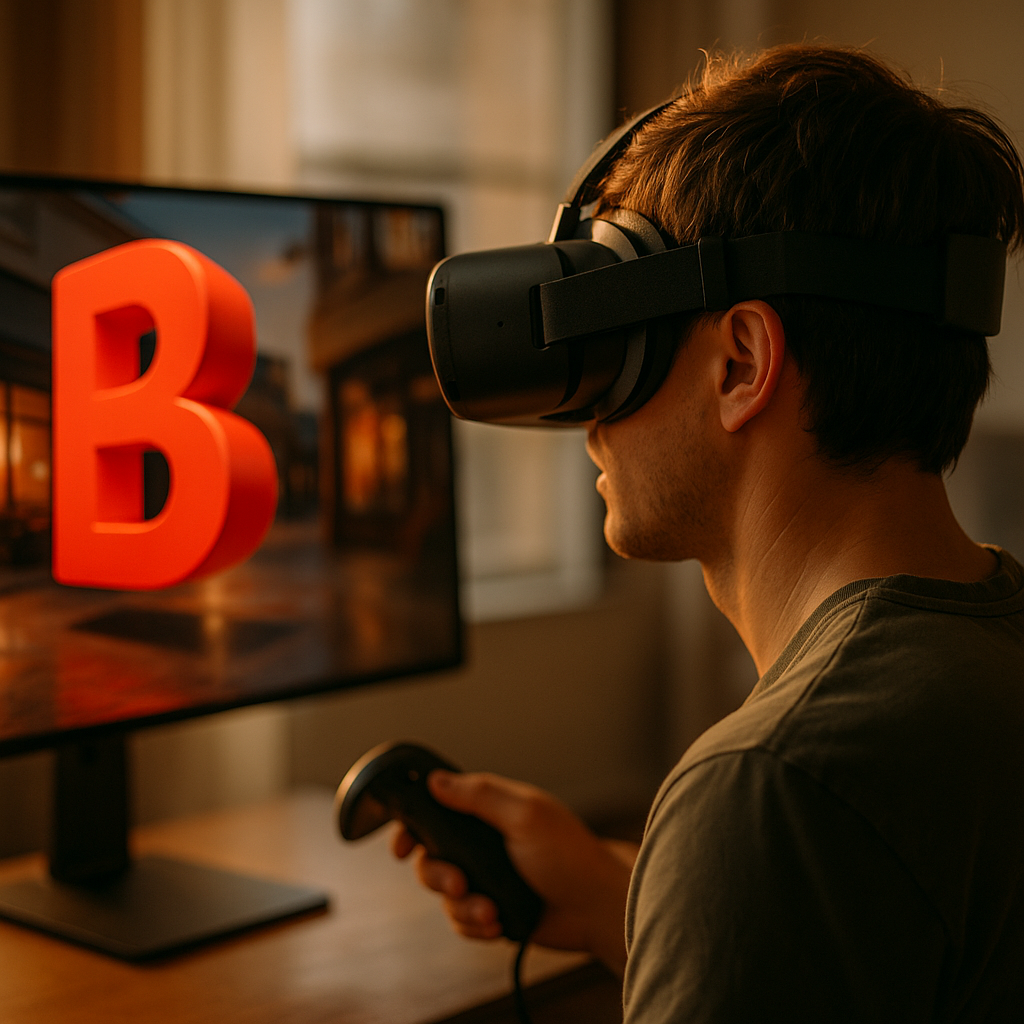
In 2026, brands compete inside crowded digital spaces where attention is scarce and memory is fragile. The Science of Visual Anchoring in 3D Immersive Brand Advertisements explains why some immersive campaigns stay vivid while others fade instantly. By pairing cognitive science with spatial design, marketers can guide perception, improve recall, and shape action. What makes certain visuals stick so powerfully?
What visual anchoring means in immersive advertising
Visual anchoring is the deliberate use of stable, attention-guiding elements that help people orient themselves, interpret information, and remember a message. In traditional advertising, an anchor may be a logo placement, a repeated color, or a central character. In immersive advertising, anchors become more complex because users move through space, shift perspective, and interact with layered stimuli.
In 3D brand environments, an anchor can be a glowing product pedestal, a recurring motion path, a branded sound-synced object, or a high-contrast focal point that appears at key moments. The anchor reduces cognitive strain by telling the brain where to look first and what to connect with the brand. Without it, the user may enjoy the spectacle but fail to retain the message.
This matters because immersive experiences often create a paradox: the more visually rich they become, the easier it is for core branding to get lost. A successful 3D ad does not simply impress. It structures attention. It gives the viewer a perceptual home base.
From an EEAT perspective, marketers should avoid treating visual anchoring as a trend term. It is grounded in well-established principles from cognitive psychology, human-computer interaction, spatial perception, and neuromarketing. Practical success comes from testing how real people navigate visual fields, not from assumptions made in a design room.
How spatial attention drives 3D brand engagement
3D brand engagement depends on spatial attention, the brain’s ability to prioritize one object or region over others within an environment. In flat media, attention typically follows hierarchy through size, contrast, position, and motion. In immersive formats such as AR, VR, digital out-of-home 3D displays, and interactive product showcases, spatial attention is more dynamic.
The viewer continuously decides:
- Where am I supposed to look?
- What is interactive and what is decorative?
- Which object carries the brand message?
- What should I remember after the experience ends?
Visual anchors answer these questions fast. They create a pattern the brain can return to, even as the environment changes. This is especially important in sensory-rich campaigns, where multiple moving elements can compete for limited working memory.
Research in attention science consistently shows that contrast, movement onset, novelty, and goal relevance influence what people notice first. But immersive ads add another layer: perceived depth. Objects that appear closer, larger in space, or aligned with the user’s movement path often gain priority. Smart brands use this to place anchors where attention naturally lands, rather than forcing viewers to search.
For example, if a branded object hovers slightly forward from the rest of the scene, pulses subtly, and sits along the likely gaze path, it can become a powerful anchor without feeling intrusive. If every object competes this way, however, the effect collapses. Anchoring works through selective emphasis, not visual shouting.
Teams should also remember that engagement is not only about dwell time. A user can stay inside an experience and still miss the brand cue. Strong visual anchoring improves quality of attention, not just duration of exposure.
Cognitive load and memory cues in 3D advertising design
One of the strongest arguments for visual anchoring lies in 3D advertising design and cognitive load management. The human brain can process impressive amounts of sensory input, but conscious attention and working memory remain limited. Immersive ads often fail because they demand too much orientation, too much interpretation, and too much decision-making at once.
Anchors lighten that load. They act as memory cues, helping viewers encode the brand narrative in manageable chunks. When the same focal element reappears across stages of the ad experience, the brain links those moments together. This supports recognition, recall, and meaning.
Effective memory cues in 3D environments often include:
- A consistent branded object that appears at entry, interaction, and exit points
- A recurring color or light signature tied to the brand identity
- A predictable directional cue, such as a motion trail or spatial pathway
- A central character or product form that remains visually dominant
- A repeated visual rhythm that signals what matters next
The best anchors are simple enough to recognize instantly and distinctive enough to remain memorable. If the anchor needs explanation, it is too weak. If it overwhelms the rest of the experience, it is too heavy-handed.
Marketers should ask a practical question during concept review: If someone remembers only one image from this experience after 24 hours, what will it be? If the answer is uncertain, the anchoring strategy needs work.
This is also where measurement matters. Eye-tracking, heat maps, interaction path analysis, aided recall surveys, and post-exposure brand lift studies can reveal whether an anchor actually supports memory. Helpful content should make this clear: immersive creativity becomes more reliable when it is validated by observation and outcome data.
Why sensory hierarchy matters for AR and VR marketing
In AR and VR marketing, visual anchoring does not operate alone. It works within a sensory hierarchy. That hierarchy determines which cues the user prioritizes when visual, auditory, and interactive signals occur together. If the hierarchy is poorly designed, the user’s attention splinters. If it is well designed, the experience feels intuitive.
Visual information usually leads, but sound, haptics, and motion can reinforce the anchor. A product can become more memorable when it is introduced with coordinated lighting, a spatial audio cue, and a simple user action. This multisensory reinforcement strengthens encoding. Yet the visual anchor still needs to remain primary if the goal is brand recall.
Here are principles that improve sensory hierarchy in immersive campaigns:
- Lead with one dominant focal point. Do not introduce multiple brand messages at the same moment.
- Support visual focus with audio, not competition. Sound should direct users toward the anchor, not distract from it.
- Use motion with restraint. Movement can attract attention instantly, but excessive motion erodes clarity.
- Match interaction to importance. If the product is central, the main gesture should involve the product, not a side object.
- Control environmental complexity. Background elements should create context, not steal salience.
AR campaigns need especially careful anchoring because they sit on top of the real world, where countless external distractions already exist. In outdoor or retail settings, a branded visual anchor must cut through environmental noise while still feeling native to the space. In VR, the challenge shifts toward orientation. Users need a stable visual reference inside a fully constructed environment to avoid confusion and sustain attention.
Good immersive advertising respects how perception actually works. It does not assume the audience will naturally notice what the brand cares about most.
Best practices for brand recall in immersive media
Strong brand recall in immersive media comes from consistency, placement, timing, and relevance. Many teams overinvest in visual spectacle and underinvest in memory architecture. If recall is the goal, the ad should be built around a few deliberate anchoring decisions.
Start with brand distinctiveness. The anchor should connect directly to recognizable brand assets: product silhouette, signature color, logo behavior, packaging geometry, mascot, or a distinctive visual motif. If the anchor could belong to any brand, it will not strengthen recall.
Next, place anchors at high-attention moments. These usually include the opening scene, the first interaction, the peak emotional moment, and the closing frame or exit state. Repetition across these moments increases memory without requiring visual redundancy everywhere.
Timing also shapes recall. If the logo appears only at the end, after users have spent their mental energy navigating a complex environment, the branding may underperform. If it appears too aggressively from the start, users may disengage. The best sequence introduces the anchor early, reinforces it during interaction, and resolves it clearly at the end.
Another best practice is narrative anchoring. People remember stories better than disconnected features. A 3D ad should give the anchor a role in progression: guide, reward, transformation point, or destination. This turns a visual element into a meaningful memory structure.
To improve outcomes, teams should evaluate:
- Unaided recall: Can users name the brand after the experience?
- Visual recall: Can they describe the key branded object or scene?
- Message recall: Do they remember the intended value proposition?
- Behavioral response: Did the anchor support clicks, shares, scans, store visits, or product exploration?
These metrics make immersive work more accountable. They also support EEAT by showing expertise through tested practice, not vague claims. In 2026, audiences and stakeholders both expect that level of rigor.
How to optimize visual anchors for interactive ad performance
Visual anchoring should be treated as an optimization variable, not a one-time design flourish. Better interactive ad performance usually comes from iterative refinement. The first version of an immersive ad may look impressive, yet small changes to anchor size, contrast, depth, timing, or repetition can dramatically improve user response.
A practical optimization process includes:
- Define the primary action. Decide whether the anchor should support recall, exploration, purchase intent, or another measurable goal.
- Map the attention journey. Identify where the viewer enters, what they see first, and where confusion may occur.
- Prototype focal variations. Test different placements, scales, and movement patterns for the anchor.
- Measure real user behavior. Use gaze studies, interaction analytics, and recall surveys to validate assumptions.
- Reduce competing stimuli. Remove decorative elements that pull attention away from the brand objective.
- Adapt by platform. Anchors that work on headset-based VR may fail on mobile AR or large-format 3D billboards.
Context is critical. On a mobile device, screen size and shorter sessions demand immediate focal clarity. In a public 3D display, the anchor must communicate from multiple distances and viewing angles. In mixed reality retail, the anchor should guide users toward both digital interaction and physical product awareness.
Accessibility should also be part of optimization. Contrast sensitivity, color perception differences, and motion sensitivity affect how users experience anchors. Designing for broader usability improves clarity for everyone and reduces the risk of excluding segments of the audience.
Finally, brands should connect creative testing to business outcomes. It is not enough to know that users looked at the anchor. Did they remember the product? Did they understand the message? Did the experience influence consideration or action? Visual anchoring is successful when attention converts into durable brand value.
FAQs about visual anchoring in 3D immersive ads
What is visual anchoring in 3D immersive brand advertisements?
It is the use of deliberate visual focal points that orient users, guide attention, and strengthen brand memory inside a 3D or interactive environment.
Why is visual anchoring important for brand recall?
Immersive ads can be visually dense. Anchors reduce cognitive overload and help the brain connect the most important visual cue with the brand, improving recall after the experience ends.
What makes a good visual anchor?
A good anchor is distinctive, easy to notice, tied to brand identity, and repeated at meaningful moments. It should guide attention without overwhelming the user.
How is visual anchoring different in AR and VR?
In AR, anchors must compete with real-world distractions and fit naturally into a live environment. In VR, anchors help users orient themselves within a fully digital space and maintain focus through the experience.
Can too many anchors hurt performance?
Yes. If several elements compete as focal points, users may feel overloaded or confused. The result is weaker message clarity and lower brand retention.
How can brands measure whether visual anchoring works?
They can use eye-tracking, heat maps, interaction path analysis, brand lift studies, recall surveys, and conversion metrics tied to the immersive campaign’s main objective.
Does visual anchoring only help awareness campaigns?
No. It can also support product education, purchase intent, navigation, interactive storytelling, and post-experience recall in performance-oriented campaigns.
What is the biggest mistake brands make in immersive ad design?
They often prioritize spectacle over structure. A beautiful experience without a clear anchor may entertain users but fail to deliver durable branding or action.
Visual anchoring gives 3D immersive ads their strategic core. It helps people notice, understand, and remember what the brand wants to communicate. In 2026, the most effective campaigns are not the loudest or most complex. They are the most intentionally designed. When brands structure attention with clear anchors, immersive experiences become memorable, measurable, and far more persuasive.