


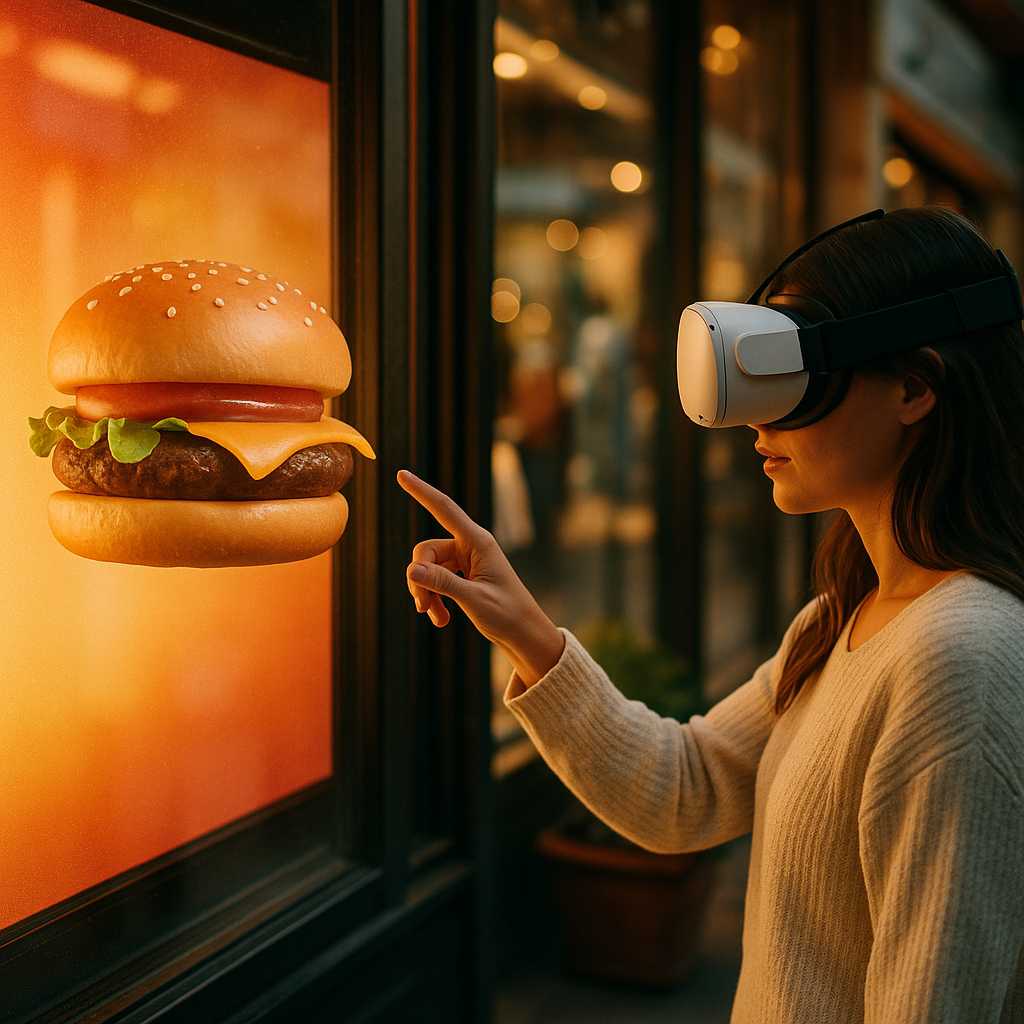
In 2025, immersive media is moving from novelty to measurable performance, and brands need reliable ways to direct attention inside depth-rich scenes. The Science of Visual Anchoring in 3D Immersive Advertisements explains how the brain picks stable reference points, builds spatial certainty, and remembers messages more effectively. Learn the perceptual principles, design rules, and measurement methods that turn 3D experiences into outcomes—before your next campaign goes live.
Visual attention and salience in 3D ads
Visual anchoring is the deliberate placement of stable, high-value reference cues that help viewers orient, understand, and remember what matters in a scene. In 2D advertising, “anchor” often means a logo lockup, a hero product shot, or a strong headline. In 3D immersive advertisements—AR lenses, VR showrooms, volumetric video, and spatial placements—the anchor must also work across depth, motion, and viewpoint changes.
At the perceptual level, attention is guided by two systems that operate together: bottom-up salience (stimulus-driven cues such as contrast, brightness, motion, and novelty) and top-down goals (task-driven cues such as “find the product,” “follow the instruction,” or “locate the CTA”). Immersive environments add more competing signals—parallax, occlusion, spatial audio, and interactive elements—so anchors must be engineered to win attention without overwhelming the viewer.
In practice, strong 3D anchors share three properties:
- Perceptual dominance: they stand out through contrast, motion control, or unique form, but remain comfortable to view.
- Spatial stability: they stay “where the viewer expects” even as the camera or head position shifts.
- Meaningful relevance: they connect clearly to the brand promise or the action you want next.
If any of these fails, attention fragments. Viewers may explore the scene but miss the message, misinterpret depth cues, or abandon the experience.
Depth cues and spatial perception for immersive marketing
Anchors in 3D work because the brain constantly solves a problem: “What is stable in this environment, and where am I relative to it?” Depth cues supply the evidence. Designers can use these cues to create an anchor that feels trustworthy and easy to track.
Key depth cues to leverage:
- Binocular disparity: differences between left and right eye images create depth. In VR, excessive disparity can cause discomfort. Keep anchors within comfortable vergence ranges, especially for text.
- Motion parallax: as the viewer moves, nearer objects shift faster than distant ones. A well-placed anchor behaves consistently under parallax, reinforcing realism.
- Occlusion: when one object blocks another, the front object is perceived as closer. Anchors often work best when they are never unintentionally occluded.
- Relative size and perspective: familiar objects (a can, shoe, phone) can act as implicit scale anchors, reducing ambiguity in product dimensions.
- Lighting and shadows: contact shadows and consistent lighting ground objects. Floating products without grounding cues weaken trust and perceived quality.
For immersive advertising, treat depth as a communication layer. Place the anchor at a depth that supports your goal: closer for urgency and “pick up” interactions, mid-depth for comfortable reading, and farther for context or scene-setting. Avoid rapid depth jumps for critical information; abrupt changes force the viewer to re-accommodate and can reduce comprehension.
Follow-up question you might have: should the brand logo always be the anchor? Not always. The anchor should be the decision driver at that moment—sometimes the product, sometimes a benefit claim, and sometimes a guided interaction. The logo can be a secondary stabilizer that appears after attention is secured.
Memory encoding and brand recall in 3D experiences
Anchors influence memory by shaping what gets encoded and how it’s retrieved. In immersive scenes, viewers build a mental map: objects, relationships, and actions in space. When you attach brand meaning to a stable location or repeated spatial pattern, recall improves because the brain can “revisit” that position mentally.
Mechanisms that make anchors memorable:
- Distinctiveness: unique shapes, textures, or interactions create stronger memory traces than generic panels.
- Consistency: repeated placement (e.g., CTA always appears at the same relative position) reduces cognitive load and reinforces recognition.
- Chunking: grouping key information into one anchored cluster (product + benefit + CTA) prevents scattering attention across the scene.
- Embodied interaction: when viewers grab, rotate, or trigger an effect, the action becomes part of the memory. Anchors that invite a single, clear interaction can increase learning and recall.
However, immersion can also dilute memory if the experience prioritizes spectacle over structure. Too many animated elements compete for encoding. The cure is a hierarchy: one primary anchor, one supporting anchor, and controlled “accent” motion elsewhere.
Practical guidance: tie the brand to an anchored behavior, not just an object. For example, if your hero claim is “instantly fits your routine,” design a short interaction where the product snaps into a daily scene at the same anchored location. The viewer remembers both the placement and the meaning.
AR/VR UX design principles for stable visual anchors
Good anchors feel inevitable: viewers find them quickly, understand them instantly, and trust them throughout movement. That outcome comes from UX choices that respect comfort, readability, and interaction physics.
Design rules that reliably improve anchoring:
- Prioritize stability over novelty: lock critical UI and brand cues to a stable reference frame. In AR, that could be a detected surface (tabletop, wall). In VR, that could be a fixed diegetic object (kiosk, pedestal) rather than a floating overlay.
- Use a “depth-safe” text system: keep text at a comfortable distance, avoid extreme curvature, and ensure high contrast without glare. Text is often the first anchor to fail when depth is aggressive.
- Respect occlusion and collision: if the product is the anchor, don’t let it clip through surfaces or hands. Physics errors reduce perceived realism and can reduce persuasion.
- Constrain motion: micro-animations can highlight an anchor, but continuous movement can become noise. Use short, purposeful motion (pulse, reveal, settle) and then hold.
- Guide with layered cues: combine subtle spatial audio, gaze cues, and lighting to lead attention to the anchor. A single cue can be missed; layered cues feel natural.
- Design for re-acquisition: viewers will look away. Make it easy to find the anchor again through consistent placement, a gentle beacon effect, or a “return to product” affordance.
Accessibility and comfort considerations are part of EEAT and performance. Keep interactions simple, provide readable sizing, avoid rapid flashing, and offer alternatives to precise hand gestures (e.g., dwell-to-select, large hit targets). When users feel comfortable, they stay longer and process more information.
Follow-up question: should anchors be world-locked or head-locked? For advertising, world-locked anchors (attached to a stable object or surface) often feel more premium and believable. Head-locked elements (HUD-like) can help with onboarding and safety messaging, but overuse can feel intrusive and reduce presence. A balanced approach uses head-locked guidance briefly, then transitions to world-locked brand and product anchors.
Neuromarketing metrics and measurement in immersive ads
“It felt immersive” is not a performance metric. In 2025, teams can validate anchoring with behavioral and physiological signals, then iterate quickly.
What to measure to confirm an anchor works:
- Time to first fixation: how quickly the viewer looks at the anchor after the scene begins.
- Dwell time and revisit rate: how long the anchor holds attention, and whether viewers return to it after exploring.
- Task completion and error rate: for interactive ads, measure whether users can find and use the CTA without confusion.
- Gaze paths and attention heatmaps: identify competing elements stealing attention from the message.
- Brand recall and recognition: test immediate recall and delayed recognition. Anchoring should improve both, not just “wow.”
- Comfort signals: drop-off points, nausea reports, or unusually erratic head movement can indicate depth or motion issues near the anchor.
Choose methods that match your platform. In VR, eye tracking (when available) provides strong evidence. In mobile AR, approximate attention can be inferred from camera orientation, interaction logs, and on-screen focus points. Pair quantitative logs with short post-experience questions that probe comprehension: “What was the main benefit?” “What action could you take next?” If users remember the scene but not the message, the anchor hierarchy needs adjustment.
How to run a useful test:
- Start with a hypothesis: “A mid-depth product pedestal with a single pulse animation will reduce time to first fixation and increase CTA activation.”
- A/B only one variable: depth position, motion style, lighting, or CTA placement—one at a time.
- Segment by experience level: first-time VR users behave differently than frequent users; anchors must work for both.
This measurement discipline supports EEAT by making claims traceable to observed behavior, not opinion.
3D creative strategy and conversion optimization
Visual anchoring is not just a design technique; it’s a conversion strategy. Immersive ads often fail when they treat exploration as the goal. Exploration is a means to build understanding and preference, then move the viewer to action.
A reliable anchoring framework for 3D campaigns:
- Define the primary decision: Is it “choose a variant,” “request a quote,” “add to cart,” or “visit a store”? The anchor must support that decision.
- Build an anchor ladder: 1) orienting anchor (where am I?), 2) meaning anchor (why this matters), 3) action anchor (what to do next).
- Control the first 5 seconds: place the primary anchor inside the natural gaze envelope at start. Early attention often predicts the rest of the session.
- Use scene grammar: foreground for interaction, midground for messaging, background for brand world. Don’t invert this unless you have a strong reason.
- Connect anchor to proof: let users verify a claim through a simple interaction (compare sizes, reveal ingredients, simulate fit). Proof strengthens trust.
- Close the loop: after interaction, return attention to the action anchor with a subtle cue so the experience ends with a clear next step.
Common pitfalls include placing CTAs on moving objects, scattering key benefits across multiple depths, and adding “cinematic” camera motion that steals control from the viewer. In immersive advertising, persuasion improves when viewers feel agency and clarity.
Finally, align anchoring with brand identity. If your brand signals calm and precision, anchors should feel stable, minimal, and grounded. If your brand signals play and experimentation, anchors can be dynamic—but still must be reacquirable and readable. Consistency is what makes the anchor feel like part of the brand, not an overlay.
FAQs: Visual anchoring in 3D immersive advertisements
What is visual anchoring in 3D immersive advertising?
It is the intentional use of stable visual and spatial cues—such as a grounded product, consistent UI placement, lighting, and depth positioning—to guide attention, improve comprehension, and increase brand recall and action inside AR/VR or other 3D formats.
How many anchors should an immersive ad have?
Most experiences perform best with one primary anchor (the main focus), one secondary anchor (supporting info or brand cue), and limited accent elements. More than that often increases cognitive load and reduces message retention.
Should the CTA be a floating button or part of the environment?
For premium, believable experiences, embed the CTA in the environment (world-locked) near the product anchor. Use floating (head-locked) CTAs mainly for onboarding, safety, or short-lived guidance, then transition to a world-locked action point.
How do you avoid motion sickness while still using attention cues?
Reduce forced camera motion, keep critical text and UI at comfortable depths, use short and purposeful animations, and avoid rapid depth changes. Let the viewer control movement and use lighting, audio, and subtle motion to guide attention instead of aggressive transitions.
What metrics prove an anchor is working?
Time to first fixation, dwell time, revisit rate, CTA completion, and brand recall are the most practical. Also monitor comfort indicators such as drop-off points and interaction errors, because discomfort can negate attention gains.
Do visual anchors work the same in AR and VR?
The principle is the same—create stable, meaningful reference points—but implementation differs. AR anchors must survive real-world lighting, tracking drift, and occlusion. VR anchors can be more controlled but must respect comfort, readability, and presence.
Visual anchoring succeeds in 3D immersive ads when it turns depth, motion, and interaction into clarity rather than distraction. Use perceptually stable cues, place messages at comfortable depths, and connect the anchor to a simple, provable benefit. Measure attention and action, then refine one variable at a time. The takeaway: build one dominant anchor that earns attention, supports memory, and leads to an unmistakable next step.