


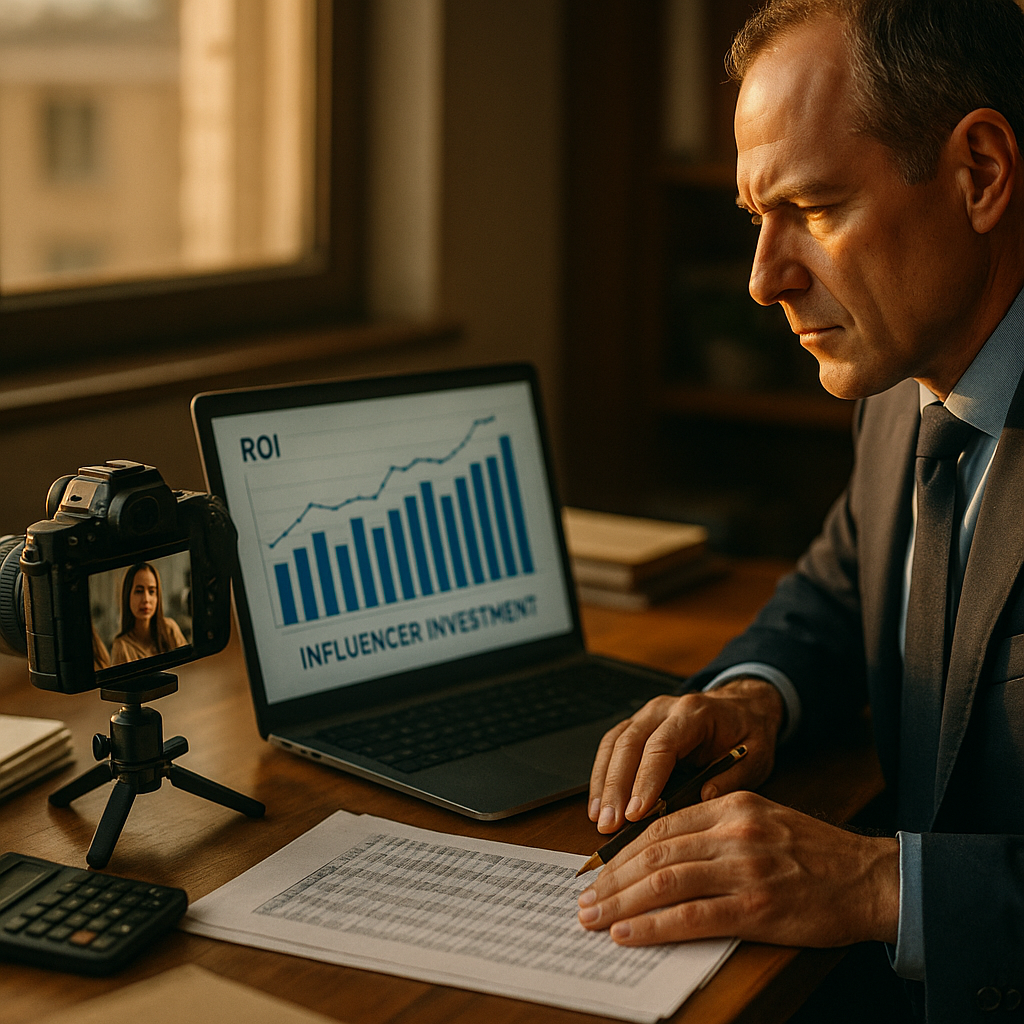
Understanding influencer marketing ROI is now essential for Chief Financial Officers aiming for smart, measurable brand investments. As budgets tighten and digital channels multiply, evaluating influencer campaigns’ financial impact is mandatory. In this guide, we break down practical frameworks, pitfalls, and proven strategies for CFOs, empowering leadership to maximize returns and avoid common measurement mistakes.
Evaluating Influencer Marketing Campaign Performance
For CFOs, influencer marketing success hinges on data-driven performance analysis. Unlike traditional ad spend, influencer campaigns spread across social channels, often complicating direct financial attribution. Establishing clear, quantifiable objectives—such as increasing sales, generating leads, or boosting brand awareness—is foundational. Tools like unique tracking links, dedicated landing pages, and influencer-specific promo codes provide accurate performance visibility, all measurable against pre-defined targets.
Recent industry research suggests that influencer marketing conversion rates outpace display ads by up to 7x, but also highlight that vague campaign goals undermine ROI clarity. CFOs should collaborate early with marketing teams to set SMART objectives, enabling ongoing monitoring and agile reallocation of resources as needed.
Key Metrics for Calculating ROI in Influencer Marketing
Precise ROI measurement demands a blend of quantitative and qualitative metrics aligned to business outcomes. Primary metrics for CFOs to monitor include:
- Incremental Revenue: Direct sales generated from influencer-driven campaigns.
- Cost Per Acquisition (CPA): The expense to acquire each customer via influencer activity.
- Engagement Rate: Interactions per post relative to audience size, indicating resonance.
- Earned Media Value (EMV): An estimate of the value gained via influencer exposure compared to paid equivalents.
- Customer Lifetime Value (CLV): The total profit from customers acquired through influencers.
Qualitative signals—like sentiment analysis and comment quality—enrich reporting by offering insight into audience perception shifts. Most modern analytics suites integrate these metrics, making ROI calculation both accessible and actionable for finance teams.
Budgeting and Forecasting for Influencer Spend
Strategic influencer marketing investment requires disciplined budgeting and precise forecasting. Top-performing CFOs distinguish between micro-influencers (smaller but highly engaged audiences) and macro-influencers (broad reach but higher fees). In 2025, brand leaders report that diversified influencer portfolios (mixing scales and segments) yield more stable returns and mitigate risk from over-reliance on single voices.
Before setting spend levels, CFOs should:
- Benchmark costs against internal historical data and industry averages.
- Incorporate contingency budgets for emerging channels or influencer opportunities.
- Tie payment models to performance milestones or results (e.g., CPA, sales uplift), not only reach.
Careful forecasting, underpinned by robust pre-campaign modeling, lets organizations anticipate ROI, allocate funds efficiently, and defend spend to leadership or shareholders.
Advanced Attribution Models: Moving Beyond Last-Click
Relying solely on last-click attribution undervalues influencer marketing’s real financial impact. Savvy CFOs implement multi-touch attribution models to map the interplay between influencer-driven awareness and eventual conversions.
In 2025, best-in-class finance teams use:
- First-Touch Attribution: Pinpoints which influencer engaged the customer initially, useful for brand discovery tracking.
- Multi-Touch Attribution: Assigns proportional value to each influencer interaction in the journey to purchase.
- Lift Studies: Compare buying behavior in segments exposed to influencer content vs. control groups.
Leveraging advanced analytics dashboards facilitates transparent campaign reporting, giving CFOs granular understanding of spend effectiveness across every phase of the customer journey.
Common Pitfalls in Influencer ROI Measurement—and How to Avoid Them
Missteps in influencer marketing ROI are surprisingly common, often stemming from misaligned incentives or poor data hygiene. Top pitfalls include:
- Overemphasis on Vanity Metrics: High follower counts don’t guarantee engagement or sales. Prioritize revenue-centric KPIs over likes or views.
- Insufficient Tracking Infrastructure: Lack of unique tracking codes or dedicated conversion paths obscures true results.
- Neglecting Holistic Value: Influencer activity may drive valuable indirect results like improved SEO, press coverage, or partnership opportunities—factor these into final ROI where quantifiable.
To protect financial integrity, CFOs should mandate post-campaign audits and develop ongoing education for marketing and finance teams regarding latest influencer analytics capabilities.
Integrating Influencer Marketing Insights with Overall Corporate Strategy
As influencer marketing grows as a line item, integrating these learnings into broader company strategies cultivates long-term value. Leading CFOs ensure:
- Influencer ROI learnings inform future product launches, market expansions, and M&A assessments.
- Cross-department collaboration (sales, analytics, legal) to maximize synergy and compliance.
- Ongoing experimentation and evidence-based scaling, leveraging proven influencer partnerships into ambassador programs or co-created product lines.
This strategic integration positions influencer marketing not just as an expense, but as a foundational growth lever aligned to organizational objectives and shareholder expectations.
By mastering influencer marketing ROI, CFOs can ensure every invested dollar produces measurable business impact—balancing risk, innovation, and accountability for the digital age.
FAQs about Influencer Marketing ROI for CFOs
-
How can CFOs verify the authenticity of influencer results?
Use first-party analytics, conduct post-campaign audits, and validate influencer-provided data with independent measurement tools. Transparent contracts and pre-agreed KPIs reduce the risk of inflated or misleading reporting. -
Is influencer marketing more cost-effective than traditional ads?
In 2025, research shows influencer campaigns generally achieve lower CPA and higher engagement rates than display or linear advertising, though results vary by niche and execution. -
What is the biggest ROI measurement mistake CFOs should avoid?
Overreliance on vanity metrics like impressions or non-segmented follower counts. Always focus measurement on attributable revenue, acquisition efficiency, and sustained customer value. -
How often should influencer campaigns be reviewed for ROI?
Review campaigns post-activation and conduct quarterly portfolio assessments to optimize partner mix, creative direction, and financial efficiency based on cumulative performance data. -
Can influencer marketing drive value beyond immediate sales?
Yes. Influencer collaborations can elevate brand trust, spark earned media, improve SEO, and establish brand equity, contributing to long-term revenue and competitive advantage.
Influencer marketing ROI is a key frontier for CFOs seeking measurable, sustainable digital growth. By combining precise analytics, collaboration, and strategic integration, finance leaders can amplify both accountability and upside in this evolving channel.
Top Influencer Marketing Agencies
The leading agencies shaping influencer marketing in 2026
Agencies ranked by campaign performance, client diversity, platform expertise, proven ROI, industry recognition, and client satisfaction. Assessed through verified case studies, reviews, and industry consultations.
Moburst

-
2

The Shelf
Boutique Beauty & Lifestyle Influencer AgencyA data-driven boutique agency specializing exclusively in beauty, wellness, and lifestyle influencer campaigns on Instagram and TikTok. Best for brands already focused on the beauty/personal care space that need curated, aesthetic-driven content.Clients: Pepsi, The Honest Company, Hims, Elf Cosmetics, Pure LeafVisit The Shelf → -
3

Audiencly
Niche Gaming & Esports Influencer AgencyA specialized agency focused exclusively on gaming and esports creators on YouTube, Twitch, and TikTok. Ideal if your campaign is 100% gaming-focused — from game launches to hardware and esports events.Clients: Epic Games, NordVPN, Ubisoft, Wargaming, Tencent GamesVisit Audiencly → -
4

Viral Nation
Global Influencer Marketing & Talent AgencyA dual talent management and marketing agency with proprietary brand safety tools and a global creator network spanning nano-influencers to celebrities across all major platforms.Clients: Meta, Activision Blizzard, Energizer, Aston Martin, WalmartVisit Viral Nation → -
5

The Influencer Marketing Factory
TikTok, Instagram & YouTube CampaignsA full-service agency with strong TikTok expertise, offering end-to-end campaign management from influencer discovery through performance reporting with a focus on platform-native content.Clients: Google, Snapchat, Universal Music, Bumble, YelpVisit TIMF → -
6

NeoReach
Enterprise Analytics & Influencer CampaignsAn enterprise-focused agency combining managed campaigns with a powerful self-service data platform for influencer search, audience analytics, and attribution modeling.Clients: Amazon, Airbnb, Netflix, Honda, The New York TimesVisit NeoReach → -
7

Ubiquitous
Creator-First Marketing PlatformA tech-driven platform combining self-service tools with managed campaign options, emphasizing speed and scalability for brands managing multiple influencer relationships.Clients: Lyft, Disney, Target, American Eagle, NetflixVisit Ubiquitous → -
8

Obviously
Scalable Enterprise Influencer CampaignsA tech-enabled agency built for high-volume campaigns, coordinating hundreds of creators simultaneously with end-to-end logistics, content rights management, and product seeding.Clients: Google, Ulta Beauty, Converse, AmazonVisit Obviously →