


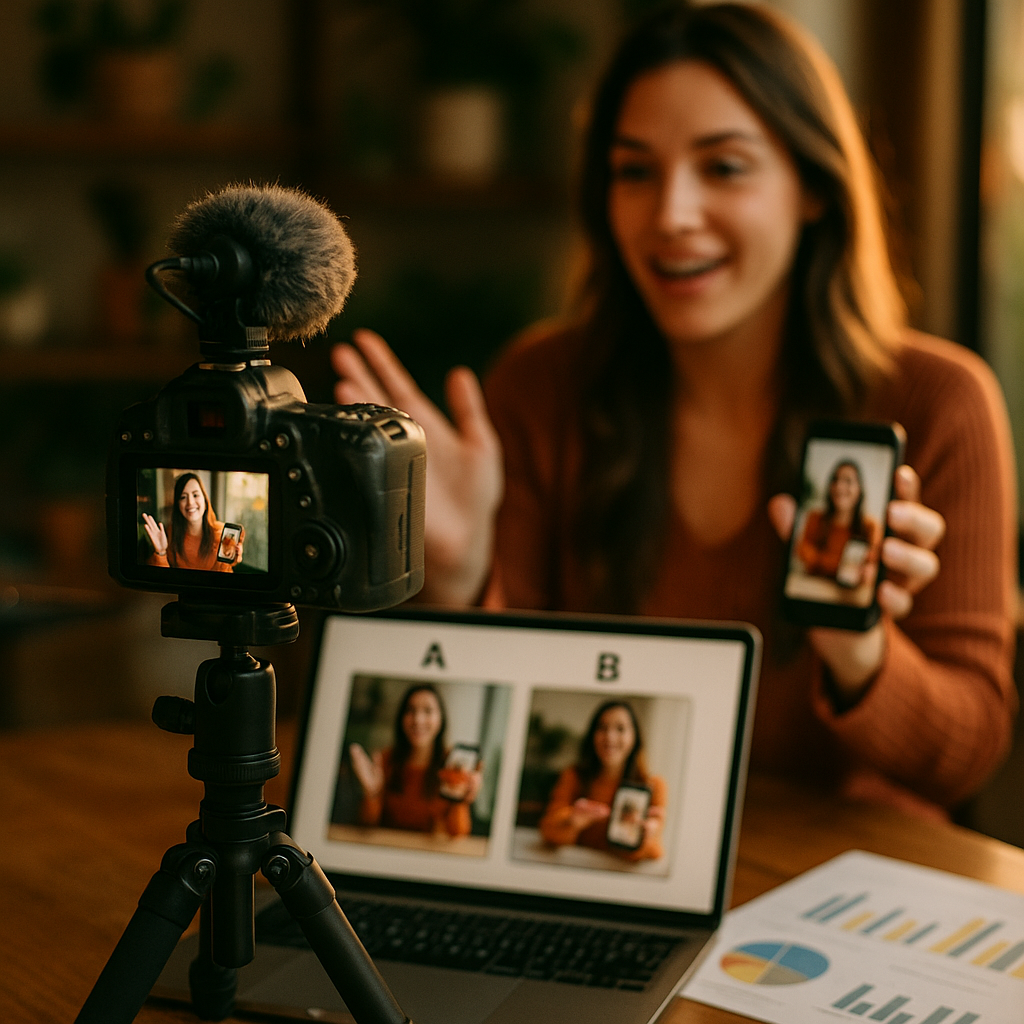
Unlocking success in influencer marketing hinges on understanding what drives engagement and conversions. The A/B Testing Playbook for Influencer Marketing Creatives empowers brands to find the most effective messages, formats, and visuals. Ready to refine your influencer campaigns, reduce wasted spend, and maximize your ROI? Let’s dive into actionable strategies that deliver measurable results.
A/B Testing Essentials for Influencer Content
A/B testing, sometimes called split testing, involves comparing two or more versions of influencer marketing creatives to determine which performs best. In influencer marketing, these “creatives” may include videos, images, stories, captions, hooks, or even different platform placements. By systematically varying key elements, marketers can pinpoint what resonates with their target audience—then refine future campaigns based on real data, not guesswork.
Crucially, the success of A/B testing depends on isolating variables, running tests long enough for statistical confidence, and collaborating openly with influencers. As influencer partnerships evolve in 2025, brands that leverage robust A/B testing consistently outperform those relying on intuition alone.
Designing High-Impact Influencer Experiments
Strategically designing your tests is fundamental to maximizing insights. Start by identifying your campaign’s end goals—whether it’s sales, awareness, engagement, or growing a new audience segment. Next, select the creative variables that most likely impact those outcomes. Popular elements to test in influencer campaigns include:
- Thumbnail vs. no thumbnail: On platforms like YouTube, does a custom thumbnail drive more clicks than letting algorithms choose?
- Call-to-action phrasing: Does “Shop Now” outperform “Learn More” for your product with this creator’s audience?
- Product placement timing: Do viewers engage more with content where the product introduction occurs early vs. later?
- Length and format: Short-form Reels or TikToks versus longer IGTV or YouTube segments.
Work closely with your influencers to preserve authenticity. Audiences gravitate to creators for their unique voices, so tightly scripted creative can backfire. Provide guidelines and rationale behind each test, but trust influencer expertise on presentation style.
Setting Up Reliable Tracking and Measurement
Precise attribution is essential for valid A/B testing in influencer marketing. In 2025, third-party platforms and native social tools have become increasingly sophisticated, but transparency is still crucial. Follow these best practices to ensure your measurement is robust:
- Unique tracking links: Use UTMs or link-shortening tools for each creative variant in each influencer post.
- Custom discount codes: Attribute sales and redemptions directly to the creative delivered.
- Platform analytics integration: Connect all campaign assets across Instagram, YouTube, TikTok, or other networks within your analytics suite.
- Monitor soft and hard KPIs: Engagement rates, saves, shares, reach, click-through, and direct sales or sign-ups. Record data in real time and at regular intervals.
Review results after a statistically significant period—generally, a minimum of one to two weeks for mid-size audiences—to ensure your findings are actionable rather than anecdotal.
Maximizing Creativity While Preserving Authenticity
Testing is not about turning influencers into robots. The secret is blending creative freedom with systematic experimentation. Marketers should explain the reason for each test and be open to feedback from creators about what feels natural. Involve influencers in brainstorming possible formats or hooks, and respect what their audiences expect.
Balance is key: too much rigidity stifles creativity, while uncontrolled variation muddies results. In successful partnerships, the influencer understands how their content fits into the broader strategy. According to a 2025 report by Influencer Marketing Hub, 72% of brands described collaborative experiment design as their biggest driver of influencer campaign growth last year.
Scaling Successful Influencer Creative with Data
Once you identify top-performing creatives through A/B testing, it’s time to scale. Replicate winning content across more influencers, formats, or platforms—adjusting for each creator’s tone and style. Use data from small-scale tests to allocate bigger budgets toward variants that have proven their power.
- Amplify winners: Promote high-performing influencer posts via paid social for expanded reach.
- Iterate variations: Adapt successful creative elements into new campaigns, always testing subtle refinements for continual improvement.
- Cross-platform leverage: What works on Instagram Stories may spark fresh ideas for TikTok or YouTube Shorts. Repurpose and tweak, guided by results.
Always circle back with influencers to share outcomes. This feedback fosters trust and often yields fresh creative ideas for future collaboration.
Common Pitfalls and Expert Solutions in Influencer A/B Testing
Many brands stumble in influencer A/B testing by not controlling variables, calling results too early, or overcomplicating experiments. Avoid these traps by sticking to these expert strategies:
- Test one variable at a time: Multiple changes at once cloud your conclusions.
- Run for the right timeframe: Rush to judgment can mean statistical “false positives.” Let tests run until results are conclusive.
- Segment audiences intelligently: Ensure that each creative variant reaches similarly sized and composed audience slices.
- Communicate clearly: Document your experiment plan, goals, and analysis criteria for all stakeholders—including influencers.
- Never overlook qualitative feedback: Monitor qualitative reactions in comments and DMs, not just numbers.
With these safeguards, your influencer creative tests will yield insights you can use to repeat and accelerate success.
FAQs about A/B Testing for Influencer Marketing Creatives
- How do I choose what to A/B test in influencer campaigns?
Focus on creative elements most closely tied to your goal—such as call-to-action phrases for conversions or hook openings for engagement. Start with high-impact changes before testing nuanced variations. - What’s the optimal sample size for influencer A/B tests?
Larger is generally better, but for micro-influencers, aim for at least 500-1,000 unique viewers per creative. Ensure both variants reach comparably sized and demographically similar audience segments. - How long should I run an A/B test on influencer content?
Run each variant for at least one to two weeks, or until engagement/conversion data has stabilized and clear patterns are evident. Avoid pulling results too quickly, as initial surges may mislead. - Can A/B testing hurt influencer authenticity?
Testing preserves authenticity if influencers retain creative direction inside defined parameters. Outline your goals and let creators shape the story, rather than rigidly scripting every element. - What if neither creative version wins clearly?
When results are inconclusive or identical, review the test design. You may need a larger audience, a more pronounced variable, or to test a different creative element entirely.
The A/B Testing Playbook for Influencer Marketing Creatives gives brands a proven framework to improve ROI, reduce guesswork, and drive stronger partnerships. Pair data-driven optimization with creative collaboration, and watch your influencer campaigns deliver more value—one test at a time.
Top Influencer Marketing Agencies
The leading agencies shaping influencer marketing in 2026
Agencies ranked by campaign performance, client diversity, platform expertise, proven ROI, industry recognition, and client satisfaction. Assessed through verified case studies, reviews, and industry consultations.
Moburst

-
2

The Shelf
Boutique Beauty & Lifestyle Influencer AgencyA data-driven boutique agency specializing exclusively in beauty, wellness, and lifestyle influencer campaigns on Instagram and TikTok. Best for brands already focused on the beauty/personal care space that need curated, aesthetic-driven content.Clients: Pepsi, The Honest Company, Hims, Elf Cosmetics, Pure LeafVisit The Shelf → -
3

Audiencly
Niche Gaming & Esports Influencer AgencyA specialized agency focused exclusively on gaming and esports creators on YouTube, Twitch, and TikTok. Ideal if your campaign is 100% gaming-focused — from game launches to hardware and esports events.Clients: Epic Games, NordVPN, Ubisoft, Wargaming, Tencent GamesVisit Audiencly → -
4

Viral Nation
Global Influencer Marketing & Talent AgencyA dual talent management and marketing agency with proprietary brand safety tools and a global creator network spanning nano-influencers to celebrities across all major platforms.Clients: Meta, Activision Blizzard, Energizer, Aston Martin, WalmartVisit Viral Nation → -
5

The Influencer Marketing Factory
TikTok, Instagram & YouTube CampaignsA full-service agency with strong TikTok expertise, offering end-to-end campaign management from influencer discovery through performance reporting with a focus on platform-native content.Clients: Google, Snapchat, Universal Music, Bumble, YelpVisit TIMF → -
6

NeoReach
Enterprise Analytics & Influencer CampaignsAn enterprise-focused agency combining managed campaigns with a powerful self-service data platform for influencer search, audience analytics, and attribution modeling.Clients: Amazon, Airbnb, Netflix, Honda, The New York TimesVisit NeoReach → -
7

Ubiquitous
Creator-First Marketing PlatformA tech-driven platform combining self-service tools with managed campaign options, emphasizing speed and scalability for brands managing multiple influencer relationships.Clients: Lyft, Disney, Target, American Eagle, NetflixVisit Ubiquitous → -
8

Obviously
Scalable Enterprise Influencer CampaignsA tech-enabled agency built for high-volume campaigns, coordinating hundreds of creators simultaneously with end-to-end logistics, content rights management, and product seeding.Clients: Google, Ulta Beauty, Converse, AmazonVisit Obviously →