


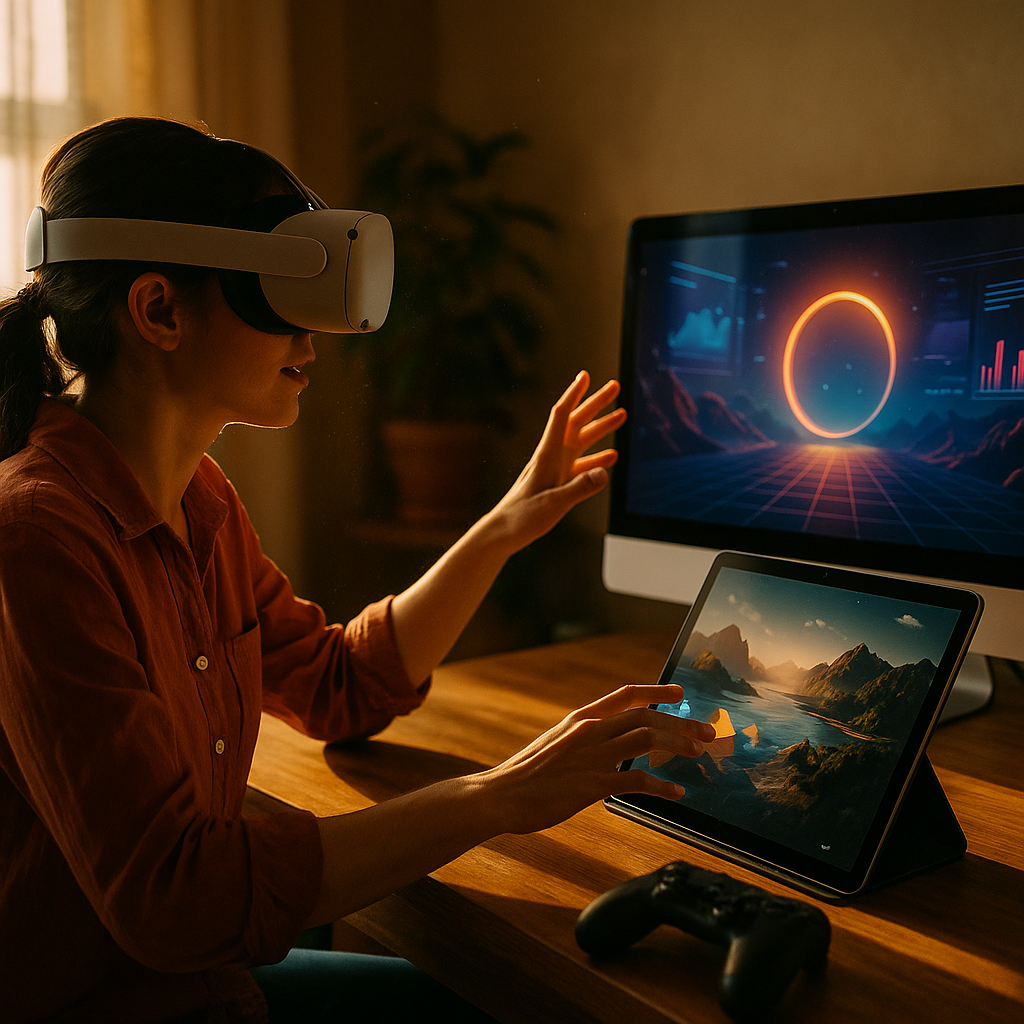
The future of content is evolving rapidly, and interactive and immersive content formats are at the forefront of this transformation. As brands and creators seek deeper engagement and memorable experiences, these formats offer unique opportunities to connect with audiences. What exactly defines these innovations, and how can organizations harness their potential for success?
Understanding Interactive Content Trends in 2025
Interactive content has surged in popularity, transforming the way audiences consume information and participate in online experiences. Unlike static content, interactive formats—such as quizzes, polls, calculators, and interactive infographics—invite user participation. According to a 2025 Content Marketing Institute report, 88% of marketers say interactivity helps brands stand out and fosters much higher engagement rates.
Several key trends are shaping interactive content in 2025:
- Personalized Experiences: AI-driven personalization tailors questions, product recommendations, or pathway options based on user responses, increasing relevance and satisfaction.
- Real-Time Feedback: From interactive assessments to live data visualizations, delivering instant results encourages users to stay engaged longer and fosters learning.
- Gamification: Interactive competitions, badges, and leaderboards tap into users’ intrinsic motivation to participate, share, and return.
Leaning into these strategies not only captivates visitors but also generates deeper insights into their preferences and behaviors, enabling further refinement of future content initiatives.
The Rise of Immersive Content Experiences
Immersive content uses cutting-edge technologies to surround users in compelling digital universes. Formats including virtual reality (VR), augmented reality (AR), and 360-degree videos allow audiences to explore, learn, and interact like never before. In 2025, immersive content is accessible to more businesses and consumers due to affordable devices and widespread adoption of fast 5G connectivity.
Immersive formats offer several distinct advantages:
- Emotional Resonance: Placing audiences at the center of the narrative stimulates empathy and long-lasting impressions, whether through virtual tours or AR product visualizations.
- Educational Opportunities: Complex ideas are simplified when users can manipulate 3D models, explore layers, or test hypotheses in a virtual lab.
- Enhanced Storytelling: Creators craft multilayered stories, combining audio, visuals, and interactivity to achieve a more engaging, impactful experience.
These immersive environments transform passive observers into active participants, improving knowledge retention and strengthening brand loyalty in the process.
Benefits of Adopting Next-Gen Content Formats
Organizations that embrace interactive and immersive content formats quickly discover tangible benefits. The leading advantages include:
- Higher Engagement Rates: Content that invites participation or exploration experiences longer viewing times and higher click-through rates.
- Improved Data Collection: Interactive modules generate rich, first-party data that can be leveraged to personalize future marketing, fueling robust customer profiles even in a privacy-conscious landscape.
- Boosted Conversions: Studies show that AR product demos and interactive quizzes can double or triple conversion rates compared to traditional static content.
- Brand Differentiation: Pioneering next-gen formats establishes brands as innovators, fostering stronger recognition and competitive advantage in crowded markets.
By investing in these advanced formats, organizations not only future-proof their content strategy but also unlock powerful new ways to connect and convert audiences.
Practical Steps to Implement Interactive Content
Transitioning to interactive and immersive content doesn’t require a complete overhaul. Even modest steps can yield significant results. Here are actionable strategies:
- Start Small: Integrate polls, quizzes, or interactive timelines within existing blog posts or landing pages.
- Leverage Third-Party Tools: Platforms like Outgrow, Ceros, and Google’s interactive templates enable rapid, low-cost creation and deployment.
- Collaborate with Experts: Partner with designers, developers, or agencies proficient in AR/VR to ensure seamless integration and a polished user experience.
- Test and Iterate: Use analytics dashboards to monitor performance, gather user feedback, and refine future content based on concrete data.
Incorporating interactive elements at a manageable pace allows brands to measure impact, learn what resonates, and build confidence before scaling up more ambitious immersive projects.
Immersive Content Strategy: Best Practices for 2025
To maximize the impact of immersive content, brands should align creation with Google’s EEAT (Experience, Expertise, Authoritativeness, and Trustworthiness) guidelines, as well as audience needs. Consider these best practices:
- User-Centric Design: Build experiences around real audience challenges and interests. This increases satisfaction and organic sharing.
- Accessibility First: Ensure content is inclusive—supporting multiple languages, providing audio captions, and accommodating users with disabilities or device constraints.
- Transparency: Communicate data usage policies clearly within interactive and immersive environments to build user trust, especially when deploying personalized features.
- Measurable Outcomes: Define clear objectives (engagement, leads, training, etc.) and align content KPIs to ensure ROI is tracked and communicated throughout your organization.
- Continuous Learning: Stay informed about advances in AR/VR, AI, and web technology to maintain relevance and leverage the latest storytelling tools.
Applying these principles builds trust, drives better results, and positions brands as credible leaders in a fast-evolving content landscape.
Key Sectors Innovating with Interactive and Immersive Formats
Certain industries have emerged as early adopters and innovators, offering case studies that highlight the impact of interactive and immersive content formats:
- Education: Schools and universities employ immersive labs, virtual field trips, and real-time collaborative tools to foster active learning and inclusivity.
- Healthcare: Medical training programs use VR surgery simulations and AR patient care scenarios to improve expertise and safety outcomes.
- Retail: Major retailers offer AR-powered “try before you buy” features, personalized product configurators, and interactive virtual stores, boosting online sales and customer satisfaction.
- Tourism: Travel brands use 360-degree destination previews and immersive itineraries, allowing users to explore locations virtually before booking.
Organizations in these sectors have proven that integrating interactive and immersive content not only enhances user experience but also drives meaningful business results, offering valuable models for other industries considering similar investments.
Conclusion: Preparing for the Content Revolution
Interactive and immersive content formats are redefining digital engagement in 2025. Forward-thinking organizations that strategically adopt these tools can unlock deeper connections and remarkable business outcomes. The brands that succeed will empower users, adapt quickly, and keep their audience at the center of every experience.
FAQs: Interactive and Immersive Content Formats in 2025
-
What is the difference between interactive and immersive content?
Interactive content requires audience participation—like quizzes or calculators—while immersive content envelops users in a digital experience, using tools like AR, VR, or 360-degree media for deeper engagement.
-
Are interactive and immersive formats suitable for small businesses?
Yes, small businesses can leverage affordable tools and platforms to incorporate interactive elements. Starting small and scaling with measurable success minimizes risk and ensures a solid return on investment.
-
How do interactive and immersive content formats impact SEO?
These formats increase dwell time, reduce bounce rates, and improve user satisfaction—all metrics that search engines value. They can also attract backlinks and shares, further boosting SEO performance.
-
What are potential challenges with adopting immersive content?
Immersive content can require more resources, specialized skills, and careful testing across devices. Prioritizing accessibility and clear data privacy practices is crucial for a positive user experience.
-
How can organizations measure the impact of these content formats?
Use analytics to track user participation, time spent, conversions, and qualitative feedback. Set clear KPIs before launching, and adjust strategies as needed for continuous improvement.
Top Influencer Marketing Agencies
The leading agencies shaping influencer marketing in 2026
Agencies ranked by campaign performance, client diversity, platform expertise, proven ROI, industry recognition, and client satisfaction. Assessed through verified case studies, reviews, and industry consultations.
Moburst

-
2

The Shelf
Boutique Beauty & Lifestyle Influencer AgencyA data-driven boutique agency specializing exclusively in beauty, wellness, and lifestyle influencer campaigns on Instagram and TikTok. Best for brands already focused on the beauty/personal care space that need curated, aesthetic-driven content.Clients: Pepsi, The Honest Company, Hims, Elf Cosmetics, Pure LeafVisit The Shelf → -
3

Audiencly
Niche Gaming & Esports Influencer AgencyA specialized agency focused exclusively on gaming and esports creators on YouTube, Twitch, and TikTok. Ideal if your campaign is 100% gaming-focused — from game launches to hardware and esports events.Clients: Epic Games, NordVPN, Ubisoft, Wargaming, Tencent GamesVisit Audiencly → -
4

Viral Nation
Global Influencer Marketing & Talent AgencyA dual talent management and marketing agency with proprietary brand safety tools and a global creator network spanning nano-influencers to celebrities across all major platforms.Clients: Meta, Activision Blizzard, Energizer, Aston Martin, WalmartVisit Viral Nation → -
5

The Influencer Marketing Factory
TikTok, Instagram & YouTube CampaignsA full-service agency with strong TikTok expertise, offering end-to-end campaign management from influencer discovery through performance reporting with a focus on platform-native content.Clients: Google, Snapchat, Universal Music, Bumble, YelpVisit TIMF → -
6

NeoReach
Enterprise Analytics & Influencer CampaignsAn enterprise-focused agency combining managed campaigns with a powerful self-service data platform for influencer search, audience analytics, and attribution modeling.Clients: Amazon, Airbnb, Netflix, Honda, The New York TimesVisit NeoReach → -
7

Ubiquitous
Creator-First Marketing PlatformA tech-driven platform combining self-service tools with managed campaign options, emphasizing speed and scalability for brands managing multiple influencer relationships.Clients: Lyft, Disney, Target, American Eagle, NetflixVisit Ubiquitous → -
8

Obviously
Scalable Enterprise Influencer CampaignsA tech-enabled agency built for high-volume campaigns, coordinating hundreds of creators simultaneously with end-to-end logistics, content rights management, and product seeding.Clients: Google, Ulta Beauty, Converse, AmazonVisit Obviously →