


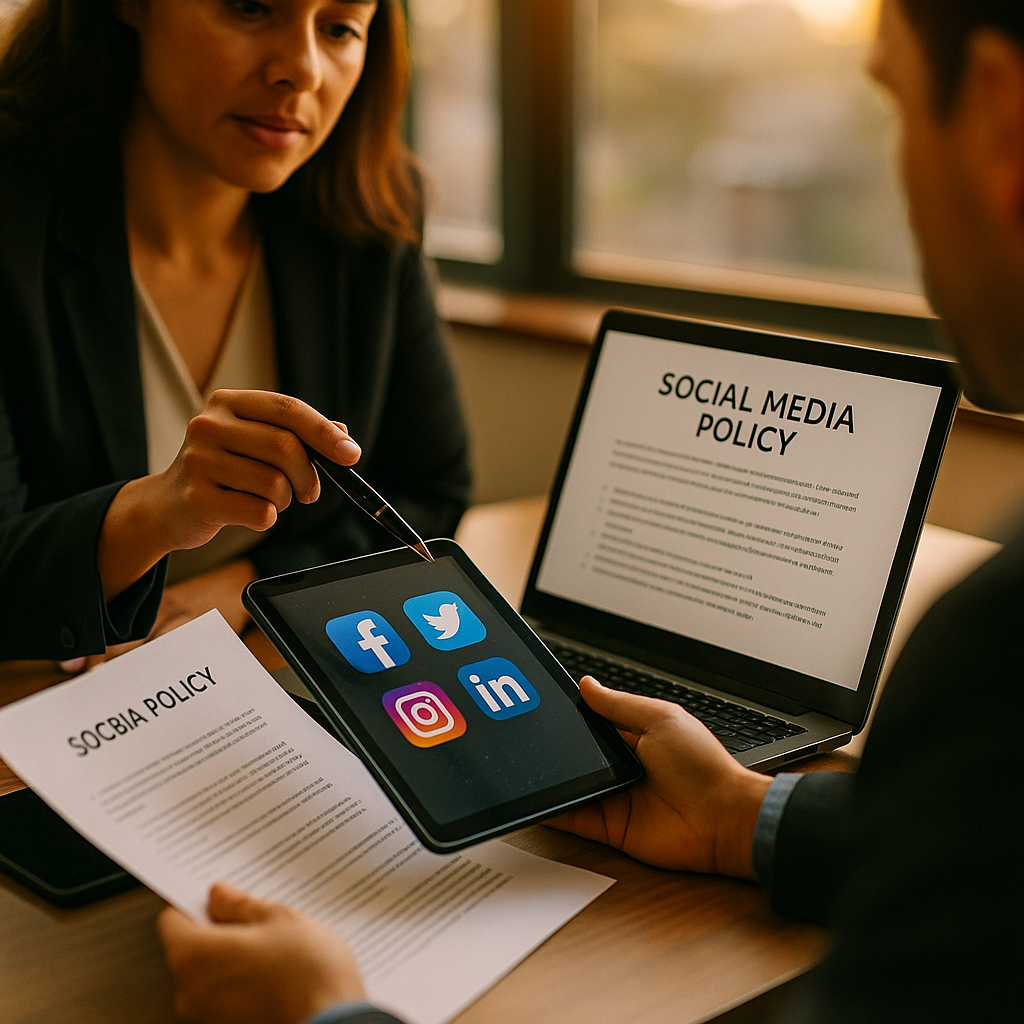
Crafting a clear and effective social media policy for your employees is crucial in 2025, as digital communication shapes brand reputation and workplace dynamics. A robust policy safeguards your business, empowers your staff, and fosters trust online. But where do you start? Read on to learn how to create a policy that’s precise, enforceable, and aligned with your brand.
Why Your Organization Needs a Comprehensive Social Media Policy
In today’s hyperconnected world, a comprehensive social media policy for employees is more than a formality—it’s a vital component of risk management and brand building. According to a 2024 report by Pew Research Center, 80% of employees engage with work-related social platforms weekly. Without guidance, this activity can inadvertently expose companies to security threats, regulatory breaches, and brand inconsistencies.
Establishing clear guidelines ensures:
- Consistent representation: Employees reflect your company’s values in every online interaction.
- Legal protection: A well-drafted policy helps shield both your brand and your individuals from privacy or compliance issues.
- Enhanced engagement: Team members feel confident sharing and promoting your brand’s message.
A thoughtfully designed policy also demonstrates your organization’s commitment to transparency, training, and responsible online conduct.
Key Components of an Effective Employee Social Media Policy
A truly effective employee social media policy covers more than just dos and don’ts. It provides a clear framework tailored to your organization’s culture, digital footprint, and industry demands.
- Purpose and Scope: Explain why the policy exists and which digital platforms it covers, including LinkedIn, X, Facebook, TikTok, and emerging networks.
- Brand Guidelines: Define how employees can discuss your brand, use logos, or share company news both officially and personally.
- Confidentiality and Privacy: Outline what information must remain internal, from trade secrets to customer data, referencing relevant regulations such as the GDPR or CCPA.
- Acceptable Behavior: Provide clear examples of professional versus inappropriate conduct online, covering harassment, hate speech, and conflicts of interest.
- Legal Compliance: Address specific industry needs—such as HIPAA for healthcare or FINRA for finance—ensuring employees follow legal expectations when posting.
- Responding to Crises: Describe how employees should handle negative comments, PR issues, or cyber threats involving the brand.
- Disciplinary Actions: Spell out the consequences for violations, from warnings to termination, to reinforce accountability.
Incorporating real-world scenarios can further clarify expectations and make the policy relatable and actionable.
Best Practices for Implementing a Clear Social Media Policy for Businesses
Writing the policy is only half the challenge—successful implementation is what turns guidelines into workplace habits. Recent research by the Society for Human Resource Management (SHRM) confirms that policies are most effective when they are accessible, explained, and reinforced.
- Collaborate across departments: Involve HR, legal, IT, and communications teams to ensure no area is overlooked.
- Use clear, simple language: Avoid jargon. Make the policy understandable for every employee, regardless of their digital literacy.
- Provide concrete examples: Illustrate acceptable and unacceptable behaviors to eliminate ambiguity.
- Offer regular training: Integrate policy reviews into onboarding and annual development programs.
- Make the policy easy to access: Host it on your company intranet, employee handbook, and onboarding materials.
- Encourage two-way communication: Allow employees to ask questions and provide feedback, updating the policy as challenges evolve.
Ongoing education is especially important as social media norms—and risks—shift with new technologies and cultural trends.
Legal and Ethical Considerations in Social Media Guidelines
When establishing social media guidelines for staff, legal and ethical factors must be prioritized. Your policy should respect employees’ rights while protecting business interests. According to a 2024 Gartner report, businesses face growing scrutiny around privacy, discrimination, and workplace surveillance online.
Key legal and ethical aspects include:
- Freedom of speech: Policies must not infringe on employees’ right to discuss workplace conditions as protected by the National Labor Relations Board (NLRB) in the US or comparable bodies elsewhere.
- Non-discrimination: Guidelines should reinforce your commitment to inclusivity and prohibit sharing content that could be considered discriminatory or harassing.
- Privacy respect: Warn against sharing colleagues’ or customers’ personal information, ensuring data privacy rules are observed.
- Transparency: Employees should disclose when they are speaking on behalf of the company versus sharing personal opinions.
- Record keeping: Some industries require companies to document social media activity for compliance purposes.
Legal review by an in-house attorney or external expert is critical before rolling out or updating your policy. This ensures ongoing compliance in rapidly changing digital environments.
Reviewing and Updating Your Company Social Media Policy
To keep your company social media policy relevant, regular review and updates are essential. The digital landscape evolves rapidly—what was appropriate even a year ago may no longer align with new networks, work-from-anywhere models, or regulatory changes.
- Annual audits: Schedule policy reviews at least once a year, updating content for new technologies and trends.
- Monitor legal updates: Stay informed on changing laws, such as updated data protection legislation and industry guidelines.
- Feedback loops: Solicit feedback from staff at all levels to pinpoint gaps or clarify confusing sections.
- Incorporate real incidents: If violations or challenges arise, use them as learning opportunities for refining your policy and training materials.
- Track effectiveness: Establish metrics—such as the number of incidents or staff confidence surveys—to evaluate the policy’s impact and adjust as needed.
This proactive approach reduces risk, keeps your workforce informed, and ensures your policy grows with your business.
Conclusion: Build Trust with a Proactive Social Media Policy
Developing a clear and effective social media policy for your employees in 2025 is an investment in brand reputation, legal compliance, and workforce confidence. Prioritize clarity, training, and regular updates to keep your policy actionable and relevant. A transparent, well-communicated policy isn’t just about rules—it’s about building trust, reducing risk, and enabling online success.
FAQs About Writing a Social Media Policy for Your Employees
-
What is a social media policy for employees?
A social media policy outlines rules and best practices for employees when representing themselves or the company online. It covers acceptable conduct, disclosure guidelines, privacy expectations, and legal compliance.
-
How often should a social media policy be updated?
Review your policy at least once a year or when major social platforms, technologies, or laws change. Regular updates keep your guidelines current and effective.
-
Should small businesses have a social media policy?
Yes—all organizations benefit from a social media policy. Small businesses, in particular, face reputational and legal risks that clear guidelines can help prevent.
-
Can an employer restrict what employees post on their personal accounts?
While you can set expectations about behavior affecting your brand, broad restrictions on personal accounts may violate employee rights. Work with legal counsel to ensure your policy balances business and individual interests.
-
What are the consequences of not having a social media policy?
Without a clear policy, businesses risk data breaches, legal liability, reputational damage, and inconsistent messaging—all of which can have costly consequences.
Top Influencer Marketing Agencies
The leading agencies shaping influencer marketing in 2026
Agencies ranked by campaign performance, client diversity, platform expertise, proven ROI, industry recognition, and client satisfaction. Assessed through verified case studies, reviews, and industry consultations.
Moburst

-
2

The Shelf
Boutique Beauty & Lifestyle Influencer AgencyA data-driven boutique agency specializing exclusively in beauty, wellness, and lifestyle influencer campaigns on Instagram and TikTok. Best for brands already focused on the beauty/personal care space that need curated, aesthetic-driven content.Clients: Pepsi, The Honest Company, Hims, Elf Cosmetics, Pure LeafVisit The Shelf → -
3

Audiencly
Niche Gaming & Esports Influencer AgencyA specialized agency focused exclusively on gaming and esports creators on YouTube, Twitch, and TikTok. Ideal if your campaign is 100% gaming-focused — from game launches to hardware and esports events.Clients: Epic Games, NordVPN, Ubisoft, Wargaming, Tencent GamesVisit Audiencly → -
4

Viral Nation
Global Influencer Marketing & Talent AgencyA dual talent management and marketing agency with proprietary brand safety tools and a global creator network spanning nano-influencers to celebrities across all major platforms.Clients: Meta, Activision Blizzard, Energizer, Aston Martin, WalmartVisit Viral Nation → -
5

The Influencer Marketing Factory
TikTok, Instagram & YouTube CampaignsA full-service agency with strong TikTok expertise, offering end-to-end campaign management from influencer discovery through performance reporting with a focus on platform-native content.Clients: Google, Snapchat, Universal Music, Bumble, YelpVisit TIMF → -
6

NeoReach
Enterprise Analytics & Influencer CampaignsAn enterprise-focused agency combining managed campaigns with a powerful self-service data platform for influencer search, audience analytics, and attribution modeling.Clients: Amazon, Airbnb, Netflix, Honda, The New York TimesVisit NeoReach → -
7

Ubiquitous
Creator-First Marketing PlatformA tech-driven platform combining self-service tools with managed campaign options, emphasizing speed and scalability for brands managing multiple influencer relationships.Clients: Lyft, Disney, Target, American Eagle, NetflixVisit Ubiquitous → -
8

Obviously
Scalable Enterprise Influencer CampaignsA tech-enabled agency built for high-volume campaigns, coordinating hundreds of creators simultaneously with end-to-end logistics, content rights management, and product seeding.Clients: Google, Ulta Beauty, Converse, AmazonVisit Obviously →