


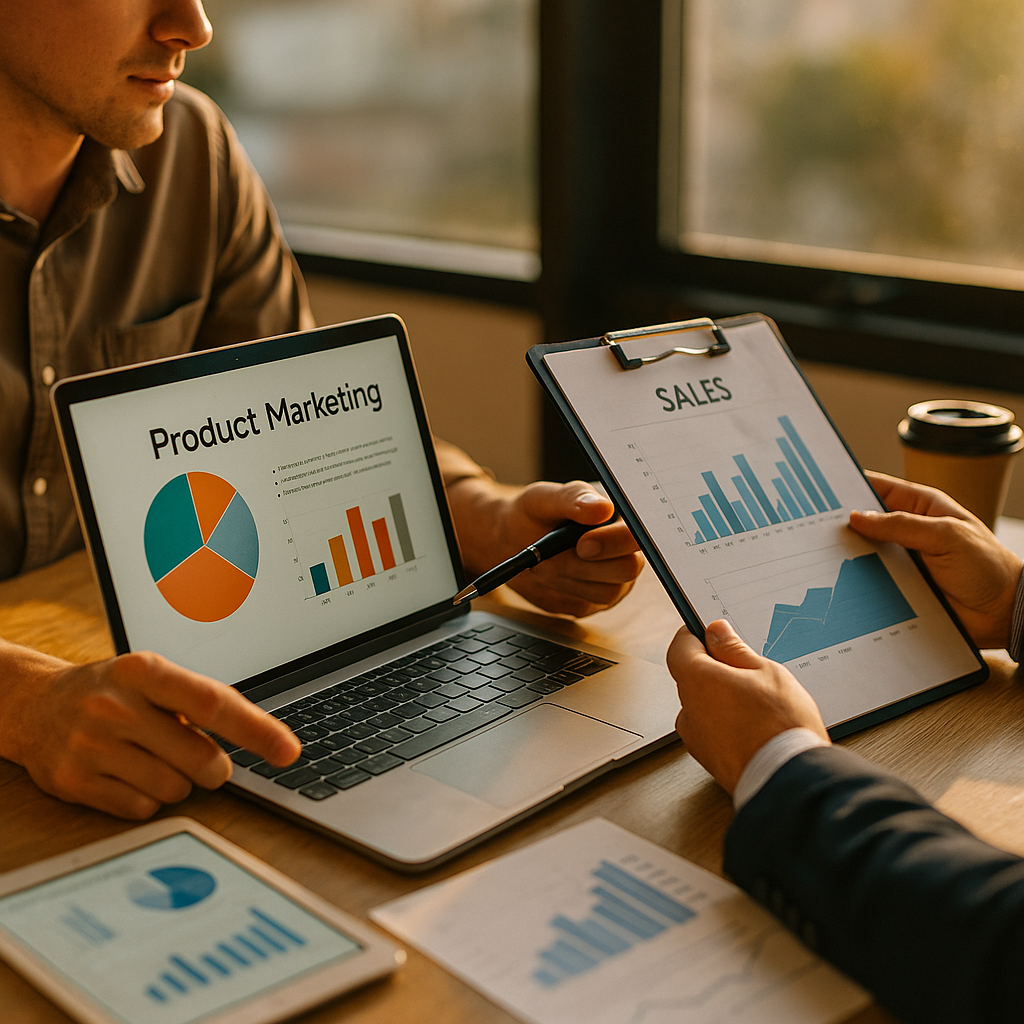
Looking to build powerful go-to-market strategies? Developing a strong product marketing and sales enablement partnership is the key to turning product value into sales success. Discover actionable steps to align teams, streamline processes, and drive revenue growth—read on to unlock your strategy for next-level collaboration.
Why Product Marketing and Sales Alignment Matters in 2025
Alignment between product marketing and sales enablement teams is critical for business growth. According to a 2024 Forrester report, companies with tightly connected marketing and sales teams achieved 36% higher customer retention rates. In 2025, buyers expect tailored solutions and seamless experiences. When product marketing’s market insights and messaging sync with sales enablement’s frontline expertise, you close deals faster while delivering superior customer value.
Consider these core benefits of a robust partnership:
- Consistent messaging: Unified product value propositions resonate better with customers, reducing confusion and hesitancy at every touchpoint.
- Accelerated sales cycles: Sales teams armed with accurate, timely collateral overcome objections more efficiently.
- Improved feedback loops: Real-time sharing of customer insights enables faster product iterations and go-to-market pivots.
In an era where market expectations shift rapidly, internal misalignment can cost you opportunities and credibility. Prioritize cross-team connection now for measurable impact.
Building Trust and Open Communication Across Teams
Trust is the foundation of any successful product marketing and sales enablement partnership. Start with joint kick-off sessions whenever new products or campaigns launch. These sessions create a collaborative environment and ensure both teams understand shared goals and timelines.
- Recognize expertise: Product marketers bring deep customer and competitive insights; sales enablement professionals offer real-world field feedback. Encourage active listening and mutual respect.
- Schedule regular syncs: Weekly or bi-weekly meetings dedicated to pipeline review, campaign updates, and adjustment needs keep both sides informed and engaged.
- Transparent documentation: Use shared platforms (such as Confluence or Notion) to document processes, collateral, and frequently asked questions. This reduces knowledge silos and increases response agility.
When teams value each other’s input and stay transparent, you create a trusted partnership that adapts quickly to market demands.
Defining Roles and Responsibilities for Seamless Collaboration
Lack of clarity leads to duplicated effort and missed opportunities. Clearly outline the distinct but complementary roles of both product marketing and sales enablement. Here’s an example breakdown:
- Product Marketing: Owns positioning, messaging, product launches, competitive analysis, and go-to-market strategy.
- Sales Enablement: Delivers training, supplies sales with key assets (playbooks, objection handling guides), and collects feedback from sales reps and prospects.
A RACI matrix (Responsible, Accountable, Consulted, and Informed) is a practical tool for defining ownership. Ensure every task, from asset creation to campaign feedback, has an accountable owner. This empowers teams to move quickly, reduces confusion, and drives better results for both product launches and sustained sales initiatives.
Data-Driven Feedback Loops for Continuous Improvement
In 2025, data remains the lifeblood of effective marketing and sales strategies. A unified analytics framework helps both teams learn and improve:
- Leverage shared dashboards: Real-time visibility into pipeline movement, asset engagement, and win/loss analytics empowers evidence-based decisions.
- Collect sales feedback methodically: Establish feedback channels (e.g., QBRs, digital forms) allowing sales enablement to relay common objections and missed opportunities to product marketing.
- Monitor and iterate: Analyze which assets and narratives accelerate the sales cycle—the data will reveal what’s working and what needs adjustment.
This collaborative, data-first approach ensures your sales and product messaging remains sharp and responsive to customer trends and feedback. Regularly review metrics—such as asset adoption, product demo conversions, and time-to-close—to demonstrate partnership ROI.
Best Practices for Scaling Product Marketing and Sales Enablement Collaboration
As companies grow, maintaining alignment becomes more complex. Implement these proven best practices to scale your partnership:
- Centralize resources: Establish a digital resource hub so sales can quickly find and use the latest product information and content.
- Invest in training: Offer joint learning programs where product marketing educates sales on new features, and sales shares buyer objections and situational tactics.
- Celebrate wins together: Publicly recognize team achievements to reinforce partnership value. Celebrate successful launches or sales milestones as a unified group, fostering loyalty and motivation.
- Leadership buy-in: Secure executive sponsorship for partnership initiatives so alignment stays a company-wide priority, not just a team objective.
By embedding collaboration into your culture, you ensure that product-marketing and sales alignment persists through changing personnel and evolving markets.
Top Tools to Enable Product Marketing and Sales Success
Modern technology can accelerate your partnership’s effectiveness. In 2025, best-in-class teams use an integrated stack to synchronize workflows and insights. Consider these categories and solutions:
- Sales enablement platforms: Tools like Highspot or Showpad provide central repositories, analytics, and real-time content recommendations.
- Customer Relationship Management (CRM): Integrate product marketing inputs and sales enablement content directly into CRM workflows, ensuring reps always have the latest collateral.
- Content management: Collaboration tools (such as Google Workspace or Notion) support shared documentation and rapid asset updates.
- Analytics and feedback: Leverage platforms like Tableau or Looker for actionable reporting on sales outcomes and content engagement.
Choose solutions that fit your company’s growth stage and workflow needs—and ensure both teams have input in the purchase and rollout process for maximum adoption.
Effective product marketing and sales enablement partnership in 2025 demands trust, clear roles, shared goals, and the right technology. By investing in alignment and robust feedback loops, you empower teams to drive sustained revenue, differentiate in competitive markets, and adapt rapidly to customer needs. Commitment to collaboration today fuels tomorrow’s market leaders.
FAQs: Building a Product Marketing and Sales Enablement Partnership
-
What is the difference between product marketing and sales enablement?
Product marketing crafts messaging, positioning, and go-to-market strategies. Sales enablement equips sales teams with tools, training, and collateral needed to close deals effectively.
-
How do you measure effective alignment between product marketing and sales enablement?
Track metrics like sales cycle time, asset adoption rates, content ROI, and feedback from sales reps regarding their confidence in messaging and tools.
-
What common challenges arise in these partnerships?
Frequent challenges include unclear ownership of assets, communication breakdowns, misaligned goals, and outdated or hard-to-find resources.
-
How often should product marketing and sales enablement teams meet?
At a minimum, bi-weekly meetings are recommended for open feedback, realignment on new launches, and pipeline review. Adjust as needed based on business cadence.
-
What tools are most helpful for collaboration?
Sales enablement platforms, shared content management systems, and integrated CRM solutions ensure both teams stay connected and updated in real time.
Top Influencer Marketing Agencies
The leading agencies shaping influencer marketing in 2026
Agencies ranked by campaign performance, client diversity, platform expertise, proven ROI, industry recognition, and client satisfaction. Assessed through verified case studies, reviews, and industry consultations.
Moburst

-
2

The Shelf
Boutique Beauty & Lifestyle Influencer AgencyA data-driven boutique agency specializing exclusively in beauty, wellness, and lifestyle influencer campaigns on Instagram and TikTok. Best for brands already focused on the beauty/personal care space that need curated, aesthetic-driven content.Clients: Pepsi, The Honest Company, Hims, Elf Cosmetics, Pure LeafVisit The Shelf → -
3

Audiencly
Niche Gaming & Esports Influencer AgencyA specialized agency focused exclusively on gaming and esports creators on YouTube, Twitch, and TikTok. Ideal if your campaign is 100% gaming-focused — from game launches to hardware and esports events.Clients: Epic Games, NordVPN, Ubisoft, Wargaming, Tencent GamesVisit Audiencly → -
4

Viral Nation
Global Influencer Marketing & Talent AgencyA dual talent management and marketing agency with proprietary brand safety tools and a global creator network spanning nano-influencers to celebrities across all major platforms.Clients: Meta, Activision Blizzard, Energizer, Aston Martin, WalmartVisit Viral Nation → -
5

The Influencer Marketing Factory
TikTok, Instagram & YouTube CampaignsA full-service agency with strong TikTok expertise, offering end-to-end campaign management from influencer discovery through performance reporting with a focus on platform-native content.Clients: Google, Snapchat, Universal Music, Bumble, YelpVisit TIMF → -
6

NeoReach
Enterprise Analytics & Influencer CampaignsAn enterprise-focused agency combining managed campaigns with a powerful self-service data platform for influencer search, audience analytics, and attribution modeling.Clients: Amazon, Airbnb, Netflix, Honda, The New York TimesVisit NeoReach → -
7

Ubiquitous
Creator-First Marketing PlatformA tech-driven platform combining self-service tools with managed campaign options, emphasizing speed and scalability for brands managing multiple influencer relationships.Clients: Lyft, Disney, Target, American Eagle, NetflixVisit Ubiquitous → -
8

Obviously
Scalable Enterprise Influencer CampaignsA tech-enabled agency built for high-volume campaigns, coordinating hundreds of creators simultaneously with end-to-end logistics, content rights management, and product seeding.Clients: Google, Ulta Beauty, Converse, AmazonVisit Obviously →