


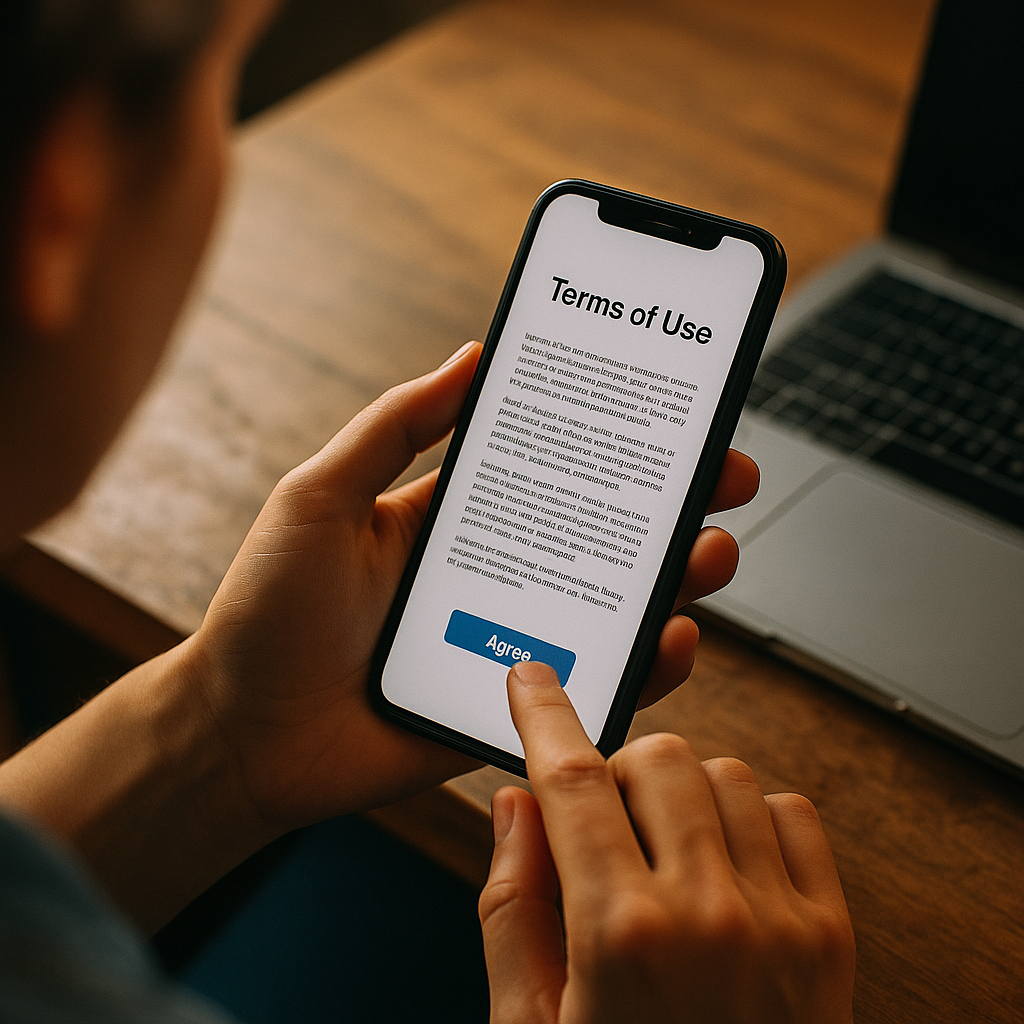
Drafting an effective Terms of Use Agreement for a mobile app is essential to safeguarding your business and setting user expectations. A clear and enforceable terms of use lays the legal foundation for how your app operates and the responsibilities of all parties. Read on for a step-by-step guide to getting your mobile app’s legal protection right from the start.
Why Mobile App Terms of Use Agreements Matter for User Trust
Mobile app terms of use agreements aren’t just legal requirements; they’re your first opportunity to build user trust and prevent conflicts. A well-written agreement clarifies what users can and cannot do, limits your liability, and strengthens your position in the event of a dispute. According to Statista’s 2025 mobile usage report, users expect transparency and are less likely to use apps with unclear terms. Implementing an explicit agreement reassures users of your professionalism and respect for their data and rights.
Key Legal Elements Every Mobile App Terms of Use Should Cover
To be both clear and enforceable, your app’s Terms of Use should include certain mandatory sections. Covering these areas ensures your agreement complies with major app marketplaces and jurisdictional requirements:
- Eligibility: Specify who can use your app, including age restrictions and account creation rules.
- User responsibilities: Outline acceptable behaviors and prohibited actions clearly.
- Intellectual property: State your ownership over the app’s content, code, logos, and trademarks.
- License grant: Describe the type of license you’re giving users (e.g., limited, revocable, non-transferable).
- Limitation of liability: Limit your liability for damages arising from app use, within the bounds of local law.
- Governing law and dispute resolution: State which country’s or state’s laws apply and how disputes will be resolved.
- Termination: Define circumstances where you may suspend or terminate access.
- Changes to terms: Explain how you’ll notify users of updates to the agreement.
Covering these elements provides clarity for users and ensures enforceability in court if an issue arises.
Structuring a User-Friendly and Readable Terms of Use Agreement
Clarity is crucial—not only for legal compliance, but for user understanding. According to a 2025 Nielsen Norman Group survey, users are more likely to accept and comply with terms written in plain language. Here’s how to structure your agreement for maximum accessibility:
- Use clear headings: Divide content into logical, titled sections for easier navigation.
- Be concise and straightforward: Avoid legalese and jargon where possible.
- Highlight key terms: Bold or italicize particularly important obligations or limitations of liability.
- Use examples: Offer practical scenarios for ambiguous rules to reduce misuse and disputes.
- Summarize lengthy sections: Add brief summaries or Q&A style callouts for the most complex rules.
Making your terms user-friendly not only meets best-practice accessibility guidelines, but also protects you against claims that users weren’t properly informed.
Ensuring Your Mobile App Terms of Use Agreement Is Enforceable
For your agreement to stand up in court, it must demonstrate that users have clearly agreed to the terms. Enforceability is determined by both the content and how the agreement is presented. Here’s how to guarantee enforceability:
- Use clickwrap over browsewrap: Always require users to actively accept the terms, such as clicking an “I Agree” button before account creation. Passive “browsewrap” (where terms are just linked) has been repeatedly struck down by courts as insufficient.
- Link conspicuously: Ensure your Terms of Use link is clearly visible and accessible—especially before any personal data is collected or services rendered.
- Maintain records of acceptance: Keep logs of what version of the terms each user agreed to, and when.
- Localize for relevant jurisdictions: If you serve users in multiple countries, adjust your agreement for regional legal requirements, such as data privacy laws or language.
By addressing these issues, you boost your agreement’s legal weight and strengthen your app’s compliance with app store policies and privacy regulators.
Maintaining and Updating Your Mobile App Terms of Use Over Time
Your Terms of Use should evolve with changes in your app’s features, business model, or legal landscape. The best practice, supported by 2025 guidance from global regulators, is to:
- Review terms regularly: Audit your terms annually or whenever you launch major features.
- Communicate updates transparently: Notify users of substantive changes via in-app messages, push notifications, or email. Require fresh consent when changes are material.
- Archive versions: Retain a copy of each version and the acceptance dates to resolve future disputes.
- Seek legal expertise: Engage an attorney or privacy consultant, especially when operating across multiple regions or collecting sensitive data.
Proactive updates prevent legal gaps and demonstrate your ongoing commitment to compliant and ethical app governance.
Conclusion: Crafting a Terms of Use Agreement that Protects and Informs
A clear and enforceable Terms of Use Agreement protects your business, defines user expectations, and builds long-term trust. Invest in precise language, frequent updates, and transparent communication to stay legally compliant and user-focused as your app business grows.
FAQs: Mobile App Terms of Use Agreement
-
Do I need a Terms of Use for a free mobile app?
Yes. Whether your app is free or paid, a Terms of Use Agreement limits your liability, sets user expectations, and can be required by app stores.
-
What is the difference between a Terms of Use and a Privacy Policy?
Terms of Use define the rules for using the app; a Privacy Policy explains how user data is collected and handled. Both are typically required for mobile apps.
-
Can I copy another app’s Terms of Use?
It is not advisable. Every app has unique features and risks. Customizing your agreement for your app and jurisdiction ensures adequate protection and compliance.
-
How do I notify users of updates to my Terms of Use?
Use in-app notifications, emails, or pop-ups. For material changes, require users to re-consent before proceeding.
-
How often should I update my Terms of Use?
Review your agreement annually, or more frequently if launching new features, entering new markets, or responding to regulatory changes.
Top Influencer Marketing Agencies
The leading agencies shaping influencer marketing in 2026
Agencies ranked by campaign performance, client diversity, platform expertise, proven ROI, industry recognition, and client satisfaction. Assessed through verified case studies, reviews, and industry consultations.
Moburst

-
2

The Shelf
Boutique Beauty & Lifestyle Influencer AgencyA data-driven boutique agency specializing exclusively in beauty, wellness, and lifestyle influencer campaigns on Instagram and TikTok. Best for brands already focused on the beauty/personal care space that need curated, aesthetic-driven content.Clients: Pepsi, The Honest Company, Hims, Elf Cosmetics, Pure LeafVisit The Shelf → -
3

Audiencly
Niche Gaming & Esports Influencer AgencyA specialized agency focused exclusively on gaming and esports creators on YouTube, Twitch, and TikTok. Ideal if your campaign is 100% gaming-focused — from game launches to hardware and esports events.Clients: Epic Games, NordVPN, Ubisoft, Wargaming, Tencent GamesVisit Audiencly → -
4

Viral Nation
Global Influencer Marketing & Talent AgencyA dual talent management and marketing agency with proprietary brand safety tools and a global creator network spanning nano-influencers to celebrities across all major platforms.Clients: Meta, Activision Blizzard, Energizer, Aston Martin, WalmartVisit Viral Nation → -
5

The Influencer Marketing Factory
TikTok, Instagram & YouTube CampaignsA full-service agency with strong TikTok expertise, offering end-to-end campaign management from influencer discovery through performance reporting with a focus on platform-native content.Clients: Google, Snapchat, Universal Music, Bumble, YelpVisit TIMF → -
6

NeoReach
Enterprise Analytics & Influencer CampaignsAn enterprise-focused agency combining managed campaigns with a powerful self-service data platform for influencer search, audience analytics, and attribution modeling.Clients: Amazon, Airbnb, Netflix, Honda, The New York TimesVisit NeoReach → -
7

Ubiquitous
Creator-First Marketing PlatformA tech-driven platform combining self-service tools with managed campaign options, emphasizing speed and scalability for brands managing multiple influencer relationships.Clients: Lyft, Disney, Target, American Eagle, NetflixVisit Ubiquitous → -
8

Obviously
Scalable Enterprise Influencer CampaignsA tech-enabled agency built for high-volume campaigns, coordinating hundreds of creators simultaneously with end-to-end logistics, content rights management, and product seeding.Clients: Google, Ulta Beauty, Converse, AmazonVisit Obviously →