


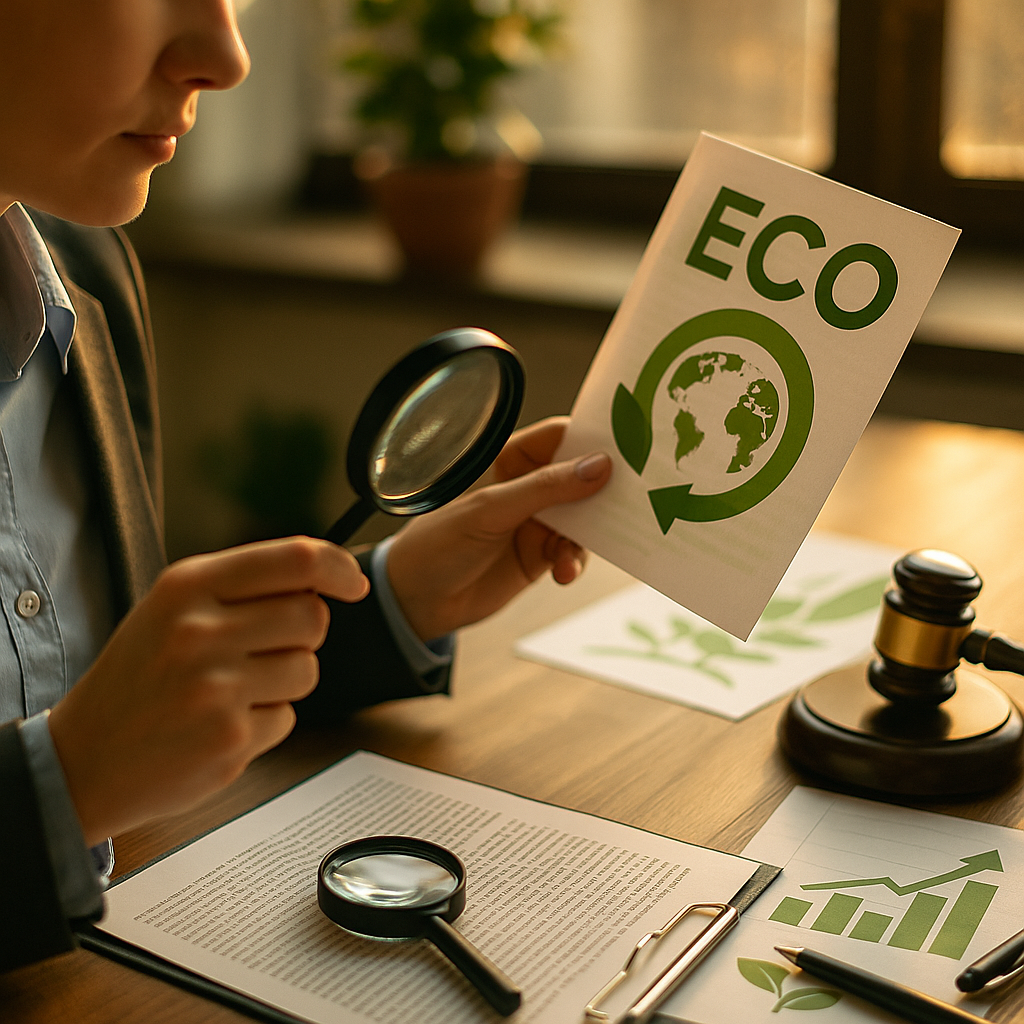
Understanding how to comply with greenwashing and environmental marketing regulations is crucial for any business promoting its sustainability efforts. With increasing scrutiny on environmental claims, brands face legal and reputational risks if they fail to adhere to evolving guidelines. This guide unpacks how your company can authentically market green credentials—and why compliance matters now more than ever.
The Importance of Environmental Marketing Compliance
In 2025, environmental claims are under the microscope. Falsely presenting products as eco-friendly—known as greenwashing—can attract lawsuits, regulatory fines, or customer backlash. Global regulators, such as the U.S. Federal Trade Commission and the European Union, have introduced rigorous rules around environmental marketing. Businesses must ensure factual, substantiated claims or risk damage to both reputation and financial health.
Beyond legal implications, consumers today demand genuine sustainability. According to IBM’s 2024 Institute for Business Value survey, 68% of global consumers are more likely to buy environmentally responsible brands. Earning their trust is critical—and starts with regulatory compliance.
Understanding Greenwashing Definitions and Laws
The term greenwashing describes deceptive marketing practices that exaggerate or fabricate a product’s environmental benefits. Common examples include misusing terms like “eco-friendly” without proof or using misleading graphics and imagery.
Legally, regulators define greenwashing as making:
- Unsubstantiated or exaggerated environmental benefit claims
- Ambiguous statements that could mislead buyers
- Omitting important facts about a product’s environmental impact
Most national laws, such as the FTC Green Guides and EU Directive 2024/825, require marketers to have clear evidence for any environmental claim. Claims must be specific, accurate, and easily understood by the average customer. Fines for violations have increased in 2025, reflecting regulators’ intent to crack down on misleading green marketing.
Staying compliant means knowing which local, federal, and regional frameworks apply to your market and industry. Consulting legal experts and sustainability specialists can ensure your marketing approaches align with updated guidance.
Key Steps for Substantiating Environmental Claims
Reliable environmental marketing is built on verifiable facts. To avoid greenwashing and meet regulatory requirements:
- Gather robust evidence first. Before making any sustainability claim, collect third-party certifications, scientific studies, or detailed lifecycle analyses.
- Be specific and transparent. Replace vague phrases like “earth-friendly” with concrete details, such as “made from 85% recycled PET plastic.”
- Ensure claims are relevant and comparative. Statements like “greener than before” should clarify compared to what (e.g., previous product versions), using measurable data.
- Disclose all necessary qualifiers. If a claim applies only to part of a product or under specific conditions, clarify these limitations in your messaging.
- Continuously update claims. Regulations, science, and supply chains change. Review your marketing regularly to ensure continued accuracy and compliance.
Brands that document the basis for each claim—and subject these claims to internal and external review—limit their legal exposure and build consumer confidence.
Marketing Practices that Uphold Greenwashing Regulations
Complying with environmental marketing regulations involves more than avoiding falsehoods. Marketers should proactively align messaging with both the letter and spirit of the law:
- Obtain reputable certifications. Use recognized eco-labels, like ENERGY STAR or Fair Trade, and be ready to verify their authenticity.
- Collaborate across departments. Sustainability, legal, and marketing teams must work together to craft and approve claims.
- Educate your audience. Explain the significance of certifications or sustainability initiatives, helping customers make informed choices.
- Avoid selective disclosure. Don’t highlight one environmentally positive aspect if the overall product impact is significant. Transparent life cycle communication is key.
- Monitor competitor and regulator activity. Stay aware of enforcement trends and peer marketing pitfalls to avoid making similar errors.
Well-designed marketing both supports compliance and sets your brand apart as genuinely committed to environmental responsibility.
Mitigating Risks and Preparing for Regulatory Changes
The regulatory landscape for green marketing is evolving rapidly in 2025. New standards, such as EU’s Digital Services Act requirements for online green claims, have made global compliance more complex. To minimize risk, companies should:
- Implement a compliance management system. Develop internal policies and audits to review all environmental marketing pre-launch.
- Provide regular staff training. Keep marketing staff, copywriters, and product teams current on greenwashing laws and best practices.
- Retain all documentation. Maintain comprehensive records of data, certifications, and supplier information that underpins environmental statements.
- Review digital and omni-channel messaging. Ensure accuracy and consistency across web, social, and packaging content globally.
- Designate a compliance lead. Assign responsibility to a specific executive or team for final review and regulatory liaison.
By anticipating regulatory changes and embedding compliance into business processes, organizations can navigate new requirements efficiently—all while strengthening brand integrity.
Best Practices for Ethical and Transparent Green Marketing
Businesses that excel in environmental marketing compliance go beyond minimal legal standards. They build trust through clear, ethical, and transparent communication:
- Use plain language. Make environmental claims easy for the average consumer to understand.
- Publish methodology. Disclose how environmental calculations are made (e.g., life cycle analysis, carbon reporting frameworks).
- Balance promotion with humility. Don’t over-promise; highlight where challenges remain and where further improvements are planned.
- Invite third-party scrutiny. Consider voluntary audits or NGO partnerships that confirm sustainability claims.
- Foster ongoing dialogue. Provide channels for customer feedback, questions, or concerns about environmental practices.
When customers see credible, transparent marketing backed by evidence and accessible information, loyalty and engagement grow—helping protect your brand in a highly regulated world.
FAQs: Complying with Greenwashing and Environmental Marketing Regulations
- What is greenwashing in marketing?
Greenwashing is the practice of making unsubstantiated, misleading, or false claims about the environmental benefits of a product or service. It’s illegal in many jurisdictions and can result in significant penalties. - How can my company avoid greenwashing?
Only make environmental claims you can substantiate with strong evidence, such as third-party certifications or scientific reports. Ensure claims are precise, relevant, and updated as data and regulations evolve. - What are regulators looking for in 2025?
Authorities want clear evidence supporting all green claims, accurate disclosures of a product’s entire lifecycle impact, and avoidance of vague or comparative statements without qualifiers. Digital marketing is also under increased scrutiny. - What counts as a misleading environmental claim?
Claims that are untrue, exaggerated, or ambiguous—for example, using terms like “eco-friendly” or “biodegradable” without supporting data, or only telling part of the environmental story—are considered misleading. - Does compliance differ by country?
Yes. While principles are similar, specific requirements can vary by jurisdiction. Always consult local laws, such as the updated EU Directive or FTC Green Guides, and seek legal expertise when expanding internationally.
In conclusion, mastering greenwashing and environmental marketing regulations allows businesses to build trust, avoid legal risk, and genuinely advance sustainability. By being transparent, following current laws, and consistently verifying claims, brands can confidently market their sustainable practices in 2025 and beyond.
Top Influencer Marketing Agencies
The leading agencies shaping influencer marketing in 2026
Agencies ranked by campaign performance, client diversity, platform expertise, proven ROI, industry recognition, and client satisfaction. Assessed through verified case studies, reviews, and industry consultations.
Moburst

-
2

The Shelf
Boutique Beauty & Lifestyle Influencer AgencyA data-driven boutique agency specializing exclusively in beauty, wellness, and lifestyle influencer campaigns on Instagram and TikTok. Best for brands already focused on the beauty/personal care space that need curated, aesthetic-driven content.Clients: Pepsi, The Honest Company, Hims, Elf Cosmetics, Pure LeafVisit The Shelf → -
3

Audiencly
Niche Gaming & Esports Influencer AgencyA specialized agency focused exclusively on gaming and esports creators on YouTube, Twitch, and TikTok. Ideal if your campaign is 100% gaming-focused — from game launches to hardware and esports events.Clients: Epic Games, NordVPN, Ubisoft, Wargaming, Tencent GamesVisit Audiencly → -
4

Viral Nation
Global Influencer Marketing & Talent AgencyA dual talent management and marketing agency with proprietary brand safety tools and a global creator network spanning nano-influencers to celebrities across all major platforms.Clients: Meta, Activision Blizzard, Energizer, Aston Martin, WalmartVisit Viral Nation → -
5

The Influencer Marketing Factory
TikTok, Instagram & YouTube CampaignsA full-service agency with strong TikTok expertise, offering end-to-end campaign management from influencer discovery through performance reporting with a focus on platform-native content.Clients: Google, Snapchat, Universal Music, Bumble, YelpVisit TIMF → -
6

NeoReach
Enterprise Analytics & Influencer CampaignsAn enterprise-focused agency combining managed campaigns with a powerful self-service data platform for influencer search, audience analytics, and attribution modeling.Clients: Amazon, Airbnb, Netflix, Honda, The New York TimesVisit NeoReach → -
7

Ubiquitous
Creator-First Marketing PlatformA tech-driven platform combining self-service tools with managed campaign options, emphasizing speed and scalability for brands managing multiple influencer relationships.Clients: Lyft, Disney, Target, American Eagle, NetflixVisit Ubiquitous → -
8

Obviously
Scalable Enterprise Influencer CampaignsA tech-enabled agency built for high-volume campaigns, coordinating hundreds of creators simultaneously with end-to-end logistics, content rights management, and product seeding.Clients: Google, Ulta Beauty, Converse, AmazonVisit Obviously →