


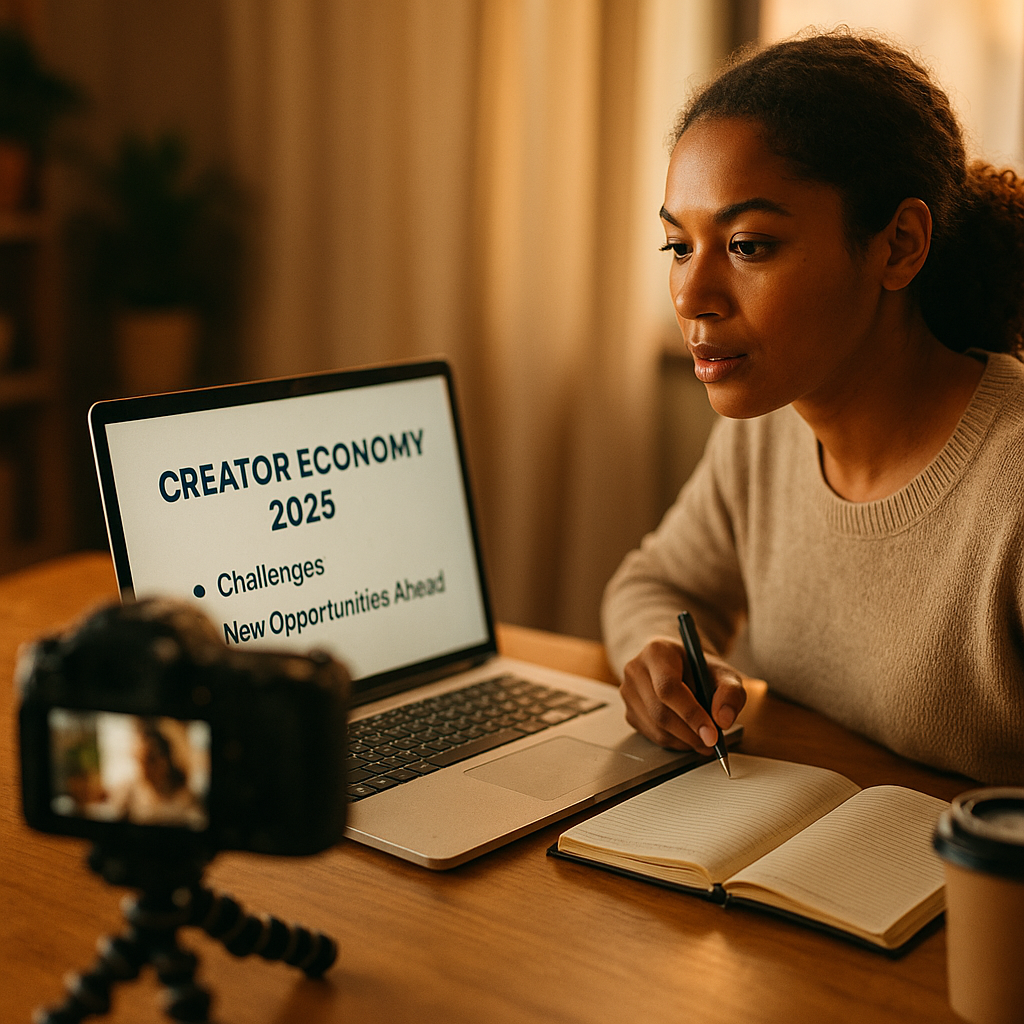
The creator economy bubble has captured global attention, driven by digital transformation and an explosion of content platforms. As the industry reaches a turning point, questions loom about sustainability, market corrections, and the emergence of new opportunities. Is this economy headed for a bust—or is it evolving into a more mature ecosystem? Read on to discover the answers.
The Rapid Rise of the Creator Economy: Key Market Trends
The creator economy exploded over the past decade as millions abandoned traditional jobs to monetize content, skills, and communities online. In 2025, over 320 million people participate in the creator ecosystem, leveraging platforms such as YouTube, TikTok, Instagram, Patreon, and Substack. This surge is inspired by success stories of six-figure influencers and solopreneurs who thrive on brand deals, subscriptions, and direct fan support.
Recent data from SignalFire shows that, as of 2025, creator-focused startups and platforms are attracting significant investor attention despite volatile macroeconomic conditions. Advanced creator tools, AI-driven content management, and new monetization models are fueling growth. Yet, as more creators seek financial independence, competition increases and revenue per creator flattens, raising concerns that the traditional growth trajectory may not continue indefinitely.
Market Corrections: Is the Creator Economy Bubble Bursting?
Some industry observers argue the creator economy bubble is due for a correction. In 2025, platform ad rates have plateaued, fan spending habits have shifted in response to global inflation, and creators report difficulty in standing out as digital channels saturate. According to Linktree’s annual Creator Report, over 70% of creators earn less than $1,000 per year, challenging the viability of creator middle classes.
Recent platform policy changes amplify uncertainty. TikTok’s algorithm updates and YouTube’s shifting monetization requirements have directly impacted creator earnings. Brands, seeking demonstrable ROI, are reducing influencer marketing budgets and demanding greater transparency and authenticity. These factors indicate that the market is adjusting, weeding out unsustainable business models while favoring creators and platforms that deliver consistent value and trust.
New Monetization Opportunities: How Creators Can Adapt
Despite these market forces, fresh monetization strategies are emerging for those who can pivot. Creators increasingly diversify income streams, combining platform payouts, merchandise, exclusive communities, and knowledge products.
- Direct-to-fan platforms: Tools such as Patreon or Memberspace allow creators to nurture loyal subscribers and offset declining ad revenues. These platforms are investing in better analytics and personalization to increase lifetime value.
- Branded partnerships and micro-influencing: Micro- and nano-influencers are in higher demand, as brands seek authentic voices to target niche audiences more effectively than celebrity influencers.
- Educational offerings: Courses, eBooks, and live workshops present lucrative avenues for creators with expertise. The online learning market, projected to exceed $1 trillion globally by 2025, is a major opportunity for skilled content creators.
- Decentralized platforms and Web3 tools: NFTs, crypto-enabled tipping, and distributed content hosting empower creators with more control and higher earning potential, with less reliance on tech giants’ changing algorithms.
Creators who actively adopt these new opportunities, build engaged communities, and emphasize transparency are positioned to thrive in a transformed landscape.
Investor Perspective: Where Are the Smart Bets Now?
Venture capitalists and institutional investors once flooded the creator economy, hoping for “unicorn” growth. As the market matures, investors are more cautious and selective, seeking startups that solve creators’ pain points beyond discovery—such as payment processing, audience management, and IP protection.
According to a 2025 PitchBook report, capital is now concentrating around “infrastructure” plays. Platforms focused on analytics, workflow automation, community retention, and legal compliance are favored over pure content-based apps. Fintech solutions enabling faster payouts and more transparent revenue sharing also attract backing. This pivot reflects a shift from hyper-growth to sustainable profitability and value creation across the creator supply chain.
The Evolving Role of Platforms: Support, Regulation, and Transparency
Major platforms wield significant power in shaping the future of the creator economy. In 2025, pressure is mounting for companies to offer clearer terms, fairer monetization splits, and innovative support services for creators. Regulatory scrutiny is also increasing: governments are considering policies to address copyright, child safety, and AI-generated content.
Platforms like YouTube and TikTok are rolling out creator funds, content moderation improvements, and expanded analytics dashboards. Meanwhile, decentralized and co-op models gain momentum as creators demand greater ownership and share of profits. Ultimately, platforms that prioritize long-term creator well-being and community trust will lead the next phase of growth.
Looking Ahead: Creator Economy Resilience and Next-Gen Opportunities
While the creator economy bubble may experience correction, the underlying demand for digital content, expertise, and community remains robust in 2025. This sector is not disappearing; instead, it is recalibrating—rewarding creators, platforms, and investors that can adapt to new realities. Emerging technologies, changing consumer expectations, and innovative business models will fuel the next wave of opportunity.
To succeed, creators must diversify income, relentlessly focus on audience engagement, and learn to leverage new technologies. Investors and platforms that foster transparency, flexibility, and genuine creator empowerment will find lasting success in the evolving digital landscape.
FAQs About the Creator Economy Bubble, Market Corrections, and Opportunities
-
Is the creator economy bubble bursting in 2025?
While parts of the creator economy are undergoing correction due to platform changes and ad-rate stagnation, the industry as a whole is evolving. Unsustainable models may fade, but resilient creators and innovative platforms continue to find growth and opportunity.
-
What are the biggest risks for creators right now?
Primary risks include over-dependence on single platforms, rapidly changing algorithms, audience fatigue, and uncertain monetization. Diversification and adapting to consumer trends are key to minimizing these risks.
-
How can creators make more money in 2025’s changing market?
Strategy is crucial. Successful creators are diversifying revenue streams through subscriptions, exclusive communities, direct product sales, educational content, and experimenting with new platforms (like decentralized solutions and Web3).
-
Where are investors focusing in the creator economy?
Investors are prioritizing startups offering infrastructure—such as analytics, payment processing, and audience management—over pure content creation platforms, signaling a shift toward scalable solutions that empower creators’ businesses.
In summary, the creator economy bubble is entering a phase of correction and consolidation, but this brings new opportunities for adaptation and innovation. By staying agile, diversifying income sources, and focusing on authentic audience relationships, creators and investors alike can navigate the evolving market with confidence.
Top Influencer Marketing Agencies
The leading agencies shaping influencer marketing in 2026
Agencies ranked by campaign performance, client diversity, platform expertise, proven ROI, industry recognition, and client satisfaction. Assessed through verified case studies, reviews, and industry consultations.
Moburst

-
2

The Shelf
Boutique Beauty & Lifestyle Influencer AgencyA data-driven boutique agency specializing exclusively in beauty, wellness, and lifestyle influencer campaigns on Instagram and TikTok. Best for brands already focused on the beauty/personal care space that need curated, aesthetic-driven content.Clients: Pepsi, The Honest Company, Hims, Elf Cosmetics, Pure LeafVisit The Shelf → -
3

Audiencly
Niche Gaming & Esports Influencer AgencyA specialized agency focused exclusively on gaming and esports creators on YouTube, Twitch, and TikTok. Ideal if your campaign is 100% gaming-focused — from game launches to hardware and esports events.Clients: Epic Games, NordVPN, Ubisoft, Wargaming, Tencent GamesVisit Audiencly → -
4

Viral Nation
Global Influencer Marketing & Talent AgencyA dual talent management and marketing agency with proprietary brand safety tools and a global creator network spanning nano-influencers to celebrities across all major platforms.Clients: Meta, Activision Blizzard, Energizer, Aston Martin, WalmartVisit Viral Nation → -
5

The Influencer Marketing Factory
TikTok, Instagram & YouTube CampaignsA full-service agency with strong TikTok expertise, offering end-to-end campaign management from influencer discovery through performance reporting with a focus on platform-native content.Clients: Google, Snapchat, Universal Music, Bumble, YelpVisit TIMF → -
6

NeoReach
Enterprise Analytics & Influencer CampaignsAn enterprise-focused agency combining managed campaigns with a powerful self-service data platform for influencer search, audience analytics, and attribution modeling.Clients: Amazon, Airbnb, Netflix, Honda, The New York TimesVisit NeoReach → -
7

Ubiquitous
Creator-First Marketing PlatformA tech-driven platform combining self-service tools with managed campaign options, emphasizing speed and scalability for brands managing multiple influencer relationships.Clients: Lyft, Disney, Target, American Eagle, NetflixVisit Ubiquitous → -
8

Obviously
Scalable Enterprise Influencer CampaignsA tech-enabled agency built for high-volume campaigns, coordinating hundreds of creators simultaneously with end-to-end logistics, content rights management, and product seeding.Clients: Google, Ulta Beauty, Converse, AmazonVisit Obviously →