


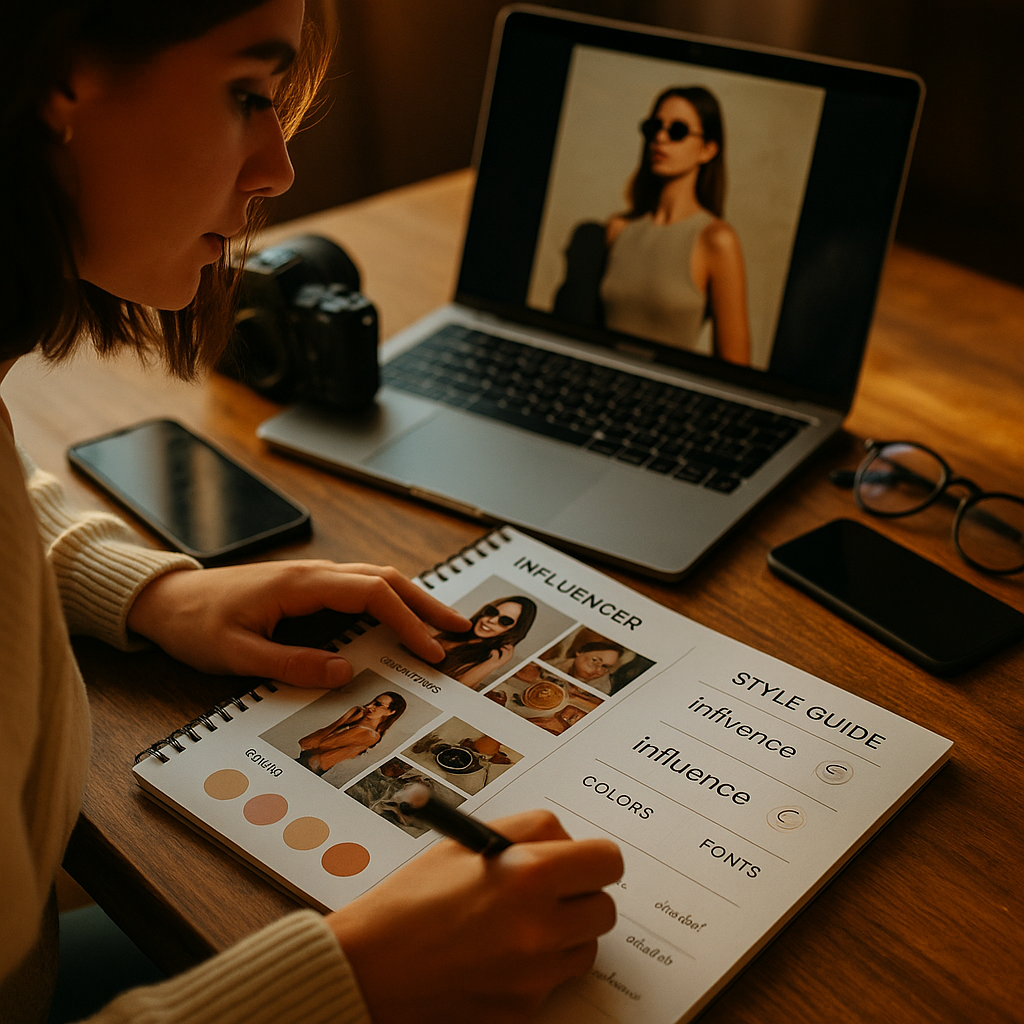
Building productive collaborations starts with a clear brand style guide for your influencer partners. This essential resource aligns content and messaging, ensuring your brand’s identity shines through every partnership. But how do you create a style guide that’s both easy to follow and effective? Let’s break down the actionable steps to equip your influencers for success.
Why an Influencer Brand Style Guide Matters
Consistency is the backbone of brand credibility. When working with multiple influencer partners, maintaining a unified image across platforms is crucial. A brand style guide goes beyond color schemes and logos—it preserves your voice, values, and quality standards throughout all content. This trust-building consistency is proven to improve customer engagement and foster long-term loyalty.
According to a 2024 Influencer Marketing Hub report, 69% of marketers say maintaining brand consistency is their top challenge when scaling influencer campaigns. By providing clear guidelines, you empower creators to interpret your brand authentically while reducing approval cycles and content missteps.
Essential Elements of a Brand Style Guide for Influencers
Your guide should cover more than just appearances. An effective brand style guide for influencer collaborations includes components tailored for creators’ unique needs. Prioritize clarity—here’s what to include:
- Brand Overview: Outline your mission, vision, and unique value proposition in clear, relatable terms.
- Voice & Tone: Define how your brand ‘speaks’ and how partners should adapt this voice in captions, stories, and videos.
- Visual Identity: Specify approved logos, color palettes, and image styles. Provide sample posts and do’s & don’ts.
- Content Requirements: List must-have elements (hashtags, mentions, calls to action), disclosure language, and content format preferences.
- Brand Values & Messaging: Share key messages, preferred topics, and red flags to avoid. This ensures creators don’t veer into off-brand territory.
- Legal & Compliance Guidelines: State required disclosures for sponsored content and reference up-to-date advertising regulations.
Collaborating With Influencers on Your Style Guide
Involve your influencer partners in the process. Creators know their audiences best, and their feedback can make your brand guidelines genuinely actionable. Invite feedback on tone, clarity, and flexibility. This two-way collaboration builds a sense of partnership, not prescription, making influencers more invested in your success.
Provide real examples: Show high-quality influencer content you love. Visual, relatable examples help bridge the gap between theory and real-world execution, especially for storytelling, unboxing, or tutorial content.
Maintaining Flexibility While Enforcing Standards
Balance is key. Your style guide should be precise about non-negotiables—like logo placement or language for disclaimers—but leave room for creative interpretation. Influencers thrive when they can infuse branded content with their personality, which also boosts authenticity. Set boundaries, but encourage innovation within them.
- Update the guide regularly to adapt to evolving platforms, trends, and audience preferences.
- Encourage feedback after each campaign to refine guidelines for future collaborations.
- Offer constructive support rather than rigid policing—focus on positive reinforcement, not punitive measures.
Best Practices for Sharing and Implementing Your Brand Style Guide
Accessibility and clarity are paramount. Use cloud-based documents or branded PDFs for easy sharing. Supplement written guides with video walkthroughs or live Q&A sessions for new influencer partners. Periodically host reviews or ‘office hours’ to address questions and ensure understanding.
Integrate your style guide into onboarding, and make it part of campaign kickoff calls. Offer quick-reference one-pagers for instant access to most-used guidelines. According to Statista’s 2024 data, brands that provide influencer-specific toolkits show 27% higher campaign efficiency versus those that do not.
Measuring the Success of Your Influencer Style Guide
Assess the impact with clearly defined metrics. Track consistency in brand messaging, legal compliance, and visual standards across influencer campaigns. Monitor content approval times and revisions—streamlined processes signal that partners understand and follow your guidelines.
Request feedback from influencers on the guide’s usability and value. Use customer sentiment analysis to identify whether brand perception aligns with your style guide’s intended effect. Continuous iteration based on data and real-world results will further optimize your approach.
By creating a comprehensive brand style guide for influencer partners, you empower creators to represent your brand consistently while preserving their authentic voice. The result: Long-lasting, high-performing partnerships that strengthen brand recognition and audience trust in 2025 and beyond.
FAQs: Creating a Brand Style Guide for Influencer Partners
-
What is a brand style guide for influencer partners?
A brand style guide for influencers is a resource outlining your brand’s visual identity, voice, messaging, and content guidelines for creators to follow, ensuring consistency and compliance across all sponsored content. -
How detailed should a brand style guide be?
It should be detailed enough to cover core brand elements—such as tone, visuals, and compliance—yet concise and clear to avoid overwhelming creators. Use real examples and clear ‘must-do’ versus ‘nice-to-have’ guidance. -
How often should we update our influencer style guide?
Review and update your style guide at least twice per year, or whenever there is a major brand update, new platform policy, or significant shift in campaign strategy. -
How can brands encourage influencers to follow the style guide?
Onboard influencers with interactive sessions, check-ins, and provide constructive feedback. Recognize and reward compliance, and treat guideline adherence as part of a collaborative partnership, not enforcement. -
Do smaller brands need an influencer style guide?
Absolutely. Regardless of scale, a style guide ensures your message is clear and consistent as you grow. It also saves time for both the brand and the influencer in managing expectations and revisions.
Top Influencer Marketing Agencies
The leading agencies shaping influencer marketing in 2026
Agencies ranked by campaign performance, client diversity, platform expertise, proven ROI, industry recognition, and client satisfaction. Assessed through verified case studies, reviews, and industry consultations.
Moburst

-
2

The Shelf
Boutique Beauty & Lifestyle Influencer AgencyA data-driven boutique agency specializing exclusively in beauty, wellness, and lifestyle influencer campaigns on Instagram and TikTok. Best for brands already focused on the beauty/personal care space that need curated, aesthetic-driven content.Clients: Pepsi, The Honest Company, Hims, Elf Cosmetics, Pure LeafVisit The Shelf → -
3

Audiencly
Niche Gaming & Esports Influencer AgencyA specialized agency focused exclusively on gaming and esports creators on YouTube, Twitch, and TikTok. Ideal if your campaign is 100% gaming-focused — from game launches to hardware and esports events.Clients: Epic Games, NordVPN, Ubisoft, Wargaming, Tencent GamesVisit Audiencly → -
4

Viral Nation
Global Influencer Marketing & Talent AgencyA dual talent management and marketing agency with proprietary brand safety tools and a global creator network spanning nano-influencers to celebrities across all major platforms.Clients: Meta, Activision Blizzard, Energizer, Aston Martin, WalmartVisit Viral Nation → -
5

The Influencer Marketing Factory
TikTok, Instagram & YouTube CampaignsA full-service agency with strong TikTok expertise, offering end-to-end campaign management from influencer discovery through performance reporting with a focus on platform-native content.Clients: Google, Snapchat, Universal Music, Bumble, YelpVisit TIMF → -
6

NeoReach
Enterprise Analytics & Influencer CampaignsAn enterprise-focused agency combining managed campaigns with a powerful self-service data platform for influencer search, audience analytics, and attribution modeling.Clients: Amazon, Airbnb, Netflix, Honda, The New York TimesVisit NeoReach → -
7

Ubiquitous
Creator-First Marketing PlatformA tech-driven platform combining self-service tools with managed campaign options, emphasizing speed and scalability for brands managing multiple influencer relationships.Clients: Lyft, Disney, Target, American Eagle, NetflixVisit Ubiquitous → -
8

Obviously
Scalable Enterprise Influencer CampaignsA tech-enabled agency built for high-volume campaigns, coordinating hundreds of creators simultaneously with end-to-end logistics, content rights management, and product seeding.Clients: Google, Ulta Beauty, Converse, AmazonVisit Obviously →