


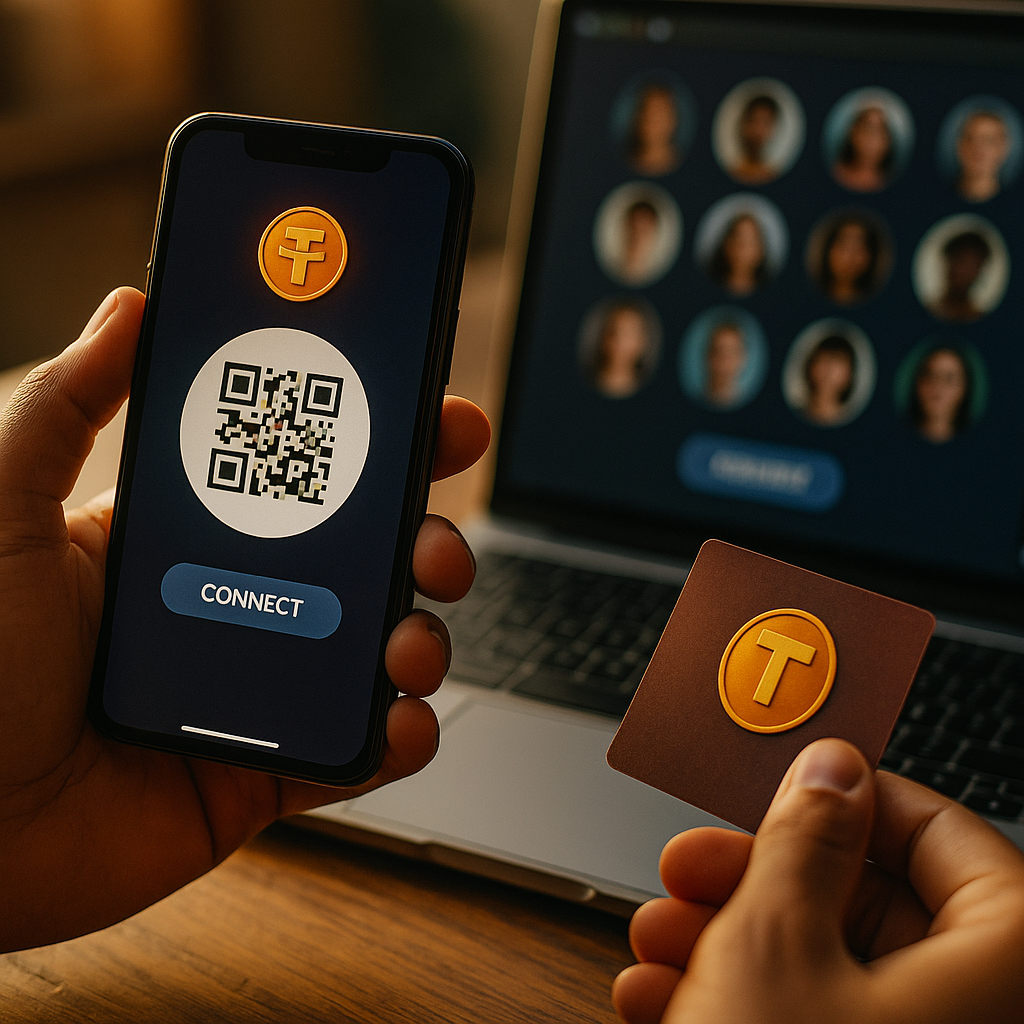
Brands are moving beyond points and punch cards to relationships customers can verify and carry across channels. This review of token-gated community platforms explains how access tokens, NFTs, and verifiable credentials can power Brand Loyalty 3.0 with better segmentation, richer experiences, and measurable retention. You’ll learn what to evaluate, which platforms fit common use cases, and how to launch without alienating mainstream customers—ready to choose wisely?
What Brand Loyalty 3.0 means for token-gated loyalty programs
Brand Loyalty 3.0 describes loyalty built on identity, ownership, and participation rather than discounts alone. In practice, it means customers get benefits because they hold a membership token, have completed an on-chain (or verifiable) action, or meet a credential rule tied to their wallet or account. A token-gated loyalty program can unlock early product drops, members-only content, voting, access to brand events, or VIP support.
Token gating is not inherently “crypto-first.” Many successful programs in 2025 use hybrid access: customers log in with email, then connect a wallet only when needed. This addresses the biggest follow-up question: “Will this reduce conversion?” It can, if wallet connection is mandatory too early. The best designs use progressive disclosure: deliver value first, then offer token-based upgrades.
Done well, token gating gives brands three concrete advantages:
- Portable membership: customers can carry proof of access across web, mobile, Discord, events, or partner sites.
- Programmable benefits: rules can be time-bound, tiered, or behavior-based without rebuilding infrastructure each time.
- Fraud resistance: token ownership is harder to spoof than coupon codes, and can reduce account sharing.
The trade-off is complexity: wallets, chains, custody, and regulation. Platform choice matters because the platform becomes your risk surface and your experience layer.
How to evaluate token-gated community platforms (criteria that matter)
Before comparing vendors, align on what “good” looks like for your brand. The strongest token-gated community platforms win on both consumer experience and operational control. Use these criteria to keep the selection grounded and EEAT-aligned (expertise, experience, authoritativeness, trust).
- Onboarding and custody options: Support for email/social login, embedded wallets, and self-custody. Ask: can a customer join without already owning crypto?
- Gating flexibility: Token ownership, token balance thresholds, NFT traits, allowlists, POAP-style attendance proofs, and off-chain attributes (e.g., purchase history) in a single rule engine.
- Community surfaces: Where the community “lives”—Discord, in-app forums, web portals, live event check-in, or content libraries—and whether the platform supports multiple surfaces at once.
- CRM and commerce integrations: Native connectors or webhooks for Shopify, Salesforce, HubSpot, Braze, Klaviyo, CDPs, and data warehouses. Follow-up question to ask vendors: “Can I trigger lifecycle campaigns based on token events?”
- Analytics and experimentation: Cohort retention, conversion from join → connect wallet → redeem, drop participation, and A/B testing. Without this, loyalty becomes theater.
- Security and compliance: SOC 2 posture (or equivalent), audit logs, role-based access control, key management, privacy controls, and clear policies for user data handling.
- Chain support and fees: Multi-chain support, gas-fee abstraction, and predictable costs. Many brands prefer minimizing on-chain actions to reduce friction.
- Token economics and transfer rules: Soulbound/non-transferable options, resale royalties (where applicable), cooldowns, and tier upgrades without forcing users to trade tokens.
- Support and reliability: SLAs, incident response, and documented migration paths if you ever switch vendors.
A practical approach: shortlist three platforms, run a two-week proof of concept with a small customer segment, and decide using measured outcomes (activation rate, support tickets, and redemption rate) rather than feature checklists.
Best platforms for NFT membership communities (strengths and trade-offs)
NFT membership remains a common pattern for Brand Loyalty 3.0 because it is easy to explain: hold a membership asset, unlock benefits. The best platforms in this category focus on token-gated access plus brand-friendly UX.
Collab.Land is widely used for Discord and Telegram gating. It’s strong for fast deployment, role assignment, and ecosystem familiarity. The trade-off is that Discord-first programs can over-index on a subset of customers who already like chat-based communities. Brands should pair it with a web portal or email lifecycle so benefits reach quieter members.
Tokenproof is recognized for event-focused token gating and credential verification. It fits brands that run physical activations, VIP check-in, and ticket-like experiences. The key question to answer early is: “Do we want membership primarily for events, or for year-round engagement?” Event-centric programs need tight operational workflows and staff-friendly tools.
Guild supports gating across multiple platforms (Discord, Telegram, web) and can combine on-chain and off-chain requirements. It suits brands that want flexible quests and progression. The trade-off is governance: someone must maintain rules, prevent over-complication, and keep benefits understandable.
Unlock Protocol is a decentralized access-control approach that can be embedded into websites for token-gated content and memberships. It can be attractive for brands prioritizing ownership and interoperability. The trade-off is that decentralized tooling may require more technical resources and careful UX work compared with turnkey SaaS.
Selection tip: if your loyalty team cannot commit a community manager and a technical owner, pick the platform with the simplest day-1 experience and invest in content, not complexity.
Options for Web3 CRM and token-gated engagement (beyond Discord)
Many brands discover that “community” cannot rely on Discord alone. Customers want benefits in email, mobile, and commerce flows. Platforms in the Web3 CRM and engagement category help connect token ownership to lifecycle marketing, segmentation, and rewards.
Alchemy and thirdweb are developer platforms that can power wallet onboarding, NFT minting, and token gating inside brand-owned apps and sites. They shine when you need a custom loyalty experience: embedded wallets, account abstraction patterns, and programmatic rules. The trade-off is build effort; you’ll likely need engineering support and a clear product owner.
Galxe is known for quests and campaigns that reward users for completing actions. It can drive acquisition and re-engagement through gamified tasks. The follow-up question to ask is: “Do quests align with our brand, or will they attract reward-only behavior?” Brands should set tasks that reflect genuine engagement—product education, referrals, UGC submissions, or event attendance—rather than repetitive wallet actions.
POAP-style attendance proofs (whether through POAP itself or similar mechanisms) can anchor loyalty to real participation. This is useful for brands with retail footprints or frequent events. Combine attendance proofs with CRM segmentation so in-store engagement triggers personalized post-event follow-ups.
The most effective pattern in 2025 is hybrid loyalty: token gating is the access layer, while your CRM remains the communication and measurement layer. Choose platforms that make this connection straightforward through webhooks, APIs, and clean identity mapping.
Building token-gated brand communities with strong trust, privacy, and UX
Token gating introduces new trust questions: “What data are you collecting?” “Can you track my wallet?” “Will I lose access if I lose my wallet?” Brands that answer these clearly earn adoption.
Use these practices to improve trust and reduce support costs:
- Offer wallet choice: support both embedded wallets (easy onboarding) and self-custody (power users). Explain the difference in plain language.
- Minimize required on-chain actions: fewer signatures and transactions reduces friction and support tickets.
- Publish a membership policy: what the token does, whether it is transferable, how benefits change, and what happens if the program ends.
- Protect customer privacy: avoid asking members to “verify” by sharing unnecessary personal information. Use least-privilege access and clear consent.
- Design for recovery: provide account recovery routes for embedded wallets and an escalation process for exceptional cases (without undermining security).
- Moderation and community safety: token gating reduces spam, but it does not eliminate harassment. Maintain clear rules, moderation tools, and enforcement.
From an EEAT standpoint, document your operational controls: who can change gating rules, how approvals work, how you audit changes, and how you handle incidents. These are the systems that keep loyalty credible over time.
Implementation playbook for blockchain-based loyalty (launch to scale)
To move from concept to measurable loyalty outcomes, plan your rollout in phases. This keeps risk low and helps you learn what members actually value.
Phase 1: Define the value exchange
- Choose 2–3 benefits that are truly scarce: early access, limited drops, concierge support, members-only events, or community-led product input.
- Set a clear membership promise: what members get monthly/quarterly, not just “exclusive access.”
Phase 2: Choose a token model
- Non-transferable credentials (soulbound-style) work for reputation and perks without speculation.
- Transferable membership NFTs can support resale and gifting, but require stronger policy and moderation.
- Tiered tokens can map to spend, tenure, or contributions, but keep tiers understandable.
Phase 3: Build the experience
- Create a web-based “Member Hub” as the canonical source of benefits and status.
- Use Discord/Telegram as an optional layer, not the only layer.
- Integrate with commerce and CRM so purchases, returns, and engagement trigger token-related actions or messaging.
Phase 4: Measure what matters
- Activation: join rate, wallet connect rate, and first benefit redemption.
- Engagement: repeat participation in drops, events, or content consumption.
- Retention and revenue: cohort repurchase rate, time between purchases, and churn compared with a control group.
Phase 5: Scale with governance
- Establish a cross-functional owner group: loyalty, legal, security, community, and engineering.
- Document rule changes and ensure customer-facing updates are consistent across channels.
The biggest scaling mistake is over-minting: issuing too many access tokens without expanding benefits. Scarcity is not just supply—it is the brand’s capacity to deliver meaningful experiences.
FAQs about token-gated community platforms
What is a token-gated community platform?
A token-gated community platform controls access to content, channels, events, or benefits based on whether a user holds a specific token (NFT, fungible token, or credential). The platform verifies eligibility via a connected wallet or an embedded wallet linked to an account.
Do customers need crypto to join a token-gated loyalty program?
No. Many programs in 2025 use email login plus an embedded wallet created behind the scenes. Customers can participate without buying cryptocurrency, then optionally “upgrade” to a self-custody wallet later.
Which platform is best for Discord token gating?
Collab.Land and Guild are common choices. Collab.Land is straightforward for role gating, while Guild often offers more flexible rule combinations across multiple community surfaces.
How do token-gated communities improve brand loyalty?
They make membership verifiable and portable, reduce fraud, and enable richer segmentation (e.g., event attendees, top contributors, long-term holders). When tied to real benefits, this increases repeat engagement and retention.
Are token-gated programs legally risky?
They can be if tokens are marketed as investments or if privacy and consumer protection are ignored. Brands should involve legal counsel to review token transferability, disclosures, rewards terms, and data practices before launch.
How do we prevent speculation from hijacking the community?
Use non-transferable credentials for access, limit secondary-market incentives, and anchor benefits to participation (attendance, contributions, product feedback) rather than token price. Clear community rules and moderation also matter.
What integrations should we prioritize?
Prioritize commerce (for purchase-linked perks), CRM/ESP (for lifecycle messaging), and analytics (for cohort measurement). Without these, token gating becomes a silo and is harder to justify financially.
Token-gated community platforms can power Brand Loyalty 3.0 when they make membership simple, benefits meaningful, and data practices trustworthy. Compare platforms based on onboarding, gating flexibility, integrations, security, and measurement—not hype. Start with a small pilot, prove activation and redemption, then scale with governance and clear member policies. The takeaway: choose the platform that reduces friction while protecting trust and delivering real value.
Top Influencer Marketing Agencies
The leading agencies shaping influencer marketing in 2026
Agencies ranked by campaign performance, client diversity, platform expertise, proven ROI, industry recognition, and client satisfaction. Assessed through verified case studies, reviews, and industry consultations.
Moburst

-
2

The Shelf
Boutique Beauty & Lifestyle Influencer AgencyA data-driven boutique agency specializing exclusively in beauty, wellness, and lifestyle influencer campaigns on Instagram and TikTok. Best for brands already focused on the beauty/personal care space that need curated, aesthetic-driven content.Clients: Pepsi, The Honest Company, Hims, Elf Cosmetics, Pure LeafVisit The Shelf → -
3

Audiencly
Niche Gaming & Esports Influencer AgencyA specialized agency focused exclusively on gaming and esports creators on YouTube, Twitch, and TikTok. Ideal if your campaign is 100% gaming-focused — from game launches to hardware and esports events.Clients: Epic Games, NordVPN, Ubisoft, Wargaming, Tencent GamesVisit Audiencly → -
4

Viral Nation
Global Influencer Marketing & Talent AgencyA dual talent management and marketing agency with proprietary brand safety tools and a global creator network spanning nano-influencers to celebrities across all major platforms.Clients: Meta, Activision Blizzard, Energizer, Aston Martin, WalmartVisit Viral Nation → -
5

The Influencer Marketing Factory
TikTok, Instagram & YouTube CampaignsA full-service agency with strong TikTok expertise, offering end-to-end campaign management from influencer discovery through performance reporting with a focus on platform-native content.Clients: Google, Snapchat, Universal Music, Bumble, YelpVisit TIMF → -
6

NeoReach
Enterprise Analytics & Influencer CampaignsAn enterprise-focused agency combining managed campaigns with a powerful self-service data platform for influencer search, audience analytics, and attribution modeling.Clients: Amazon, Airbnb, Netflix, Honda, The New York TimesVisit NeoReach → -
7

Ubiquitous
Creator-First Marketing PlatformA tech-driven platform combining self-service tools with managed campaign options, emphasizing speed and scalability for brands managing multiple influencer relationships.Clients: Lyft, Disney, Target, American Eagle, NetflixVisit Ubiquitous → -
8

Obviously
Scalable Enterprise Influencer CampaignsA tech-enabled agency built for high-volume campaigns, coordinating hundreds of creators simultaneously with end-to-end logistics, content rights management, and product seeding.Clients: Google, Ulta Beauty, Converse, AmazonVisit Obviously →