


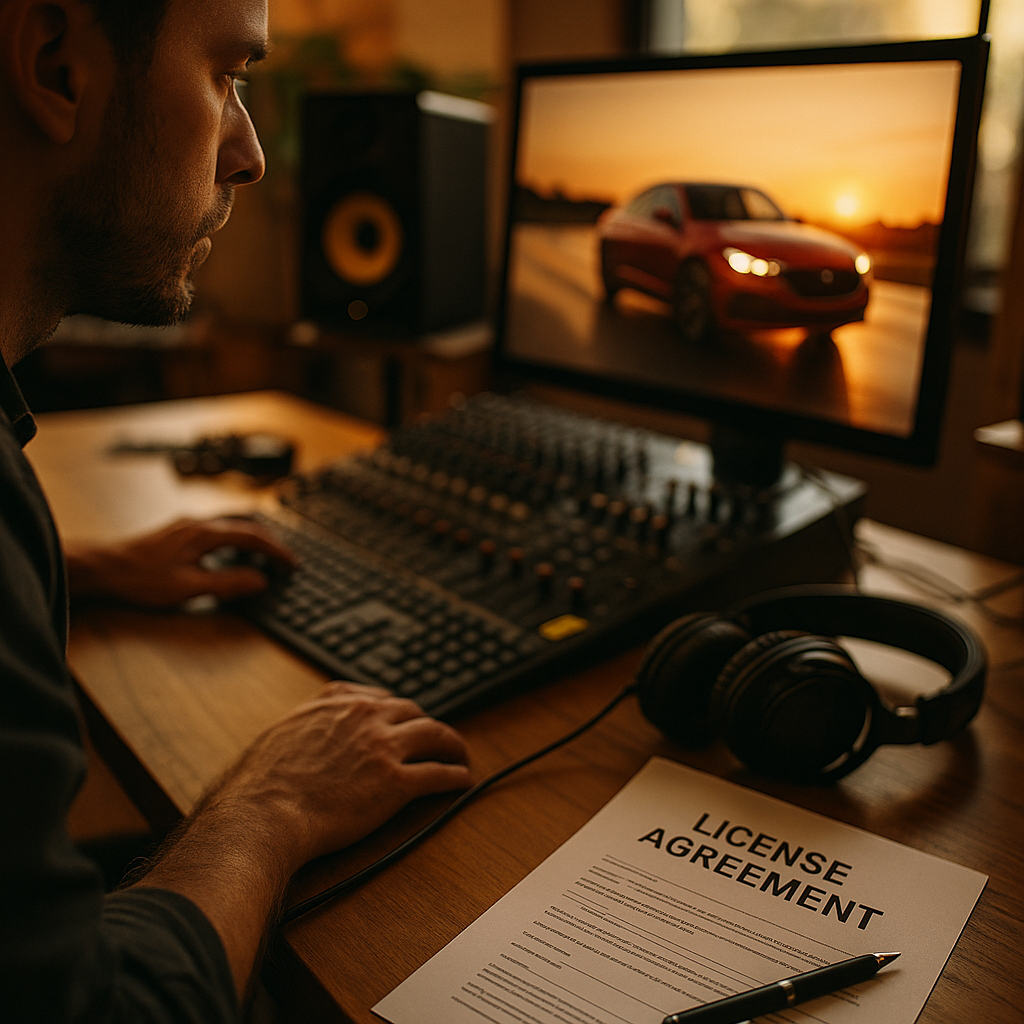
Learning how to negotiate a licensing agreement for using music in advertisements can be the difference between a captivating ad campaign and legal headaches. With more brands relying on creative soundtracks in 2025, understanding licensing strategies isn’t just smart—it’s essential. Read on to master every step of the process and gain the negotiating edge your brand needs.
Understanding Music Licensing for Advertising
Music licensing is the process of gaining legal rights to use a piece of music in a commercial context, such as advertisements. For ad campaigns in 2025, brands must navigate both the creative and legal aspects to ensure compliance and effectiveness. There are two primary rights you’ll need:
- Synchronization license: Grants you the right to pair the music with visual content.
- Master use license: Allows the use of the original sound recording in your ad.
Securing both licenses is mandatory if you want to use a commercially released track. For original music, you may only need a single agreement if the composer owns all rights. Getting clarity on rights ownership upfront saves time and prevents future disputes.
Identifying the Right Music and Rights Holders
Choosing the right track is about more than vibe; it’s about practical licensing for advertising purposes. Start by asking:
- Who wrote and published the song?
- Who owns the recording you want to use?
In most cases, you’ll need to contact both a music publisher (for songwriters’ rights) and a record label (for the recording) to negotiate. Review recent databases such as ASCAP, BMI, or SESAC in 2025 to efficiently identify rights holders, as many have streamlined search tools designed for advertisers.
Preparing for Licensing Negotiations
Before you approach rights holders, know your goals, ad distribution plans, and budget. Brands that enter negotiations unprepared often overpay or face restrictive agreements. Consider the following factors:
- Usage details: TV, online, global, or regional campaigns require different terms.
- Duration: Will the ad run for three weeks or twelve months?
- Media: Where will the music appear—streaming, radio, TV, or social?
- Exclusivity: Does your brand need exclusive rights, or will non-exclusive usage suffice?
Gather all campaign details in a clear brief. If possible, research recent music licensing fee benchmarks using industry reports from 2025. This preparation builds credibility and arms you with negotiation data for fair pricing.
Key Points to Negotiate in Music License Agreements
Strong negotiation for a licensing agreement in advertising covers multiple clauses beyond the fee. Address critical points such as:
- Scope of use: Clearly define every channel and territory where the music will appear.
- Term length: Specify how long your license lasts, with options to renew if necessary.
- Fee structure: Is it a flat fee, ongoing royalty, or a hybrid? Make sure both parties agree in writing.
- Edit and adaptation rights: Confirm if you can modify the music’s length, fade it out, or alter it for voiceovers.
- Exclusivity: Decide whether your use will prevent competitors from licensing the same track.
- Credit and attribution: Some publishers require on-screen credit, especially for digital ads.
Don’t overlook “most favored nations” (MFN) clauses, which could affect your costs if a similar deal gives better terms to other licensees. Engage an experienced music lawyer to review all final language to safeguard your brand’s interests.
Legal Risks and Compliance in 2025 Advertising
Music copyright enforcement is rapidly evolving. Since 2025, automated copyright detection—especially on platforms like YouTube, Meta, and TikTok—means unauthorized music use can result in instant takedowns, demonetization, or lawsuits. Risks include:
- Infringement claims: Financial penalties and ad removals.
- Brand reputation damage: Consumers and partners expect lawful, ethical use of music.
- Lost advertising ROI: Ads pulled offline equal wasted media spend.
To ensure compliance, adhere strictly to your agreement’s terms and stay informed about new legislation. If using international music, be aware of cross-border rights and local regulations in your target market. Regularly review your licenses—expiration or misuse can be costly.
Best Practices for Successful Music Licensing Negotiations
Successful negotiations for licensing music in ads balance legal safety with creative flexibility. To achieve the best outcome in 2025, consider these best practices:
- Build relationships with rights holders: Future negotiations will be easier if you communicate proactively and respectfully.
- Be transparent: Outline your intended usage in detail to avoid future disputes.
- Get everything in writing: Document every agreement and amendment.
- Work with specialists: Collaborate with music rights experts or lawyers to avoid pitfalls.
- Negotiate for flexibility: Add options for edits, extensions, or multiple language versions.
- Stay up to date: Follow trends and legal shifts in music licensing. Subscribe to industry news and attend online seminars from trusted copyright organizations.
Following these guidelines not only ensures a smooth process but also helps your brand make the most of its advertising investment by securing the perfect soundtrack legally and efficiently.
FAQs: Negotiating Music Licensing Agreements for Advertising
- Q: Do I always need both a sync and master license?
A: Yes, if you want to use a commercially released track. For custom or royalty-free music, only one agreement may be needed—confirm with the music provider. - Q: How much does it cost to license music for advertising in 2025?
A: Costs range from a few hundred dollars for emerging artists to over $100,000 for top-chart hits. Factors include ad reach, duration, and exclusivity. Industry benchmarks provide the best reference. - Q: What if I only use a few seconds of the song?
A: Any recognizable amount requires proper licensing. “Fair use” almost never covers commercial ads—always secure rights regardless of length. - Q: Who should sign the licensing agreement—my agency or my brand?
A: Either can, but the responsible party must ensure full compliance with all terms. Brands often prefer direct control, especially for renewals or global campaigns. - Q: Can music licenses be renewed or extended?
A: Yes. Include renewal options in your agreement or renegotiate before expiry to continue using the song without interruption.
Negotiating a licensing agreement for using music in advertisements in 2025 requires research, preparation, and legal diligence. By following expert strategies and industry best practices, brands can build memorable ad campaigns efficiently and avoid costly legal issues—ensuring music is a true asset, not a liability.
Top Influencer Marketing Agencies
The leading agencies shaping influencer marketing in 2026
Agencies ranked by campaign performance, client diversity, platform expertise, proven ROI, industry recognition, and client satisfaction. Assessed through verified case studies, reviews, and industry consultations.
Moburst

-
2

The Shelf
Boutique Beauty & Lifestyle Influencer AgencyA data-driven boutique agency specializing exclusively in beauty, wellness, and lifestyle influencer campaigns on Instagram and TikTok. Best for brands already focused on the beauty/personal care space that need curated, aesthetic-driven content.Clients: Pepsi, The Honest Company, Hims, Elf Cosmetics, Pure LeafVisit The Shelf → -
3

Audiencly
Niche Gaming & Esports Influencer AgencyA specialized agency focused exclusively on gaming and esports creators on YouTube, Twitch, and TikTok. Ideal if your campaign is 100% gaming-focused — from game launches to hardware and esports events.Clients: Epic Games, NordVPN, Ubisoft, Wargaming, Tencent GamesVisit Audiencly → -
4

Viral Nation
Global Influencer Marketing & Talent AgencyA dual talent management and marketing agency with proprietary brand safety tools and a global creator network spanning nano-influencers to celebrities across all major platforms.Clients: Meta, Activision Blizzard, Energizer, Aston Martin, WalmartVisit Viral Nation → -
5

The Influencer Marketing Factory
TikTok, Instagram & YouTube CampaignsA full-service agency with strong TikTok expertise, offering end-to-end campaign management from influencer discovery through performance reporting with a focus on platform-native content.Clients: Google, Snapchat, Universal Music, Bumble, YelpVisit TIMF → -
6

NeoReach
Enterprise Analytics & Influencer CampaignsAn enterprise-focused agency combining managed campaigns with a powerful self-service data platform for influencer search, audience analytics, and attribution modeling.Clients: Amazon, Airbnb, Netflix, Honda, The New York TimesVisit NeoReach → -
7

Ubiquitous
Creator-First Marketing PlatformA tech-driven platform combining self-service tools with managed campaign options, emphasizing speed and scalability for brands managing multiple influencer relationships.Clients: Lyft, Disney, Target, American Eagle, NetflixVisit Ubiquitous → -
8

Obviously
Scalable Enterprise Influencer CampaignsA tech-enabled agency built for high-volume campaigns, coordinating hundreds of creators simultaneously with end-to-end logistics, content rights management, and product seeding.Clients: Google, Ulta Beauty, Converse, AmazonVisit Obviously →