


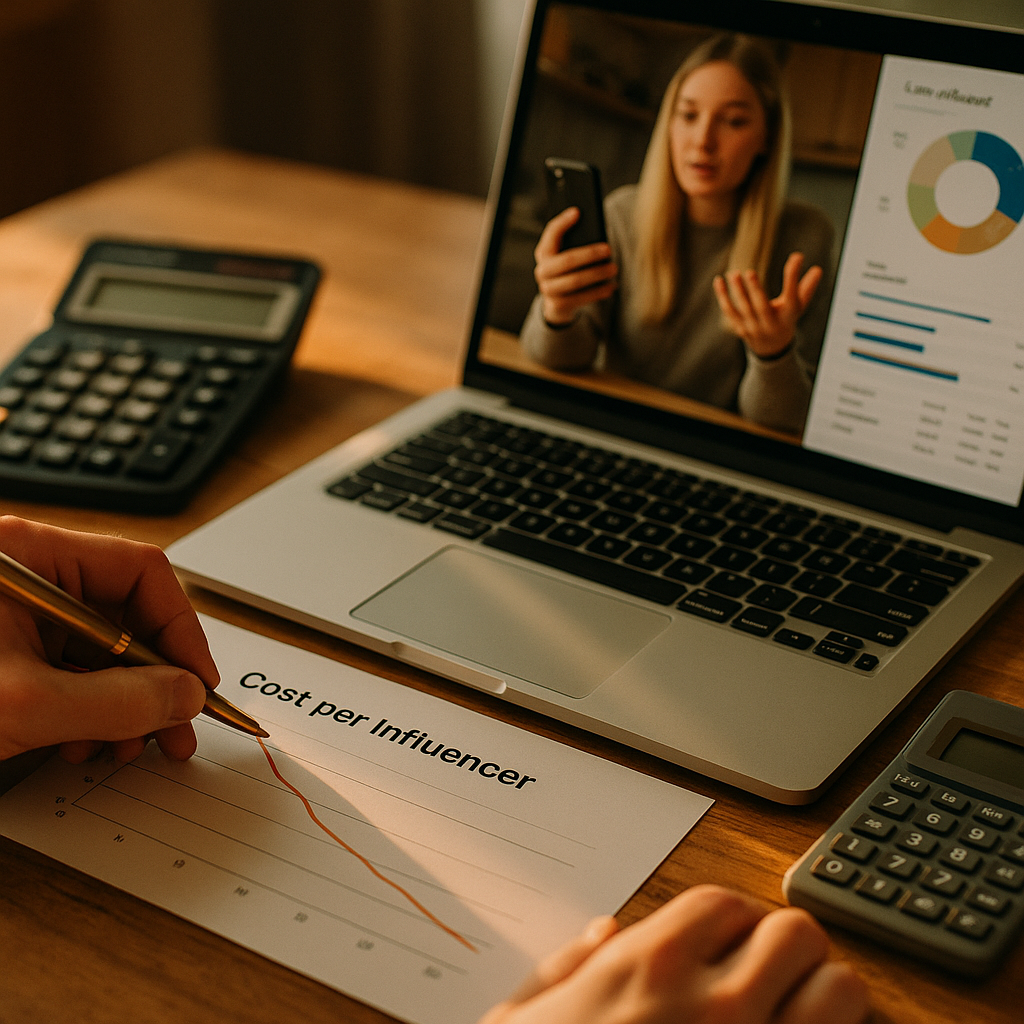
The ability to measure the true cost of influencer acquisition is essential for brands seeking sustainable ROI from their influencer marketing investments. With more platforms and creators than ever, understanding every component of cost ensures strategic partnerships and growth. How do you accurately assess what influencer collaboration really costs in 2025? Let’s break it down step by step.
Understanding Influencer Acquisition Costs
At its core, influencer acquisition cost refers to the total sum a brand invests to identify, secure, and activate an influencer partnership. This calculation transcends a simple upfront fee. In 2025, it’s essential to factor in:
- Negotiation time: Hours spent aligning budgets, expectations, and deliverables.
- Content creation support: Creative resources allocated to guiding or co-producing campaigns.
- Legal & compliance: Vetting contracts, ensuring FTC guidelines, and use rights.
- Platform tools: Subscription costs for influencer discovery, auditing, or campaign management tools.
- Paid amplification: Additional costs to boost influencer content via ads.
When summed, these costs offer a more accurate acquisition price per influencer, informing better budget allocation.
Direct Payment vs. Hidden Influencer Marketing Expenses
While the most obvious outlay is what you pay each influencer, many indirect expenses can slip by unnoticed. Direct payments often include:
- Flat fee or rate per post/video
- Affiliate commissions
- Product gifting or incentives
However, hidden expenses can include:
- Team hours dedicated to research, outreach, and relationship management
- Content revision/approval cycles, especially with larger creative teams
- Event costs if campaigns involve in-person experiences or launches
- Unforeseen revisions requested by legal or compliance
Disregarding these costs skews true ROI and may inflate anticipated returns.
Calculating Cost Per Influence With Data-Driven Tracking
Calculating cost per influencer acquisition gets reliable with robust tracking. Here’s how brands in 2025 do it effectively:
- Track actual hours worked: Use project management tools to log all time invested by staff in influencer onboarding.
- Aggregate vendor/influencer spend: Centralize all payment records, including bonuses, incentives, and performance payouts.
- Log platform/tool subscriptions: Assign prorated costs for software used during each acquisition process.
- Monitor content production expenses: Track third-party photographers, editors, or additional media production linked to influencer output.
- Include paid media amplification: Record any budget allocated to boosting influencer-generated assets.
Tallying these enables the “True Influencer Acquisition Cost” formula: (Total Spend + Internal Costs) ÷ Number of Influencers Activated. This figure is invaluable for benchmarking efficiency.
Evaluating ROI: Linking Cost to Performance Metrics
To justify influencer acquisition spend, you must connect it directly to both campaign goals and longer-term brand outcomes. Key performance metrics in 2025 include:
- Engagement quality and rate: Not just likes, but shares, comments, and sentiment.
- Sales-Attributed Conversions: Trackable through affiliate links, unique codes, or platform pixels.
- Customer acquisition cost (CAC): How influencer-driven leads compare to other channels.
- Earned media value (EMV): Quantifies publicity value generated by influencer partnerships vs. paid advertising.
- Brand lift studies: Surveys or third-party analytics measuring shifts in awareness, favorability, or intent.
Regularly compare acquisition costs against these metrics, not just reach, for informed, EEAT-compliant optimization.
Reducing Influencer Acquisition Costs Without Sacrificing Quality
Cost control doesn’t mean compromising results—savvy brands adopt several strategies to reduce their influencer acquisition costs:
- Leverage in-house tools: Minimize software subscriptions by training teams in multi-platform systems.
- Standardize contracts: Use templates to shorten negotiations and compliance reviews.
- Build long-term partnerships: Returning collaborators cost less to onboard and often deliver better performance per dollar.
- Automate reporting: Reduce manual data collection and cross-team communication costs.
- Tap micro-influencers: These creators offer lower rates with high trust and niche engagement.
The best investment is in efficient, repeatable processes paired with transparent reporting to reveal savings opportunities.
Case Study: A Scalable Approach to Influencer Acquisition
Consider a mid-size beauty brand that activated 40 influencers in Q1 2025. By integrating time-tracking software, negotiating bundled rates with groups of creators, and automating most of the reporting, they reduced their average influencer acquisition cost by 23% compared to the previous quarter. What changed?
- Clear allocation of staff hours during onboarding
- Centralized oversight of legal and compliance checks
- Bulk negotiation with platforms for tool licensure
- Regular evaluation of influencer-driven EMV relative to cost
This allowed the brand not only to justify spending but to boost earned media value by 18%—demonstrating that measuring and optimizing true acquisition cost drives real impact.
Conclusion: Mastering Influencer Acquisition Economics
To remain competitive in 2025, brands must measure the true cost of influencer acquisition using data-rich, holistic approaches. Don’t just track fees—account for every resource and optimize repeatable systems. The brands that win in influencer marketing are those with financial clarity and measurable, proven results.
FAQs: Measuring Influencer Acquisition Cost
- What should be included in influencer acquisition costs?
Include all direct payments (fees, commissions, product value) and all indirect expenditures (staff time, software, compliance, amplification, production costs) to get the full picture.
- How do I track hidden costs in influencer marketing?
Use project management tools to log every hour spent on influencer campaigns, and ensure all platform and production costs are centralized and allocated appropriately per influencer.
- How often should I evaluate my influencer acquisition costs?
Evaluate at the end of each campaign and at least quarterly to benchmark progress and identify new optimization opportunities.
- Can micro-influencers lower acquisition costs?
Yes, micro-influencers generally require smaller upfront investment and often deliver high engagement, reducing both per-influencer and per-action costs.
- How does influencer acquisition cost inform ROI analysis?
By knowing your true costs, you can accurately measure ROI relative to actual business outcomes such as conversions, EMV, and brand lift, enabling smarter budgeting and greater marketing impact.
Top Influencer Marketing Agencies
The leading agencies shaping influencer marketing in 2026
Agencies ranked by campaign performance, client diversity, platform expertise, proven ROI, industry recognition, and client satisfaction. Assessed through verified case studies, reviews, and industry consultations.
Moburst

-
2

The Shelf
Boutique Beauty & Lifestyle Influencer AgencyA data-driven boutique agency specializing exclusively in beauty, wellness, and lifestyle influencer campaigns on Instagram and TikTok. Best for brands already focused on the beauty/personal care space that need curated, aesthetic-driven content.Clients: Pepsi, The Honest Company, Hims, Elf Cosmetics, Pure LeafVisit The Shelf → -
3

Audiencly
Niche Gaming & Esports Influencer AgencyA specialized agency focused exclusively on gaming and esports creators on YouTube, Twitch, and TikTok. Ideal if your campaign is 100% gaming-focused — from game launches to hardware and esports events.Clients: Epic Games, NordVPN, Ubisoft, Wargaming, Tencent GamesVisit Audiencly → -
4

Viral Nation
Global Influencer Marketing & Talent AgencyA dual talent management and marketing agency with proprietary brand safety tools and a global creator network spanning nano-influencers to celebrities across all major platforms.Clients: Meta, Activision Blizzard, Energizer, Aston Martin, WalmartVisit Viral Nation → -
5

The Influencer Marketing Factory
TikTok, Instagram & YouTube CampaignsA full-service agency with strong TikTok expertise, offering end-to-end campaign management from influencer discovery through performance reporting with a focus on platform-native content.Clients: Google, Snapchat, Universal Music, Bumble, YelpVisit TIMF → -
6

NeoReach
Enterprise Analytics & Influencer CampaignsAn enterprise-focused agency combining managed campaigns with a powerful self-service data platform for influencer search, audience analytics, and attribution modeling.Clients: Amazon, Airbnb, Netflix, Honda, The New York TimesVisit NeoReach → -
7

Ubiquitous
Creator-First Marketing PlatformA tech-driven platform combining self-service tools with managed campaign options, emphasizing speed and scalability for brands managing multiple influencer relationships.Clients: Lyft, Disney, Target, American Eagle, NetflixVisit Ubiquitous → -
8

Obviously
Scalable Enterprise Influencer CampaignsA tech-enabled agency built for high-volume campaigns, coordinating hundreds of creators simultaneously with end-to-end logistics, content rights management, and product seeding.Clients: Google, Ulta Beauty, Converse, AmazonVisit Obviously →