


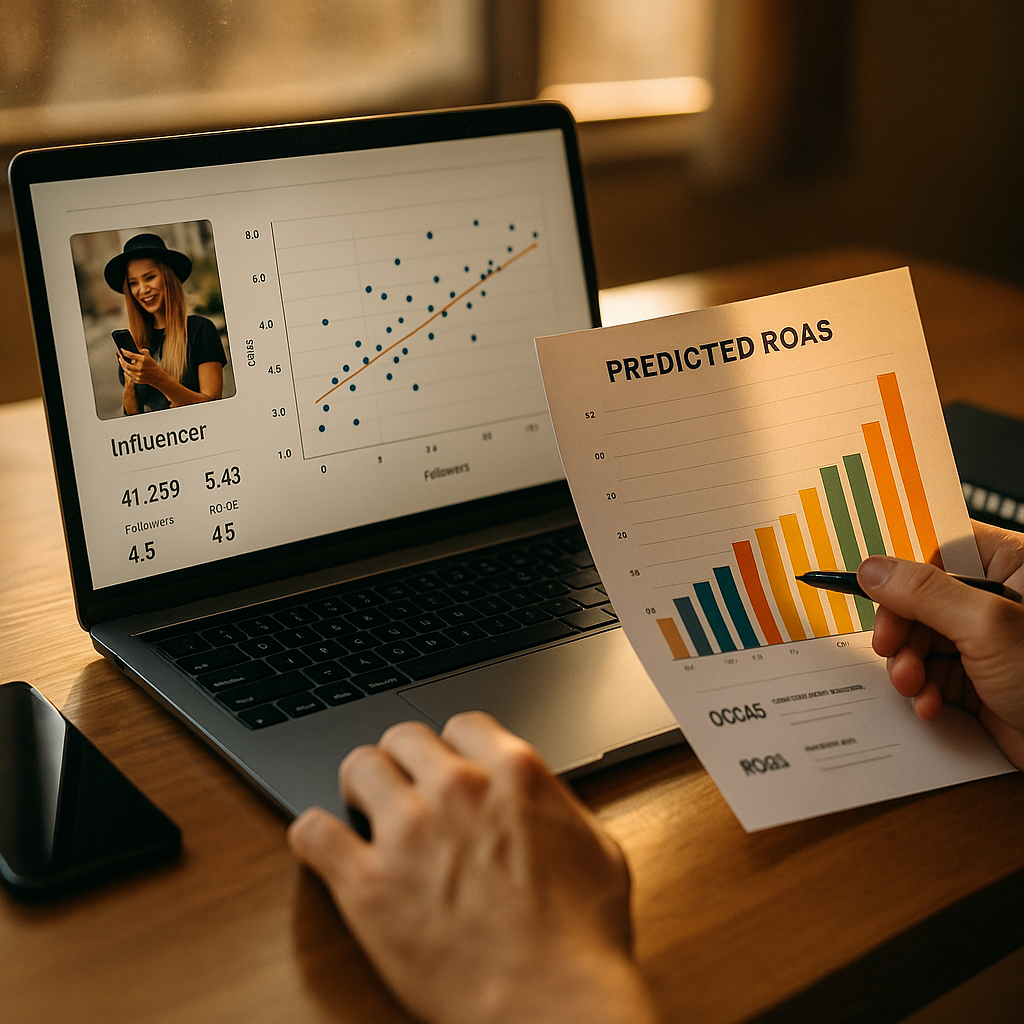
Predicting creator ROAS (Return on Ad Spend) has become essential for brands optimizing influencer marketing strategies in 2025. As budgets tighten and expectations rise, robust analytical tools now empower marketers to predict results more accurately than ever before. Discover how today’s brands are leveraging innovative platforms to remove guesswork and drive measurable return.
Understanding ROAS in Influencer Marketing Campaigns
Return on Ad Spend, or ROAS, is a vital metric for brands investing in influencer campaigns. It helps quantify the revenue generated for every dollar spent on creators. Accurately predicting creator ROAS enables brands to scale campaigns confidently, decrease wasted spend, and prove the true impact of partnerships. Brands in 2025 are shifting from gut-feel collaboration to dependable, data-informed decisions.
This pivot is driven by increasing C-suite scrutiny, tighter marketing budgets, and the demand for transparency. A strong ROAS forecast arms campaign managers with evidence to justify spend while building a robust business case for future initiatives. This urgency has spurred rapid innovation in predictive tools equipped with advanced analytics and artificial intelligence capabilities.
Top Predictive Analytics Tools for Creator ROI
Modern brands leverage specialized tools to predict creator ROI with precision. These platforms utilize historical performance data, social signals, and real-time audience insights. Leading solutions in 2025 include:
- MAVENROI: Powered by artificial intelligence, MAVENROI analyzes influencer history, engagement, and audience demographics to forecast campaign return. Marketers can simulate campaign outcomes and compare multiple creators at once.
- AffluenceIQ: With machine learning at its core, AffluenceIQ provides ROAS estimates using real-time conversion data mapped to specific influencer partnerships. It offers breakdowns by audience segment, allowing tailored strategies for every market.
- BrandformanceX: Designed for enterprise, BrandformanceX connects influencers’ post-performance with downstream conversion events. Predictive dashboards help advertisers optimize spend allocation dynamically throughout live campaigns.
These solutions go beyond vanity metrics. They focus on actionable ROAS forecasts that align with bottom-line objectives. Real-time data integration enables agile campaign management and helps marketers pivot strategies based on predictive insights, not just outcomes after the fact.
Key Features to Expect in ROAS Prediction Tools
Not all prediction tools are created equal. Brands should prioritize key features that guarantee accuracy and actionable insights, including:
- AI-Driven Modeling: Look for tools using machine learning to process millions of data points, uncover patterns, and adjust algorithms as performance data evolves.
- Cross-Platform Integration: Select solutions that track influencer content across Instagram, TikTok, YouTube, and emerging platforms to avoid blind spots.
- Audience Health Analysis: The best tools analyze creator follower authenticity, engagement quality, and past audience response to similar content, weeding out bots and fake engagement.
- Attribution Transparency: Clear, multi-touch attribution models map sales and conversions back to specific creators, content types, or timeframes.
- Scenario Planning: Sophisticated tools allow campaign managers to model best- and worst-case scenarios, optimize budget splits, and compare potential returns before committing spend.
By focusing on these features, brands ensure that forecasts are not only accurate but also practical for campaign optimization, investment justification, and long-term planning.
Best Practices for Leveraging Creator ROAS Prediction Platforms
Deploying predictive tools effectively demands a strategic approach. Here are best practices for maximizing outcomes:
- Align With Business Objectives: Input meaningful campaign KPIs—sales, sign-ups, or awareness metrics—into your prediction engine for the most relevant forecasts.
- Collaborate With Trusted Creators: Use prediction tools to screen influencers for fit, but also weigh intangibles like brand alignment and creative chemistry.
- Test, Learn, Optimize: Conduct controlled A/B tests with different creators and content types. Use platform insights to iterate in real-time.
- Validate With Post-Campaign Data: Feed actual campaign results back into your predictive platform. Over time, this feedback loop radically improves prediction accuracy.
- Champion Transparency Internally: Share data-driven predictions and outcomes with stakeholders to build organizational confidence in influencer marketing investments.
When these tools are combined with experienced teams and clear objectives, brands unlock the true potential of creator partnerships, ensuring sustainable growth and reduced marketing risk.
Common Challenges and How Tools Address Them
Even the best platforms face hurdles in predicting creator ROAS. Key issues include:
- Changing Social Media Algorithms: Platforms frequently update their algorithms, which can impact organic reach and engagement. Leading prediction tools counteract this by continuously updating their models using the latest data.
- Data Privacy and Tracking Limitations: Changes in privacy policies often restrict data availability. Modern solutions leverage anonymized datasets and modelled attribution to maintain accuracy while respecting privacy.
- Influencer Fraud: Fake engagement and purchased followers can skew predictions. Reliable tools aggressively filter for audience authenticity, using AI to distinguish genuine interactions from fraudulent ones.
- Market Volatility: Consumer preferences shift rapidly. Predictive models are updated in real time, allowing brands to pivot quickly and remain competitive.
Success depends on using predictive platforms as a decision-support tool, not a crystal ball. Brands that pair best-in-class technology with human expertise can navigate uncertainty while maximizing creator ROI.
The Future of Creator ROAS Prediction
The evolution of predictive analytics shows no signs of slowing in 2025. Increasing integration of AI, richer first-party data, and deeper creator-brand partnerships are driving greater precision. Brands are exploring blockchain-based transparency networks and predictive sentiment analysis, enabling even real-time ROAS optimization as campaigns run. Expect platforms to become increasingly personalized, responsive, and integral to every successful influencer strategy.
FAQs: Tools That Help Brands Predict Creator ROAS
-
What does creator ROAS mean?
Creator ROAS (Return on Ad Spend) measures how much revenue a brand generates for every dollar spent partnering with influencers. -
Why is predicting influencer ROI important?
Predicting influencer ROI empowers brands to allocate budgets efficiently, justify investments, and optimize campaigns before and during launch. -
Can predictive tools guarantee campaign success?
No tool can guarantee success, but predictive platforms greatly increase the likelihood of positive outcomes by reducing guesswork and improving planning. -
How do tools detect fake engagement or followers?
Advanced platforms use AI to analyze engagement patterns, audience consistency, and known fraud signals to flag inauthentic accounts. -
Is influencer marketing still effective in 2025?
Absolutely. With advanced predictive tools, influencer marketing delivers measurable ROI, provided brands leverage data-driven insights and credible creators.
In 2025, tools that help brands predict creator ROAS are essential for maximizing influencer marketing effectiveness and transparency. By investing in AI-driven platforms and prioritizing data-powered decisions, brands gain measurable confidence and stronger returns from every creator partnership.
Top Influencer Marketing Agencies
The leading agencies shaping influencer marketing in 2026
Agencies ranked by campaign performance, client diversity, platform expertise, proven ROI, industry recognition, and client satisfaction. Assessed through verified case studies, reviews, and industry consultations.
Moburst

-
2

The Shelf
Boutique Beauty & Lifestyle Influencer AgencyA data-driven boutique agency specializing exclusively in beauty, wellness, and lifestyle influencer campaigns on Instagram and TikTok. Best for brands already focused on the beauty/personal care space that need curated, aesthetic-driven content.Clients: Pepsi, The Honest Company, Hims, Elf Cosmetics, Pure LeafVisit The Shelf → -
3

Audiencly
Niche Gaming & Esports Influencer AgencyA specialized agency focused exclusively on gaming and esports creators on YouTube, Twitch, and TikTok. Ideal if your campaign is 100% gaming-focused — from game launches to hardware and esports events.Clients: Epic Games, NordVPN, Ubisoft, Wargaming, Tencent GamesVisit Audiencly → -
4

Viral Nation
Global Influencer Marketing & Talent AgencyA dual talent management and marketing agency with proprietary brand safety tools and a global creator network spanning nano-influencers to celebrities across all major platforms.Clients: Meta, Activision Blizzard, Energizer, Aston Martin, WalmartVisit Viral Nation → -
5

The Influencer Marketing Factory
TikTok, Instagram & YouTube CampaignsA full-service agency with strong TikTok expertise, offering end-to-end campaign management from influencer discovery through performance reporting with a focus on platform-native content.Clients: Google, Snapchat, Universal Music, Bumble, YelpVisit TIMF → -
6

NeoReach
Enterprise Analytics & Influencer CampaignsAn enterprise-focused agency combining managed campaigns with a powerful self-service data platform for influencer search, audience analytics, and attribution modeling.Clients: Amazon, Airbnb, Netflix, Honda, The New York TimesVisit NeoReach → -
7

Ubiquitous
Creator-First Marketing PlatformA tech-driven platform combining self-service tools with managed campaign options, emphasizing speed and scalability for brands managing multiple influencer relationships.Clients: Lyft, Disney, Target, American Eagle, NetflixVisit Ubiquitous → -
8

Obviously
Scalable Enterprise Influencer CampaignsA tech-enabled agency built for high-volume campaigns, coordinating hundreds of creators simultaneously with end-to-end logistics, content rights management, and product seeding.Clients: Google, Ulta Beauty, Converse, AmazonVisit Obviously →